
Politics
21:27, 03-May-2018
Iran will not renegotiate nuclear deal: Foreign minister
 ["china"]
Share






Copied

Iran will not renegotiate a 2015 nuclear deal with major powers, Iran's foreign minister said on Thursday, as a deadline set by US President Donald Trump for Europeans to "fix" the deal loomed.
Trump has said that unless European allies fix the “terrible flaws” in the Iran nuclear deal by May 12, he will refuse to extend US sanctions relief for oil-producing Iran.

Iranian Foreign Minister Mohammad Javad Zarif speaks at the Iran-Pakistan Business Forums in Karachi, March 13, 2018. /VCG Photo
Iranian Foreign Minister Mohammad Javad Zarif speaks at the Iran-Pakistan Business Forums in Karachi, March 13, 2018. /VCG Photo
"Iran will not renegotiate what was agreed years ago and has been implemented," Mohammad Javad Zarif said in a video message posted on YouTube.
Zarif added "Let me make it clear absolutely and once for all: we will neither outsource our security, nor will we renegotiate or add on to a deal we have already implemented in good faith."
He also pointed out the United States had "consistently violated the nuclear deal, particularly by bullying others to prevent businesses to return to Iran."
Ali Akbar Velayati, foreign policy advisor to Iran's supreme leader Ayatollah Ali Khamenei, Thursday also warned Iran will quit the landmark nuclear deal with world powers if Trump pulls the US out of the accord, was quoted as saying by the state television website.
"Iran accepts the nuclear agreement as it has been prepared and will not accept adding or removing anything," he said. "Even if countries allied with the United States, especially the Europeans, seek to revise the nuclear agreement... one of our options will be withdrawing from the accord," Velayati added.
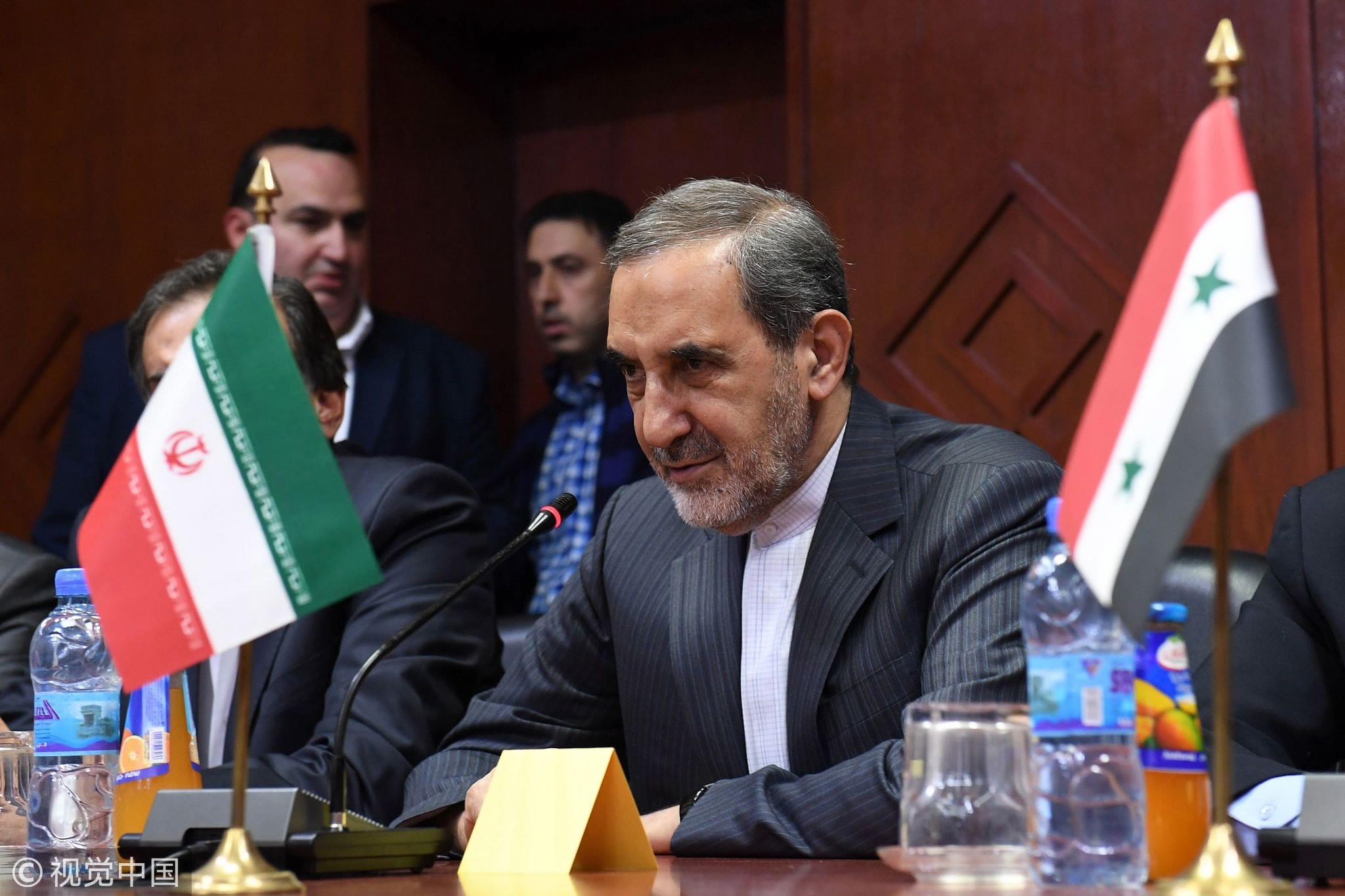
November 7, 2017: Ali Akbar Velayati, chief foreign policy advisor to Iran's supreme leader, attends an agreement signing between the University of Aleppo and Tehran's Islamic Azad University, in the northern Syrian city of Aleppo. /VCG Photo
November 7, 2017: Ali Akbar Velayati, chief foreign policy advisor to Iran's supreme leader, attends an agreement signing between the University of Aleppo and Tehran's Islamic Azad University, in the northern Syrian city of Aleppo. /VCG Photo
As the deadline is fast-approaching, related parties have voiced their own positions on the deal in recent days.
Netanyahu said in a televised address on Monday that he had new "proof" of an Iranian nuclear weapons plan that could be activated at any time. In response, the Iranian Foreign Ministry on Tuesday denounced Netanyahu's nuclear allegations against Iran as a "worthless show."
The IAEA, the United Nations atomic watchdog also responded to Netanyahu's remarks claiming there are no "credible indications" that Iran pursued nuclear weapons after 2009.
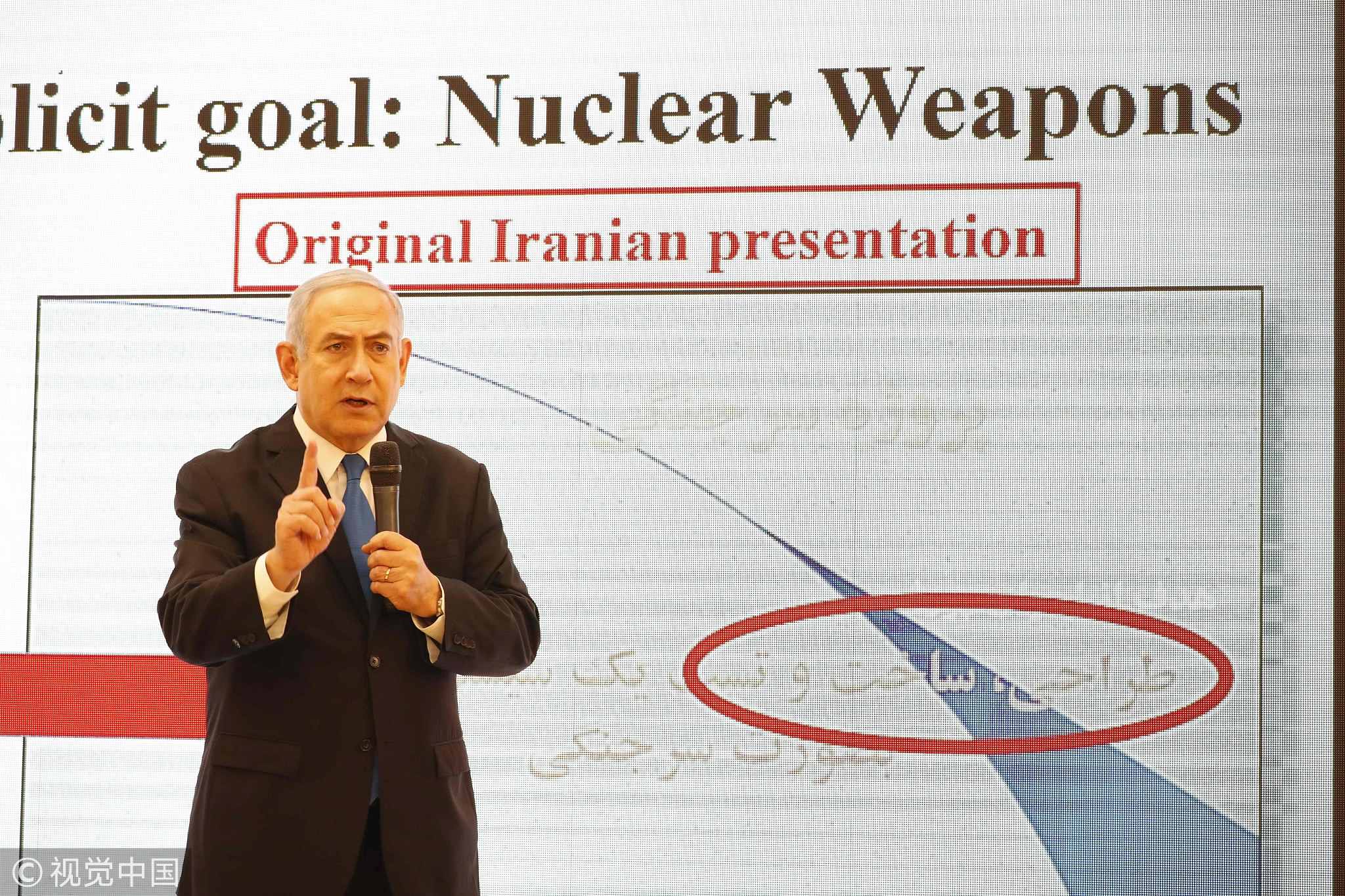
Israeli Prime Minister Benjamin Netanyahu delivers a speech at the defense ministry in Tel Aviv, April 30, 2018. /VCG Photo
Israeli Prime Minister Benjamin Netanyahu delivers a speech at the defense ministry in Tel Aviv, April 30, 2018. /VCG Photo
China, as one of the architects of the agreement, has said many times it should continue to be upheld by all the signatories.
Britain, France and Germany – the three European countries that signed the deal – have repeatedly tried to persuade Trump not to abandon it. They argue that Iran has been abiding by its terms, a position also taken by US intelligence assessments.
French President Emmanuel Macron on Wednesday reiterated his commitment to the accord, but admitted that it needed strengthening.
"I don't know what the US president will decide on May 12," Macron said during a visit to Sydney.
"I just want to say whatever the decision will be, we will have to prepare such a broader negotiation and a broader deal, because I think nobody wants a war in the region, and nobody wants an escalation in terms of tension in the region," he said.
Source(s): AFP
,Reuters