
Opinions
20:23, 31-Jul-2018
Opinion: The US-Iran meeting: Trust building first
Updated
19:33, 03-Aug-2018
 ["china"]
Share






Copied
Editor’s note: Ghanbar Naderi is an Iranian columnist and political commentator. The article reflects the author's opinion, and not necessarily the views of CGTN.
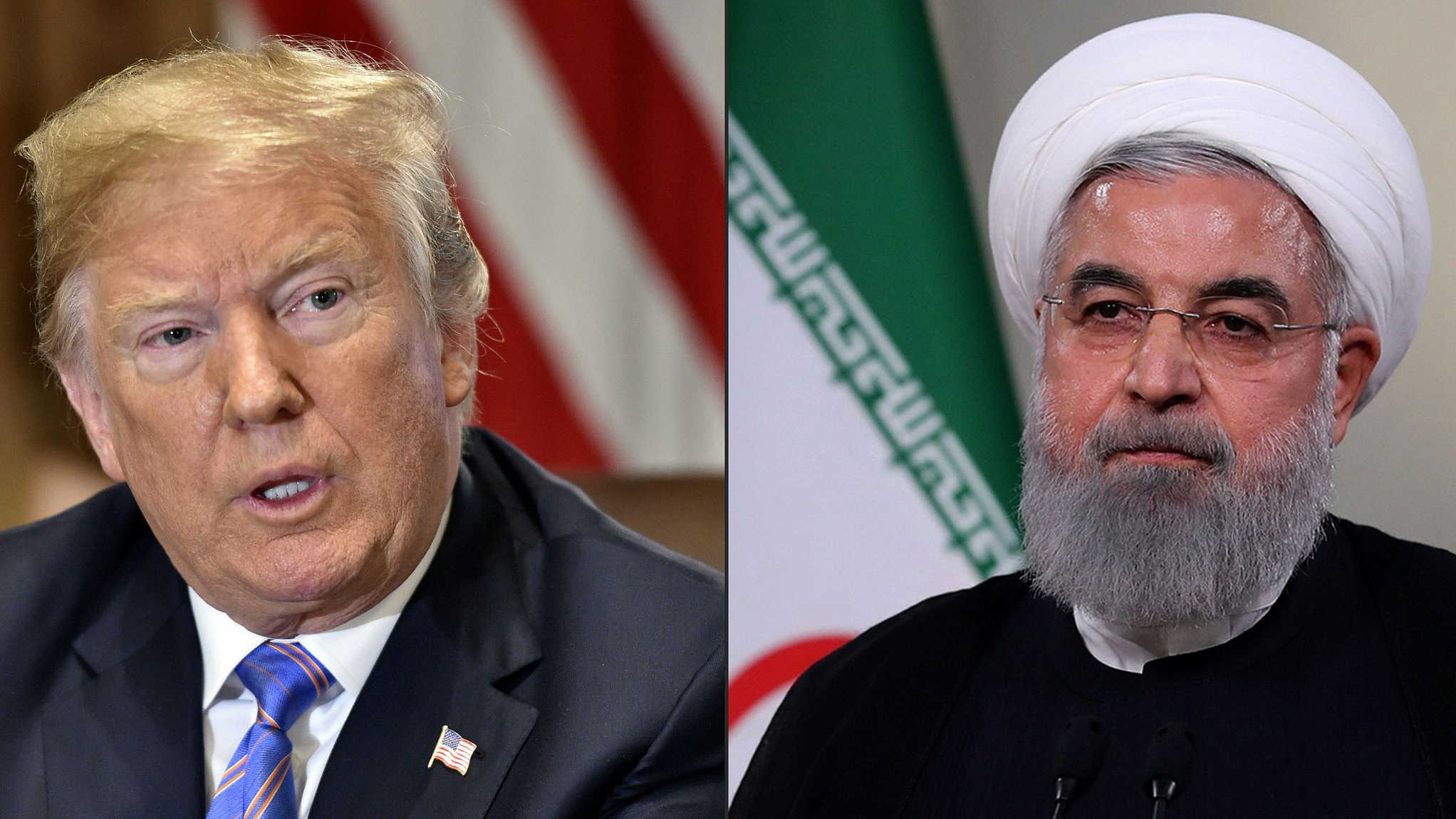
On Monday, July 30, US President Donald Trump said he would meet with Iranian President Hassan Rouhani if the Iranians are willing. He said they could meet at any time – with no preconditions.
His out-of-the-blue comments (carefully designed to repeat the so-called "success" of the Trump-Kim summit in Singapore on June 12) came after a week of conflicting US statements and tweets against Iran, many from Trump himself.
Last week, Trump threatened Iran with “consequences the likes of which few throughout history have ever suffered,” but then said he was willing to make a deal just days later. This was followed with reports, as recently as Monday that the US is preparing to attack Iran.
The political theatrics were then completed by Secretary of State Mike Pompeo who expressed his support for Trump holding talks with Iran, but listed specific conditions for such discussions to occur.
If this sounds confusing, it is.
First things first
The nuclear deal, known as the Joint Comprehensive Plan of Action (JCPOA), is an international accord, signed in 2015 by Iran, China, Russia, Britain, France, Germany and the United States. As promised during his presidential election campaign, Trump voided the agreement in May, which was a big mistake.
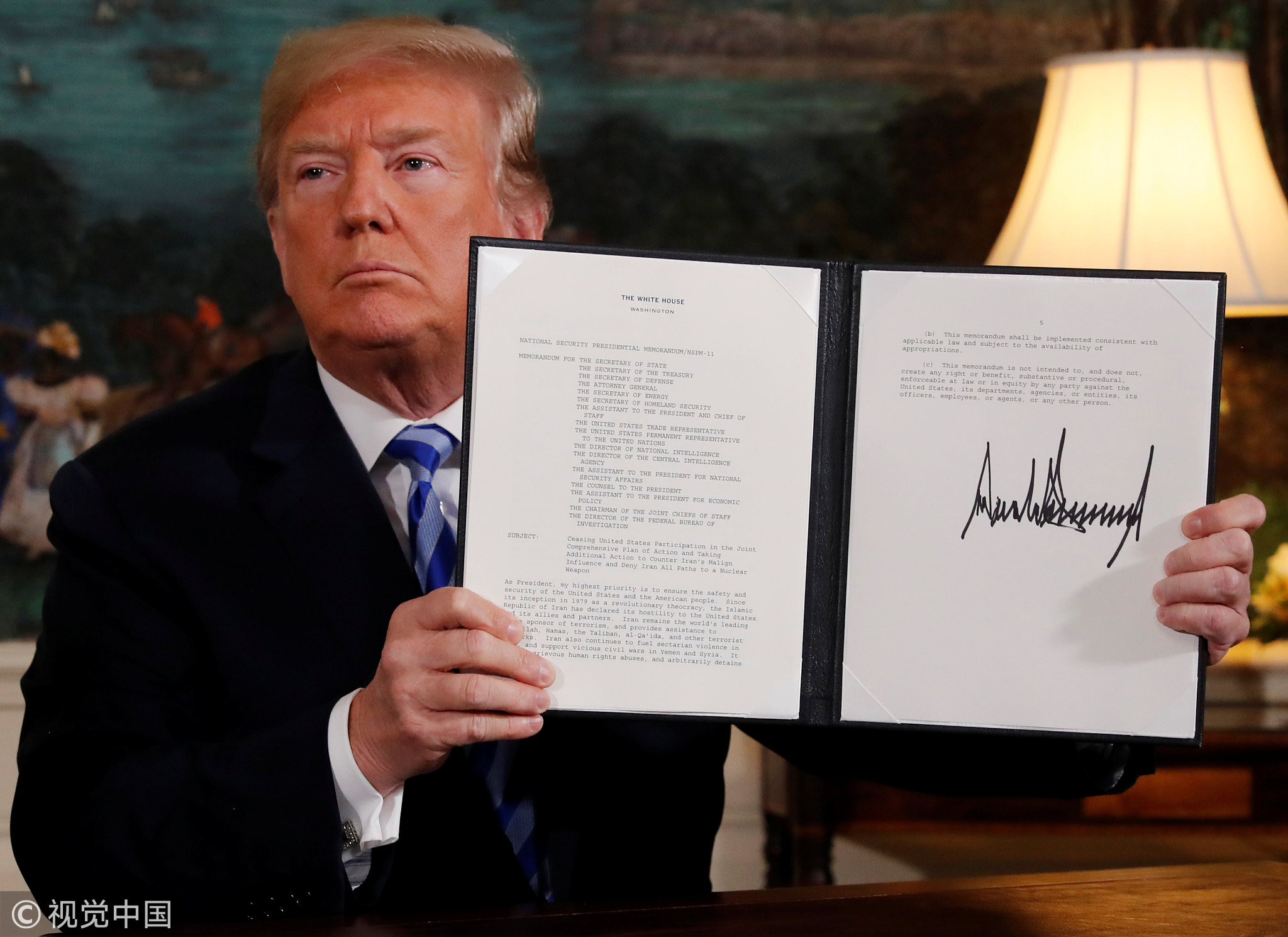
US President Donald Trump displays a presidential memorandum after announcing his intent to withdraw from the JCPOA Iran nuclear agreement in the Diplomatic Room at the White House in Washington, DC, May 8, 2018. /VCG Photo
US President Donald Trump displays a presidential memorandum after announcing his intent to withdraw from the JCPOA Iran nuclear agreement in the Diplomatic Room at the White House in Washington, DC, May 8, 2018. /VCG Photo
The European Union was quick to rebuke Trump for turning his demolition crew on the deal, telling the US president “he does not have the power to unilaterally scrap the international agreement.”
The same goes to Iran. The country does not have the power to disregard the political and security interests of remaining signatories to the deal or unilaterally hold talks with Washington on a new one.
A deal for all seasons
Trump claims the deal initiated by the Obama administration fails to address Iran's ballistic missile program or its alleged support of terror in the Middle East. Trump is correct in that the nuclear deal does not cover missile tests, and Iran does have its hands in wars in Syria and Yemen and political interference in Lebanon.
The agreement also has a sunset clause of 2025. However, the agreement was only designed to stop Iran from "breaking out" and getting a nuke. It was the best deal possible at the time.
Iran is not cheating either. In its numerous reports, the International Atomic Energy Agency has confirmed Tehran is not cheating on the deal. This is also despite claims made by Israeli Prime Minister Benjamin Netanyahu in April that Iran is cheating on the deal by hiding nuclear weapons.
Non-starter
By obscuring fact and fiction, Trump cannot undermine or replace an international deal that took 12 years to negotiate, and then force Tehran to capitulate. It's a non-starter.
Trump’s historic mistake to break the accord provoked many international organizations to adjust to life without the United States as well. Trump has no global partners and the US is politically bankrupt and isolated. The UN outlier is not big enough to face the world single-handedly.
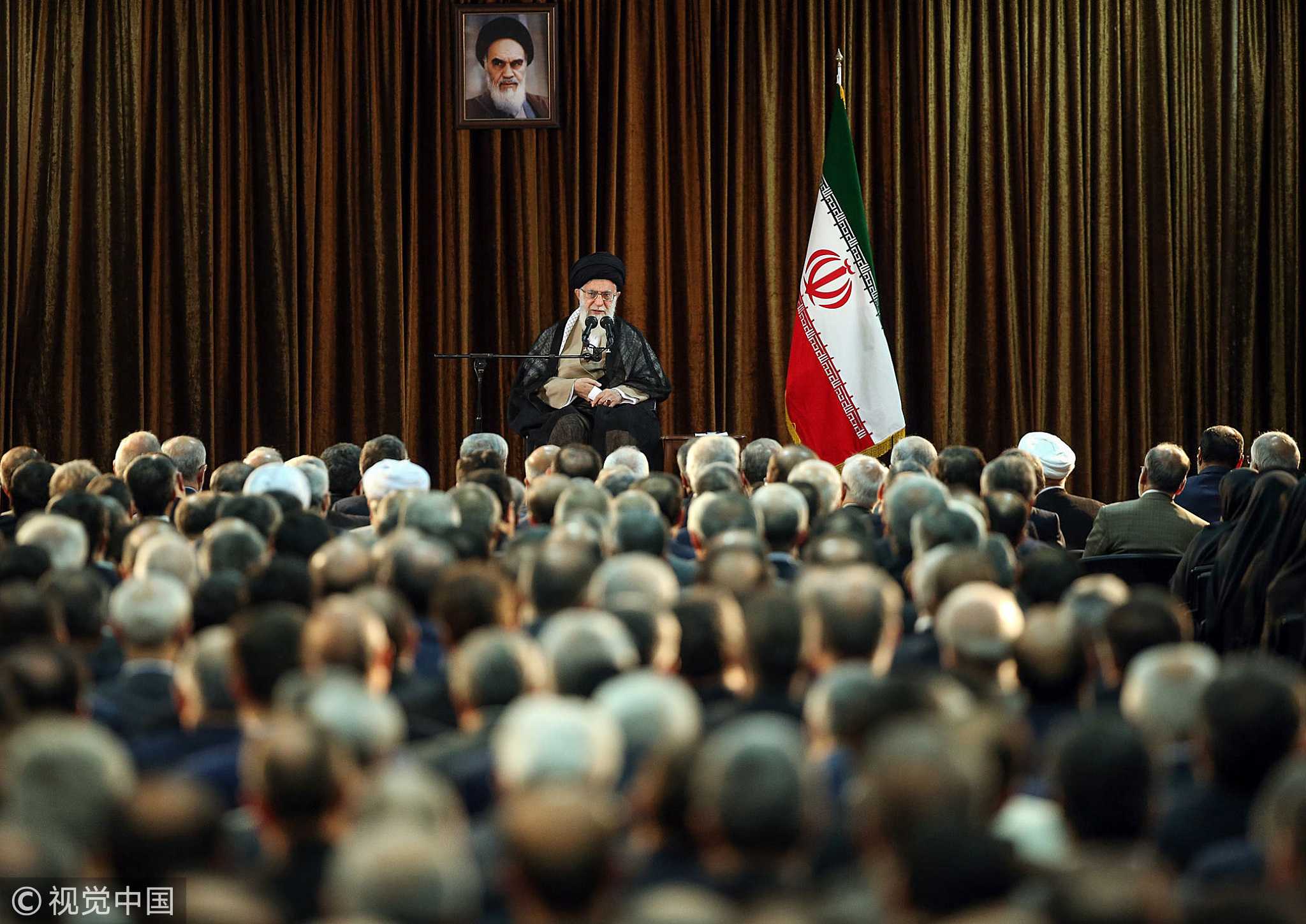
A handout picture provided by the office of Iran's Supreme Leader Ayatollah Ali Khamenei on July 21, 2018, shows him speaking during a meeting with foreign ministry officials in the capital Tehran. /VCG Photo
A handout picture provided by the office of Iran's Supreme Leader Ayatollah Ali Khamenei on July 21, 2018, shows him speaking during a meeting with foreign ministry officials in the capital Tehran. /VCG Photo
On the other hand, the nuclear deal is crucial for global security. As long as Tehran continues to implement its nuclear-related commitments as it is doing so far, China, Russia and the European Union will remain committed. They have moved on anyhow, going ahead as best they can without the US.
There are indications that this is becoming an international trend, in which other nations have similarly responded institutionally to the Trump administration’s disengagement and unilateralism, moving ahead with other international treaties that exclude the United States.
Which isn’t to say one of the world's largest oil producers, with exports worth billions of dollars each year, wouldn’t accept talks; but it won’t follow the DPRK model of protracted US threats and ever-increasing sanctions while the negotiations are ongoing. Treating Iran as a security partner, rather than an enemy, may better serve American, allied and regional security interests.
On the whole, the international civil society eyes a world with less US influence. For any talks (other than the nuclear deal) between somber yet defiant Iran and the US to succeed, Trump would need to rebuild the lost trust first, by ending the current abnormal situation, lifting the economic sanctions and travel ban, providing security guarantees, and returning to the P5+1 nuclear accord.
Whatever the impatience in some parts of Washington, Trump, who shows little understanding of how the real world works, should also stop threatening Rouhani in all-caps tweets and end his “America First” war on diplomacy.