
Opinions
09:46, 27-Jul-2018
The Heat: Why has Pakistan's parliamentary elections votes been disputed?
Updated
09:18, 30-Jul-2018
 ["china"]
Share







Copied
00:51
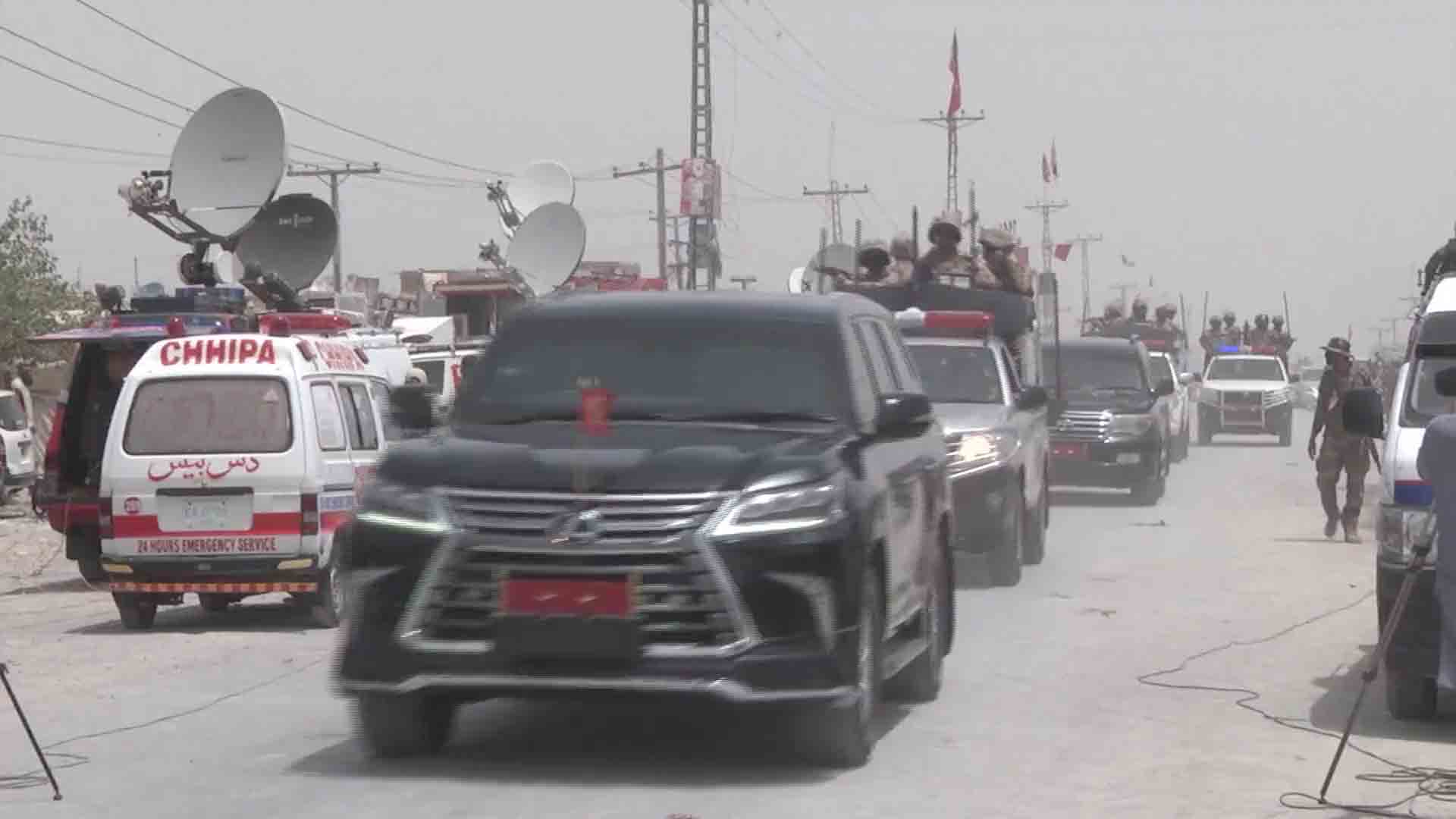
More than 100 million Pakistani voters were registered to participate in Wednesday’s parliamentary elections. In some parts of the country, women were allowed to vote for the first time.
Former cricket star Imran Khan has claimed victory in disputed votes. According to local media, the PTI is leading with 110 seats in the parliament, the PML-N with 68 and the PPP in third place with 39 seats. If those numbers stand, it could result in a hung parliament, since no party is poised to get a clear majority.
The votes are still being tallied, but there are already concerns about the legitimacy of the election result. An independent watchdog, the Human Rights Commission of Pakistan, described the campaign as one of the dirtiest in the country’s history. PML-N’s leader Shehbaz Sharif also openly rejected the result, saying form 45 was not given to their agents and votes were counted in the absence of their pool agents.
Nasir Naveed, the director of Policy and Planning at INDUS, considered the criticism more as a complaint, saying it is questionable that the PML-N did not raise their concerns until the moment they realized they were not able to form a new government.
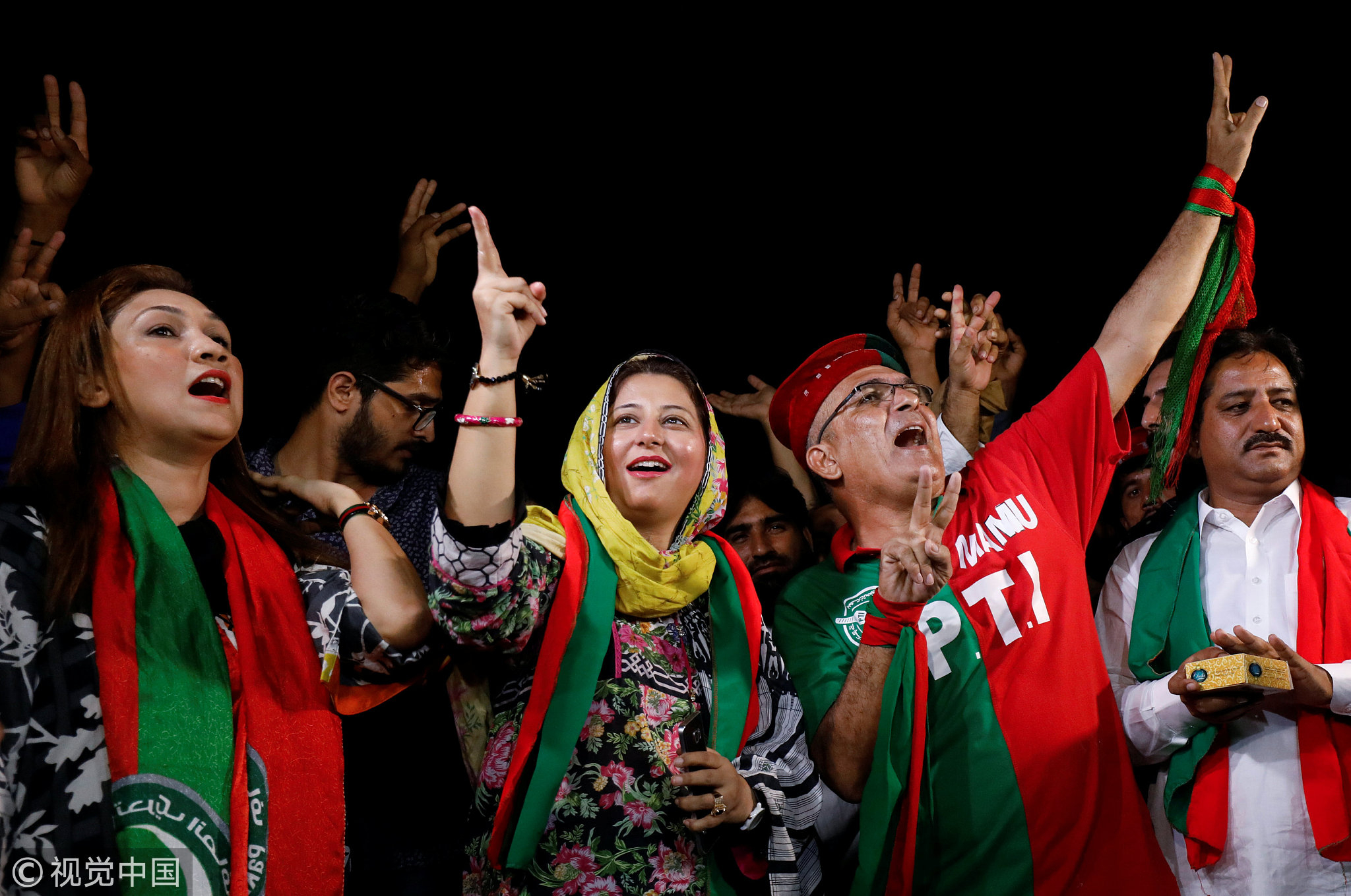
July 26, 2018: Supporters of cricket star-turned-politician Imran Khan, chairman of Pakistan Tehreek-e-Insaf (PTI), gesture to party songs, as they celebrate a day after the general election in Karachi, Pakistan./ VCG Photo
July 26, 2018: Supporters of cricket star-turned-politician Imran Khan, chairman of Pakistan Tehreek-e-Insaf (PTI), gesture to party songs, as they celebrate a day after the general election in Karachi, Pakistan./ VCG Photo
However, Sadanand Dhume, a writer who focuses on India and Pakistan, partly disagreed with Naveed. He said there are two kinds of allegations of rigging: one is the polling agents from opposition parties being thrown out of booths, which perhaps is exaggerated, but the other one is much more important.
“Long before election day, the playing field was tilted in favor of Imran Khan and against Nawaz Sharif,” Dhume said. “So you have this anti-corruption investigation which was a bit of a witch-hunt. You have the fact that Nawaz Sharif and his daughter are languishing in jail right now. That’s the kind of thing that raises questions of legitimacy. That should be the focus as opposed to what happened on Wednesday.”
Akbar Ahmed, a former Pakistani High Commissioner to the UK and Ireland, said on one hand, the irregularities do exist, but despite those disputes, a new dynamic is being played out in Pakistan, that the public is now awakening to their political rights, and they are not going to give up on that easily.
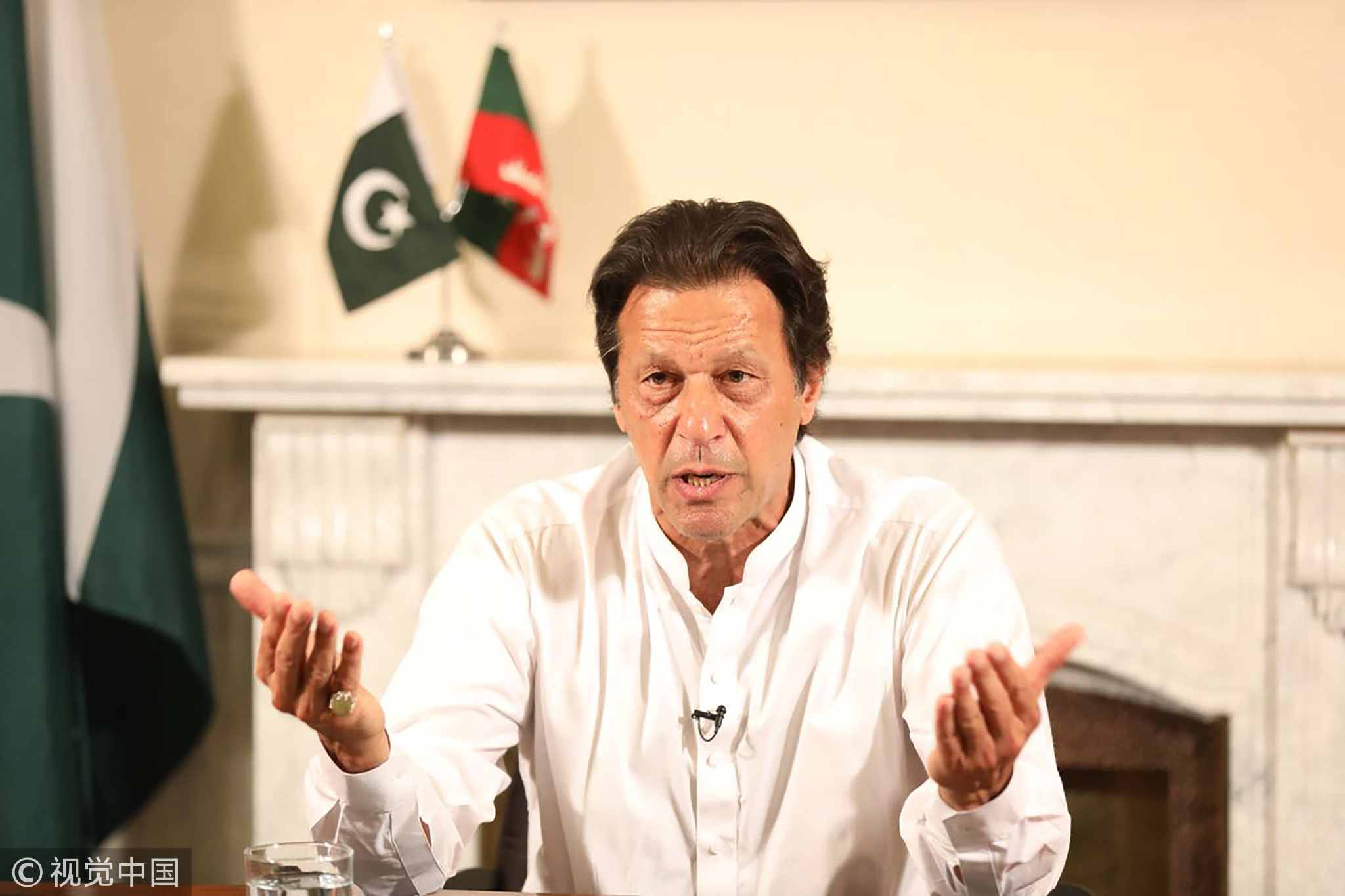
July 26, 2018: In this handout photograph released by political party Pakistan Tehreek-e-Insaf (PTI) , Pakistan's cricketer-turned politician Imran Khan, and head of the Pakistan Tehreek-e-Insaf (Movement for Justice) party, addresses the nation at his residence in Islamabad a day after general election.
July 26, 2018: In this handout photograph released by political party Pakistan Tehreek-e-Insaf (PTI) , Pakistan's cricketer-turned politician Imran Khan, and head of the Pakistan Tehreek-e-Insaf (Movement for Justice) party, addresses the nation at his residence in Islamabad a day after general election.
“This is a country which is oscillated between military and a form of democracy, and here it is at a juncture in its history when it has to decide,” Ahmed said. “In spite of all the violence, in spite of all the hurdles, Pakistanis are committed to going ahead with the democratic process.”
The new prime minister will have to deal with a lot of problems such as Pakistan’s messy economy and rising corruption. Another important issue is Pakistan’s relationship with India.
Dhume said former Prime Minister Nawaz Sharif might be the Politician who stands most strongly for improving the relationship with India through trade, but Imran Khan might not have the same attitude when it comes to this issue, which might end the chill between the two countries.
“Imran Khan is not necessarily hostile to India but he is seen very much as a creature of the Pakistan army,” Dhume said. “To the extent that he is beholden to the army for having helped him get into power, it seems very unlikely that he is going to either challenge the central position of the army in Pakistan’s policy, or challenge its stranglehold on policies towards India and Afghanistan.”
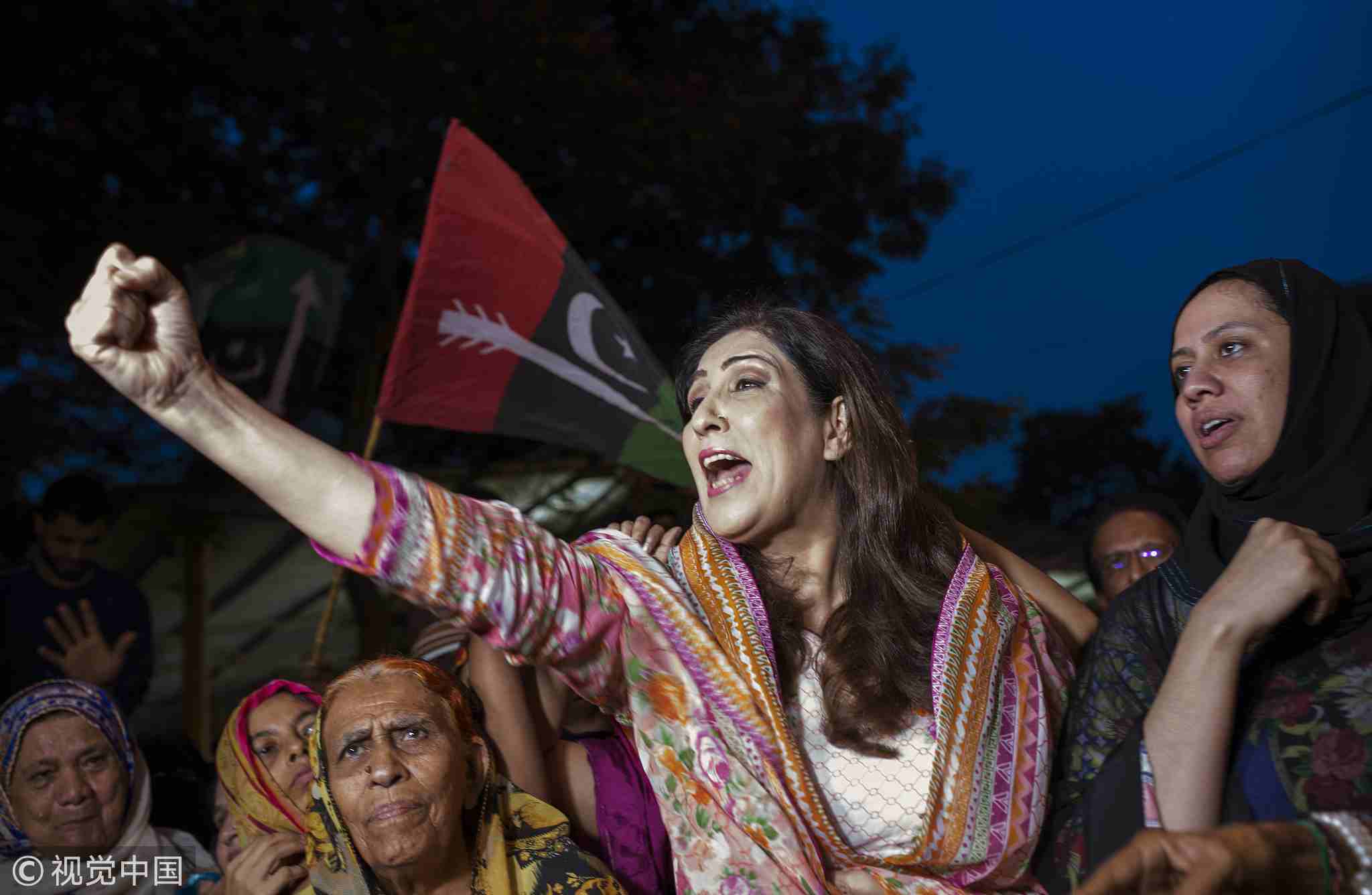
July 26, 2018: Supporters of the Pakistan Peoples Party (PPP) protest on a street in Karachi, Pakistan, on Thursday./ VCG Photo
July 26, 2018: Supporters of the Pakistan Peoples Party (PPP) protest on a street in Karachi, Pakistan, on Thursday./ VCG Photo
The PTI will be in a position to negotiate a coalition government, but Kamran Bokhari, an expert on the geopolitics of the Middle East and South Asia, said it is never a good thing to have such a government given the issues the country faces right now. The leading party is likely to be at mercy of junior partners, making things more difficult to tackle.
“They’re always demanding things and when they don’t get their way, they twist your arm,” Bokhari said. “But in this case, it’s far more than that. There has been an establishment of support for the PTI. Now we’ll see Imran Khan and his PIT run into problems with the same establishment once they get down to governance and policy-making.”
The Heat with Anand Naidoo is a 30-minute political talk show on CGTN. It airs weekdays at 7:00 a.m. BJT and 7:00 p.m. Eastern in the United States.