02:54
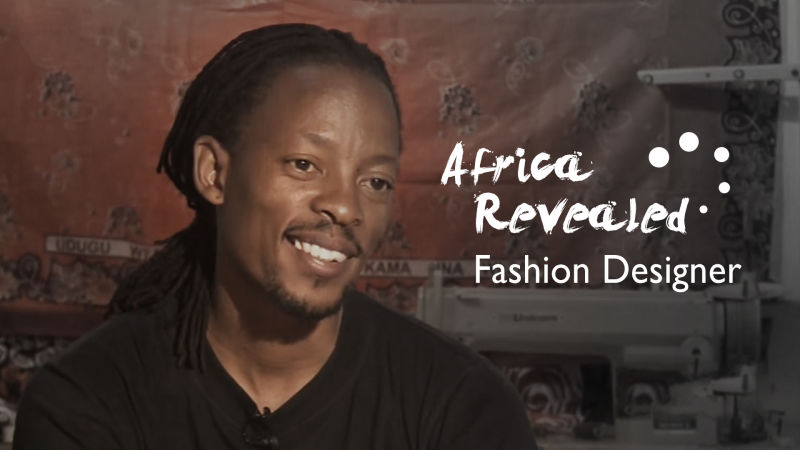
When talking about Kenya's fashion industry, one name cannot be ignored: John Kaveke.
Kenya's leading fashion designer has brought his stunning designs to numerous local and international platforms, and had his models strutting on prestigious catwalks from London to New York, stealing the hearts of his myriad followers.
Born in Mombasa and raised in Nairobi, Kaveke revealed that he was "quiet and artsy" when he was a boy. With no idea about fashion, he drew a lot instead.
Everything began with a question he asked himself when he was still in high school - if there was something where you could mix clothes and art to voice your beliefs. Kaveke needed to know and soon after discovering fashion, he aimed to make it his career for life.
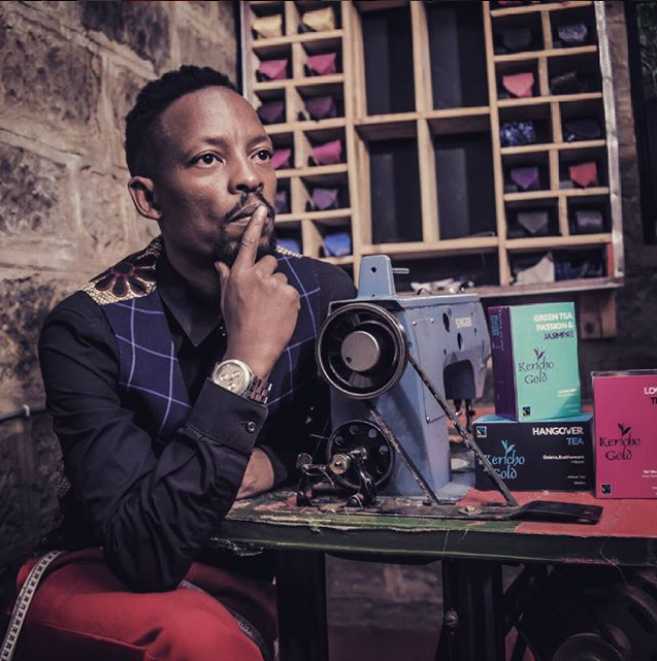
John Kaveke /Photo via Instagram @johnkaveke
John Kaveke /Photo via Instagram @johnkaveke
Starting in a tiny area in the local market, Kaveke's first order was to make dancing clothes for nursery school kids. A small job, but it kick-started his journey.
He trained at the Woodgrove Fashion College in Nairobi, Kenya and then at the Instituto Europeo di Mode in Barcelona, Spain, and continued to learn by working for various labels after graduation.
Kaveke currently lives in Nairobi and manages his own Kenya-based brand - which uses his surname - and has established himself as a must watch men's designer in Africa and beyond.
Vibrant heritage-rooted designs
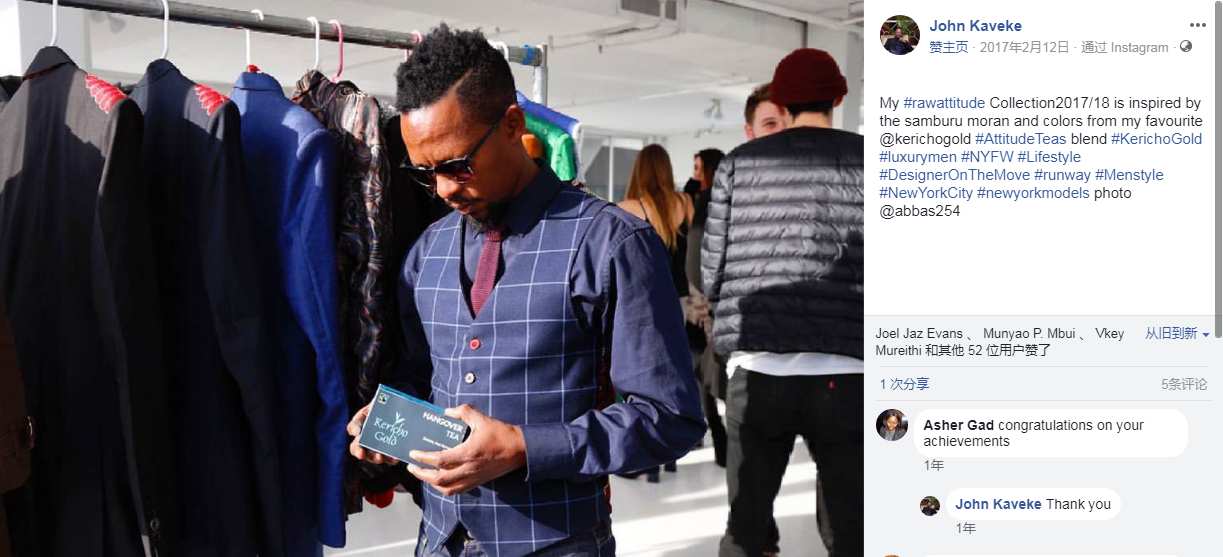
Screenshot of Kaveke's Instagram shows that he brings his "Raw Attitude" collection 2017/18 to the New York Fashion Week.
Screenshot of Kaveke's Instagram shows that he brings his "Raw Attitude" collection 2017/18 to the New York Fashion Week.
Kaveke launched his own "KAVEKE" fashion label in 1991 and focused on creating bespoke men's fashion, and this evolved over time to become a remarkable mix of African fashion elements.
Last year's New York Fashion Week invited Kaveke to showcase his latest menswear collection, dubbed "Raw Attitude". It was inspired by Samburu warriors, the Nilotic groups of north-central Kenya who adorn themselves with necklaces, bracelets, and anklets, and Kaveke's favorite drinks, Kericho Gold Attitude Teas - both of which are deeply rooted in Kenya.
The collection sees Kaveke sticking to the self-imposed task of creating a style that is both classic and contemporary, based on using heritage to develop original looks - and knows how to transition from the hills to the city.
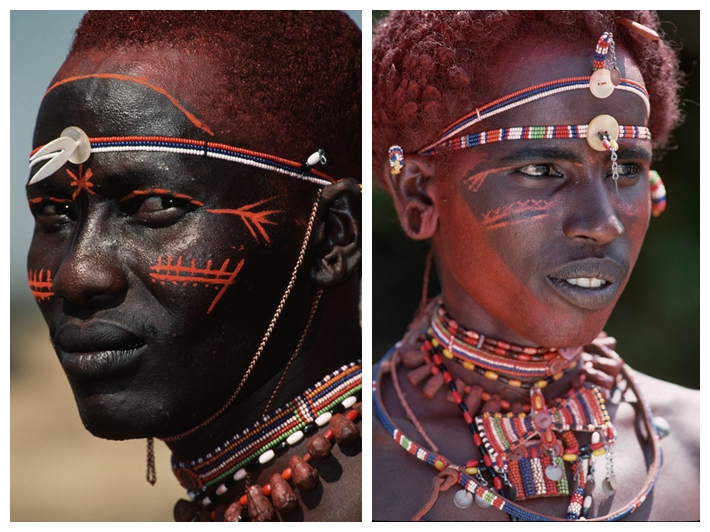
Photos show young Samburu warriors living in north-central Kenya adorn themselves with necklaces, bracelets, and anklets. /VCG Photo
Photos show young Samburu warriors living in north-central Kenya adorn themselves with necklaces, bracelets, and anklets. /VCG Photo
The color scheme is heavily influenced by the distinct Samburu print and the colors of Kericho Gold Attitude Teas, and his rich accessories are reminiscent of the vibrant beaded jewelry worn by the Samburu people.
In addition, with almost two decades of expertise in the fashion industry, Kaveke has developed his own philosophy about menswear, which he believes must look good worn and hanged.
Thus he tends to use strong lining to make his pieces stand out. "There is a life inside the lining, there is a life outside the jacket," Kaveke explained in a previous interview with CGTN.
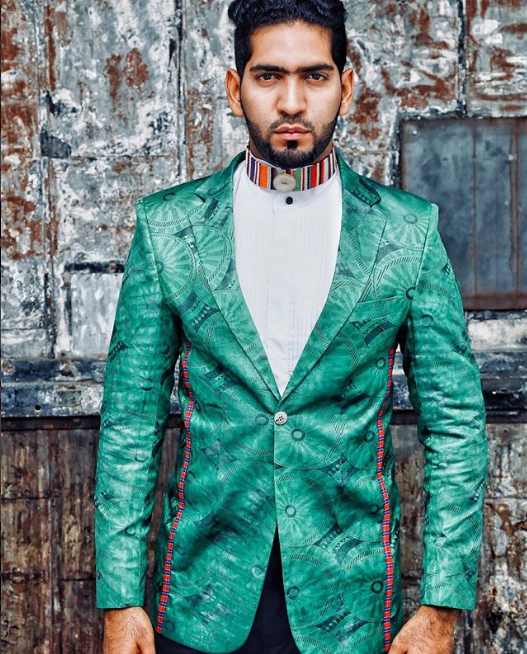
Model Chef Ali wears Kaveke's "Raw Attitude" design, a Samburu Tuxedo with "Kericho Gold" elements. /Photo via Instagram @johnkaveke
Model Chef Ali wears Kaveke's "Raw Attitude" design, a Samburu Tuxedo with "Kericho Gold" elements. /Photo via Instagram @johnkaveke
Well known for his contemporary style, Kaveke's designs are a bold but delicate fusion of African and European culture, as seen in his selection of beadwork and his choice of materials, which include leather, denim, suede, wool, cotton, linen, silk and even recycled fabrics.
The designer is free-spirited and passionate about illustrating individualism, strength and artistry in his creations, and he does this by highlighting his works with bright colors and exotic prints.
Redefining Nairobi fashion with a 'raw attitude'
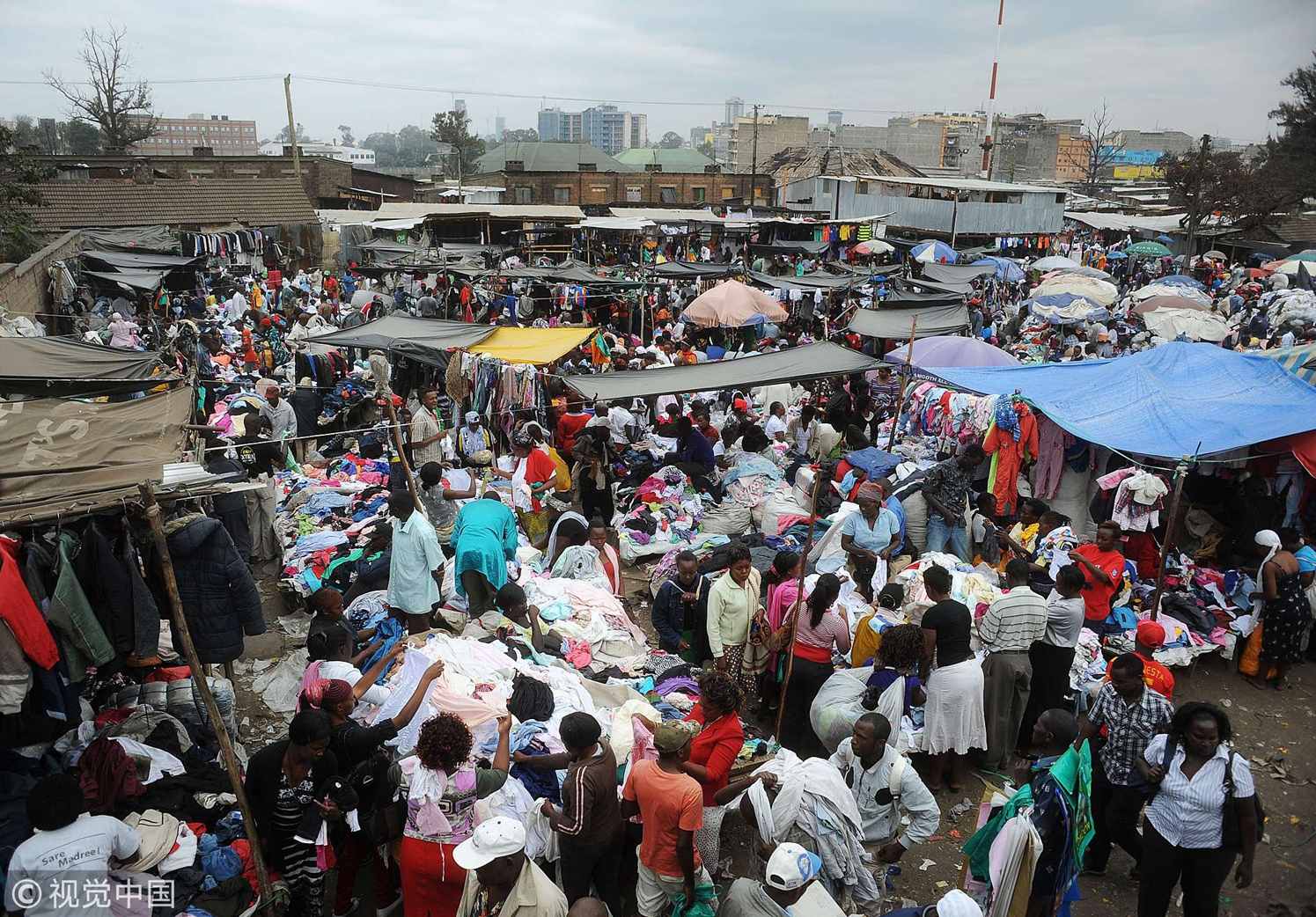
People walk around Gikomba Market, East Africa's biggest secondhand clothing market, on July 10, 2014 in Nairobi, Kenya. /VCG Photo
People walk around Gikomba Market, East Africa's biggest secondhand clothing market, on July 10, 2014 in Nairobi, Kenya. /VCG Photo
At the forefront of fashion design in Kenya, John Kaveke has seen the tremendous industrial change that has taken place in the capital city Nairobi over the past decade, and is still fighting to utilize these revolutionary trends in a wider range.
As in many African States, secondhand clothing that is locally referred to in Kenya as "mitumba", stands out amongst the influences of Nairobi fashion. A conversation about fashion in Africa cannot happen without at least one reference to mitumba.
While many welcome it for its affordability and accessibility, mitumba is also often blamed for preventing the rise of a vibrant local textile.
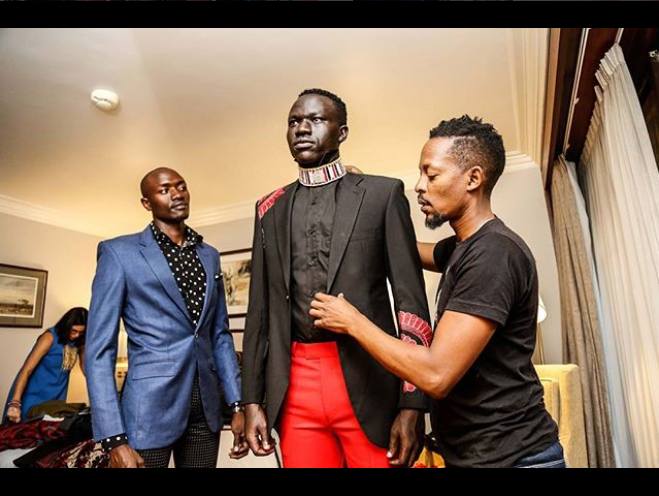
Kaveke prepares for the Mochez Model Fashion Show behind the scene. /Photo via Instagram @johnkaveke
Kaveke prepares for the Mochez Model Fashion Show behind the scene. /Photo via Instagram @johnkaveke
With these cheap fashionable secondhand clothes so easily available, many don't even consider wearing designs created by local fashion designers like Kaveke.
This means that while his designs might be famous on international runways, locally, one of his biggest competitors is mitumba.
The biggest problem is that the younger generations long for the sort of sophistication and modernity promised in the fancy pages of European and American fashion magazines, and many will continue turning to the secondhand clothing to try and fulfill these stylish desires as quickly and cheaply as possible.
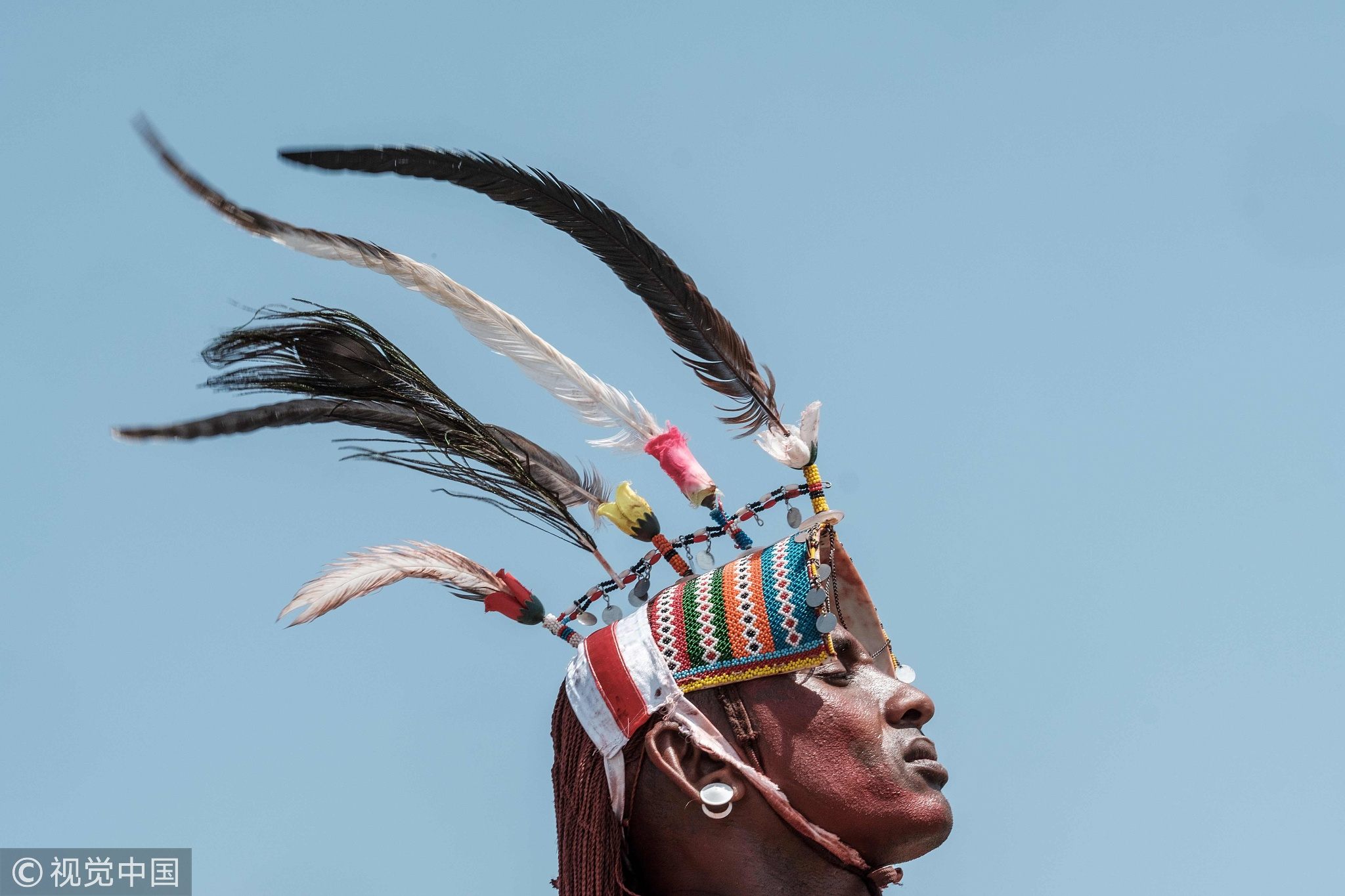
A man of the Samburu tribe performs during the 11th Marsabit Lake Turkana Culture Festival in Loiyangalani, northern Kenya, on June 28, 2018. /VCG Photo
A man of the Samburu tribe performs during the 11th Marsabit Lake Turkana Culture Festival in Loiyangalani, northern Kenya, on June 28, 2018. /VCG Photo
Aware of these challenges, John Kaveke realizes his designs have to be a cut above the rest - that his clothes must use "raw" and unique fabrics to make high-quality stuff with exclusive designs that communicate feelings, traditions, and cultures via various colors, patterns, and symbols - and continue with developing a symbol of Kenyan identity.
As he put it, "I still want people to experience the value of the brand, and the value of the brand is to give people exclusive ideas that, probably, you would feel special wearing it."
The designer is embracing the originality and attitudes about fashion that still make up the core of his brand: Create the values necessary to make your unique voice.

 ["china"]