
Business
22:18, 09-May-2018
Is the home price boom an opportunity or a bubble?
 ["china"]
Share







Copied
05:13
It may be getting more difficult for first time buyers to purchase their homes as prices are outpacing incomes to some extent. That’s according to May's Global House Price Index released by the International Monetary Fund (IMF).
The IMF said that real home prices increased in a number of countries over the past year. According to global real estate consultancy Knight Frank, Germany was one of those countries, mainly thanks to a strong foundation for capital flowing into commercial real estate provided by the country’s robust economic growth and political stability.
Consultancy Knight Frank says real estate prices in Berlin even went up 20.5 percent on average in 2017, making the city become one of the top 10 cities with the biggest property price increases since last year.
Some experts see booming home prices as a good trend for the local economy.
“I know Berlin very well. I was here even before re-unification. There were only the drop-outs from society, which is a completely different atmosphere. So I feel the change we are having nowadays is a good one,” said Henning Kraak who works at Grey2Grey properties.
01:32
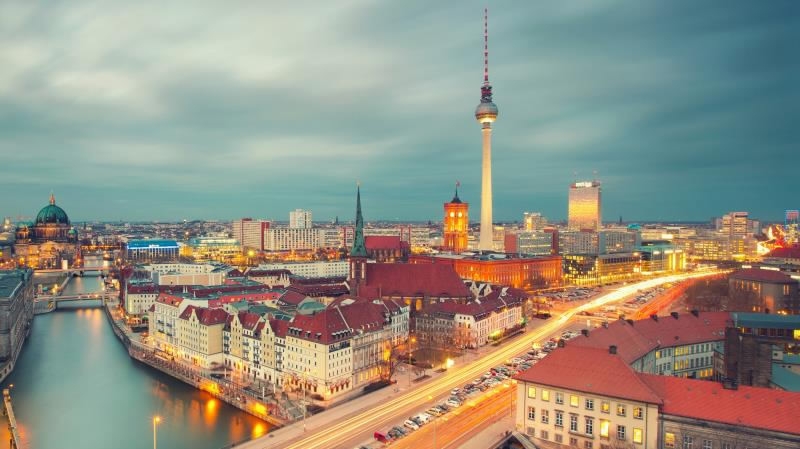
Following Berlin, Turkey's Izmir secured the second place in terms of property price increases, with an over 18 percent jump. Reykjavík, Vancouver, Budapest, China's Hong Kong SAR and Rotterdam are among the top 10 cities which saw around a 15-percent increase respectively.
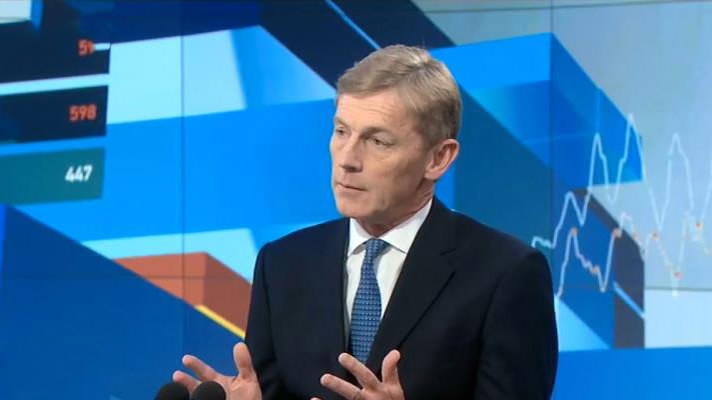
Alistair Elliott, Senior Partner and Group Chairman at Knight Frank, said that real estate is a very mixed picture. But he also emphasized that property investment has been a good choice in the past ten years.
“Real estate is a very mixed picture. First of all, medium-to-long-term home owners are really stuck to the key cites in the world. Whatever happened in the last 10 years, data suggest in the long term, it’s a very good deal. I would stick with them,” he said, adding the price surge was not a bubble by now. “Bubbles are very difficult things to predict. Let’s be honest, 99 percent of people miss them. Bubbles are too early to call.”
His opinion was supported by Achim Amann, who works at Black Label Properties.
“When you look at the difference between the rental and the property prices, there is a huge discrepancy. That is something the central bank is looking at. But people who buy properties usually have 10 to 15 or even 20 percent deposit and they go with an interest rate between one to three percent, a long-term fixed interest rate,” he explained.
However, Alistair Elliott called for governments’ carefulness at the same time as the IMF warned policymakers should remain vigilant in the face of rising home prices. “Governments have to be incredibly cautious. If they over interfere, cool it over tax, they put off anybody buying and put off the developers building,” he said.
The future direction of properties could be the private rental market, logistic properties or co-working. Maybe the potential development was another reason that the momentum of rising home prices will continue.