
Business
15:36, 29-May-2018
Italy’s political turmoil gives rise to weaker euro, bonds and stocks in Europe
 ["europe"]
Share







Copied
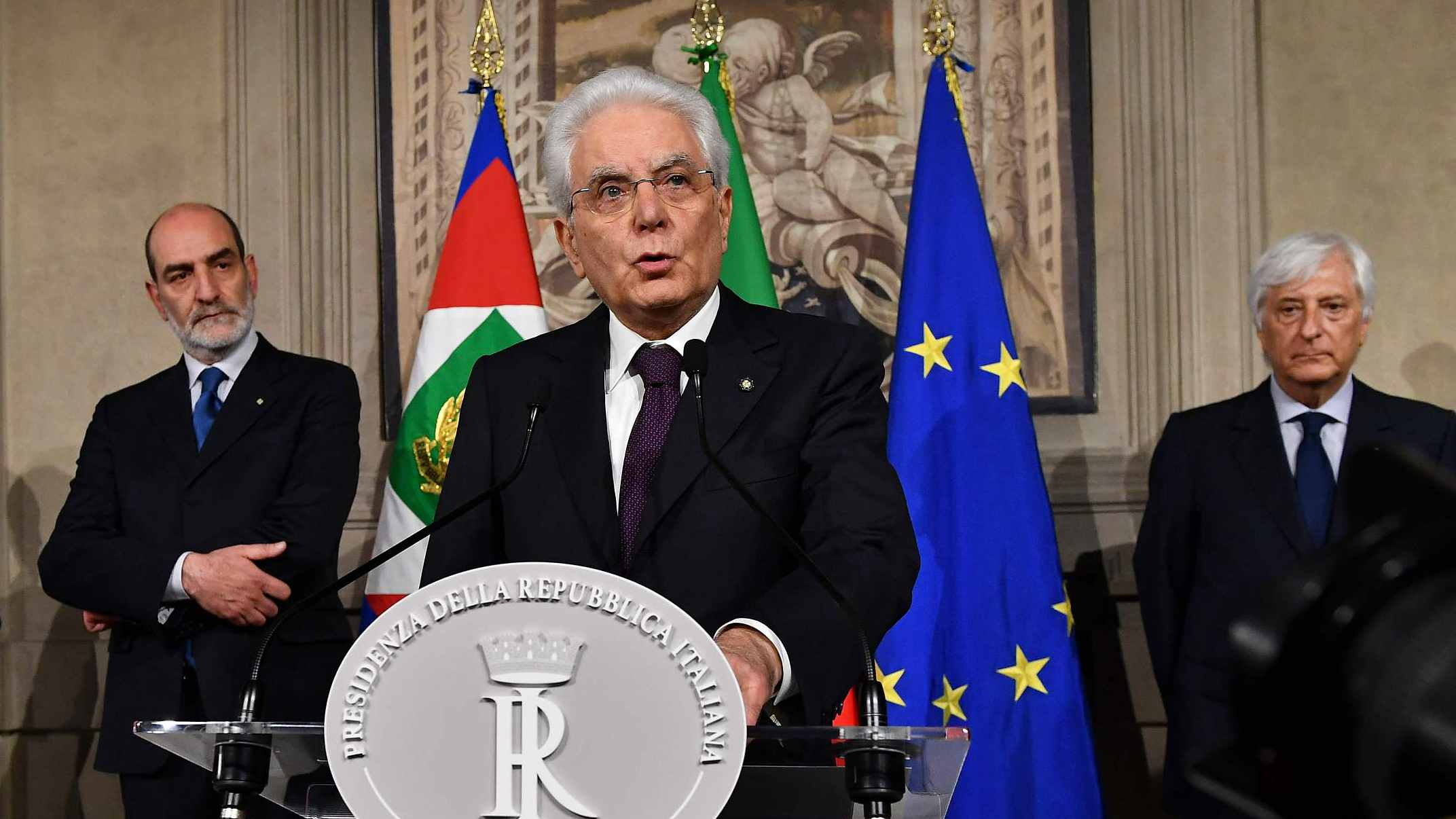
The euro continued to fall Tuesday in the wake of Italy’s abortive coalition and unstable political climate, as the caretaker prime minister ended talks on forming a government without unveiling his cabinet line-up, following the collapse of a populist coalition's bid to govern.
As a euro defender who attaches great importance to Italy’s membership in the eurozone, President Sergio Mattarella indicated that he would not support a person who might take Italy away from the EU's monetary union. Therefore, he refused to accept Paolo Savona, a Euroskeptic, as the new finance minister on Sunday. Acknowledging that the effort to form a new cabinet was in vain, the newly chosen Prime Minister Giuseppe Conte quit. On Monday officially Mattarella asked Carlo Cottarelli, a former IMF official, to form a new government,
Carlo Cottarelli had promised to deliver the list "as soon as possible" in a bid to end the chaos that has raised fears for the stability of the eurozone. But the economist discreetly left the presidential palace after a brief meeting with Mattarella on Tuesday afternoon without making any statement.
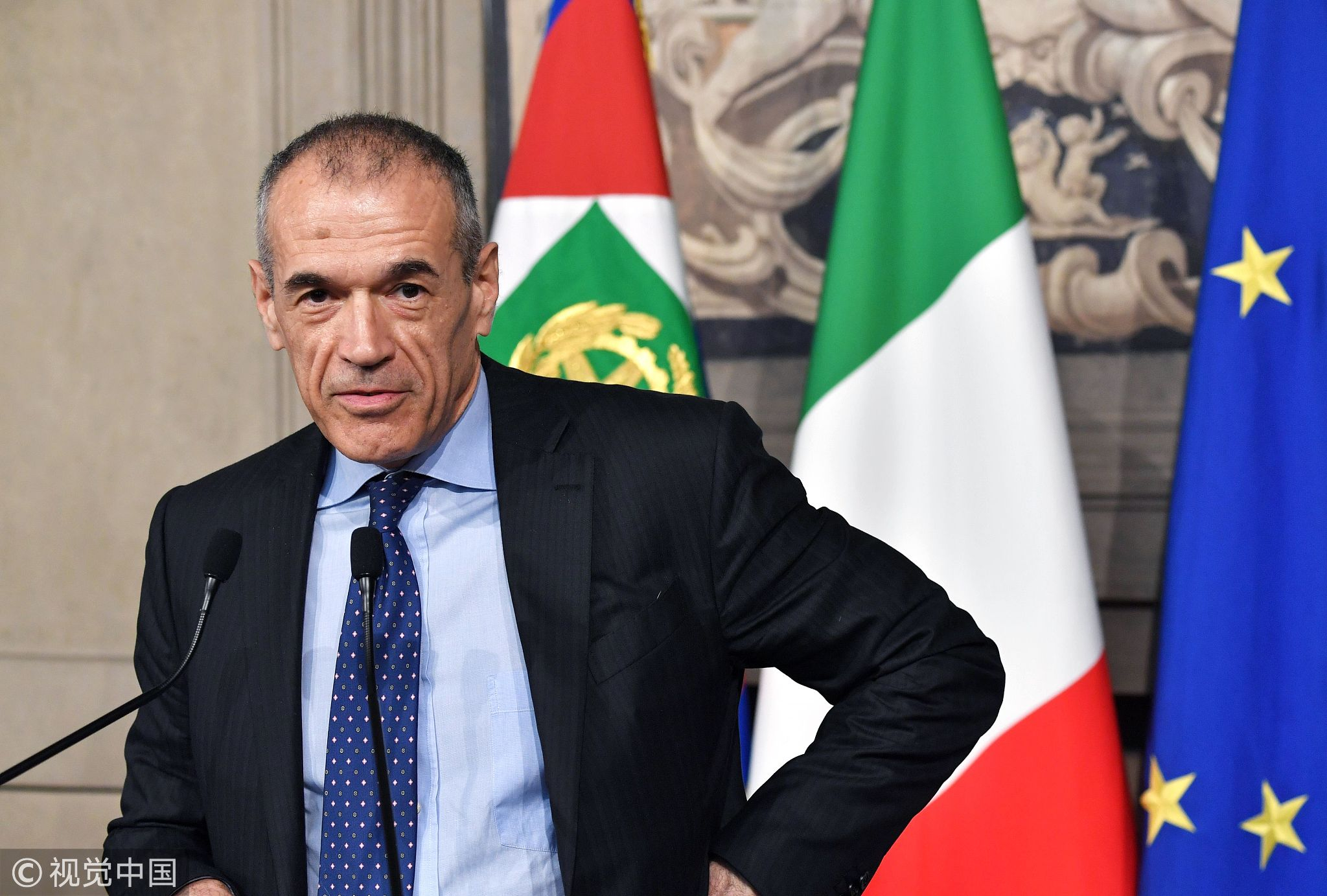
Carlo Cottarelli addresses a press conference after Italian president gave him mandate to form a government, at the Qurinale presidential palace, in Rome, May 28, 2018./ VCG Photo
Carlo Cottarelli addresses a press conference after Italian president gave him mandate to form a government, at the Qurinale presidential palace, in Rome, May 28, 2018./ VCG Photo
Actually, the euro, stocks and bonds picked up at first on Monday after Mattarella rejected Savona's nomination, but fears remain among investors who are losing confidence about the current market. The gap between Italian and German 10-year bonds, a key measure of risk, soared to 235 points, expanding to its highest in over four years.
New elections are now considered the most likely outcome of the political saga, sparked by an inconclusive poll in March.
Last Friday, the euro fell to its lowest level against the dollar since last November. Goldman Sachs warned that if Italy’s political turmoil evolves into a big event with systematic risks, the euro may fall 500 points.
Italy's financial market had already shown its nervousness when Matarella appointed Giuseppe Conte as Prime Minister last Wednesday. Italian government bonds have been sold all the way, pushing up the cost of government borrowing.
There is no doubt that the chaotic situation in Italy stands as a tough blow for other countries in the eurozone. Stock markets in Paris and Frankfurt also tumbled.