
Opinions
08:54, 26-Apr-2018
Opinion: China’s progress in intellectual property protection
 ["china"]
Share







Copied

As Justice Oliver Wendell Holmes once said, a page of history is worth a volume of logic. When we consider China’s efforts in protecting intellectual property (IP), which has been questioned recently by the United States Trade Representative Office under Section 301 investigation concerning China’s law and policy related to technology, IP and innovation, the starting point can be nothing but history.
China has a long history of civilization at over 5000 years; however, China didn't have any IP laws or regulations around 40 years ago. Over the past 30 years, China has made a significant and profound transformation of its IP landscape. During that time, a number of IP basic laws including trademark law (1982), patent law (1984) and copyright law (1990) were adopted.
In the 1990s, significant resources were invested into the enforcement of such laws and regulations, all of which were reviewed for their consistency with international norms and practices when China joined the World Trade Organization (WTO) in 2001.
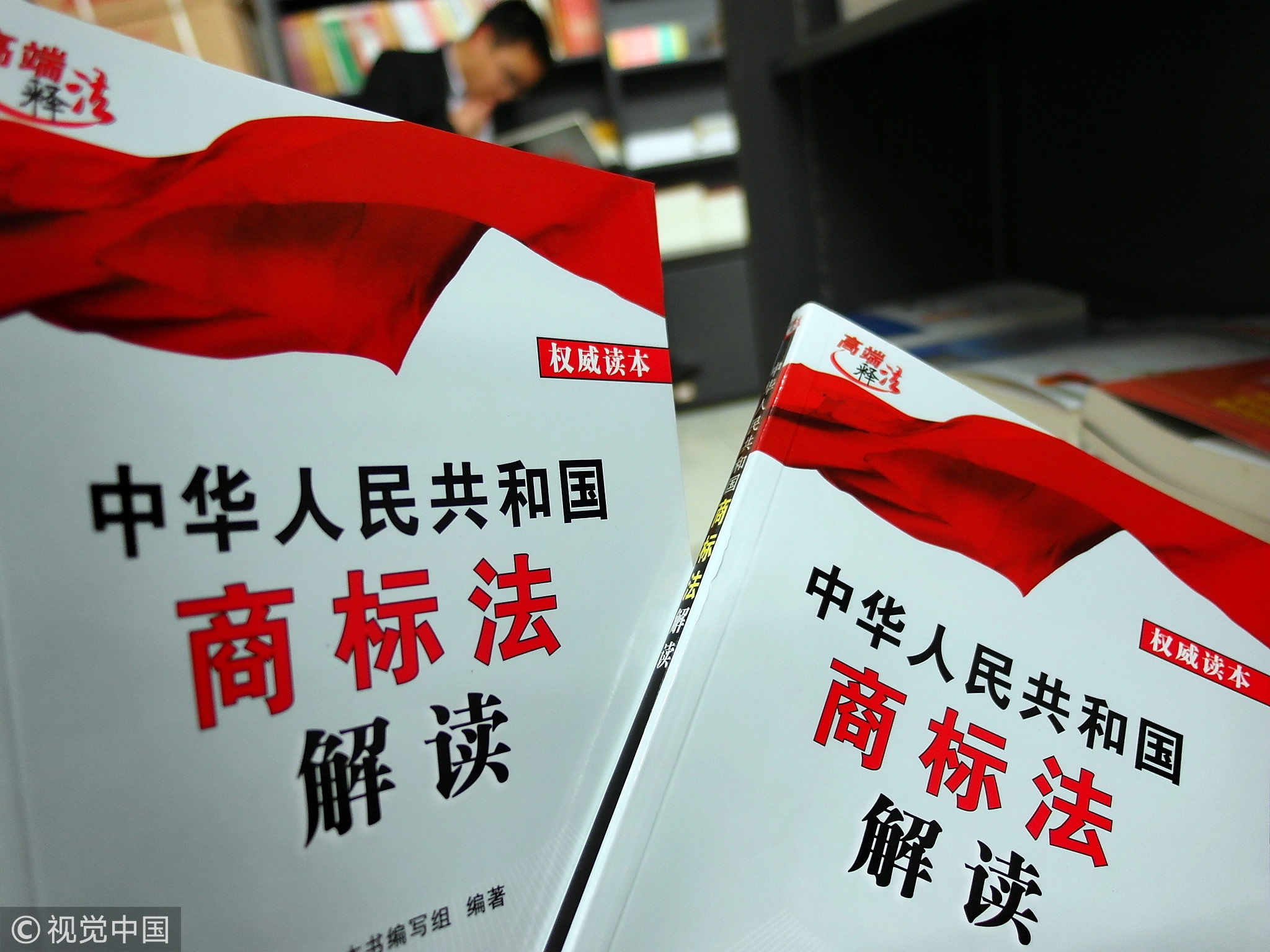
Apr. 30, 2014: Texts of the newly amended Trademark Law./ VCG Photo
Apr. 30, 2014: Texts of the newly amended Trademark Law./ VCG Photo
During the last decade, China’s patent, copyright, trademark and antitrust laws have been amended to meet the increasing demands of IP protection from both domestic and foreign businesses.
IP rights, as one category of private rights, have been codified in the General Provisions of Civil Law of 2017. It is probably fair to say that no other country in the world has paid more attention to the buildup and strengthening of IP protection than China has done in such a short period of time.
Today, IP law enforcement in China has become much more efficient and effective. In 2017, over 237,000 IP lawsuits were filed before the courts of different levels across the country, an increase of 47 percent compared with the previous year. Thousands of such cases involved foreign parties, and a majority of them are from the United States. This clearly shows that the demand for stronger IP protection is from both domestic and foreign companies operating in China.
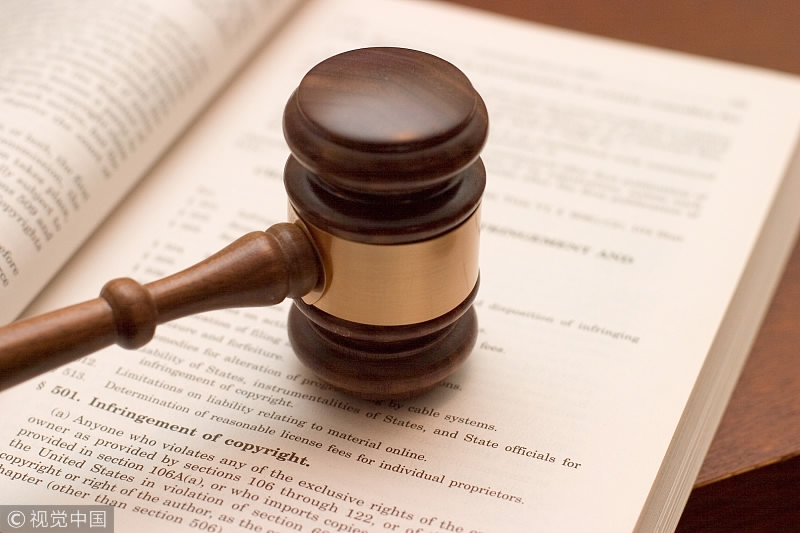
Copyright Infringement II./ VCG Photo
Copyright Infringement II./ VCG Photo
Meanwhile, China has launched a number of reforms to respond to these new challenges. For example, the country established specialized IP courts in Beijing, Shanghai and Guangzhou in 2014 as well as specialized IP tribunals in 15 other cities a few months ago. Beijing’s IP court has also piloted a guiding case system, which is similar to the stare decisis in common law jurisdictions.
Evidence rules and damages rules are also being considered for reforms in order to provide more convenience and power to the IP owners. The Chinese courts continue to follow the rule of law and offer equal protection to both domestic and foreign parties. One report shows that foreign IP owners can have around a 80-percent victory rate before some IP courts in China, which is higher than the average rate for IP cases.
The Chinese government encourages R&D, innovation and technology collaboration, but never intervenes in any cross-border technology transfers among private parties. As a member of the WTO, China is committed to complying with all of its obligations. The accusation of China “stealing technology” or forcing tech transfers has no basis. The findings of Section 301 investigation made by the USTR lack evidence and analysis based on reliable methodology.
Intellectual property./ VCG Photo
Intellectual property./ VCG Photo
The IP regime in the country has benefited from bilateral and multilateral dialogues and cooperation between China and other countries in the past 30 years. China continues to have an IP working group and dialogue mechanisms with both the US and the EU to facilitate the communication of any issues concerning all stakeholders.
Any unilateral actions may only trigger more friction and are not helpful for resolving these issues. Whatever happens, China will keep the opening-up policy and innovation-driven strategy, continue to address any emerging IP challenges and strive to maintain a business-friendly environment for all enterprises.
(Jin Haijun is a professor at Renmin University of China Law School. The article reflects the author's opinion, and not necessarily the views of CGTN.)