
Opinions
10:30, 14-Sep-2018
The Heat: CPEC is a mutual beneficial deal for Pakistan and China
Updated
10:07, 17-Sep-2018
 ["china"]
Share







Copied
With poverty and unemployment on the rise, Pakistan is dealing with economic turmoil. Running out of reserves, the country faces the possibility of asking for another IMF bailout. Pakistan has turned to the IMF 12 times since the late 1980s.
Shuja Nawaz, a distinguished fellow at the Atlantic Council, suggested that before going to foreign financial sources, the Pakistan government should first unleash its domestic development potential by leveraging existing resources and improving production capacity.
Meanwhile, US Secretary of State Mike Pompeo was in Islamabad last week, in an attempt to reset the relations between the two countries. Washington has been critical of how Pakistan is dealing with terrorism and cut 300 million dollars in military aid.
The fundamental problem between the nations, according to Jonah Blank, a senior political scientist at the RAND Corporation, is the unrealistic expectations coming from both sides.
“The US is expecting more than realistic from Pakistan, while Pakistan is doing far less than reasonable for the US,” said Jonah. What the US is expecting from Pakistan is a “full-fledged assault” on the Haqqani network on the Quetta Shura Taliban, which Pakistan government sees as sort-of friends. Therefore, to achieve its goals, the US will need to pay at an amount that is “not politically realistic.”
On the other hand, the US is losing its financial leverage on Pakistan, even before the withdrawal of a 300 million support deal.
“It is really peanuts under the reimbursement scheme for coalition support funds,” said Shuja.
01:31
According to Shuja, the better solution for the US is to seek opportunities to connect with Pakistan other than financial support. Besides, the US should respect Pakistan's independence in its communication with IMF, and allows the country to react on its own terms.
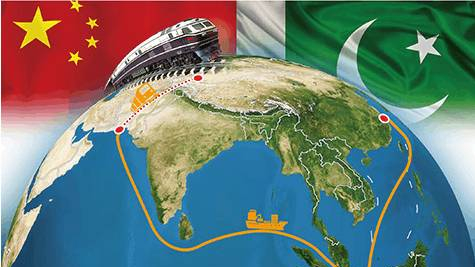
Chinese Foreign Minister Wang Yi also visited Islamabad over the weekend to help promote bilateral ties. The new Pakistani government wanted to renegotiate parts of the China Pakistan Economic Corridor, claiming it has led to a bigger trade deficit for the country.
Some critical voices from the media also addressed the possibility of Pakistani walking into a “debt trap” set by China. However, all these statements are vulnerable in many experts' eyes.
Shuju pointed out that the impact of the China-Pakistan economic corridor (CPEC) is often exaggerated in the western media context.
“CPEC is not manna from heaven, nor is it a milestone around Pakistan's neck in some narratives,” said Shuju. “The CPEC size of the investment amounts up to an annual average of two to three billion dollars, where the total investment in Pakistan is already 45 to 50 billion (US) dollars a year.”
Apart from the relatively small portion of CPEC, Pakistan is also seeing improvement in its growth and repayment capacity. Since its establishment in 2013, the young generation is enjoying the early harvest, especially in the energy sector. Going forward, CPEC focuses on booming fields like road, hydroelectricity, and coal mining, and in 2025, and the resources lay largely on industrialization and modern agriculture.
“The start is perfect,” said Shuju. “Last year alone Pakistan has achieved an increase of eight percent in its export.”
Mustafa Sayed, the executive director of the Pakistan-China Institute, was also positive about the outcome of CPEC. After years of observation, he witnessed how Pakistan came back to the radar of international investors. The “debt trap,” in his eyes, is no more than a propaganda campaign aimed to sabotage China's international image.
For China, building a robust economic tie with Pakistan is within its scope of geopolitics interests, according to Zhao Hai, an assistant research fellow at the Chinese Academy of Social Sciences. For one thing, China wants to help the young generation of Pakistan to develop its own economy. On the other side, this fits into China's broader strategy to develop the west part of the country, especially Xinjiang Uyghur Autonomous Region, for its stability.
However, he also pointed out that to lessen the war of words flying over borders between China and the west, “more transparency in program implementation and public communication are needed.”
The Heat with Anand Naidoo is a 30-minute political talk show on CGTN. It airs weekdays at 7:00 a.m. BJT and 7:00 p.m. eastern in the United States.
( If you want to contribute and have specific expertise, please contact us at opinions@cgtn.com )