
Politics
11:13, 21-May-2018
Iraq's Shiite cleric Sadr meets election's runner up to discuss forming new government
 ["china"]
Share







Copied
00:41
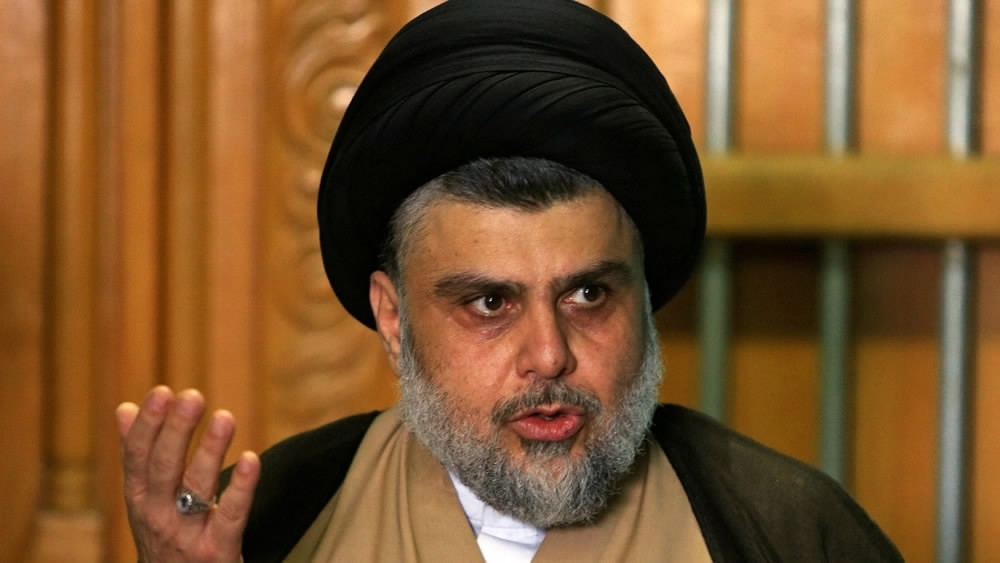
The prominent Shiite cleric Moqtada al-Sadr, whose al-Sa'iroon political coalition won the most seats in the country's May 12 parliamentary elections, met on Sunday with Hadi al-Ameri, who came second in the election to discuss the formation of a new government.
A statement by Sadr's office said the cleric met with Ameri, head of al-Fath political Coalition, which represents the Hashd Shaabi militias, and discussed "the developments of the political process."
"The formation of the government must be a national decision and importantly, all the winning political blocs must participate," the statement said.
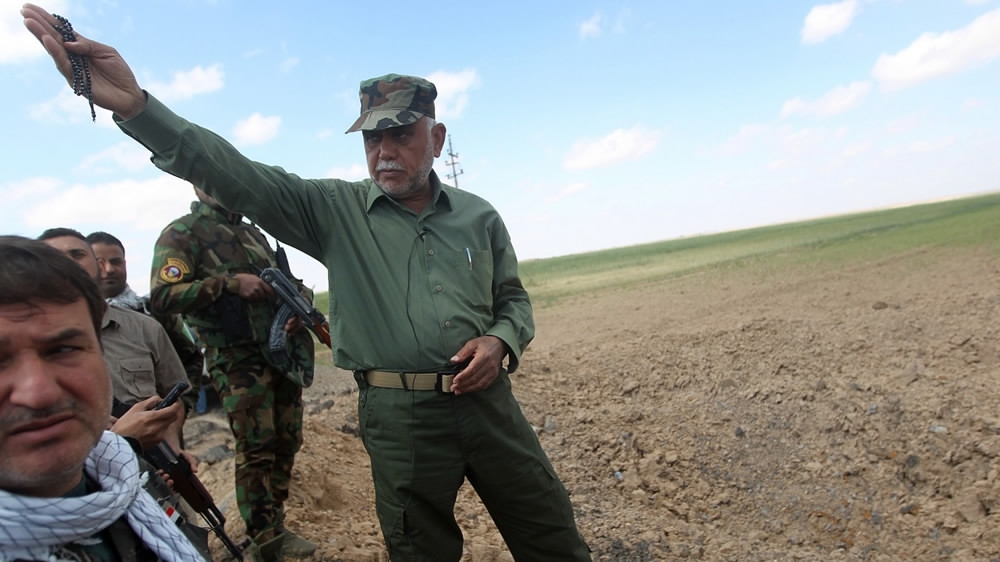
March 22, 2015: Hadi al-Ameri (R), stands in the Al-Alam area, north of Baghdad, Iraq, as he talks to the media about the ongoing fighting between Iraqi government forces and jihadists of the ISIL group for the control of the nearby city of Tikrit. /VCG Photo
March 22, 2015: Hadi al-Ameri (R), stands in the Al-Alam area, north of Baghdad, Iraq, as he talks to the media about the ongoing fighting between Iraqi government forces and jihadists of the ISIL group for the control of the nearby city of Tikrit. /VCG Photo
The final results of the parliamentary elections showed that al-Sa'iroon won 54 seats in the upcoming 329-seat parliament, while Ameri's al-Fath came in the second place with 47 seats.
Al-Fath is an umbrella group for the Shiite political Badr Organization, which has close ties with Iran, in addition to paramilitary Shiite militias of Hashd Shaabi who fought ISIL with government forces.
Sadr's meeting with Ameri came hours after Sadr's meeting with Prime Minister Haider al-Abadi, whose al-Nasr political Coalition came third with 42 seats.
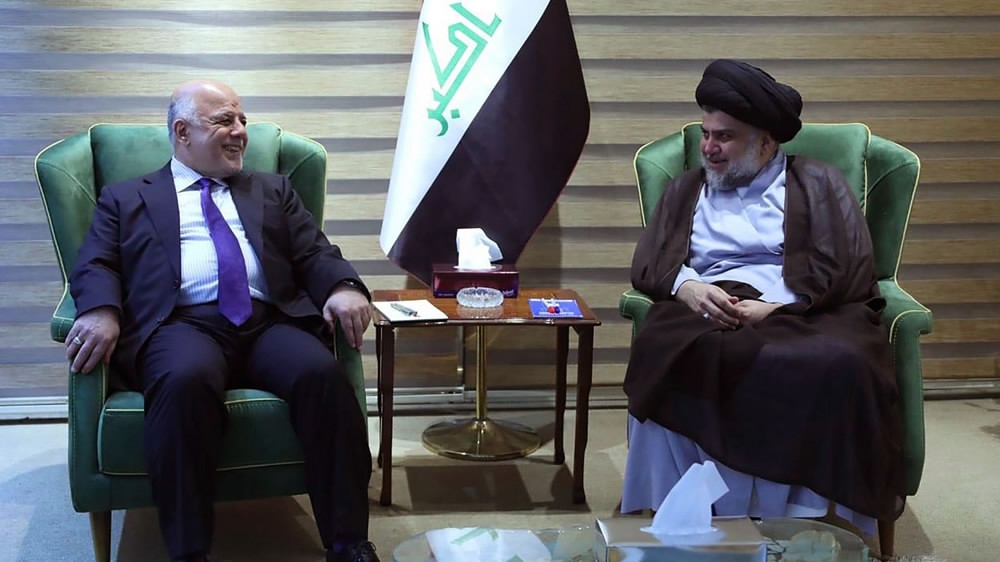
Iraqi Prime Minister Haider al-Abadi meets Iraqi Shiite cleric and leader Moqtada al-Sadr in Baghdad, Iraq, May 20, 2018. /VCG Photo
Iraqi Prime Minister Haider al-Abadi meets Iraqi Shiite cleric and leader Moqtada al-Sadr in Baghdad, Iraq, May 20, 2018. /VCG Photo
The incumbent Iraqi prime minister could still emerge as a compromise candidate, as he is seen as palatable to all sides because he has managed the competing interests of the United States and Iran during his term in office.
Abadi and Sadr discussed "working together to speed up the formation of a new government that should be strong and provide services, jobs, improve living standards and fight corruption," according to a statement by Abadi's office.
For his part, Sadr said "the meeting was a reassuring message that the next government would take care of all the Iraqi people," and "our hands are extending to all those who want to build Iraq."
Meanwhile, Ameri's office said in a statement that the al-Fath leader held a series of meetings during the day with the leaders of successful political blocs to discuss the formation of the largest alliance for the next government.
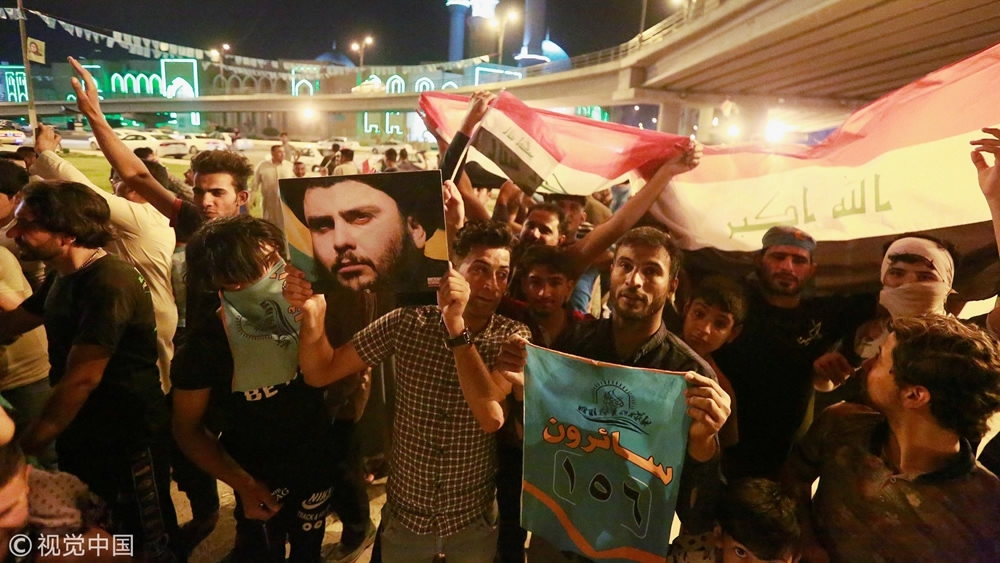
Iraqi supporters of Sairun list celebrate with Iraqi flags and a picture of Shi'ite cleric Moqtada al-Sadr after results of Iraq's parliamentary election were announced, in Najaf, Iraq, May 15, 2018. /VCG Photo
Iraqi supporters of Sairun list celebrate with Iraqi flags and a picture of Shi'ite cleric Moqtada al-Sadr after results of Iraq's parliamentary election were announced, in Najaf, Iraq, May 15, 2018. /VCG Photo
Ameri also had a telephone meeting with the Kurdish leader Masoud Barzani, head of Kurdistan Democratic Party (KDP), Ameri's statement said.
The two major Kurdish parties, the KDP and the Patriotic Union of Kurdistan (PUK), took the lead in the Kurdish region and in the ethnically-mixed province of Kirkuk, with 25 seats for the KDP and 18 for the PUK, according to figures from Iraq's electoral commission.
On May 12, millions of Iraqis went to vote for their parliamentary representatives in the first general election after Iraq's historic victory over ISIL last December.
Some 90 political entities and 7,000 candidates were vying for 329 seats in the parliament.
6293km
Source(s): Reuters
,Xinhua News Agency