
Politics
12:18, 12-Aug-2018
Trump to sign massive US defense bill for fiscal year 2019
Updated
09:16, 17-Aug-2018
 ["china"]
Share







Copied
02:53
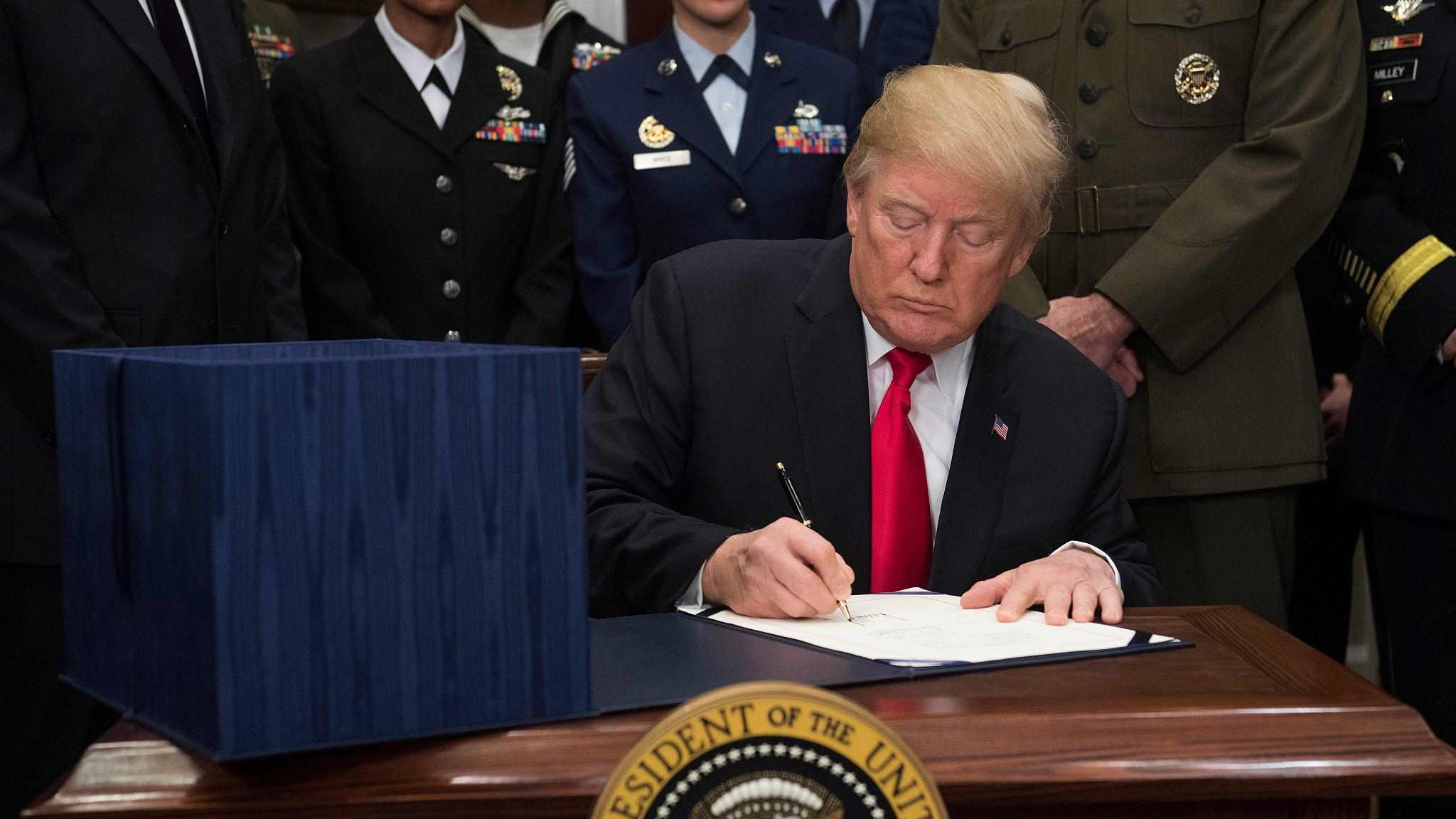
US President Donald Trump is set to sign a more than 700 billion US dollar defense bill for the fiscal year 2019 on Monday, giving big increases to the US military to counter the White House's calls for greater competition, specifically with China and Russia.
A week after approval from the House of Representatives, the US Senate passed the 716 billion US dollar National Defense Authorization Act (NDAA) on Aug. 2, backing Trump's call for a bigger and stronger military.
In action largely targeting China, the NDAA planned a series of measures:
-- Prohibits China from Rim of the Pacific exercises
-- Plans to strengthen military relations with Taiwan
-- Orders public report on China's activities in the South China Sea
-- Bans US Defense Department use of Huawei or ZTE equipment
-- Reforms foreign investment rules to address national security
-- Cuts funding for Chinese language programs at universities that house Confucius Institutes
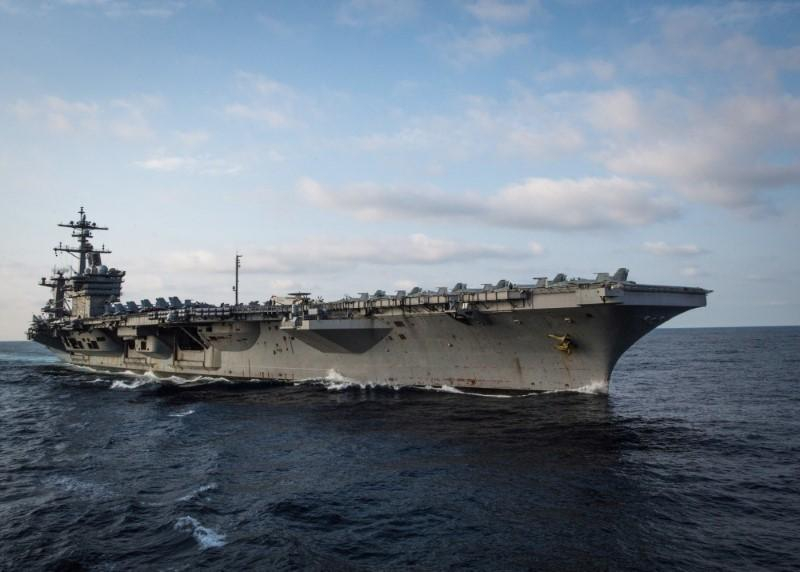
May 27, 2017: US aircraft carrier USS Carl Vinson in the Pacific Ocean. /Reuters Photo
May 27, 2017: US aircraft carrier USS Carl Vinson in the Pacific Ocean. /Reuters Photo
Analysis from CGTN's Nathan King
The policy bill said it would add another aircraft carrier to the US fleet, and in total 46 new ships would be planned for the US Navy over the next five years.
There is little opposition for this 700-billion dollar budget, the largest in the Pentagon's history, in the US. This year's defense spending request made its way through Congress far quicker than usual.
These measures are broadly based on suspicion of China and the sense of China threat.
The US focus on China as a "strategic competitor" comes as the US armed forces are downgrading the fight against terrorism and focusing more on the Asia Pacific.
Larger presence in the Indo-Pacific
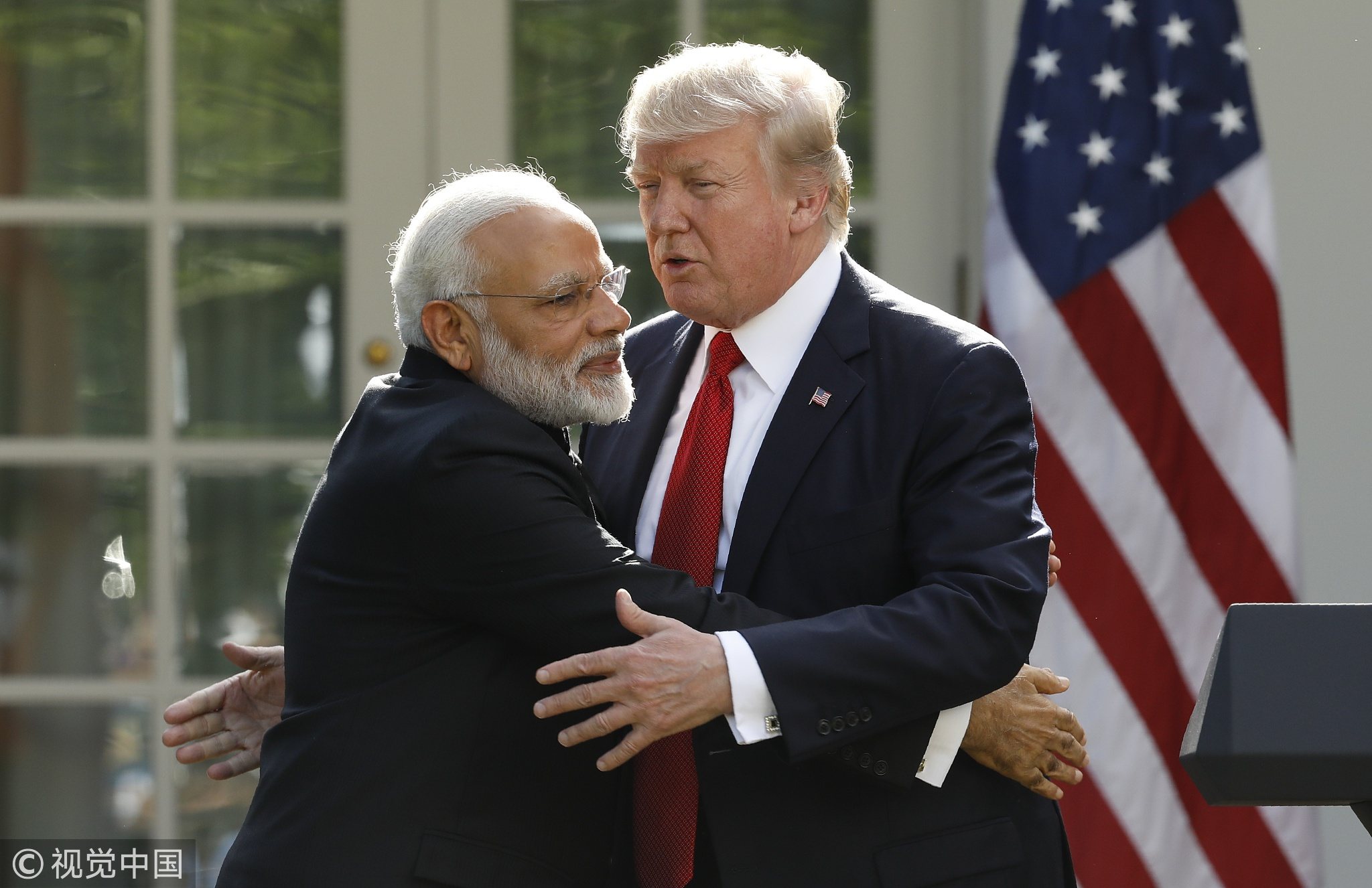
June 26, 2017: India's Prime Minister Narendra Modi hugs US President Donald Trump as they give joint statements in the Rose Garden of the White House in Washington, US. /VCG Photo
June 26, 2017: India's Prime Minister Narendra Modi hugs US President Donald Trump as they give joint statements in the Rose Garden of the White House in Washington, US. /VCG Photo
The defense act also aimed to provide more money to forge closer defense relationships with other nations like India and Sri Lanka. This year saw the first visit of a US aircraft carrier to Vietnam since the end of the Vietnam War.
"It's not simply authorizing more planes and ships to be built, which it does, but it also directs reporting requirements on issues on influence operations and espionage," said Timothy Heath, senior international defense researcher from Rand Corporation.
China is not alone, Russia too
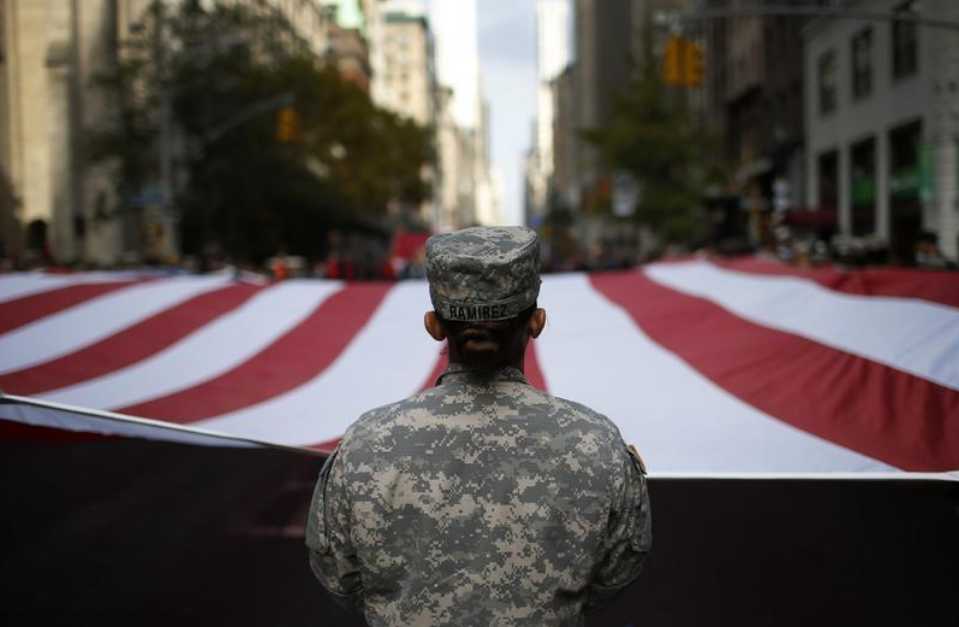
Nov. 11, 2014: US Army soldiers carry a US flag in the Veterans Day parade on 5th Avenue in New York. /Reuters Photo
Nov. 11, 2014: US Army soldiers carry a US flag in the Veterans Day parade on 5th Avenue in New York. /Reuters Photo
Russia is also targeted in the policy bill.
The NDAA authorized spending 7.6 billion US dollars for 77 F-35 Joint Strike Fighter jets, made by Lockheed Martin Corp. And it would prohibit delivery of the advanced aircraft to fellow NATO member Turkey.
US officials have warned Ankara that a Russian missile defense system Turkey plans to buy cannot be integrated into the NATO air and missile defense system.
(Top image, Dec.12, 2017: US President Donald Trump signs the National Defense Authorization Act for Fiscal Year 2018, during a signing ceremony in the Roosevelt Room at the White House in Washington, DC. /VCG Photo)
(CORRECTION: An earlier version of this story incorrectly attributed a statement to Timothy Heath.)