
China
12:42, 13-Aug-2018
Family accused of counterfeiting money to pay for daughter’s medical bills
Updated
12:25, 16-Aug-2018
 ["china"]
Share







Copied
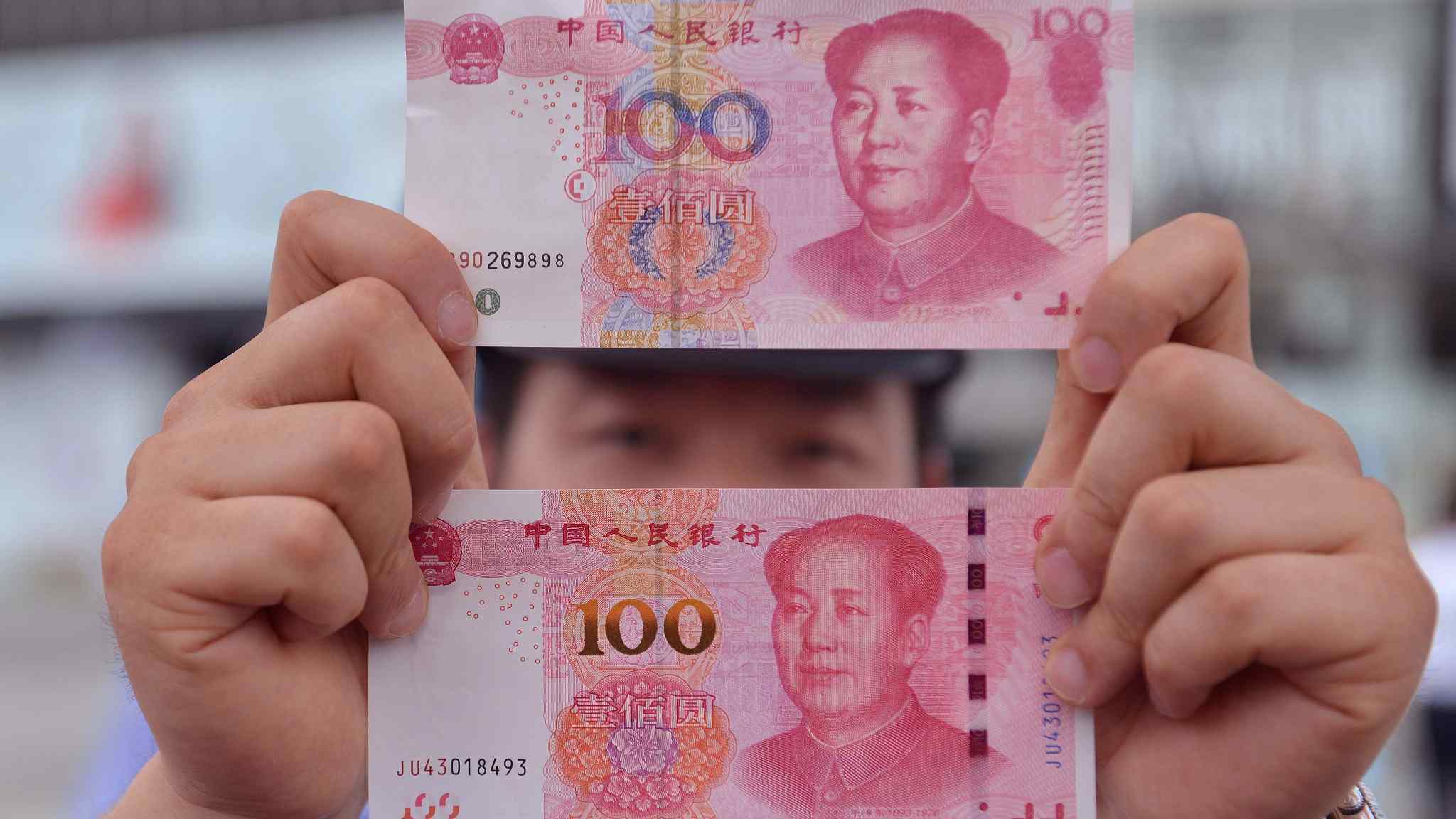
An unemployed man and his father were arrested by police for allegedly printing and selling counterfeit banknotes valuing more than 2.5 million yuan (363,900 US dollars) at their home in Bozhou City, east China’s Anhui Province. The son claimed that he did it to pay for his daughter’s medical bills.
The incident first caught the attention of local police in March, when local residents reported the unemployed son, surnamed Wang, was living a lifestyle that greatly exceeded what he could afford. They also noticed that his father stayed at home with the curtains drawn, and rarely went outside.
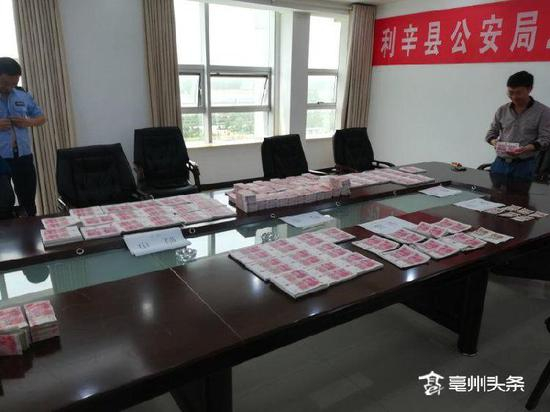
Police found conterfeit banknotes valuing over 2.5 million yuan (362,937 US dollars). /Photo via Bozhou Evening News
Police found conterfeit banknotes valuing over 2.5 million yuan (362,937 US dollars). /Photo via Bozhou Evening News
Later in May, the police raided their home and arrested them for making counterfeit money.
Working together, the son bought equipment online to produce the bills and his father was in charge of selling the counterfeit money after it was printed at home.
When the police raided their home, three of the printers and the gliding machines were still running, producing the counterfeit banknotes.
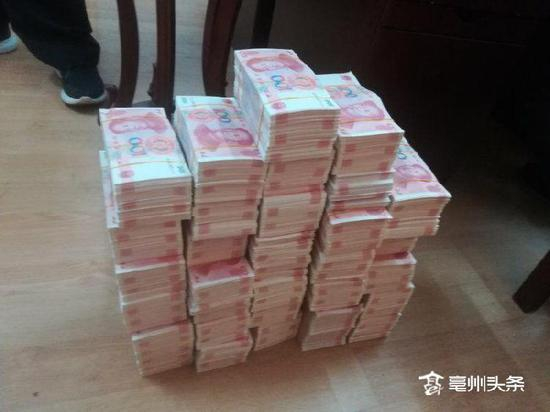
Police found more than 240,000 yuan in cash stored in the bedside cabinet. /Photo via Bozhou Evening News
Police found more than 240,000 yuan in cash stored in the bedside cabinet. /Photo via Bozhou Evening News
In addition, the police found more than 240,000 yuan in cash stored in a bedside cabinet, which were earned by selling counterfeit 100 yuan banknotes for eight yuan each, reported Bozhou Evening News.
According the police, the son claimed that he was only printing the money to pay for his daughter's medical costs. She suffers from a congenital disease and the bills were insurmountable with his regular pay.
China’s healthcare industry has undergone profound changes in the past years as reforms took place across the supply chain, making healthcare more accessible and affordable, especially in rural communities. So far, the basic medical insurance has covered 1.3 billion people in the country.
However, China's personal medical expenses are still much higher than those of developed countries. In OECD countries, on average 10 percent of medical expenses are out-of-pocket, while that proportion is 33.2 percent in China, reported China Business Network.
According to a survey conducted by World Health Organization on China's health care costs, 13 percent of urban and rural families faced "catastrophic" health care costs, with 7.5 percent leading to poverty.
Therefore, although China had greatly expanded the coverage of medical insurance, its ability to protect residents from the economic risks of disease, the effort required more work, according to World Health Organization.