
03:15, 26-Aug-2017
US Warship Collision: How incident impacts US Navy's worldwide operations
 []
[]
Share







Copied
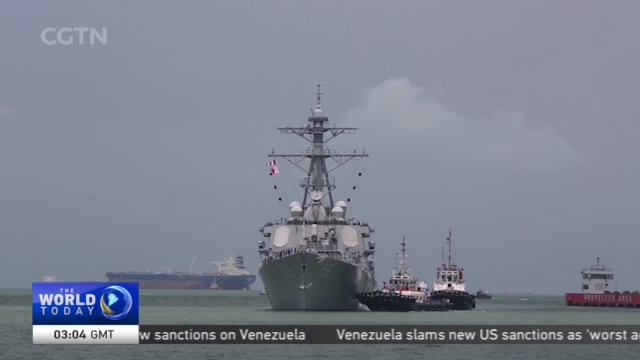
The US Navy has suspended search and rescue efforts for nine missing sailors after the USS John S McCain, collided with an oil tanker off the coast of Singapore. A string of incidents have led to the dismissal of the commander of the 7th Fleet, and a worldwide "operational pause" of all US Navy ships. For more on the US's ability to monitor the growing threat from the DPRK, as well as continue operations in the South China Sea, CGTN's Giles Gibson reports from Washington DC. "Around the world, around the clock" - that's the slogan the US Navy uses to attract new recruits. But after a series of accidents in Asian waters this year, the Navy is now two ships down in a volatile part of the world. Jan van Tol captained US warships in the same seas where the latest collision occurred. He says the recent incidents may have been avoidable
JAN VAN TOL FORMER US NAVY CAPTAIN "Standard practice when you go through a narrow straits like that is to have specially augmented launches, navigation detail, maybe an extra lookout or two. And one of the things that puzzles me in the two collisions is - where was the lookout. It seems to me the lookout should have been screaming at the bridge there's something big, close and gaining."
The USS John S. McCain was towed to Singapore's Changi Port and will be out of action for some time. Meanwhile its sister ship, the USS Fitzgerald, is sitting in dry dock at its home port in Japan after its collision in June. Both ships are equipped with Aegis ballistic missile defense systems. That means, while on active patrol, they would be capable of shooting down short and medium range missiles from the Korean peninsula, as well as tracking longer range missiles. Earlier this month, the John S McCain also reportedly conducted a so-called "freedom of navigation" operation near islands in the disputed South China Sea, action China sees as provocative and a threat to its sovereignty.
US President Donald Trump has vowed to give his military leaders the tools they need to plan for future defense commitments. But military analysts in Washington blame overly-stretched naval resources for the recent collisions.
CHRISTOPHER HARMER SENIOR NAVAL ANALYST "When there's a mismatch between resources and operations, for a while you can bridge that gap simply by running the Navy and the sailors harder than they're capable of sustaining. Eventually you run up to a hard stop where the ships are worn out, the crews are worn out - they've got too much tasking and not enough support. That's the point where we're at now." Meanwhile the head of the US Pacific Command, Admiral Harry Harris, has insisted the recent setbacks won't affect the Navy's ability to defend its allies, including South Korea. Military officials say the U.S. has more than a dozen other Aegis-equipped ships in the region.
GILES GIBSON WASHINGTONDespite those assurances, what we do know - is that the DPRK has shown no sign of backing away from its nuclear ambitions, and the US Navy now has two fewer ships in the region to monitor a growing threat.Giles Gibson, CGTN, Washington