
Privacy
23:10, 25-May-2018
'Godfather of wearables' proposes 'personal data ecosystem' to protect privacy in smart cities
 ["china"]
Share







Copied

Internet companies, governments and users should stop hating each other for data privacy concerns, and work together to create a "personal data ecosystem", as proposed by Alex "Sandy" Pentland, known as the "godfather of wearables".
Pentland made the comments to CGTN at a seminar discussing smart city technologies in Xihua University on May 20.
Smart city vs privacy
Smart city is a concept about better IT usage in urban areas. Although there's no widely-accepted definition yet, the phrase can represent people's wishes for a more connected world, in the means of both human-to-human connections and human-to-things ones.
China is very interested in building smart cities and its government is pushing internet giant Alibaba for a plan.
But there are lots of concerns over this concept, as it requires more data sharing which could lead to privacy crisis.
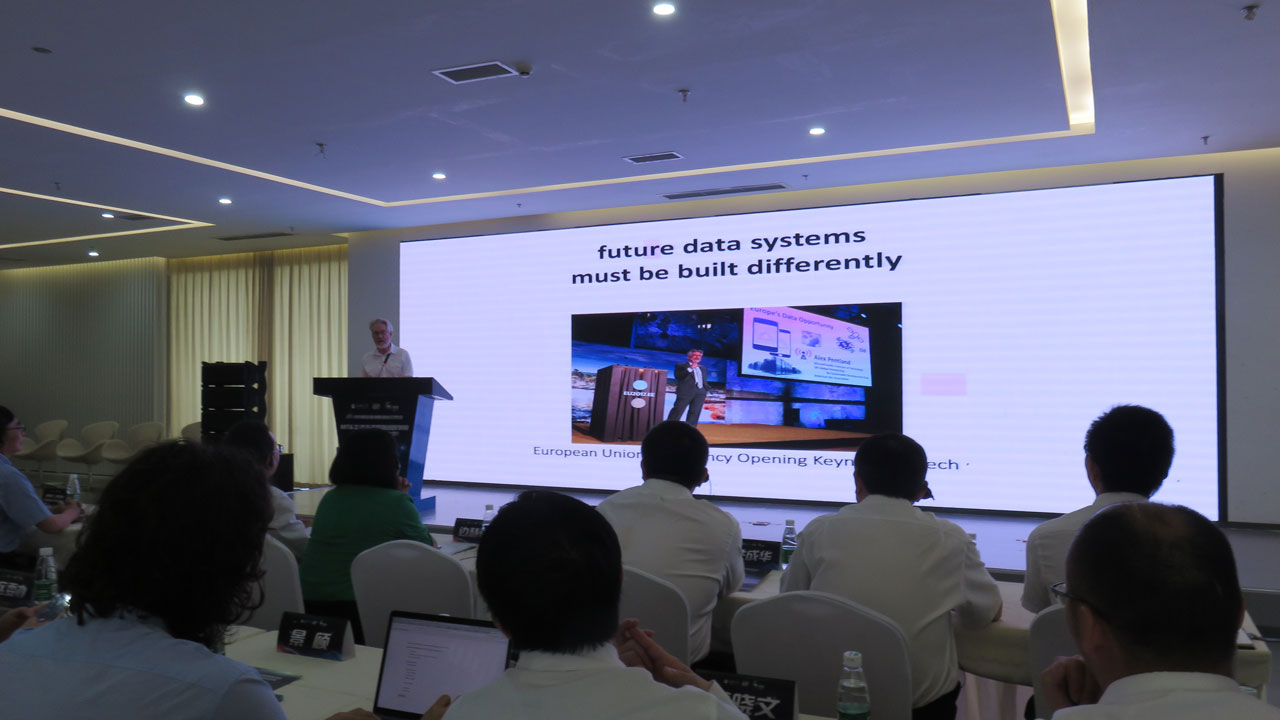
Alex Pentland talks about data system for smart city at a seminar held in Xihua University, western China's Chengdu City, on May 20. /CGTN Photo
Alex Pentland talks about data system for smart city at a seminar held in Xihua University, western China's Chengdu City, on May 20. /CGTN Photo
Some police officers in China are now wearing sunglasses with facial-recognition capacity.
Although it sounds a bit scary, these tools have actually helped them to catch criminals at large. And the government sees that as an achievement.
But what if an officer went rouge? What can be done with all those tech power?
Internationally, the Facebook privacy scandal is still ongoing, with its CEO Mark Zuckerberg escaping from an EU hearing on Tuesday.
And the EU's GDPR policies go into effect today, which has led to massive Terms of Use changes in some of the largest internet companies globally.
But what if the policies are too harsh for new internet companies to emerge?
Natural balance and government effort
Pentland told CGTN that worrying is not a solution.
"One viable response to this fragmentation is to align key stakeholders: people, private firms and the public sector, in support of one another. Indeed, 'win-win-win' outcomes will come."
And he thinks the balance is possible to achieve because none of the three parties can go too far.

CGTN Photo
CGTN Photo
For companies, selling private data can generate considerable revenue. But exploiting those data will hurt reputation – every company has to be trusted to survive in the long run.
For the government, overreaction on privacy concerns may stall economic growth, while ignoring them can lead to chaos in society.
For internet users, trading private data for convenience in life can be both beneficial and dangerous.
As all the three parties are in similar dilemmas, it's natural that they will eventually seek help from each other, reaching a balance that no one will get hurt.
But still, government is the key in the balancing process, according to Pentland.
"Governments and regulators play a vital role in influencing the size and shape of the personal data ecosystem as well as the value created by it," he said during his speech.