
Politics
20:04, 26-Aug-2018
Abe seeks fresh term as party head despite policy doubts
Updated
20:01, 29-Aug-2018
 ["china"]
Share







Copied
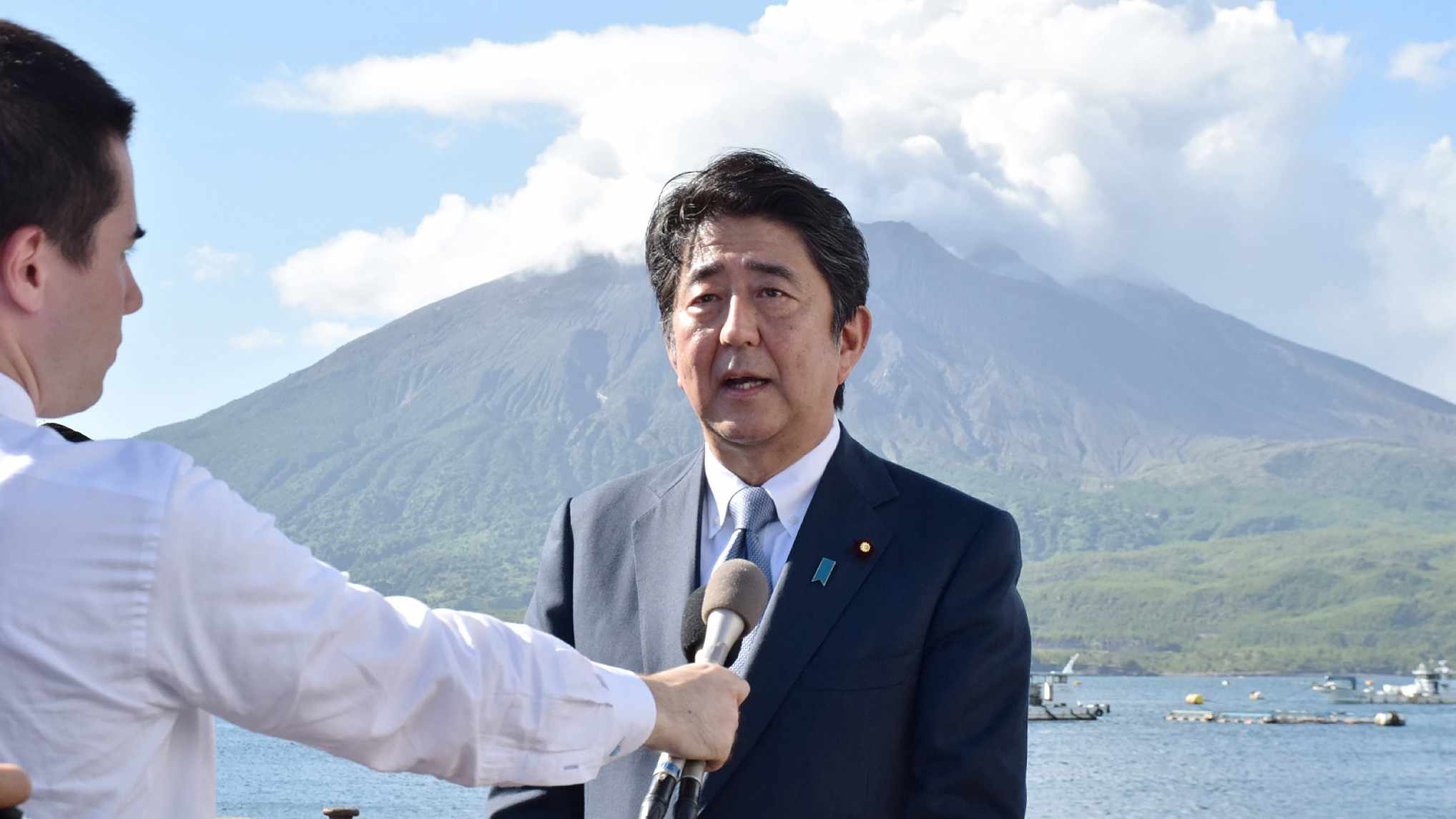
Japanese Prime Minister Shinzo Abe announced his candidacy on Sunday for a ruling party leadership election he is expected to win, despite low expectations for his economic policies and doubts over his push to revise the pacifist constitution.
The expected victory over ex-defense minister Shigeru Ishiba in the Sept. 20 Liberal Democratic Party (LDP) poll would put Abe on track to become Japan's longest-serving premier.
The winner becomes prime minister due to the LDP-led coalition's grip on parliament.
"I am resolved to steer Japan for another three years as LDP president and prime minister," Abe said.
Analysts say Abe looks set hold on to the top job because his nearly six years in power have enabled him to woo LDP backers with cabinet posts and other favors and to shut out rivals.
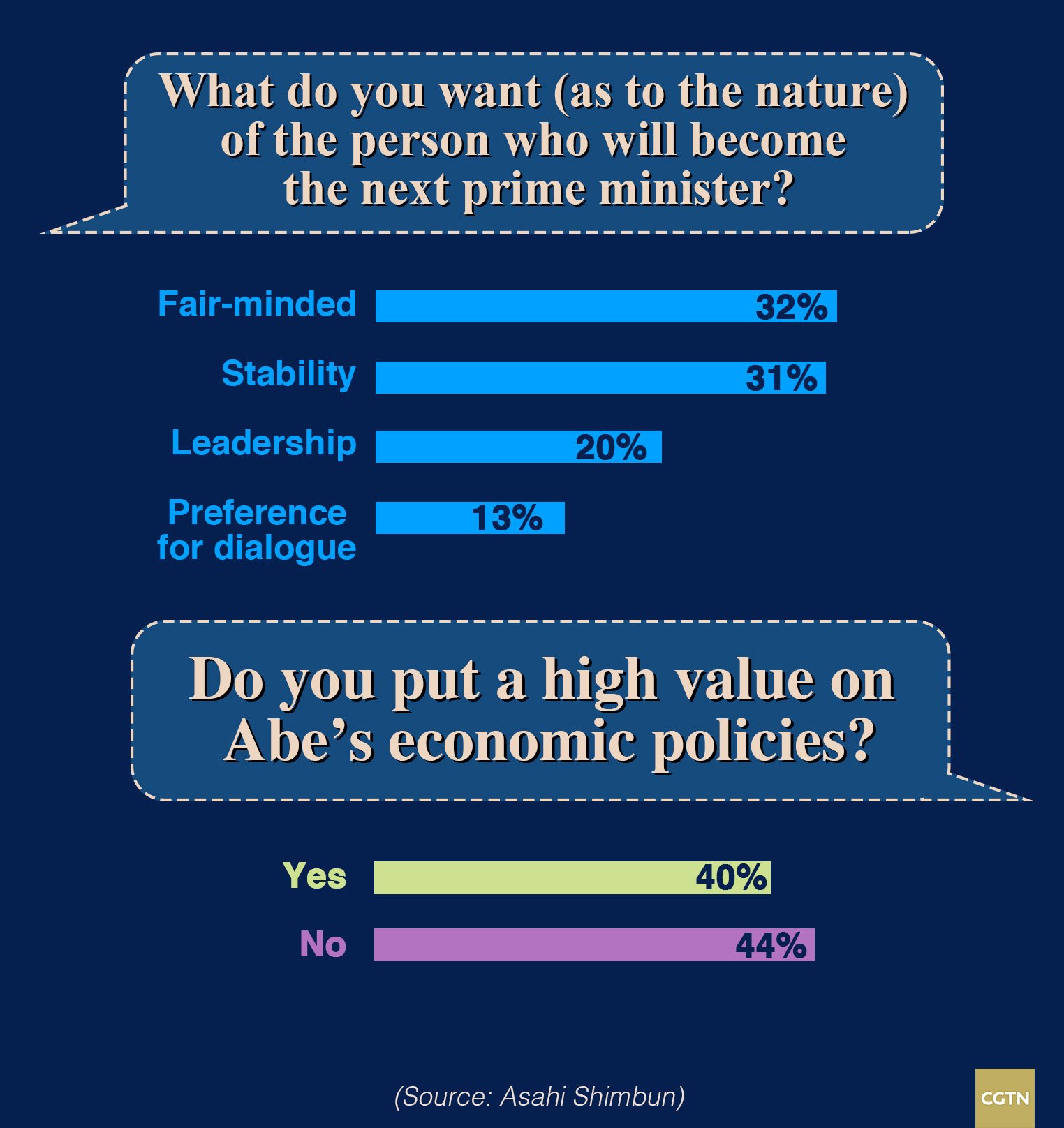
Results of a survey of LDP members /CGTN's Li Jingjie
Results of a survey of LDP members /CGTN's Li Jingjie
Abe is also seen headed in the leadership vote as per media surveys.
In the Nikkei survey, 39 percent of all voters backed Abe for next premier versus 31 percent for Ishiba. The percentage picking Abe jumped to 65 percent among LDP supporters.
Media surveys suggest Abe has the support of at least 70 percent of the 405 votes in the leadership election from LDP parliamentarians. Another 405 votes will be apportioned based on the votes of rank-and-file party members.
Read more:
Abe began a second stint as prime minister in 2012 promising to reboot the deflation-plagued economy with his "Abenomics" policies and to bolster defense.
On the economic side, the Bank of Japan has failed to reach its two percent inflation target despite an ultra-loose policy.
On the security front, Abe has boosted defense spending and uttered his attempt to revise the post-war constitution's pacifist Article 9 that bans Japan from maintaining armed forces.
Analysts say the process to revise the constitution is risky. Amendments need approval by two-thirds of both houses of parliament and a majority in a referendum. "The only concrete item on his agenda I can see is constitutional revision, and that is unlikely to fly," said Columbia University emeritus professor Gerry Curtis.
(Cover: Japanese Prime Minister Shinzo Abe speaks to the media as he announces his candidacy for the upcoming ruling Liberal Democratic Party presidential election, during a press conference in front of Mount Sakurajima volcano while on tour to Tarumizu, Kagoshima prefecture, August 26, 2018. /VCG Photo)
(With inputs from agencies)