
Politics
09:06, 10-Jul-2018
Senate battle as Trump picks Kavanaugh for Supreme Court
Updated
09:01, 13-Jul-2018
 ["china"]
Share







Copied
02:04
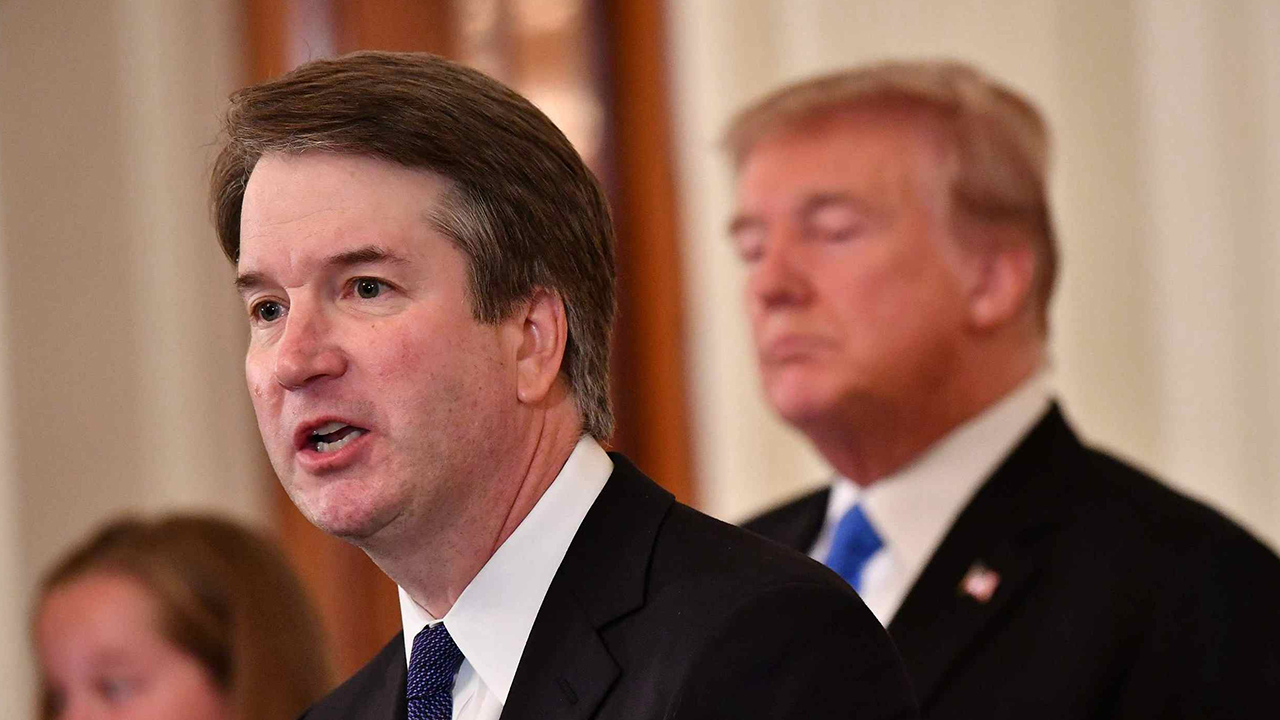
President Donald Trump has nominated conservative judge Brett Kavanaugh to replace Anthony Kennedy on the US Supreme Court, in a move that could have far-reaching implications across American society.
Trump, announcing his nomination live from the White House on Monday evening US time, described Kavanaugh as having "impeccable credentials, unsurpassed qualifications, and a proven commitment to equal justice under the law."
"No one in America is more qualified for this position, and no one more deserving," the US president added.
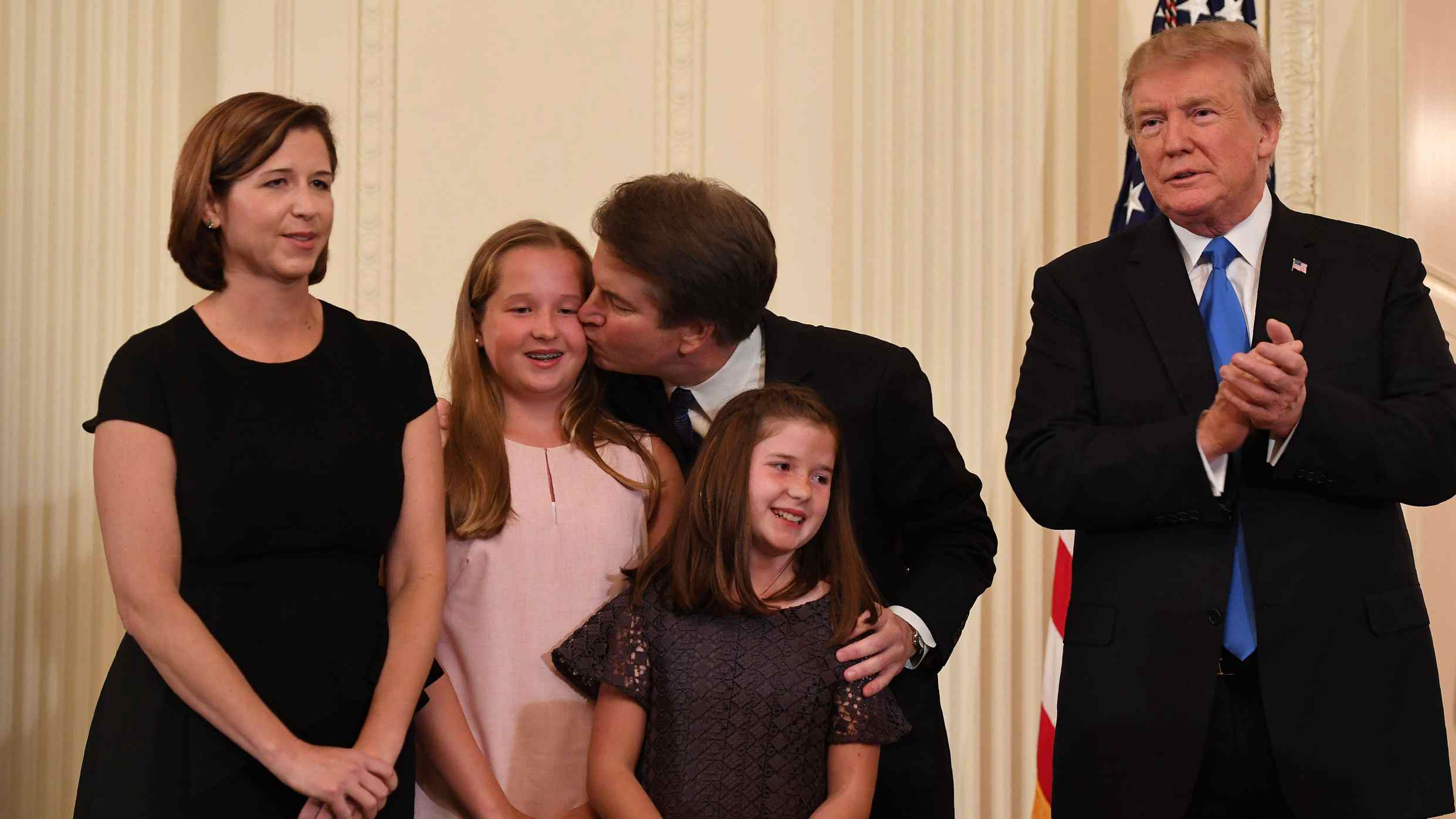
US President Donald Trump (R) claps as Brett Kavanaugh kisses one of his daughters after being nominated to the Supreme Court in the East Room of the White House on July 9, 2018 in Washington, DC. /VCG Photo
US President Donald Trump (R) claps as Brett Kavanaugh kisses one of his daughters after being nominated to the Supreme Court in the East Room of the White House on July 9, 2018 in Washington, DC. /VCG Photo
Kavanaugh said he was "deeply honored" to be nominated to replace Kennedy, who announced on June 27 that he would step down from the bench.
The 53-year-old must be confirmed by the Senate, where the Republicans have a wafer thin majority. Democrats have pledged to fight the nomination of Kavanaugh, who has been linked closely to Republican causes throughout his career.
Who is Kavanaugh?
Kavanaugh has served since 2006 on the influential US Court of Appeals for the District of Columbia Circuit.
A former White House aide under Bush who previously worked for Kenneth Starr, the independent counsel who investigated Democratic former President Bill Clinton in the 1990s, he faced a three-year confirmation battle when Bush nominated him to his current post.
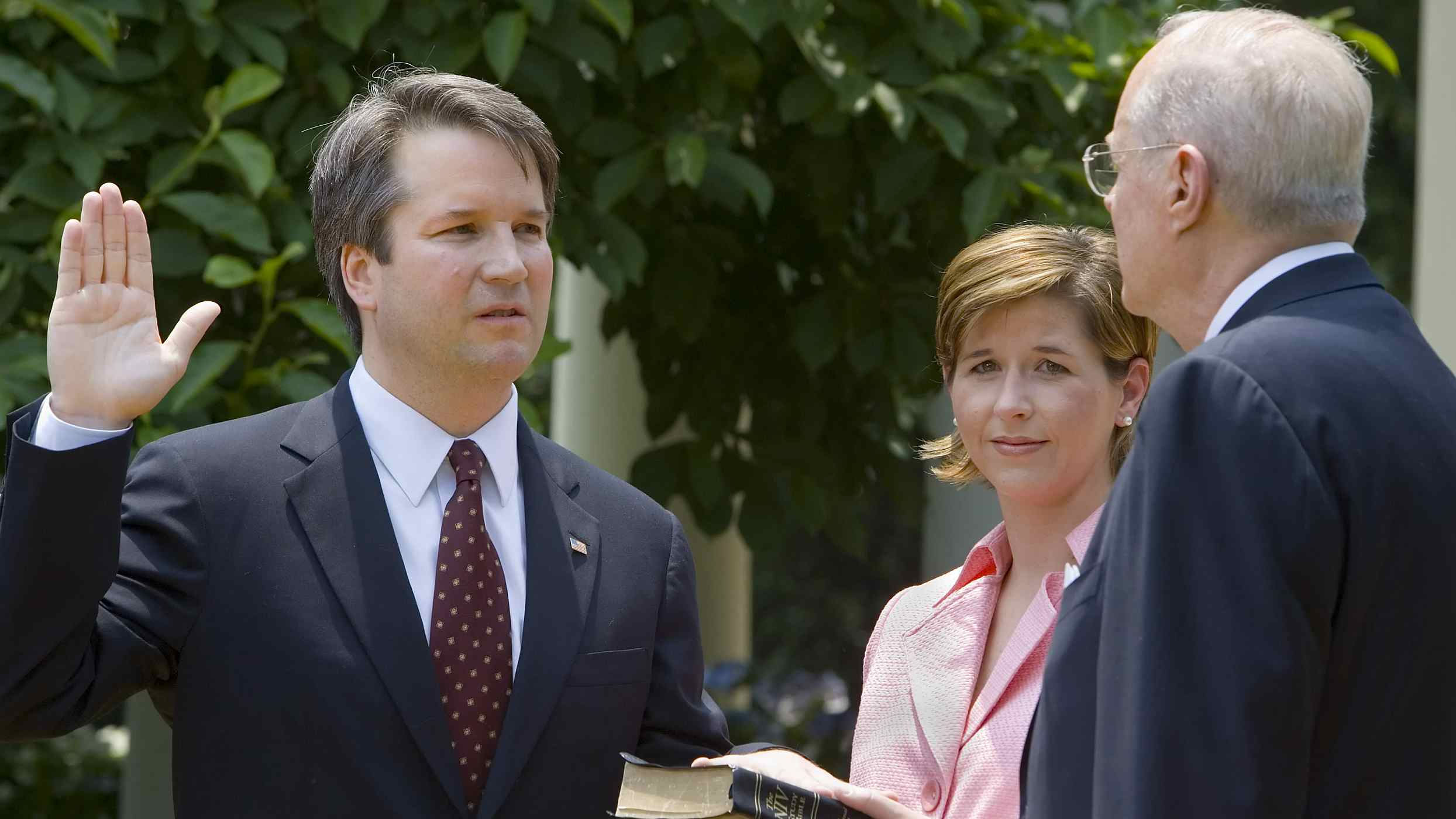
Brett Kavanaugh (L) is sworn in as a US Court of Appeals Judge for the District of Columbia by US Supreme Court Justice Anthony Kennedy (R) on 1 June 2006 in Washington, DC. /VCG Photo
Brett Kavanaugh (L) is sworn in as a US Court of Appeals Judge for the District of Columbia by US Supreme Court Justice Anthony Kennedy (R) on 1 June 2006 in Washington, DC. /VCG Photo
He has featured in many partisan flashpoints over the past 20 years. Democrats point to Kavanaugh's work for Bush during the recount fight in the pivotal state of Florida in the 2000 presidential election, a controversy that was resolved only after the conservative-majority Supreme Court sided with Bush over Democratic candidate Al Gore.
Why does it matter?
The nomination is likely to move the Supreme Court to the right, as Kennedy was a swing vote on many issues. He joined the liberal justices on key rulings on divisive social issues like abortion and gay rights.
Democrats are certain to press Kavanaugh on the landmark 1973 Roe v. Wade ruling that legalized abortion nationwide, a decision some conservatives – particularly conservative Christians - have long wanted to overturn.

Supreme Court nominee Brett Kavanaugh speaks while his wife Ashley Estes Kavanaugh (L) and US President Donald Trump listen after the announcement of his nomination on July 9, 2018 in Washington, DC. /VCG Photo
Supreme Court nominee Brett Kavanaugh speaks while his wife Ashley Estes Kavanaugh (L) and US President Donald Trump listen after the announcement of his nomination on July 9, 2018 in Washington, DC. /VCG Photo
Trump has previously said he wanted "pro-life" justices opposed to abortion rights.
Kavanaugh could also be called upon to render judgment on issues of personal significance to Trump and his administration including matters arising from Special Counsel Robert Mueller's ongoing investigation and several civil lawsuits pending against Trump.
What happens next?
Kavanaugh will now hold several weeks of talks with senators in Washington, with the White House thought to be targeting a nomination hearing in October.
Trump's selection will set up a confirmation showdown in the Senate, where his fellow Republicans hold a slim 51-49 majority, though with ailing Senator John McCain battling cancer in his home state of Arizona they currently can muster only 50 votes.
Without Republican defections, however, Senate rules leave Democrats with few options to block confirmation of Trump's nominee and delay until after November's midterm elections.
A group of Democratic senators from Republican-leaning states -- lawmakers who could be pivotal in the confirmation fight -- declined Trump's invitation to attend the White House announcement.
11160km