
World
16:59, 02-Jul-2018
Potable water a challenge in Rohingya camps
Updated
16:23, 05-Jul-2018
 ["china"]
Share







Copied
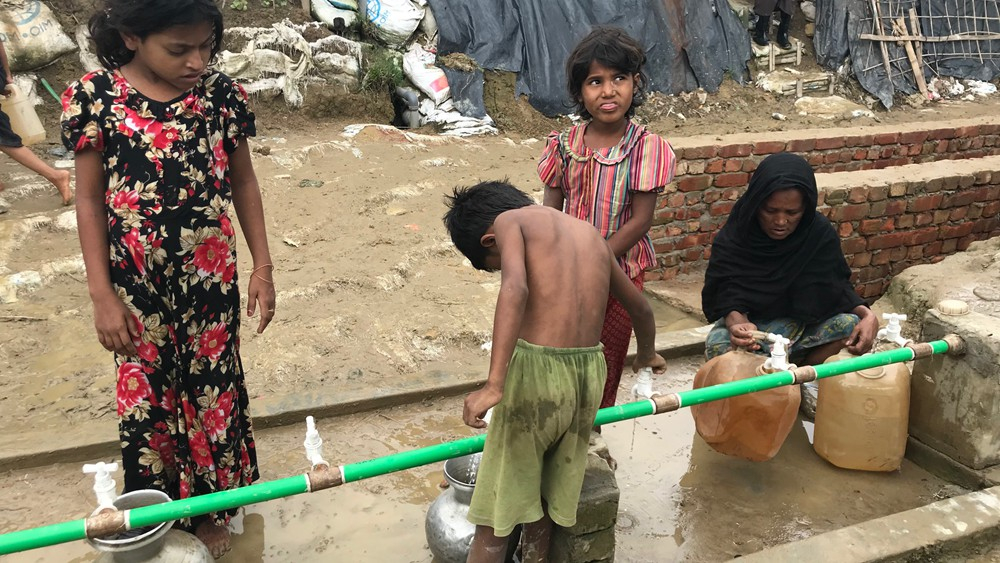
The queues at the water collection points are long on the days when it does not rain in the Rohingya refugee camps in Bangladesh's Cox's Bazar. Safe drinking water has always been a challenge in these camps but monsoons have worsened the situation due to water contamination.
When the Rohingya refugee camps were set up, aid agencies dug tube wells all across the camps. Some were dug more than 700 feet and other just 30 to 40 feet deep. It is the shallow ones that are now creating problems as many of them are close to latrines.
Shombhu Nath Saha, a WASH officer working here explains, "The amount of water that is needed is not available here. There are not enough tube wells in these camps to meet the water demands of the people. Also the water of the tube wells, which are shallow, gets contaminated because of proximity to the latrines."
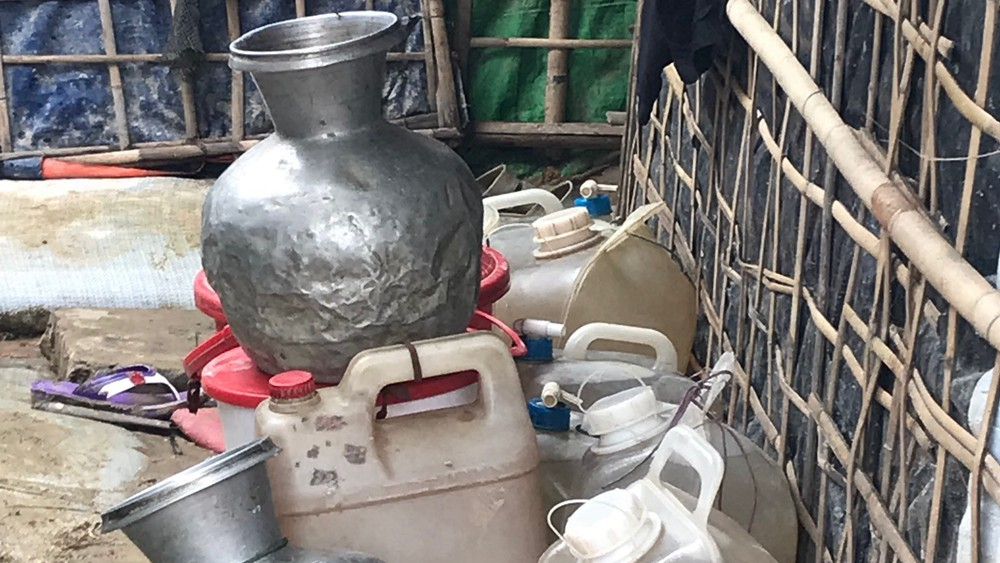
Refugees use containers to store water. /CGTN Photo
Refugees use containers to store water. /CGTN Photo
The water table has depleted since more than 700,000 refugees started living here. Many tube wells have stopped working due to the water table going down. Now new methods are being tried to make the available water safe for drinking.
Every family gets 140 chlorine tablets per month. These tablets help them to treat water on a household level. Refugees have been trained to use these tablets for purifying water.
Mohammed Shoaib went through one such training and explained to us how his family uses the tablets to make water safe for drinking at home.
"Now that they are giving us medicine we are somehow managing our drinking water needs. Those who get the medicines are managing, but there are others who do not have access to these tablets, they are in great difficulty. They have to drink water, which has iron contamination. We need more tube wells here, which are dug deep beyond 700 feet."
Others depend on water supplied by aid organizations. River water is being treated and then supplied to certain camps. Women and children are mostly seen at water points or tube wells.
Noor Bahar, who lives in a new camp, established following the new influx of refugees, makes non-stop trips to collect water for her family. This is an added responsibility since she and her family were forced to leave Myanmar to Bangladesh. Due to irregular water supply, she has to prioritize the use of water for drinking and cooking over other needs. Since she has fewer containers to store water she has to fill water at least four to five times a day.
She says,"people who have vessels to store are better off but others who don't are suffering. We have to bathe once every three days. We don't have water to wash clothes. We do not get enough water for our daily needs."
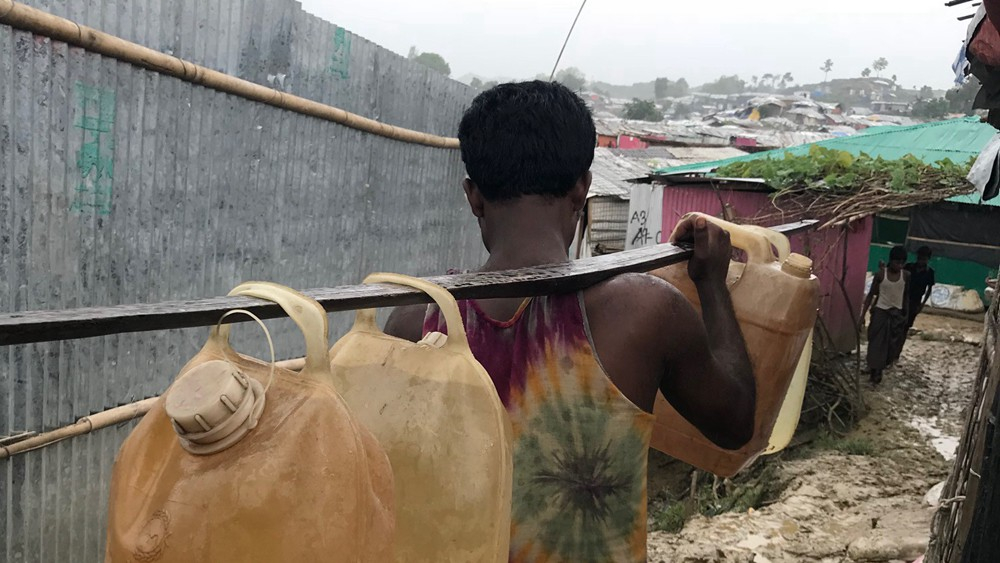
A refugee carries four containers to fetch water. /CGTN Photo
A refugee carries four containers to fetch water. /CGTN Photo
For their other needs many families now depend on rainwater. They are thankful that the weather has changed and there is good amount of rainwater for them to at least take daily.
Farzana Begum, 62, collects rain water in a big drum. "While rain does cause havoc in the camps as there is danger of our shelters being flooded or fear of landslide. But it does help us in our daily needs as we get enough water for bathing and washing clothes. At least we feel clean," says Begum.
Even as monsoons are chaotic in Rohingya camps they are a saving grace in areas where there are water shortages as the people store rainwater and use it abundantly without worrying about collection from water points. But once the monsoon is over, their struggle will begin again.