
Business
16:30, 25-Jun-2018
Stock markets dip on trade tensions, oil gives up some gains
 ["north america"]
Share







Copied
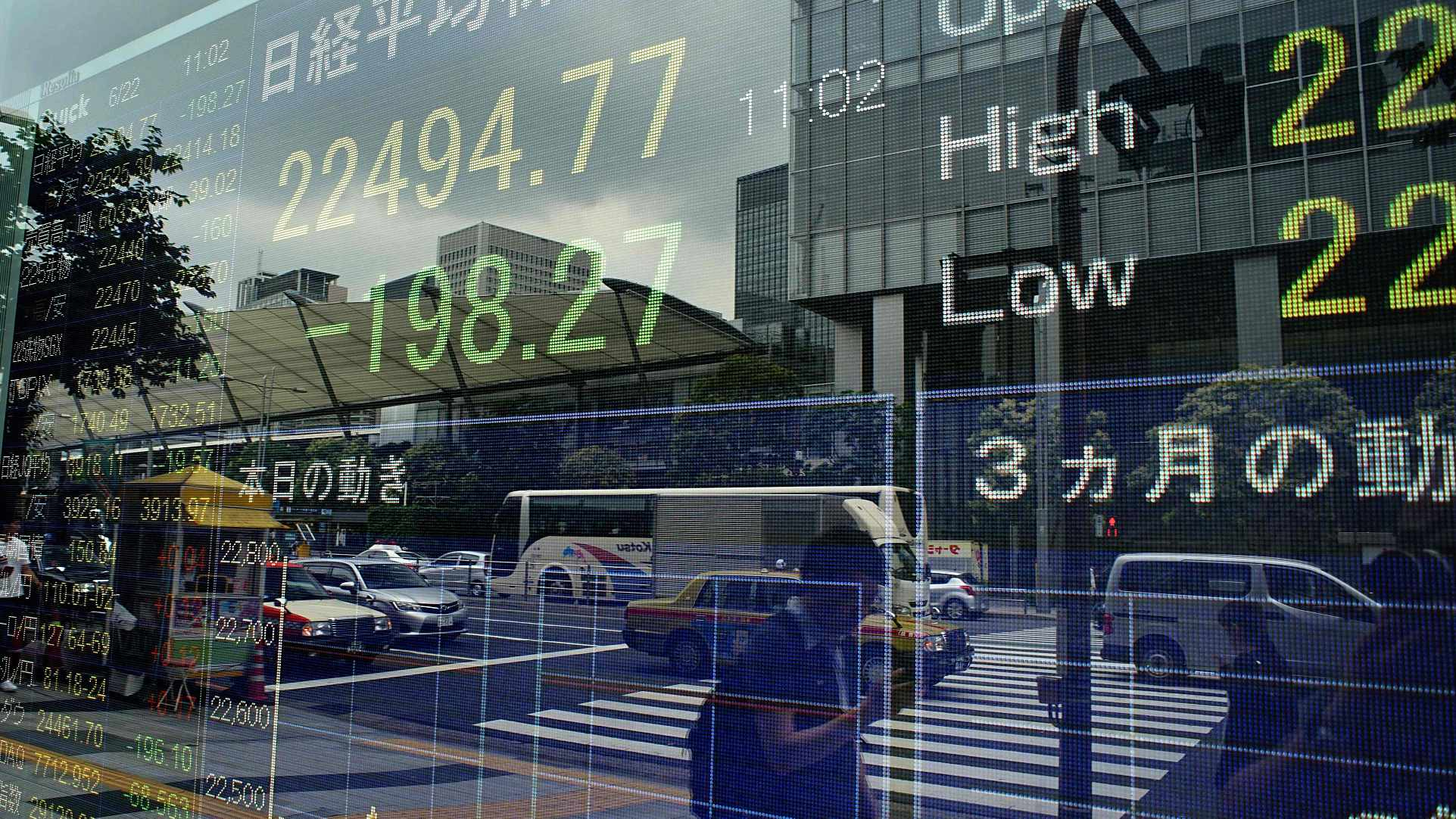
Global share prices fell on Monday on escalating trade tensions between the United States and major economies while crude oil prices gave up some of the hefty gains made after major oil exporters agreed to a modest increase in production.
European shares, which hit multi-week lows last week, were expected to extend declines, with financial spread-betters predicting Britain's FTSE and Germany's DAX would open 0.5 percent weaker, and France's CAC to open 0.6 percent down.
In Asia, S&P500 mini futures ESc1 eased as much as 0.6 percent while MSCI's broadest index of Asia-Pacific shares outside Japan. Japan's Nikkei lost 0.8 percent.
The Wall Street Journal reported that US President Donald Trump plans to bar many Chinese companies from investing in US technology firms and block additional technology exports to China.
“Until last week, there was vague optimism that we can muddle through this. But now it looks like, unless the US lays down its arms, things will be getting more chaotic,” said Hirokazu Kabeya, chief global strategist at Daiwa Securities.
As the threat of a full-blown trade war has become all the more real, MSCI’s gauge of stocks across the globe has fallen in five of the last six weeks, including last week, when it declined one percent – its biggest weekly drop in three months.
Chinese shares tumbled 3.7 percent last week, as Trump put the heat on Beijing, threatening to hit 200 billion US dollars of Chinese imports with 10 percent tariffs.
China's central bank said on Sunday it would cut the amount of cash some banks must hold as reserves by 50 basis points (bps).
The reduction in reserve requirements, the third by the central bank this year, had been widely anticipated by investors and is aimed at accelerating the pace of debt-for-equity swaps and spur lending for smaller firms.
The index of global auto manufacturers remained soft after 4.7 percent fall last week.
Trump threatened to impose a 20 percent tariff on Friday on all imports of EU-assembled cars, a month after his administration launched an investigation into whether auto imports posed a national security threat.
A senior European Commission official said on Saturday that the European Union will respond to any US move to raise tariffs on cars made in the bloc.
Investors and traders are worried that threats of higher US tariffs and retaliatory measures by others could derail a rare period of synchronized global growth.
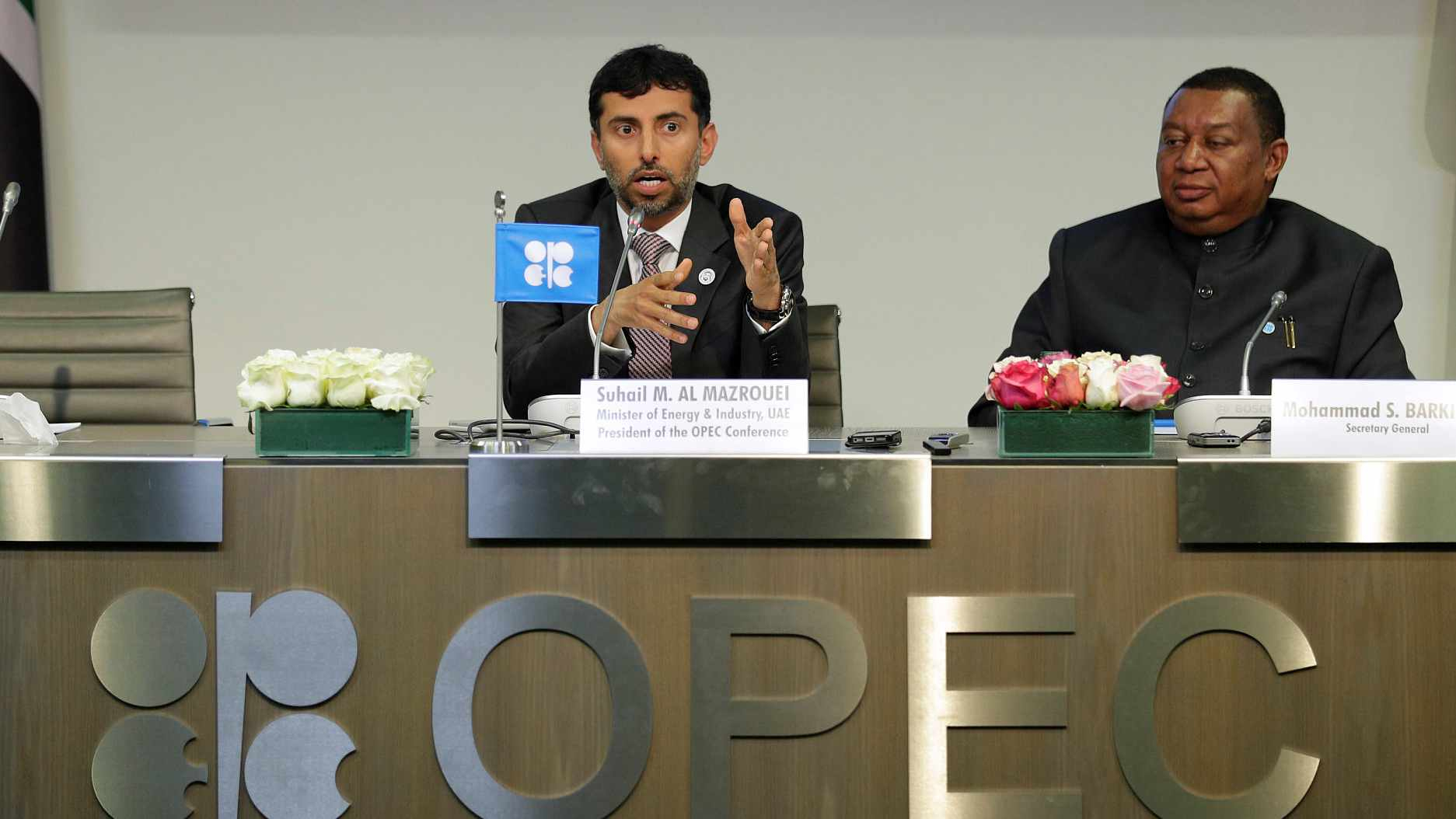
UAE's Oil Minister OPEC President Suhail Mohamed Al Mazrouei and OPEC Secretary General Mohammad Barkindo address a news conference after an OPEC meeting in Vienna, Austria, June 22, 2018. /VCG Photo
UAE's Oil Minister OPEC President Suhail Mohamed Al Mazrouei and OPEC Secretary General Mohammad Barkindo address a news conference after an OPEC meeting in Vienna, Austria, June 22, 2018. /VCG Photo
Oil prices were supported after OPEC and non-OPEC producers agreed on a modest increase in production from next month, without announcing a clear target for the output increase, leaving traders guessing how much more will actually be pumped.
OPEC and non-OPEC said in their statement that they would raise supply by returning to 100 percent compliance with previously agreed output cuts, after months of underproduction.
“In reality, there aren’t many countries that can raise outputs, with only Saudi Arabia having the capacity to flexibly increase the output. But if Saudis alone increase output sharply, they could face a backlash from some other countries,” said Tatsufumi Okoshi, senior commodity economist at Nomura Securities.
US crude futures traded at 68.36 US dollars per barrel, down 0.3 percent for the day after Friday’s 4.6 percent rally.
International benchmark Brent fell 1.8 percent, however, to 74.22 US dollars per barrel, giving up more than a half of their gains made on Friday.
Source(s): Reuters