
Opinions
14:56, 12-Jun-2018
Opinion: How trade facilitation within SCO contributes to multilateralism
 ["china"]
Share







Copied

Editor's note: The article is based on an interview with Liu Huaqin, director of the Chinese Academy of International Trade and Economic Cooperation under China's Ministry of Commerce.
Leaders of Shanghai Cooperation Organization (SCO) member states wrapped up on Sunday their first summit after expanding its membership to India and Pakistan. The regional union, originally designed to defend porous borders and fight against rampant terrorism across Central Asian countries, is undergoing a transformation to bolster economic cooperation among the world's emerging markets.
The Joint Statement of the Heads of Member States of the SCO on Promoting Trade Facilitation, among the spectrum of statements issued on Sunday, opens a new chapter at the organization's coming-of-age ceremony.
"Simplifying customs procedures and formalities related to goods import, export and transit, improving transparency and cooperation among border agencies, accelerating the flow and customs clearance of goods" are highlighted in the statement.

June 2, 2018: Qingdao cityscape /VCG Photo
June 2, 2018: Qingdao cityscape /VCG Photo
Trade facilitation plays a prominent role in a network of global value chains and a more elaborate international division of labor. The SCO's landlocked Central Asian members are at a relatively low level of trade facilitation, primarily deriving from their prohibitive trade costs that are much higher than the global average.
"Complicated procedures for customs clearance slow down the cargo movement and further raised the costs," Liu Huaqin, director of the Chinese Academy of International Trade and Economic Cooperation under China's Ministry of Commerce, told CGTN.
The policy measures formulated in the statement will help set up an institutional foundation for red tape reduction and facilitating cross-border cooperation.
Through the joint statement, China, as the host of this year's SCO, showcases its responsibility as a World Trade Organization (WTO) member. Last February, the WTO adopted a trade facilitation agreement, the first in its 21-year history and a milestone in the international trading system. The statement demonstrates China's commitment to this legally binding multilateral deal, particularly in a landscape where the West is reneging on its very initiative – globalization.
The statement is also conducive to narrowing differences among SCO members in statistical standards of trade volumes, which will then promote economic integration across the Eurasian region.
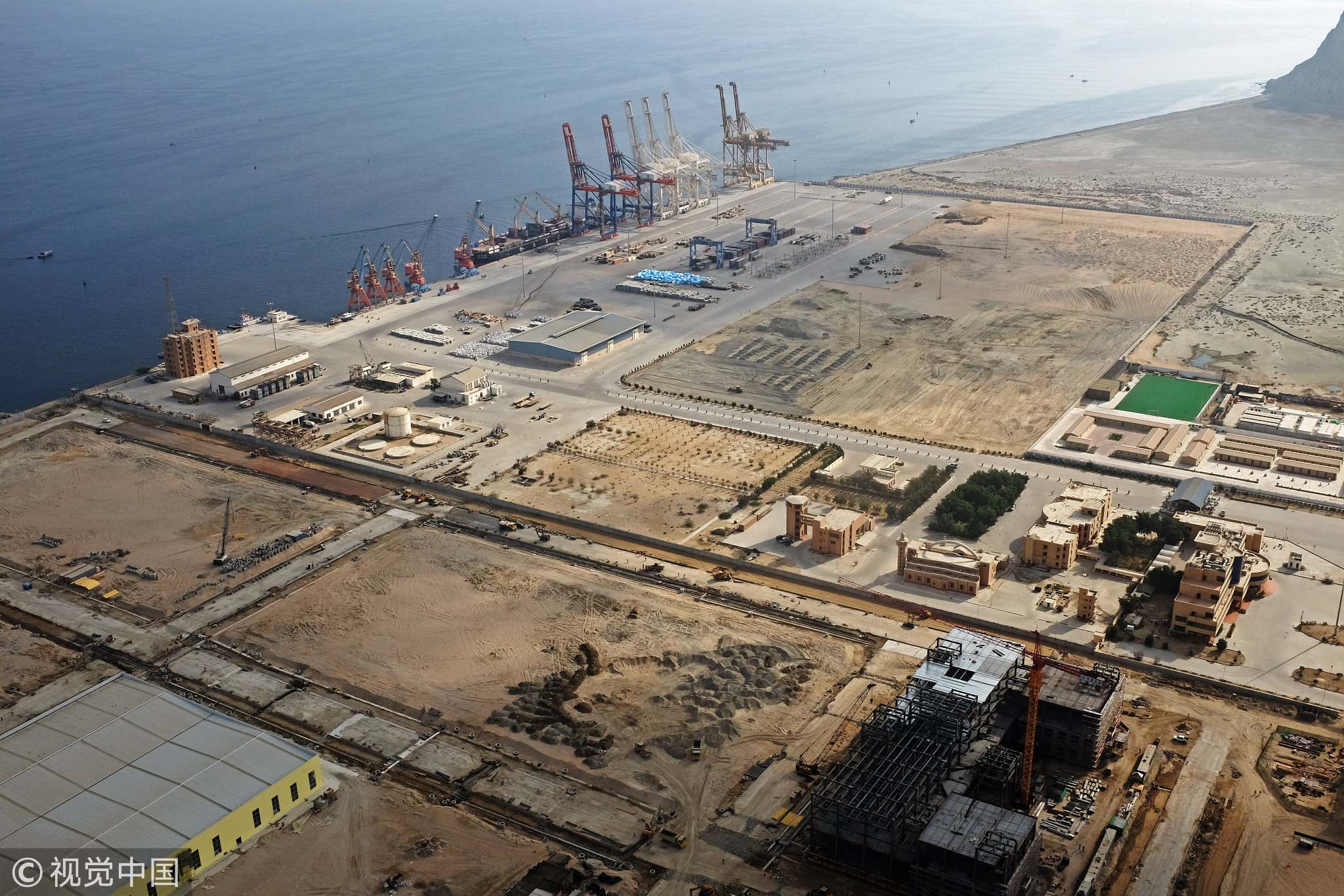
October 4, 2017: A general view of Gwadar port in Gwadar, Pakistan /VCG Photo
October 4, 2017: A general view of Gwadar port in Gwadar, Pakistan /VCG Photo
According to Chinese President Xi Jinping in his concluding remarks, the Chinese government supports building a demonstration area in Qingdao to boost local economic and trade cooperation between China and other SCO members.
"It's actually an innovation," said Liu. "Previously the SCO was focusing on state-level economic cooperation, but now local governments, corporations and individuals have opportunities to participate in and benefit directly from collaboration projects." Expect to see more of the region’s sister cities engaged not just in political and cultural communication but also in economic exchanges.
Similarly, a committee of legal services for SCO members will be set up. By providing legal guidance for enterprises before they make investment decisions, it aims at avoiding blind spots when investing overseas. Huge differences in trade laws and regulations have posed obstacles for companies in expanding their investments.
Such a committee will also help reduce investment risks in that it can render legal support during the business process. Friction in economic cooperation comes primarily from not understanding local rules, so knowledge beforehand will give transnationals an edge and also lower the possibility of contention arising from suspicion and ignorance.
Per Xi’s pledge, China will also establish a special lending facility equivalent to 30 billion yuan (4.7 billion US dollars) within the framework of the SCO Inter-bank Consortium. Liu predicted that the amount will probably be directed to infrastructure, agriculture, finance and other sectors that need funding within SCO member countries.
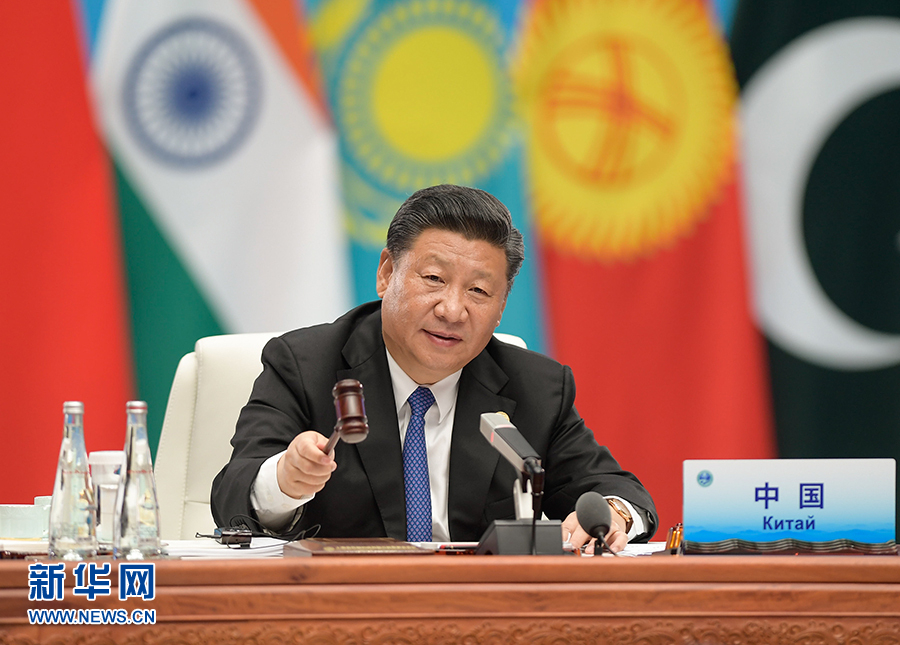
Chinese President Xi Jinping speaks at the 18th SCO summit in Qingdao, east China's Shandong Province, on June 10, 2018. /Xinhua Photo
Chinese President Xi Jinping speaks at the 18th SCO summit in Qingdao, east China's Shandong Province, on June 10, 2018. /Xinhua Photo
"The facility has offered a very good example for other countries to follow," she added. With this move, China has made clear its stance as the rotating chair of the SCO this year.
There's no denying SCO member states have yet to found an SCO bank after 10 years of discussion. The concern is exacerbated after India and Pakistan – decades-long rivals – joined the organization. However, Liu said that SCO member states have reached basic consensuses in setting up the bank, like what the BRICS did. "The only difference now is on its operation model and they will ultimately clinch an agreement," she noted.
The abundant raft of trade facilitation initiatives exhibits the resolution of the world's largest transregional organization to safeguard the multilateral economic system, which is being jeopardized by the US and several other Western nations.
Now the SCO, contributing a quarter to the global GDP, is growing into a powerful body with innovative cooperation platforms based on openness and interconnection. In a united effort, it poses an effective deterrence to trade protectionism.