Yes or no? Ireland votes in crucial abortion referendum
By Sim Sim Wissgott
["europe"]
Share
Copied
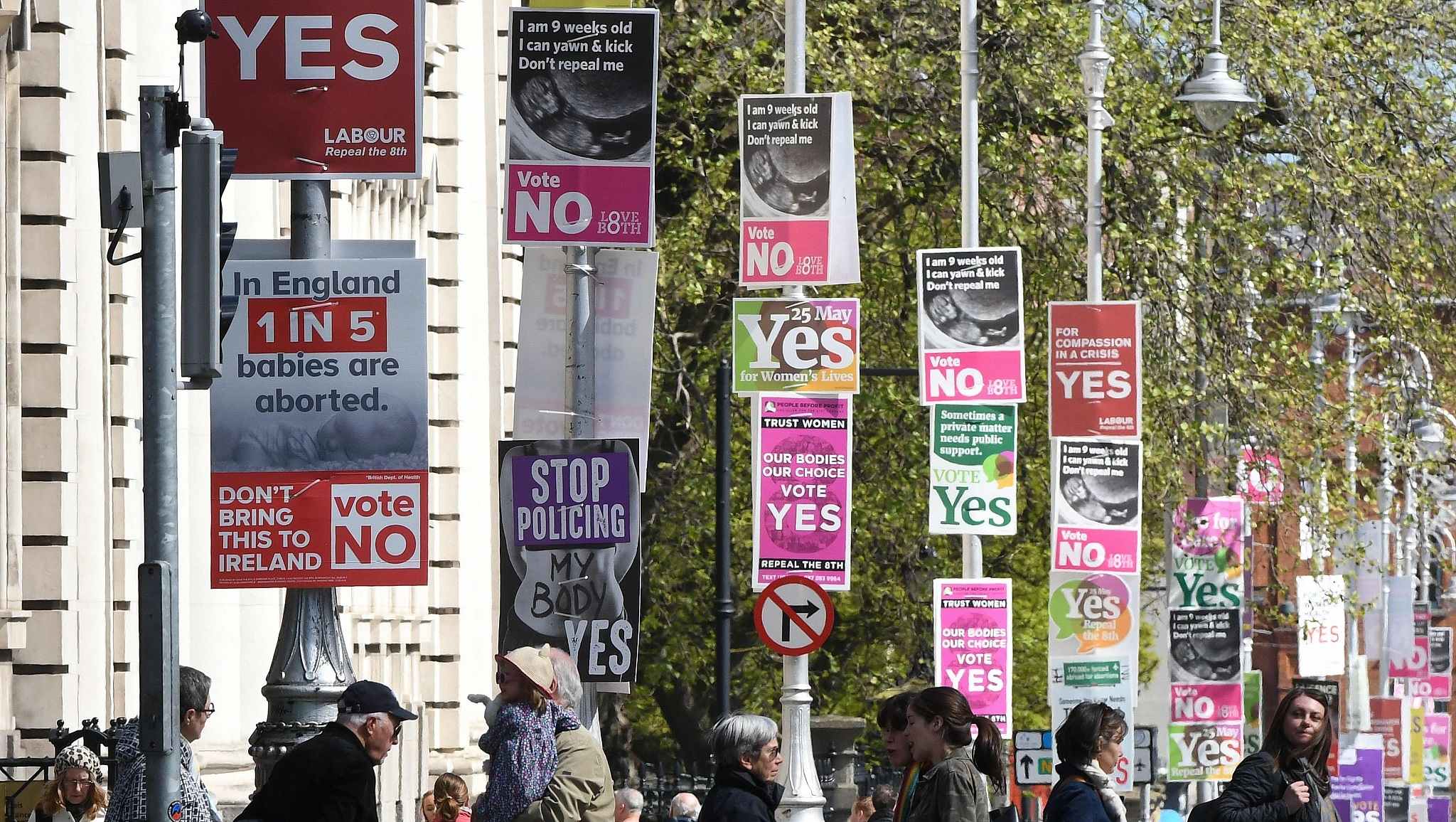
Irish voters from around the world have traveled home to take part in a crucial referendum on Friday on whether to legalize abortion.
The issue has long divided Irish society, where the Catholic Church still wields extensive influence, but the most recent polls show the "Yes" camp could win out in the end.
Here is a look at the key issues in the vote, as well as a peek at the state of abortion legislation worldwide.
#HomeToVote
CGTN screenshot of Twitter
CGTN screenshot of Twitter
CGTN screenshot of Twitter
CGTN screenshot of Twitter
Postal votes from abroad are not allowed in this referendum, much like during Ireland's historic 2015 push to legalize gay marriage. So Irish voters have been traveling home to cast their ballot – from the UK, Europe, and even as far as Argentina, Vietnam and Australia – using the hashtag #HomeToVote to share their stories.
The issue at stake is whether to repeal the Eighth Amendment of the Irish constitution, introduced in 1983, which bans all abortions.
New legislation passed in 2013 allows exceptions where the mother’s life is in danger. But in all other cases, including rape and incest, it is illegal to terminate a birth. Violating this law can land one in prison for 14 years.
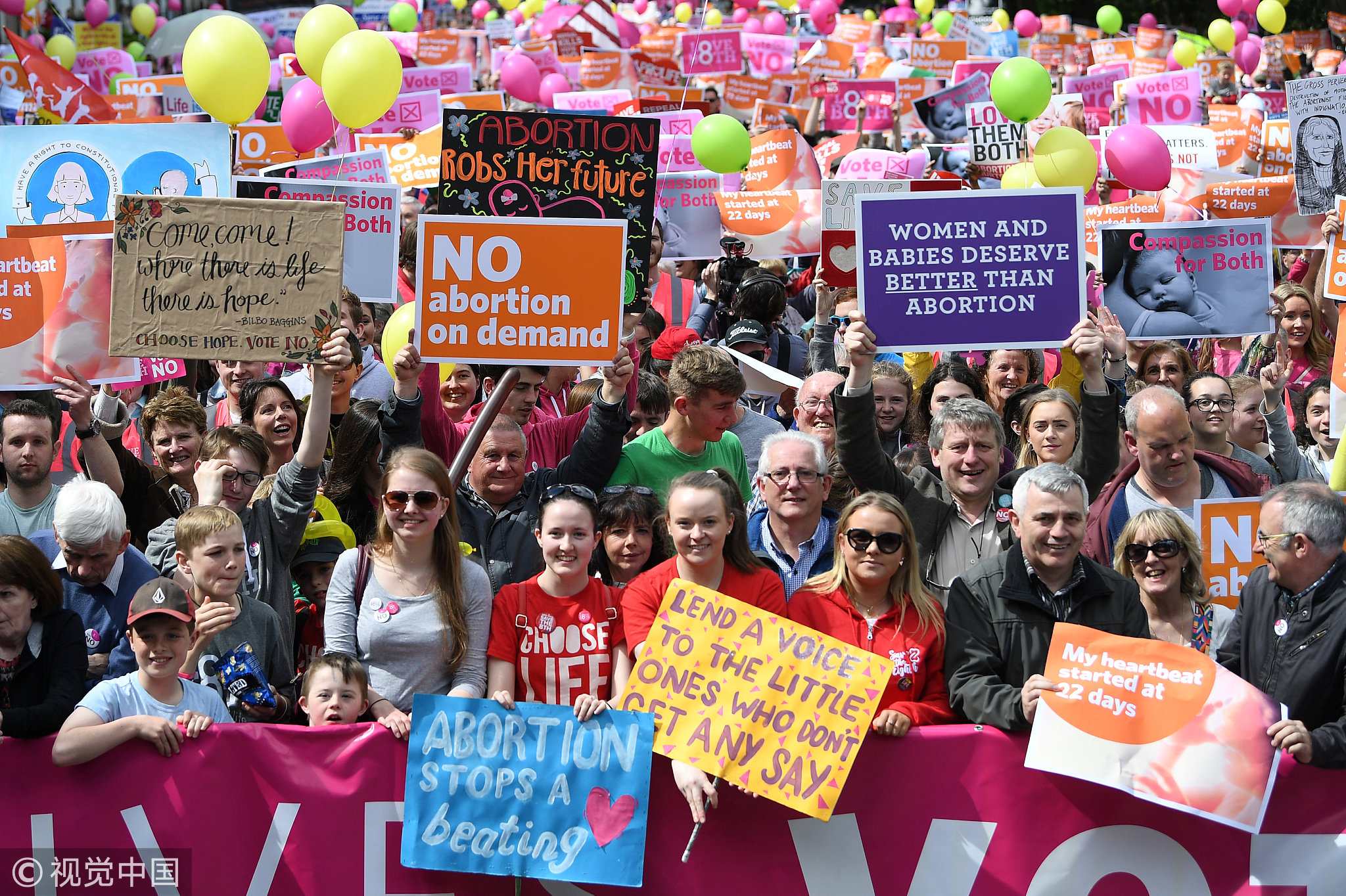
Supporters of the ban argue that abortion means ending a life, and they have warned that repealing the Eighth Amendment would lead to "abortion on demand" – in other words, women rushing to get abortions on any pretext.
Demonstrators take part in a pro-life rally ahead of a May 25 referendum on abortion law, in Dublin, Ireland, May 12, 2018. /VCG Photo
Demonstrators take part in a pro-life rally ahead of a May 25 referendum on abortion law, in Dublin, Ireland, May 12, 2018. /VCG Photo
"Yes" campaigners, on the other hand, insist that women should have the right to make decisions about their own bodies and that the existing ban does not prevent abortions from taking place – worse even, it endangers women’s lives.
Irish women seeking an abortion have been driven to illegal clinics or to using pills ordered online and taken without medical supervision, they say. Those who can afford to, travel abroad, especially to the UK or Netherlands.
‘Hidden and dangerous’
In 2016, the last year for which data is available, 3,265 women with an Irish home address sought an abortion in the UK, according to the UK Department of Health. Since 1980, that number has topped 168,000 women.
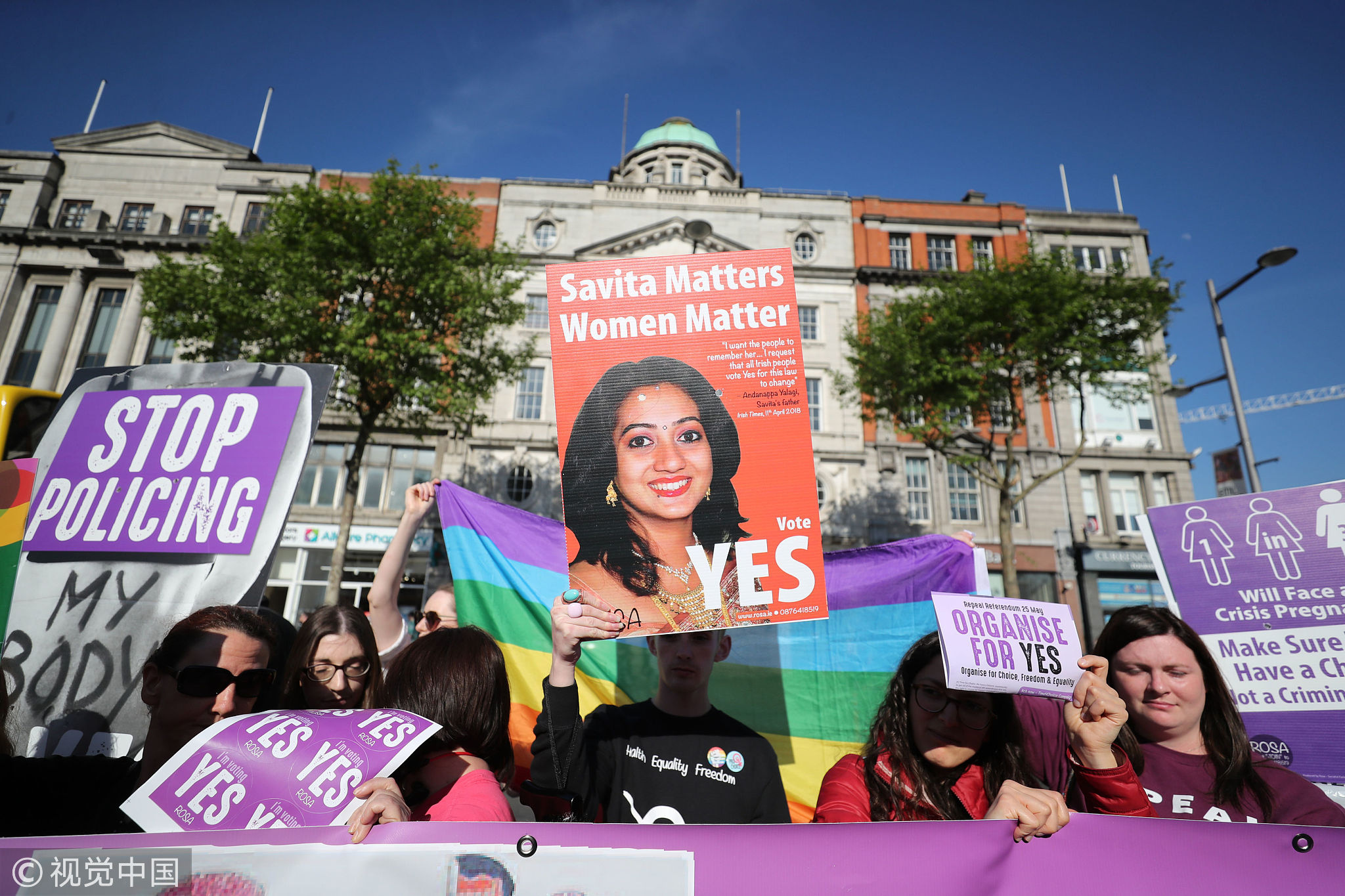
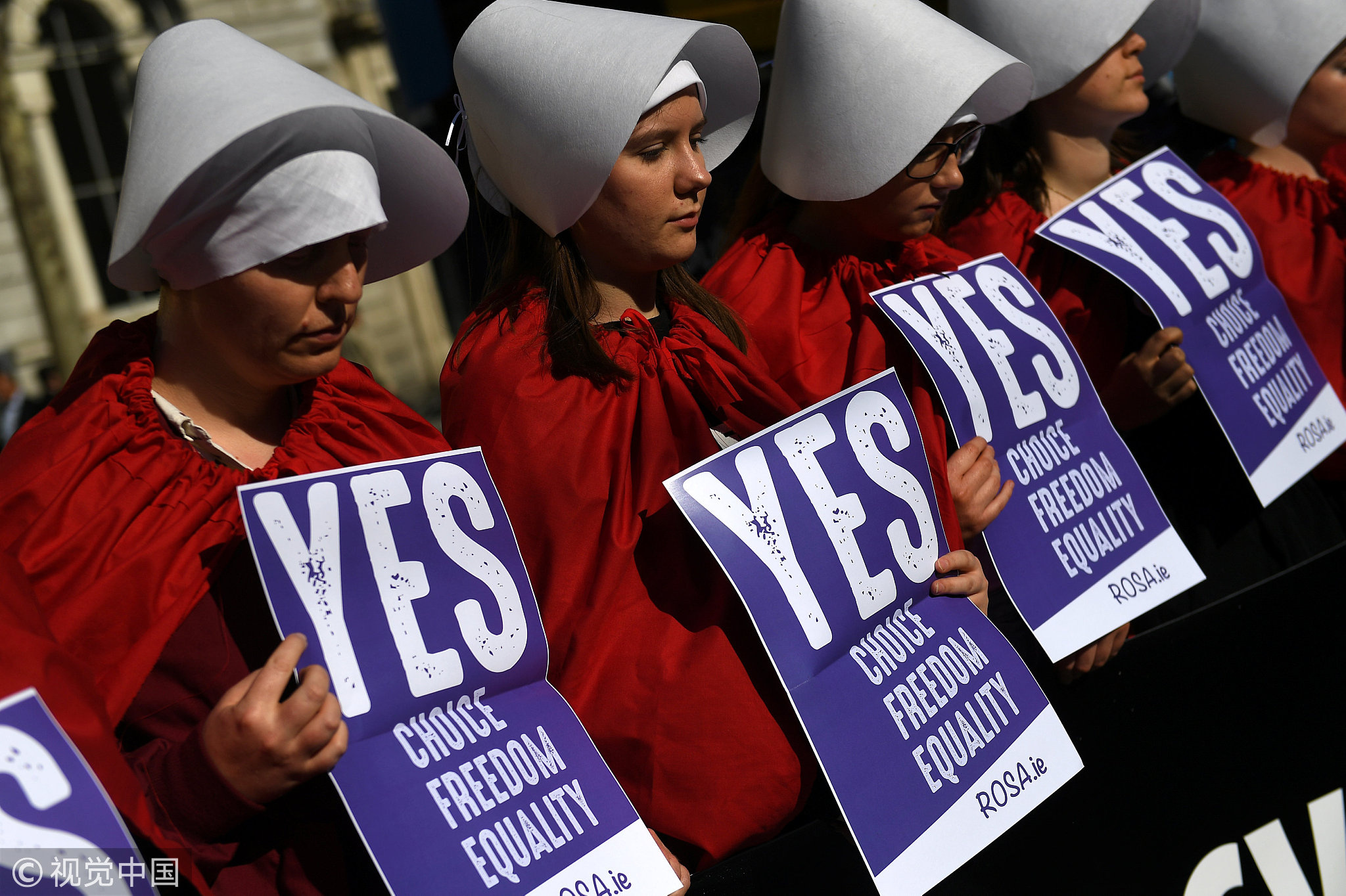
Volunteers from Reproductive rights against Oppression, Sexism & Austerity (ROSA) call for a 'Yes' vote in Ireland's abortion referendum in Dublin, May 23, 2018. /VCG Photo
Volunteers from Reproductive rights against Oppression, Sexism & Austerity (ROSA) call for a 'Yes' vote in Ireland's abortion referendum in Dublin, May 23, 2018. /VCG Photo
"The Eighth Amendment never stopped abortion, it made it hidden and dangerous," Ross Kelly, one of 1,500 Irish doctors who have signed a Doctors Together for Yes petition supporting the repeal, told the Irish Times.
An oft-cited case for legalizing abortion is that of Savita Halappanavar, a 31-year-old woman who died in a Galway hospital after being refused an abortion in 2012. The case made headlines and helped pass the 2013 legislation.
Abortion and politics
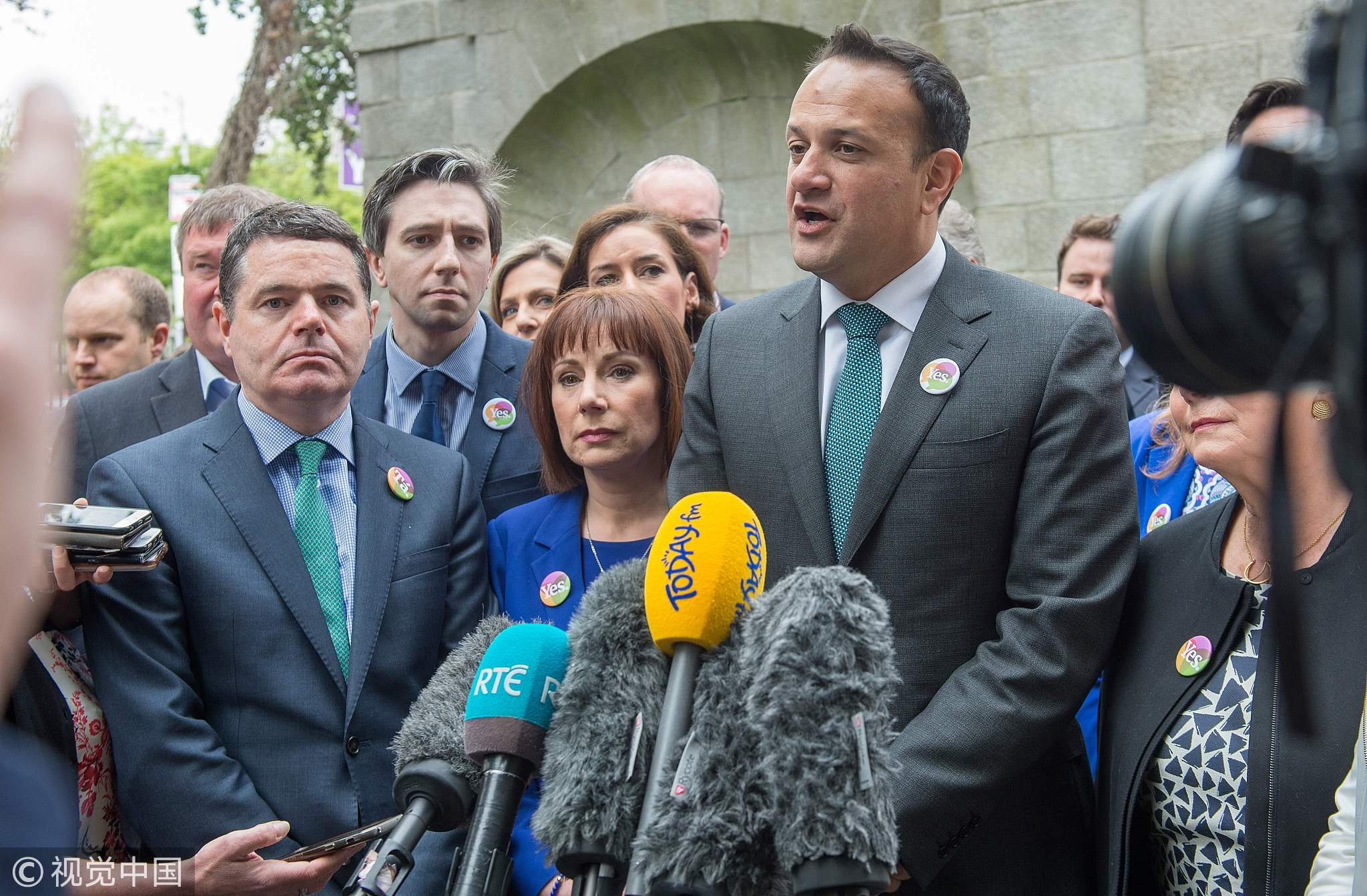
Prime Minister Leo Varadkar, who already made history when he became Ireland’s first openly gay head of state, has spoken in favor of repealing the Eighth Amendment.
Ireland's Prime Minister Leo Varadkar (R) addresses the media, urging people to vote 'yes' in the referendum to repeal the eighth amendment of the Irish constitution in Dublin, May 24, 2018. /VCG Photo
Ireland's Prime Minister Leo Varadkar (R) addresses the media, urging people to vote 'yes' in the referendum to repeal the eighth amendment of the Irish constitution in Dublin, May 24, 2018. /VCG Photo
"Abortion is a reality in Ireland today: 3 women a day take the abortion pill (which they get illegally online), without medical advice and support, while another 9 women travel abroad every day to terminate their pregnancy. They need care here at home," he tweeted earlier this week, adding that he would vote "Yes' on Friday.
Other party leaders have also voiced their support for lifting the ban. MPs have been given the right to vote freely however, regardless of their party’s stance.
During a January debate in the Dáil – the Irish parliament – several deputies admitted they might not support abortion but insisted it should be a matter of choice.
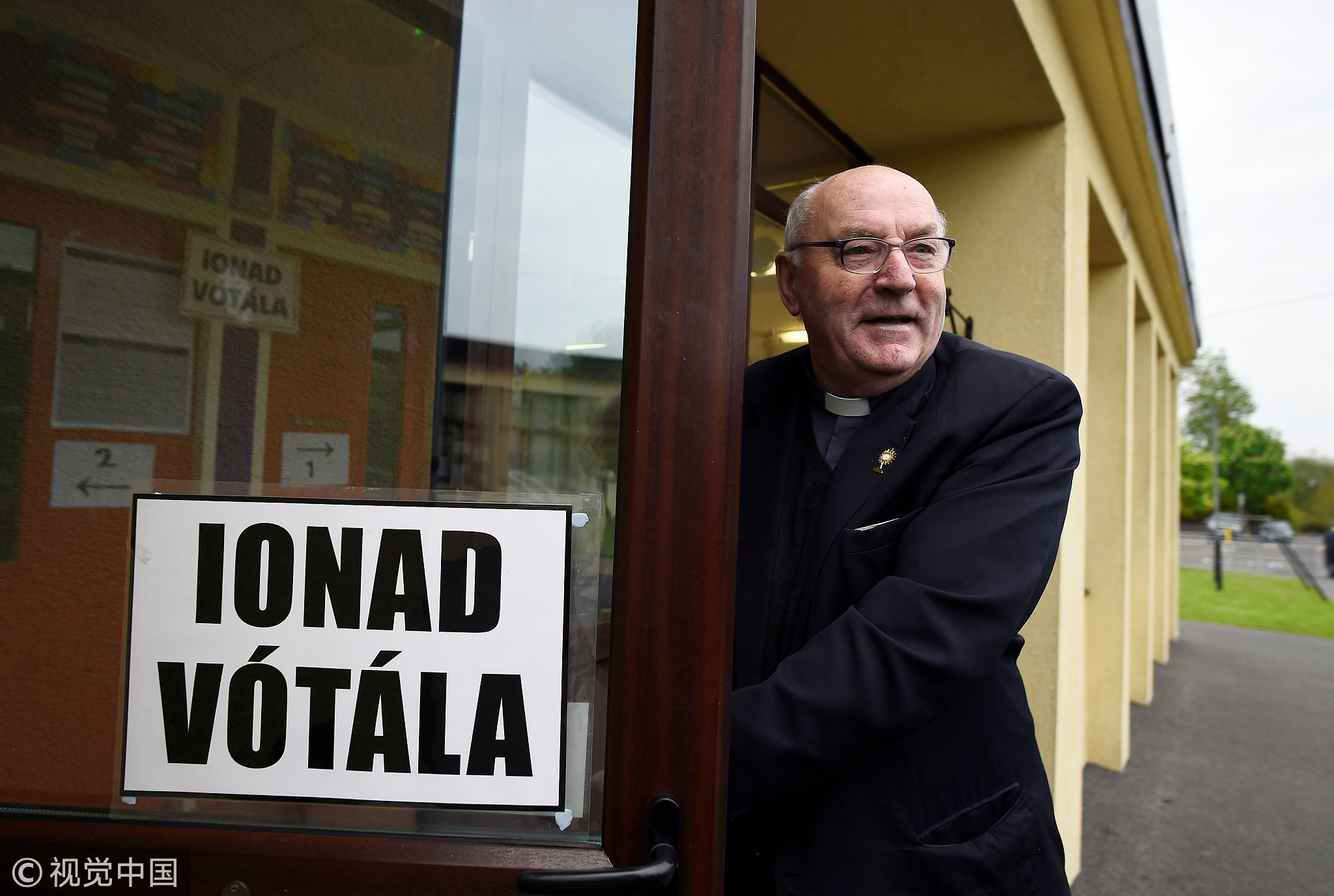
Father Thomas Harrington arrives to vote at Knock National School as Ireland holds a referendum on liberalizing its law on abortion, in Knock, Ireland, May 25, 2018. /VCG Photo
Father Thomas Harrington arrives to vote at Knock National School as Ireland holds a referendum on liberalizing its law on abortion, in Knock, Ireland, May 25, 2018. /VCG Photo
"Everyone has the right to choose," said Sinn Fein leader Gerry Adams. "(It) is not for anyone to foist their views on others."
The Irish Catholic Church, meanwhile, has maintained its opposition to abortion.
In his New Year’s message, Archbishop Eamon Martin insisted that "ending the life of an unborn child, like the taking of any other innocent human life, is always evil and can never be justified."
In the immediate run-up to the referendum however, the Church has been rather quiet and campaigners on both sides have refrained from using religion – a potent argument in the past – to avoid alienating undecided voters, observers have noted.
Pro-choice activists dress up as characters from the Handmaid's Tale in Dublin, Ireland, May 23, 2018. /VCG Photo
Pro-choice activists dress up as characters from the Handmaid's Tale in Dublin, Ireland, May 23, 2018. /VCG Photo
The latest opinion polls show the "Yes" vote slightly ahead of the "No" vote but with a significant number of voters still undecided.
The global state of abortion
In most of the developed world, women can now legally seek an abortion.
But Ireland has not been the only country to tackle this controversial issue in recent months.
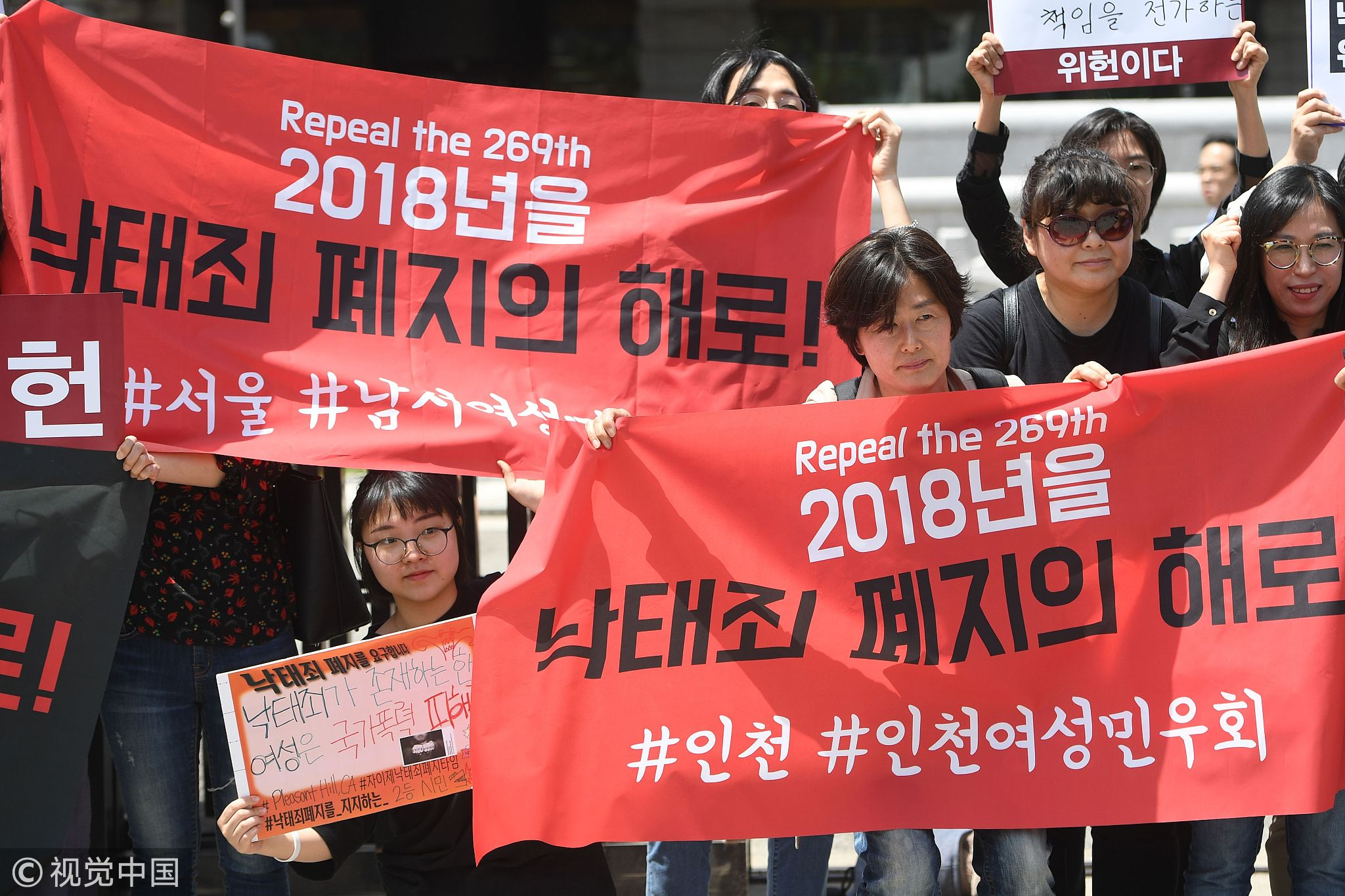
South Korea’s constitutional court on Thursday began reviewing whether to decriminalize abortion following a challenge by a doctor who has been prosecuted for carrying out close to 70 such procedures. While the law is rarely enforced, Korean women who try to end a pregnancy may still in theory face a fine and a year in prison.
South Korean pro-choice supporters hold banners reading 'Decriminalize abortions' during a rally in front of the Constitutional Court in Seoul, May 24, 2018. /VCG Photo
South Korean pro-choice supporters hold banners reading 'Decriminalize abortions' during a rally in front of the Constitutional Court in Seoul, May 24, 2018. /VCG Photo
Argentina is also due to vote on decriminalizing abortion next month.
In a major reversal however, the US state of Iowa in May passed a law banning abortions as soon as a fetal heartbeat is detected, which can be as early as six weeks – even before a woman has realized she is pregnant, critics say.
Anti-abortion groups are hoping the Supreme Court will be forced to reexamine the landmark 1973 Roe v. Wade case that legalized abortion in the US.
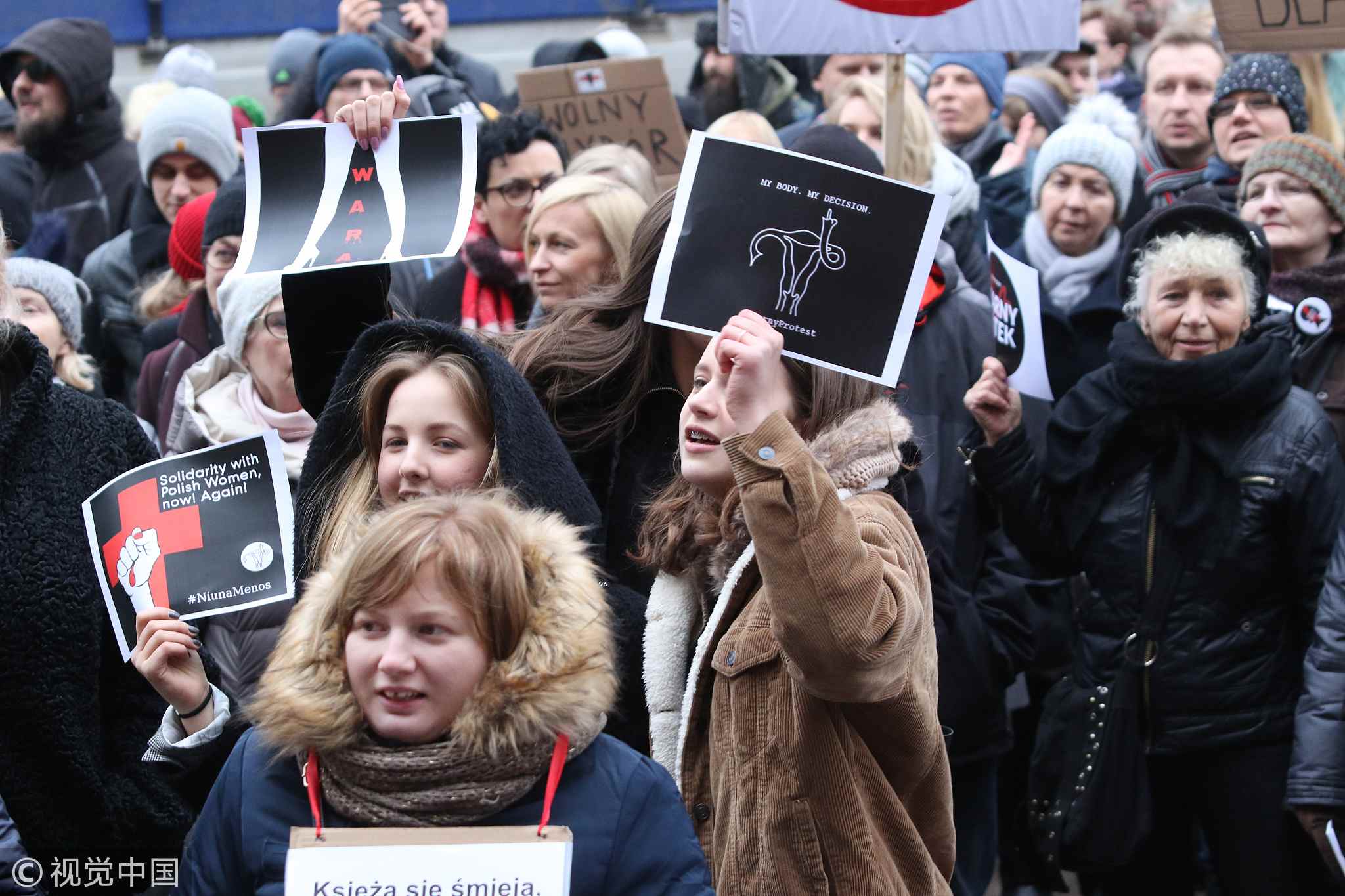
Protesters with clothes hanger pictures, symbolizing illegal abortions, are seen in Gdansk, Poland, March 23, 2018. /VCG Photo
Protesters with clothes hanger pictures, symbolizing illegal abortions, are seen in Gdansk, Poland, March 23, 2018. /VCG Photo
In Poland, protesters have come out against attempts by the conservative government to further restrict what is already one of the European Union’s narrowest laws on abortion.
In Brazil as well – where tough laws have led to hundreds of deaths over the past 10 years, according to the health ministry – more restrictive legislation is in the works.
Irish voters on Friday are only voting on whether to repeal the Eighth Amendment. But in the event of a "Yes" vote, fresh legislation – which would still have to be passed by parliament – is expected to allow abortions in the first 12 weeks of pregnancy, and up to 24 weeks for health reasons.

 ["europe"]