
Opinions
11:12, 28-Apr-2018
Opinion: Wuhan meeting - Bonhomie on the first day
 ["china"]
Share







Copied
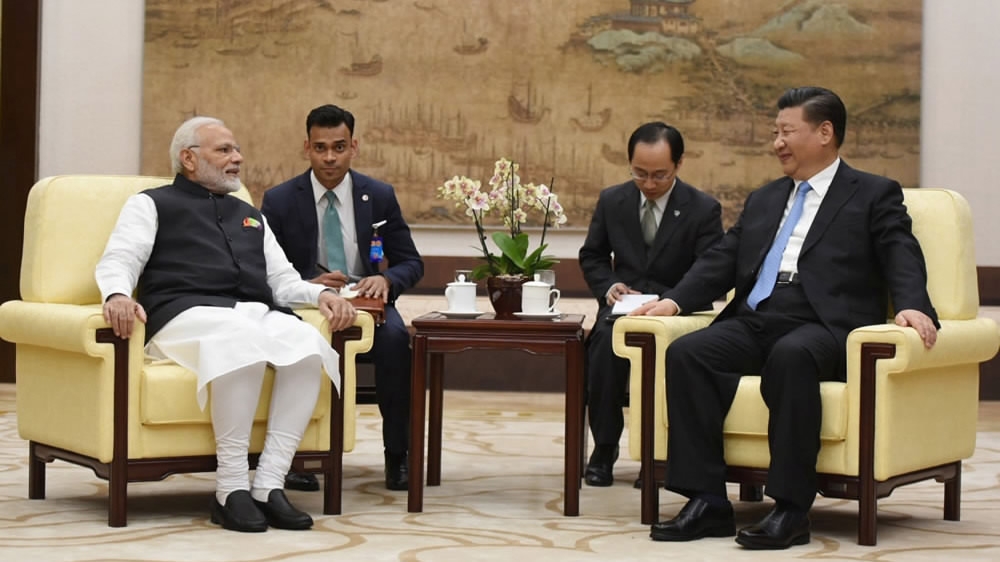
Much bonhomie prevailed on the first day of the meetings between the leaders of the two most populous countries in the world. China’s President Xi Jinping met with Indian Prime Minister Modi at the central Chinese city of Wuhan on April 27, 2018 for an “informal meeting”.
PM Modi thanked President Xi for receiving him twice out of Beijing and invited the latter to visit India in 2019. Historical and cultural links were alluded to as with the responsibility of the two leaders to uplift 40 percent of the global population. The global power matrix was touched upon by suggesting that the prestige and glory of these two countries in historical times be restored.
However, since this is an “informal meeting”, no joint statement is expected to be released, although foreign ministries of both sides have hinted at the broad discussions. It is still not clear what are the areas of consensus arrived at by both leaders at Wuhan in their interactions on “bilateral and international matters from an over-arching and long-term perspective with the objective of enhancing mutual communication at the level of leaders” as foreign minister Wang Yi stated last week.
Nevertheless, the clues in the released tweets suggest a focus on the need for economic development, specifically in infrastructure development projects such as the hydro-electricity projects PM Modi alluded to. Also, the urban development schemes spectacularly displayed in Wuhan attracted the attention of the PM who revealed that he spent a day several years ago in the region to study the economic development of China.
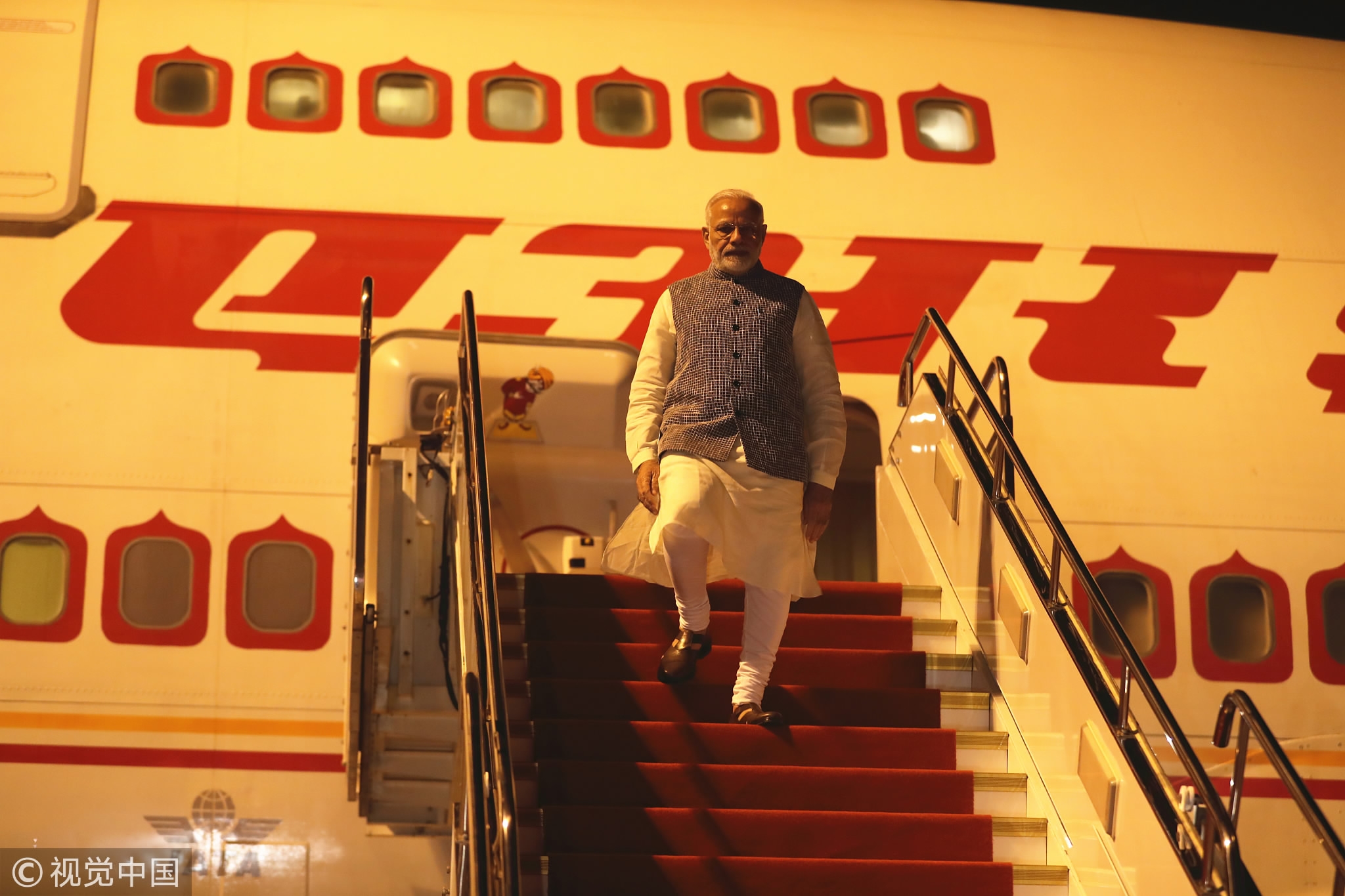
On April 27, 2018, Indian Prime Minister Narendra Modi’s special plane arrived at Wuhan Tianhe International Airport. /VCG Photo.
On April 27, 2018, Indian Prime Minister Narendra Modi’s special plane arrived at Wuhan Tianhe International Airport. /VCG Photo.
Overall, talks on the first day were conducted in a relaxed atmosphere suggesting to the easing of any tensions between the two. The press release from the military suggests to possible understanding on easing tensions on the region rocked by the border patrol stand-off at Donglang or Doklam last year.
While the details are still not clear, it is likely that effective confidence building measures – an idea floated at the two leaders meeting at Xiamen, the venue of the BRICS meeting last September- could be unveiled gradually for ushering in stability. Six CBM measures exist between the two countries so far. Possibly more efforts could be made to intensify the current mechanisms including the counter-terror Hand-in-Hand joint operations between the two armies.
China’s emphasis is on free trade and expanding economic relations as the People’s Daily pointed out. This is obvious given the major strides that the country has been making in this sphere in the last four decades. Also, both leaders’ speeches at Davos and the G-20 summit meetings in the recent past suggest supporting to the globalization process and opposing trade protectionist tendencies in the Untied States and other western countries.
This suggests some possible concrete outcomes of today’s meetings in the economic sphere, specifically in setting up manufacturing zones for export to third markets – as was mentioned in Premier Li Keqiang and PM Manmohan Singh's joint statement in May 2013 but not yet implemented. Smart cities, energy projects, skill developments, and the like are other related areas of cooperation.
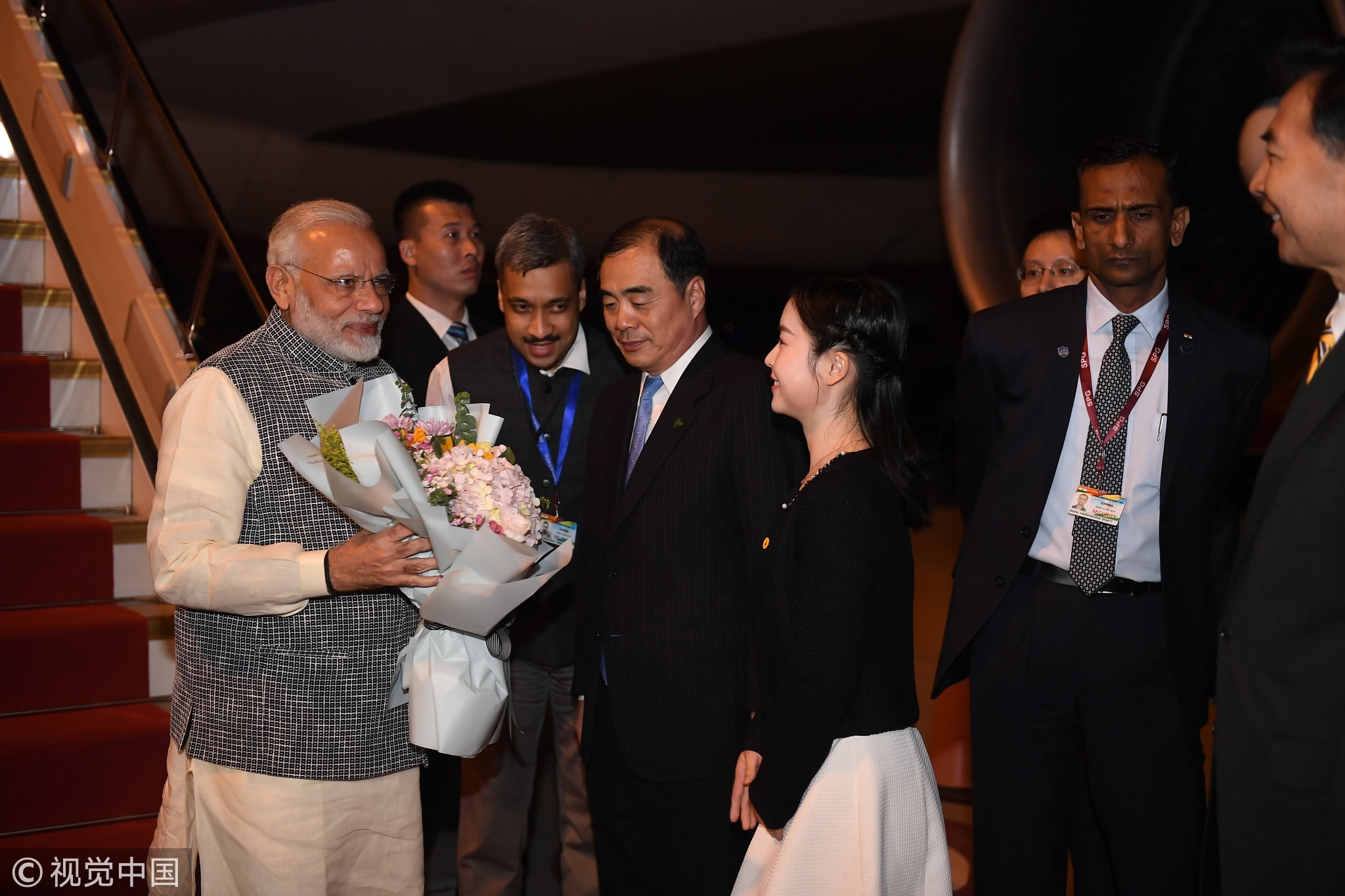
Indian Prime Minister Narendra Modi receives flowers after arriving in China's central Hubei province on April 27, 2018. /VCG Photo.
Indian Prime Minister Narendra Modi receives flowers after arriving in China's central Hubei province on April 27, 2018. /VCG Photo.
Another area is that of the social sector, specifically showcasing the advantages of each other for mutual benefit. While China made major strides in vocational education, India’s IT software training is sought after in China. Likewise, social health sector in China is well developed, while Indian pharmaceuticals have acquired global prominence through generic medicine. China’s efforts at tackling Ebola virus in West Africa, SARS, bird-flu and other pandemics are well known. Some agreements on these lines are likely after the talks.
Finally, cultural relations are another arena with huge scope in expanding people-to-people contacts, films, book fairs and exhibitions, exchanges of students and professionals, cultural troupes and others. Visit to the Hubei Provincial Museum artifacts on the first day also underlined the need for preservation of cultural artifacts – an area with which both countries are extensively endowed with.
(Srikanth Kondapalli is a professor in Chinese Studies at Jawaharlal Nehru University in New Delhi of India. The article reflects the author's opinion, and not necessarily the views of CGTN.)