
Opinions
18:26, 12-Jul-2018
Rediscovering China: Accepting sex reassignment
Updated
17:43, 15-Jul-2018
 ["china"]
Share







Copied
00:31
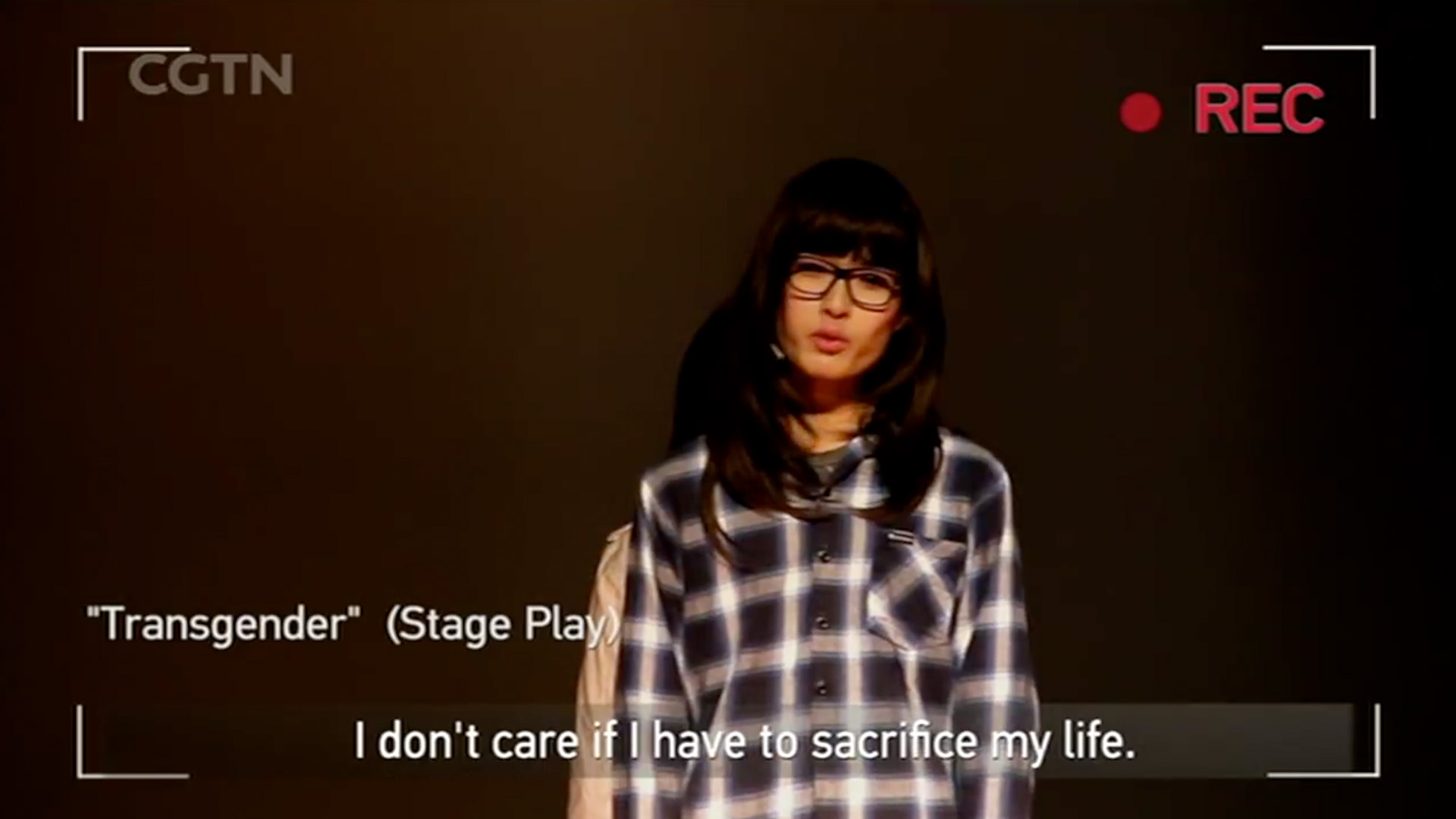
Jin Xing, the dancer and TV star, has for many years been at the forefront of efforts by China‘s transgender community to gain wider acceptance.
Now in her 50s, the former army officer had sex reassignment surgery in 1995. Before long, TV shows she hosted started gaining large audiences. Her popularity has gone a long way toward ending the misconception that transgender people are condemned to a life of frustration and misery.
A major breakthrough for the LGBT community occurred in 2001 when, in the third edition of the Chinese Classification of Mental Disorders, homosexuality and bisexuality were removed from the list. It meant that belonging to a sexual minority was no longer considered an illness.
In fact, in recent years, China has emerged as a world leader in sex reassignment surgery. Dr Zhao Yede is a specialist at 411 Hospital in Shanghai. He claims that “for female-to-male reassignment…” his team “are the best in the world.” He goes on: “When I began these operations in 1998, I performed 10 to 20 a year. Now we do hundreds.”
And his reputation is spreading: “I have patients from every province in China. And patients from all over Asia – Malaysia, Singapore, Japan. On a busy day, I have 40 to 50 consultations.”
As with any surgery, the procedure is not without physical risk. And even though in the vast majority of cases, the operation is successful, there are side effects. The likelihood is that the patient will face a lifetime of taking testosterone or estrogen to maintain their physical equilibrium.

Jin Xing before (right) and after (left) surgery. /Baidu Photo
Jin Xing before (right) and after (left) surgery. /Baidu Photo
However, most of the complications are more psychological than physical. To fit completely into the role of a different gender takes time, generally a few years.
Even if the transgender person manages to come to terms with who they are, they may still face discrimination. This can give rise to practical everyday difficulties. Many Chinese legal documents, such as university diplomas, state the holder’s gender – and if it doesn’t correspond with the gender the person identifies with, can create obstacles, for example in finding employment.
The good news is that, once the sex reassignment surgery is verified, the government now permits a change to the gender recorded on identification cards and other legal documents.
Rediscovering China is a 30-minute feature programme offering in-depth reports on the major issues facing China today. It airs on Sunday at 10.30 a.m. BJT (02.30 GMT), with a rebroadcast at 11.30 p.m. (15.30 GMT), as well as on Monday at 8.30 a.m. (00.30 GMT) and Friday at 1.30 p.m. (05.30 GMT).