
Europe
10:00, 30-May-2019
Is Europe trapped between Trump and Tehran?
 ["china"]
Share






Copied
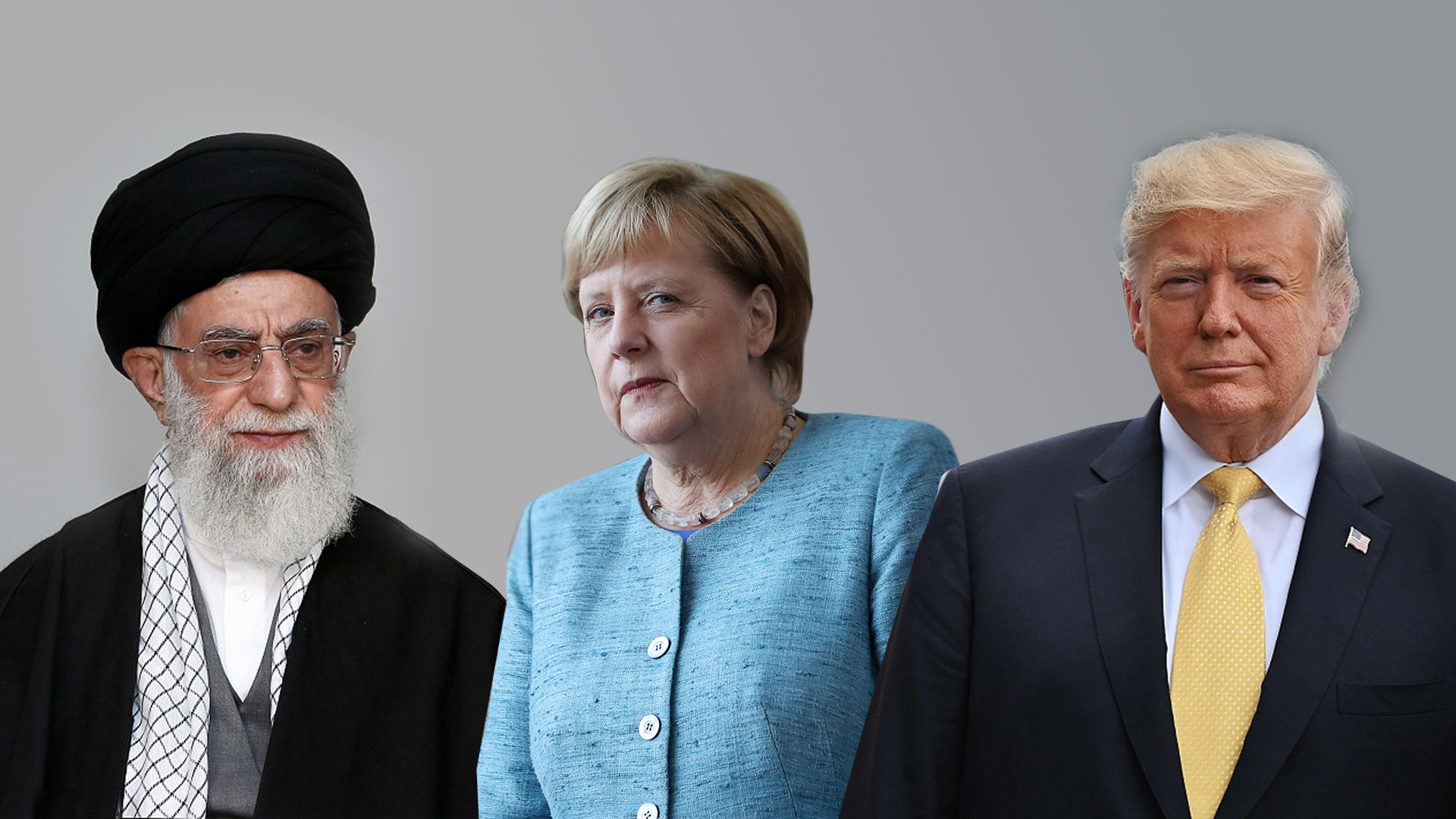
Europe faces a dilemma: The EU countries which have earlier this year enabled European companies to circumvent U.S. sanctions on Iran, now might be urged by U.S. Secretary of State Mike Pompeo's upcoming Berlin visit to withdraw from the Iran nuclear deal.
Iran slammed the U.S. on Tuesday for Trump's nuclear weapons comment while fearing at the same time that its European fellows might be backing Trump's move on Iran shortly.
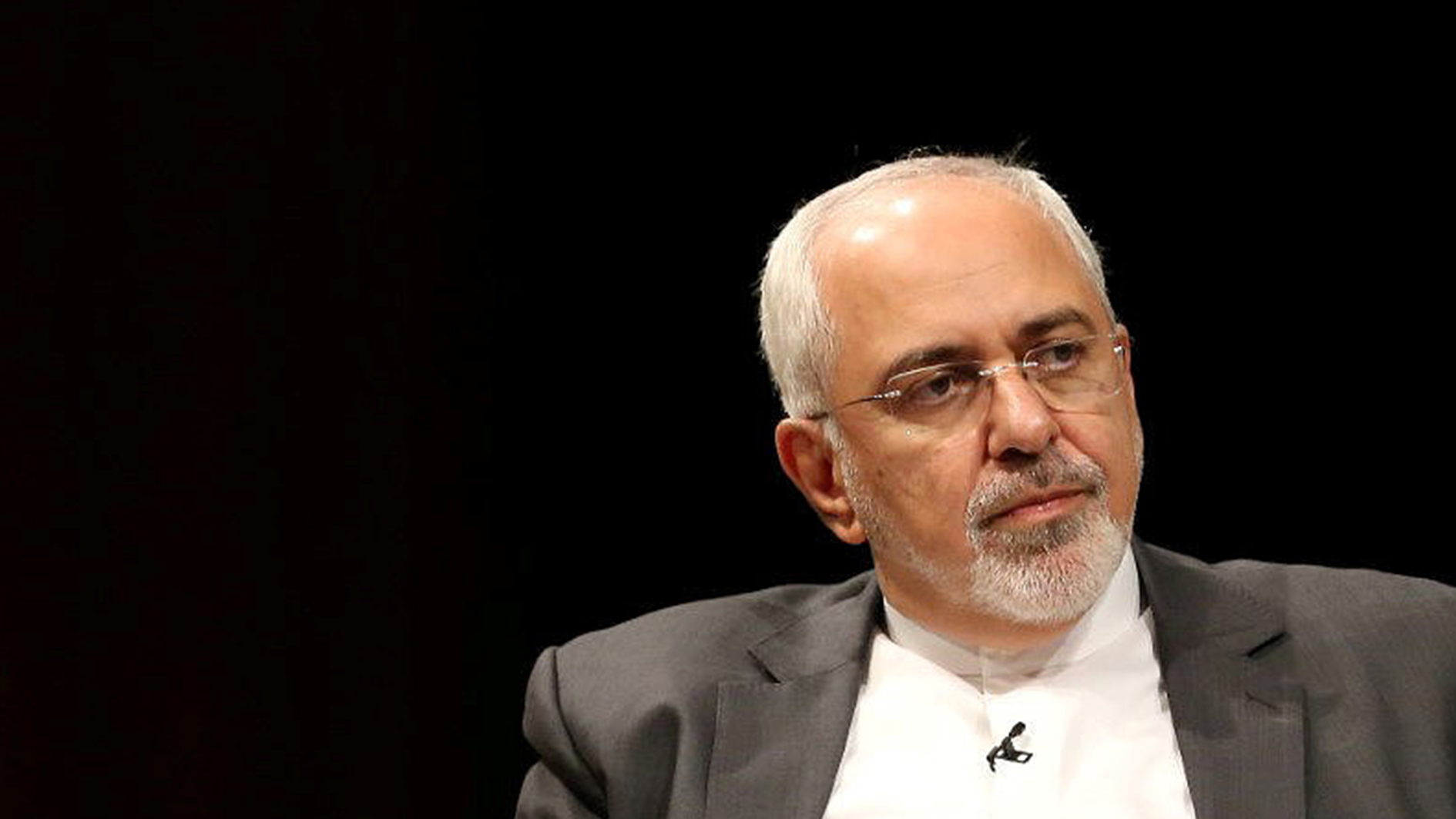
Iranian Foreign Minister Mohammad Javad Zarif wrote on his Twitter account that the U.S. administration would "cause tensions" after U.S. President Donald Trump's comment during a visit to Japan that "we're not looking for regime change (in Iran)... we're looking for no nuclear weapons."
Pompeo's upcoming visit to Berlin on May 31 is only adding fuel to the fire.
00:29
According to analysts, the tensions have revived concerns over the European Union (EU)'s difficulty in speaking with authority on the world stage, independent journalist John Psaropoulos told Al Jazeera in a May 24 report.
Great cry and little wool
The U.S. and Europe are deeply divided over the Iran nuclear issue. The Trump administration withdrew from the Iran nuclear deal and re-imposed sanctions on Iran last year, but European countries continued to support the multilateral agreement, Cong Peiying, a postdoctoral scholar of Asian Studies at the University of Haifa, told CGTN.
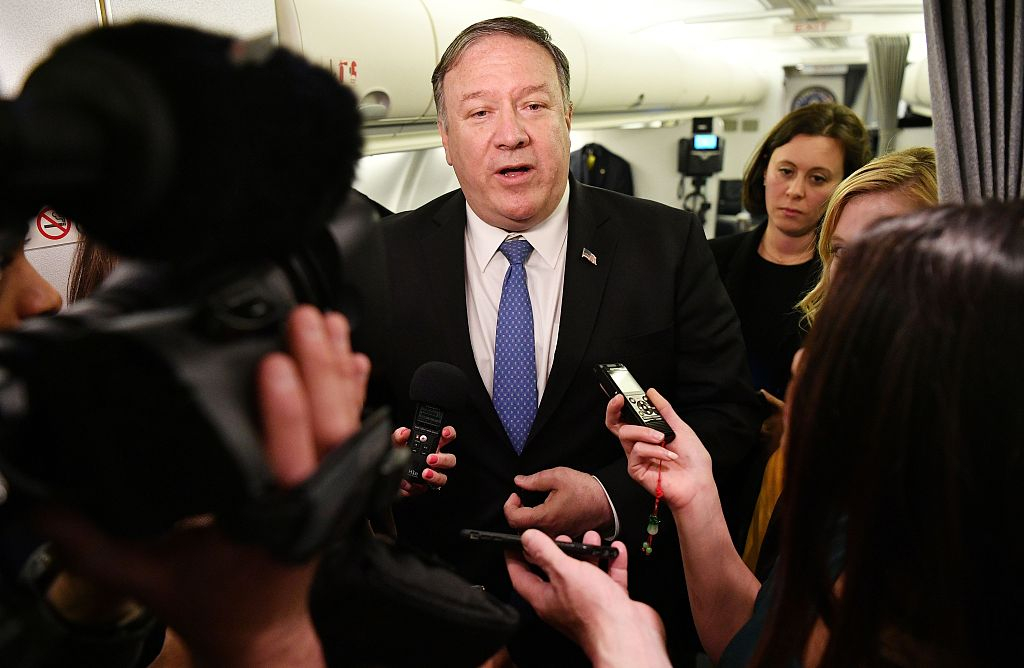
U.S. Secretary of State Mike Pompeo speaks to reporters in flight after a previously unannounced trip to Baghdad, May 8, 2019. /VCG Photo
U.S. Secretary of State Mike Pompeo speaks to reporters in flight after a previously unannounced trip to Baghdad, May 8, 2019. /VCG Photo
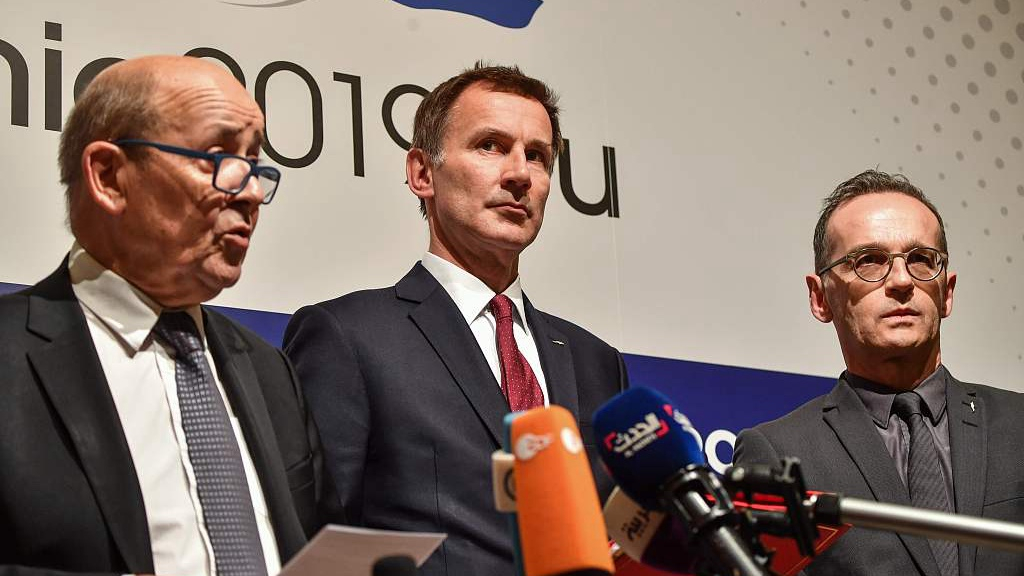
To support legitimate European trade with Iran, Britain, France, and Germany announced in late January the creation of a new mechanism that circumvents U.S. sanctions by facilitating non-dollar trade.
Foreign ministers of the three European countries, known as E3, said in a joint statement that they have set up an Instrument for Supporting Trade Exchanges, or INSTEX, to support legitimate European trade with Iran, focusing initially on the sectors most essential to the Iranian population, such as pharmaceutical, medical devices, and agri-food goods.
But there is no indication that European companies, which do far more trade with the U.S. than with Iran, will want to use INSTEX and risk being punished somehow by Washington, The New York Times reported.
00:38
For the EU, the economic stakes are high. The emergence of Iran from decades of sanctions unlocked a new market of 80 million people for European agricultural products, pharmaceuticals, machinery, capital, and services. Iran purchased 120 aircraft from EU companies in deals worth tens of billions of dollars. Those aircraft cannot be delivered now, said Psaropoulos.
When it crumbles
German Chancellor Angela Merkel acknowledged that Europe appears weak in the standoff over Iran because, with the dollar's role as a leading global currency, it struggles to counter U.S. sanctions as it tries to salvage the nuclear deal with Tehran.
The chancellor said in an interview with Germany's daily Sueddeutsche Zeitung released on May 15 that "Europe needs to reposition itself in a changed world."
00:28
Europe is used to be divided over important questions as Germany and France opposed the U.S.-led war in Iraq in 2003, while countries including Britain and Poland supported Washington.
"European leaders increasingly want to show that they can act independently in foreign policy, because they face challenges on the domestic front because Europe is treated with skepticism, because of Trump's intransigence and because of new crises," said Kostas Lavdas, professor of European politics at Panteion University in Athens.
For Pierre Vimont, former executive secretary general of the European External Action Service, the Europeans are divided on Washington's move towards Iran.
"What kind of initiative is there to get out of this?" Vimont asked. "I don't see one."
(With input from agencies)
(Cover photo by CGTN's Li Yueyun)