
Opinions
22:21, 11-Jul-2018
Opinion: US scholars reveal truth behind Sino-US trade war
Updated
17:48, 16-Jul-2018
 ["china"]
Share







Copied
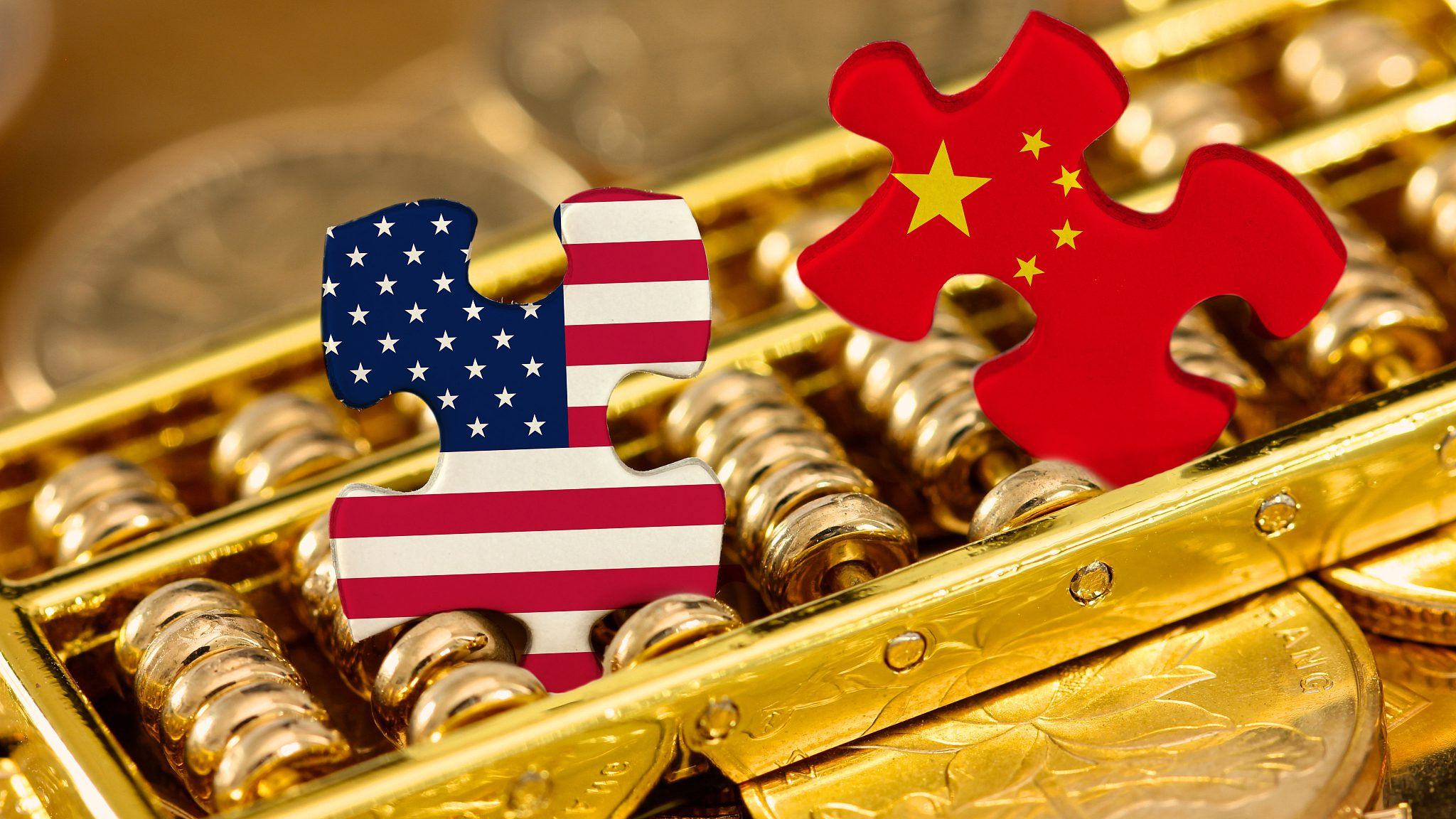
Editor's note: How much does the “added value” contribute to the US-China trade deficit? CGTN collects statistics from four foreign media outlets to take a deeper look at how the US-China trade deficit is calculated.
Today, the American mainstream media has revealed the truth behind the Sino-US trade war that US President Trump has been concealing and distorting.
As we all know, Trump’s trade war against China is based on a series of allegations against our trade behavior:
1. There is a huge trade deficit between China and the United States, and the US has suffered for it.
2. China is stealing patented US technologies through joint ventures, so that the US does not make money from these patents.
3. China still endeavors to support its own companies in order to compete with the United States, encroaching on US interests.
However, in a recent report published by CBS News, three scholars from famous leading American universities do not agree with the above points. The reason they gave was simple yet powerful: “China only makes 8.46 US dollars by exporting an iPhone to the United States.”
China earns little despite tremendous efforts!
The academics further explain that when looking at Sino-US trade relations, the US is accustomed to calculating the trade deficit between China and the United States by looking at the total value of products exported from China.
For example, an iPhone assembled in China at the factory price of 240 US dollars is shipped to the US, and then the relevant departments will directly add that amount into the bilateral trade deficit.
This makes it seem like the US lost 240 US dollars in trade to China. Adding up these costs, the US had a “trade deficit” of 15.7 billion US dollars with China from the exports of iPhone 7 and iPhone Plus.
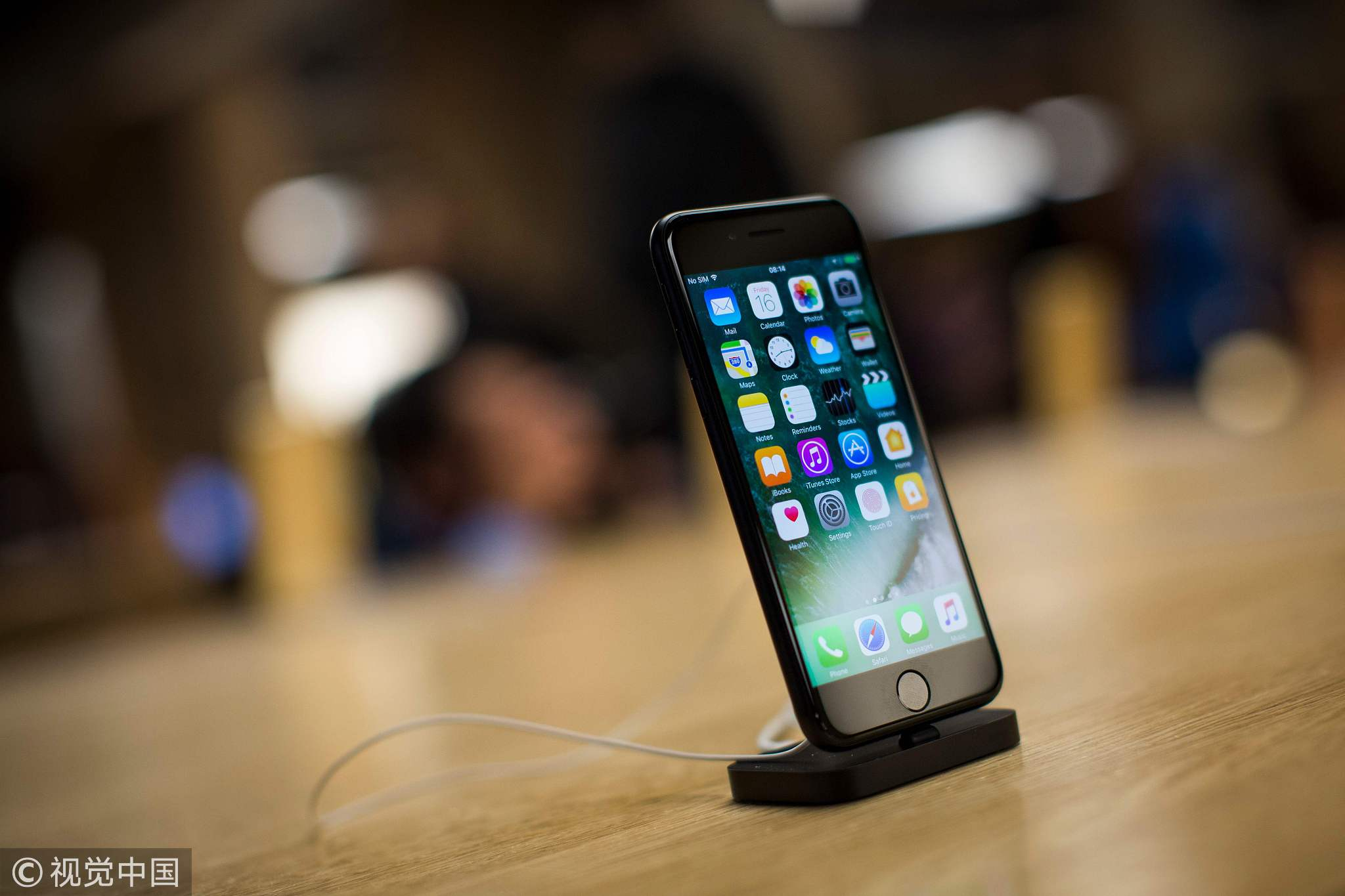
The iPhone 7 smartphone at Covent Garden in London./ VCG Photo
The iPhone 7 smartphone at Covent Garden in London./ VCG Photo
In fact, the scholars go on to say that much of the tens of billions of the trade deficit did not go into Chinese pockets at all, but those of Apple Inc. in the US and some high-tech Japanese companies.
The Chinese mainland actually earned just 8.46 US dollars from each iPhone, at only 3.6 percent of the factory price.
Why did this happen?
Since the Chinese mainland is part of the global production chain for Apple’s mobile phones, it is at the lower end of the “assembly process,” and is only responsible for putting together cutting-edge components, many of which are provided by high-tech companies abroad, such as Apple in the US.
Therefore, for Chinese manufacturers, the “added value” in the entire value chain is very low.
As a result, more than half of the revenue from the factory price would go to companies that provide the patented core technology, such as Apple Inc., and only several dollars to the Chinese factories for each iPhone, according to CBS News.
The Apple logo is pictured inside the newly opened Omotesando Apple store at a shopping district in Tokyo, June 26, 2014./ VCG Photo
The Apple logo is pictured inside the newly opened Omotesando Apple store at a shopping district in Tokyo, June 26, 2014./ VCG Photo
Not only iPhones!
Many Chinese companies only earn about half of the “added value” from high-tech products.
The Brookings Institution said that 37 percent of US imports from China were “intermediate products” because American companies can reduce the overhead from manufacturing by allowing Chinese companies to put together the semi-finished products.
The area where Chinese manufacturers receive a bulk of the profits, according to Brookings, is in traditional industries. For example, Chinese enterprises can earn 75 percent of the “added value” in the Sino-US textile trade, but this field is not the target of Trump’s strikes.

June 26, 2018: A forklift transport at a Yangluo container port on the Yangtze River in Wuhan, Hubei province, China./ VCG Photo
June 26, 2018: A forklift transport at a Yangluo container port on the Yangtze River in Wuhan, Hubei province, China./ VCG Photo
A report from the European Center for Economic Policy Research supports this view. Data from the report shows that if the trade deficit was calculated according to the actual “added value” of products earned by each relevant country, then the trade deficit between China and the United States would be reduced by 40 percent or more.
The situation is the same today. In a report by CNBC last month, data from the University of Oxford shows that if the actual value of the country’s trade consisted of only “added value,” the trade deficit between China and the United States would be reduced by half, from 2 percent of US GDP to 1 percent, which is comparable to that of the EU.
Thus, these reports show that Trump’s current attack on China will only hurt the US and its allies.
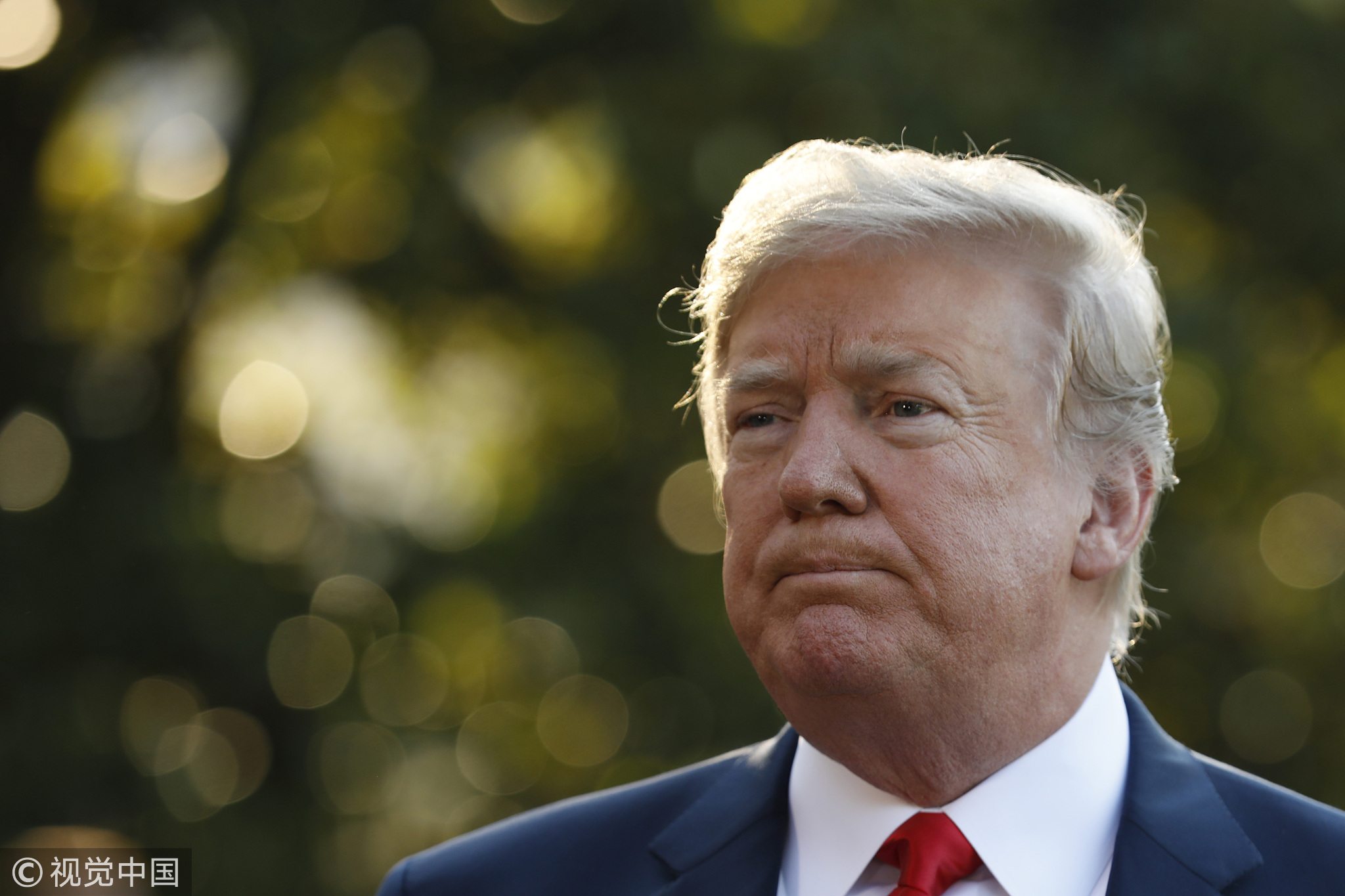
July 10, 2018: US President Donald Trump pauses while speaking to members of the media before boarding Marine One on the South Lawn of the White House in Washington, DC, US, on Tuesday./ VCG Photo
July 10, 2018: US President Donald Trump pauses while speaking to members of the media before boarding Marine One on the South Lawn of the White House in Washington, DC, US, on Tuesday./ VCG Photo
Why still launch the trade war?
So why is Trump continuing with this trade war, despite backlash from countries all over the world?
According to the CNBC report, Trump’s real concern is not to create an active and innovative economy so that the United States can continue to lead the world in the next 20 to 30 years. Instead, he only cares about the number of votes in the November midterm elections.
On the other hand, the Chinese government’s concern is to keep its economy alive for the next 20 years, intending to make China one of the leading countries in the world and be independent in the field of science and technology.