
Opinions
11:27, 23-Jul-2018
Opinion: What is the real motive for US in Africa ?
Updated
10:24, 26-Jul-2018
 ["china"]
Share







Copied

Editor's note: Liu Haifang is a professor at the Centre for African Studies at Peking University. The article reflects the author’s opinion, and not necessarily the views of CGTN.
One or two weeks before President Xi Jinping’s visit to the Middle East and Africa, my senior colleagues and I received requests for meetings one after another from the US Embassy in China. We are used to such interactions, and always try our best to help enhance mutual understanding.
However, there are obvious differences. For example, the US economic and political diplomats were not coming to discuss the possibilities of cooperation as before since 2015, but only keen to know the strengths as well as shortcomings of China in Africa.
The US’ policy in Africa does not pay any real interest to the continent per se, but is treating it more like a geopolitical game.
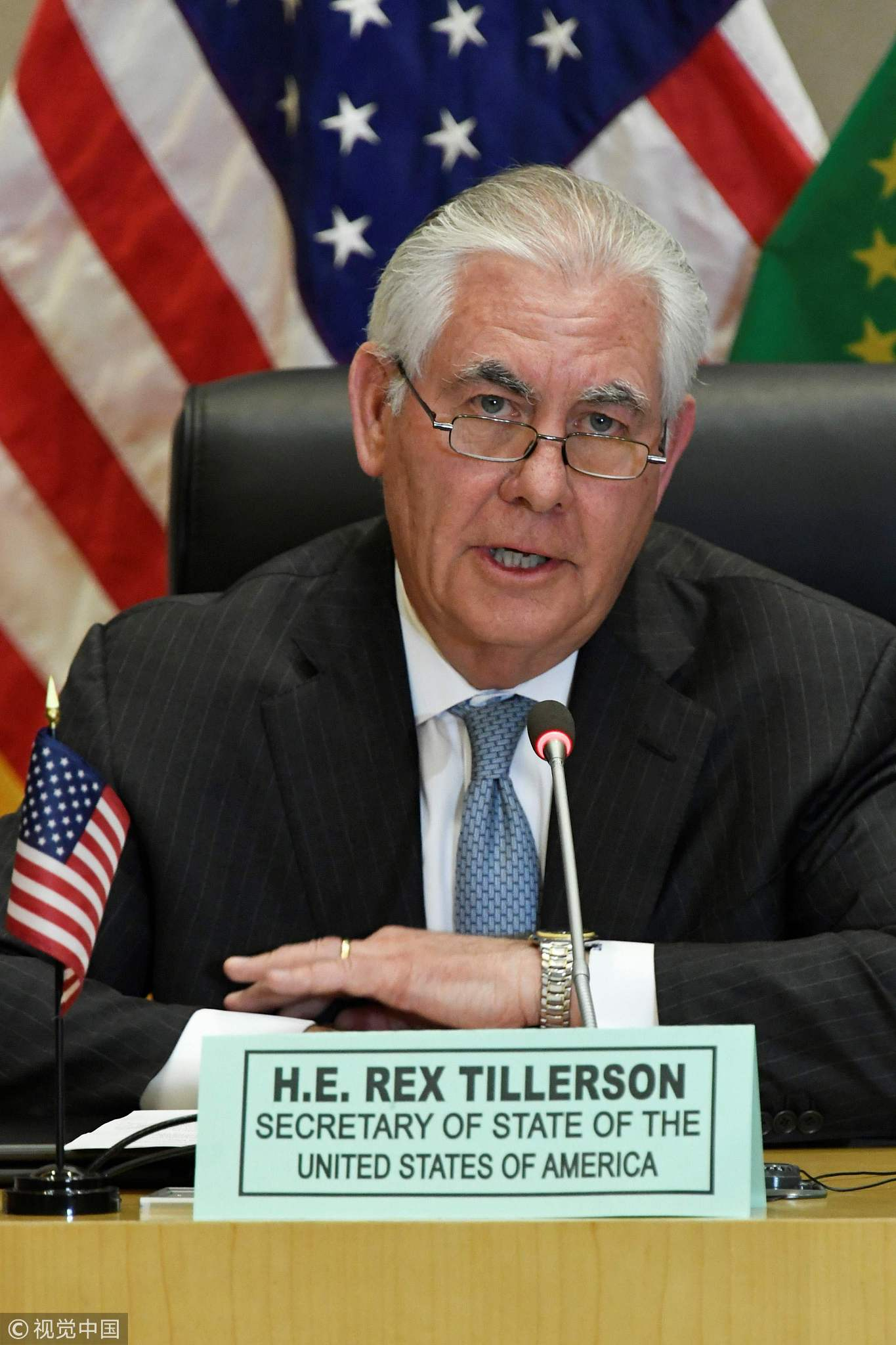
Then US Secretary of State Rex Tillerson gives a press conference, with Chairperson of the African Union (AU) Commission at the AU headquarters in Addis Ababa, on March 8, 2018./VCG Photo
Then US Secretary of State Rex Tillerson gives a press conference, with Chairperson of the African Union (AU) Commission at the AU headquarters in Addis Ababa, on March 8, 2018./VCG Photo
What the Trump administration has — or has not, to be precise — done to Africa, has been much too criticized by America’s own scholars.
Mike Pompeo, the US’ new secretary of state, has been vocal about his country’s role on the continent, though lately, he hasn’t paid a visit. On the other hand, his predecessor, Rex Tillerson, was almost a big joke given the fact that his visit to the continent was interrupted and he himself was called back and immediately fired by Trump.
An ”America First” budget in 2017 had already put “Africa last.” A budget unveiled a year later sharply reduced foreign assistance to developing countries, most of which are in Africa, and eliminated programs supporting good governance, human rights and democracy.
Interestingly, during his visit, Tillerson did stress the exponential economic growth and opportunities of the continent, calling the region “a significant part of the future.” The five countries that he visited — Nigeria, Ethiopia, Kenya, Chad and Djibouti — were often described as emerging key security partners. Observers noted, however, that the first three are among the top five markets in Africa for US goods, with Nigeria and Chad among the top five sub-Saharan exporters to the United States.
Optimistic assessments even suggested that the “new framework” for the US-Africa relationship from Tillerson’s visit highlighted economic cooperation, other than just establishing the US’ security interests in Africa like before.
African and American scholars have eagerly waited for the opportunity to learn from both China as well as other African partners in boosting economic cooperation to truly benefit Africans. It was expected that after the US-African Summit in 2014, the US would start to play catch up.
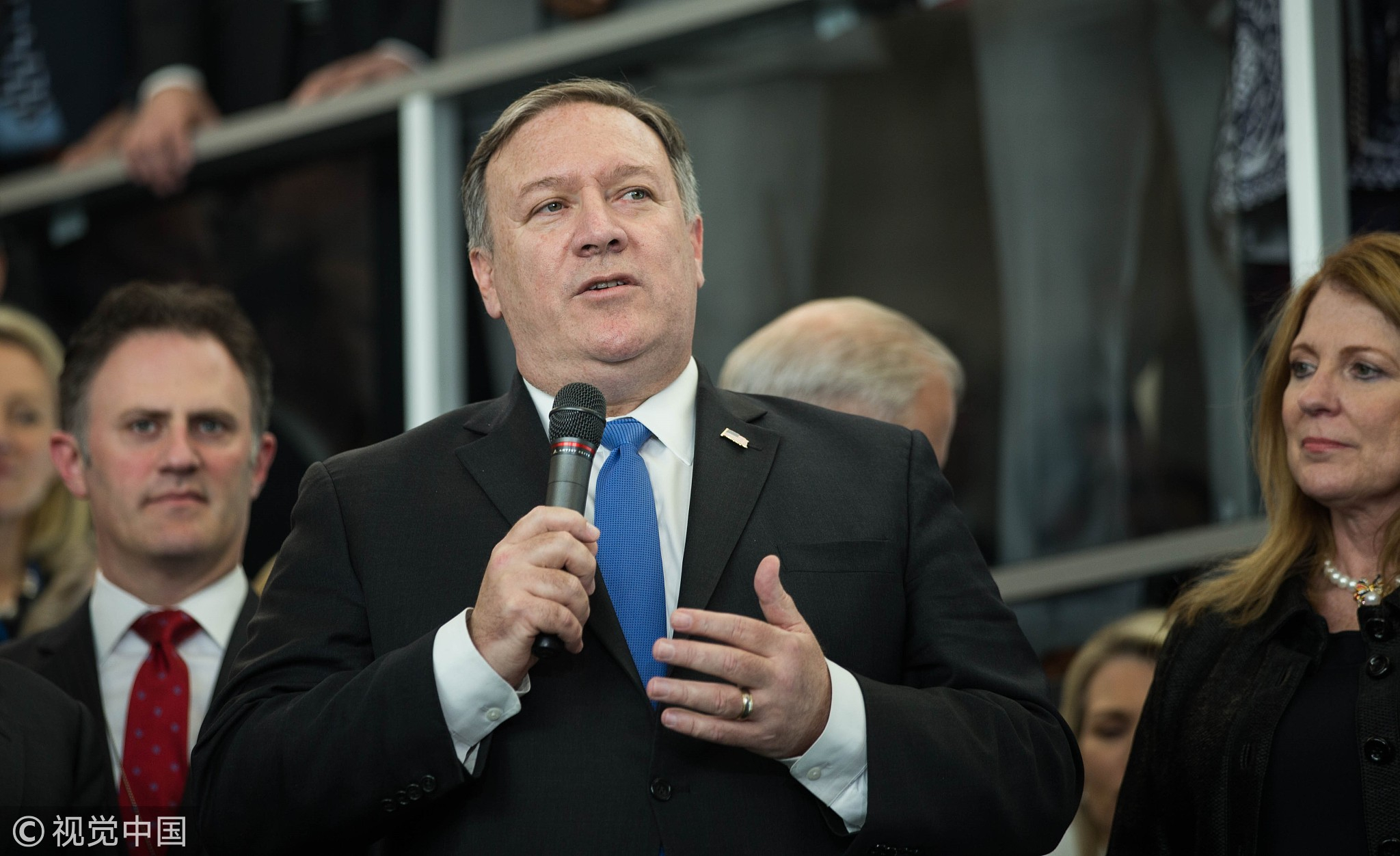
US Secretary of State Mike Pompeo (C) delivers remarks during a welcome ceremony with his wife Susan Pompeo (R) in the lobby of the Harry S. Truman Building in Washington, DC, on May 1, 2018./VCG Photo
US Secretary of State Mike Pompeo (C) delivers remarks during a welcome ceremony with his wife Susan Pompeo (R) in the lobby of the Harry S. Truman Building in Washington, DC, on May 1, 2018./VCG Photo
In my public talks at three American universities last April, students were asking me, “As you showed in your pictures taken from your field trip, China’s new round of industrialization cooperation obviously is benefiting Africa by finally shaking the shackles of being locked-in the position as a primary resource supplier, but why does the US government not see in this way and why does the State Secretary still point fingers at China as a neo-colonialist?”
For China, there is definitely a need to enhance our capacity to communicate with the world about what we are doing in Africa to demystify the bilateral relationship, though we cannot guarantee how the US government will perceive it.
Pompeo apparently has succeeded this legacy and has vocally championed Trump’s economic diplomacy, such as in his talk at the Detroit Economic Club in June. Pompeo was essentially trying to pit America’s “capitalist system” against the “China model,” announcing the desire to achieve his goal under the American government’s efforts to “break down barriers to market entry so that our companies have fair and reciprocal opportunities to sell into markets all around the world.”
Ultimately, the secretary was trying to “take a hard line” to protect American “economic sovereignty,” which in his eyes was threatened by vibrant economies that are not adopting the American model. An expert from Stanford University has criticized this nationalist approach from a seemingly positive turn to economic focus from Tillerson’s trip to an approach that will hurt Africa, but mostly the US itself because it will lose credibility faster than ever. Indeed, Pompeo is waving tariffs as a weapon, or in his words “as economic diplomacy,” even at other G7 allies, but mostly China in Africa.
Perhaps this shift in focus is to mask a big shift in the White House. FBI director Christopher Wray even said, “One of the things we’re trying to do is to view the China threat as not just a whole-of-government threat, but a whole-of-society threat.”
What was left of any positive element in the US’ policy toward Africa has suffered. Pompeo’s remarks emphasize the zero-sum thinking in the US relationship with China: “If the US does not match Chinese activity globally, a growing number of developing nations will regulate their economies, media, and civil society on Beijing’s terms.”
Some US senators have expressed their concerns about this attitude, noting that Pompeo and his boss’ “often impulse-driven foreign policy creates conflict-related risks for the United States all around the world.”