
Opinions
18:06, 27-Aug-2018
Opinion: RCEP negotiations need efforts from all sides
Updated
17:04, 30-Aug-2018
 ["china"]
Share







Copied
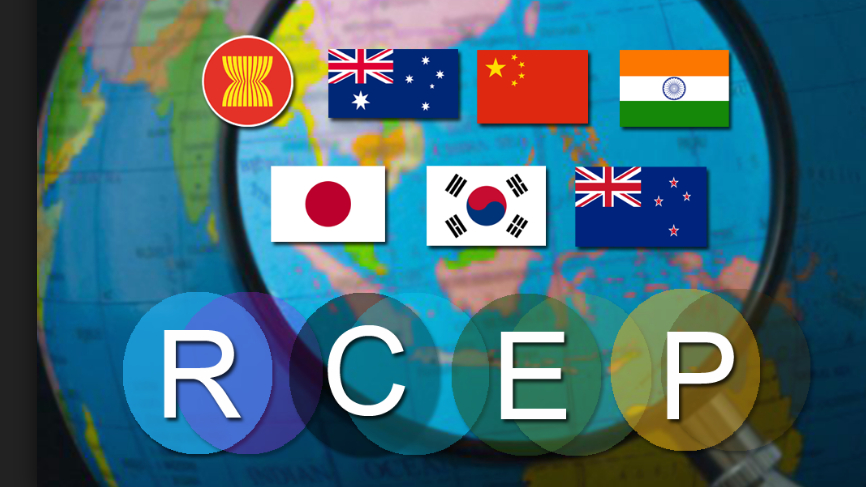
Editor's note: Liu Chunsheng is an associate professor at the Beijing-based Central University of Finance and Economics and deputy dean of Blue Source Capital Research Institute. The article reflects the author's opinions, and not necessarily the views of CGTN.
The Regional Comprehensive Economic Partnership Agreement (RCEP) is a free trade agreement (FTA) proposed by ASEAN. Under the circumstances of deglobalization/trade protectionism, this economic and trade agreement has attracted worldwide attention from the very beginning. However, the RCEP has not ended the negotiations as originally planned. Despite repeated calls from the leaders of member countries, the negotiation end date is overdue. Despite the phased results, the negotiations still face many challenges and difficulties.
First of all, there are significant gaps in social and economic development among RCEP members. For example, the GDP of the most developed country Japan is 40 times more or less that of the least developed country Myanmar. This has led to different positions among the negotiating parties.
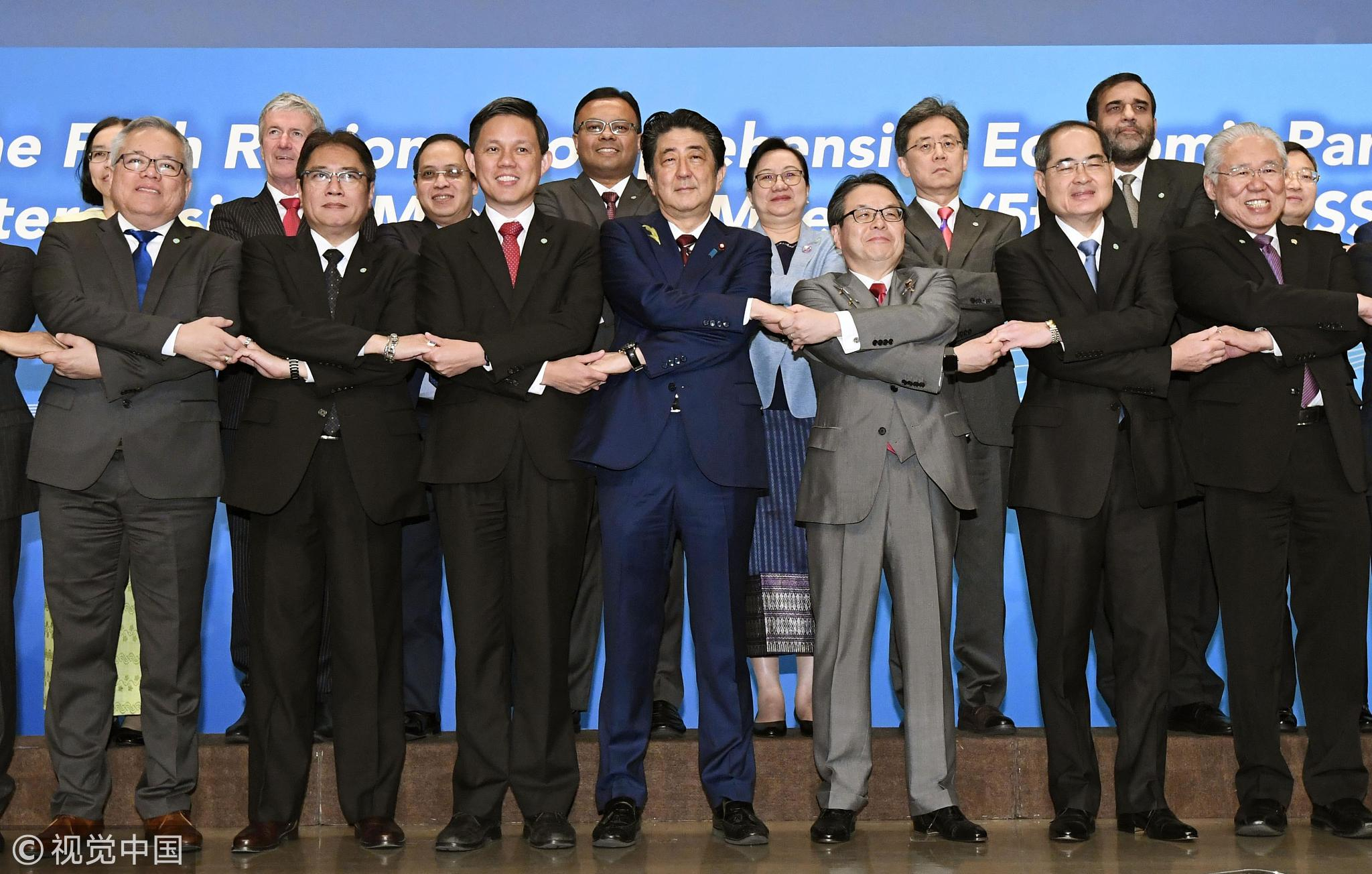
Japanese Prime Minister Shinzo Abe (C) poses with representatives from other Asia-Pacific countries in Tokyo on Jul 1, 2018. /VCG Photo
Japanese Prime Minister Shinzo Abe (C) poses with representatives from other Asia-Pacific countries in Tokyo on Jul 1, 2018. /VCG Photo
Besides the technical difficulties, the attitudes of the various members are also crucial to the RCEP negotiations. ASEAN is leading the RCEP negotiation so its members are generally supportive. However, unlike Japan or China, ASEAN seems to be insufficient to play the role of leader of mega-FTA. On the other hand, Malaysia hopes to create a new framework agreement excluding India, and Thailand has expressed its interest in joining both TPP and RECP.
All these factors influence the attitudes of ASEAN members and the progress of the RCEP agreement. As an economic power, Japan’s attitude and position have an important impact on the negotiations. Initially, Japan's expectation for TPP was higher than RCEP and China-Japan-Korea FTA. Japan believes that the RCEP agreement should be consistent with the TPP agreement, making it a high-standard trade agreement.
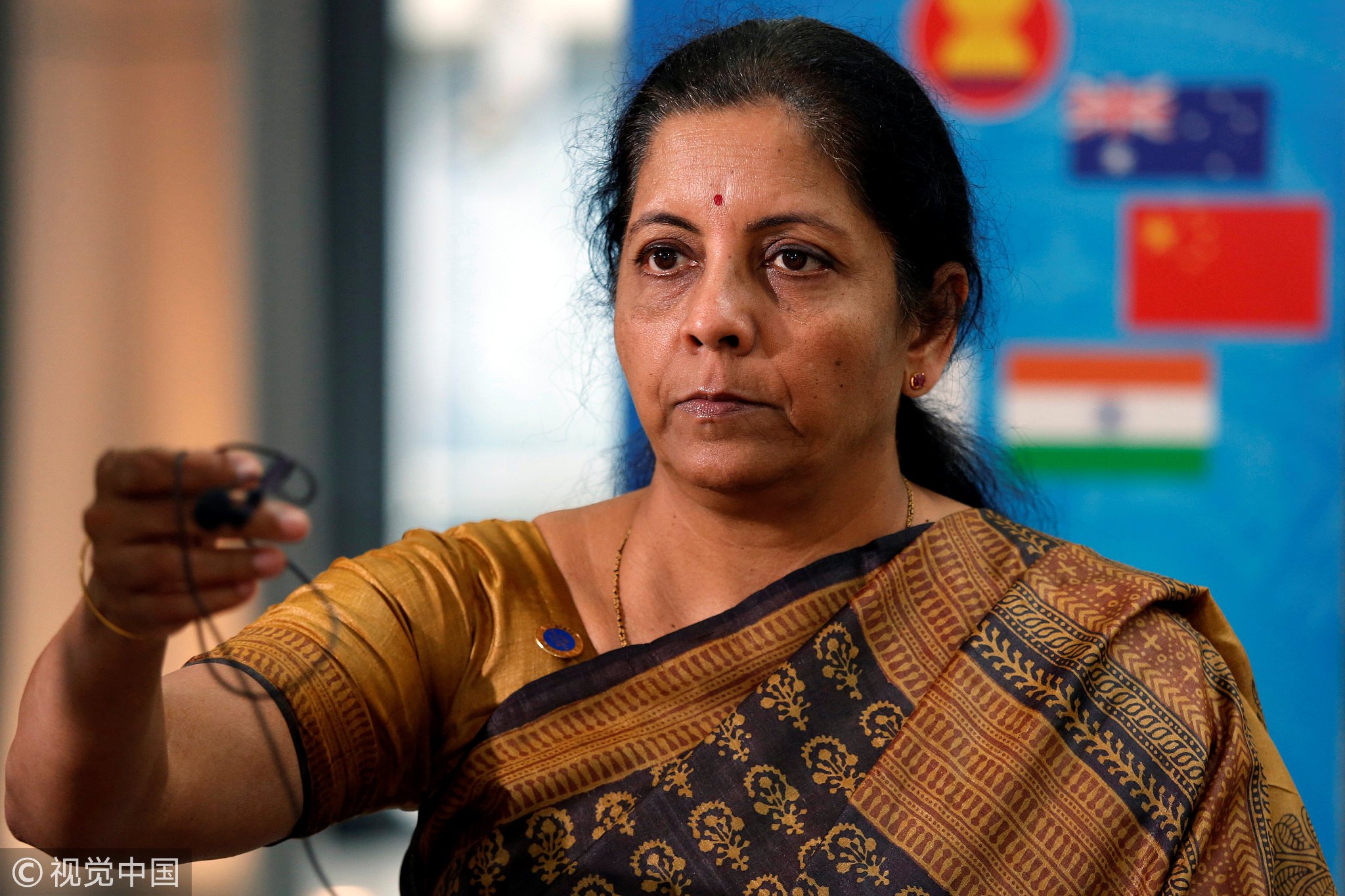
India's Commerce and Industry Minister Nirmala Sitharaman returns a microphone after speaking with the media at the 3rd Intersessional Regional Comprehensive Economic Partnership (RCEP) Ministerial Meeting in Hanoi, Vietnam on May 22, 2017. /VCG Photo
India's Commerce and Industry Minister Nirmala Sitharaman returns a microphone after speaking with the media at the 3rd Intersessional Regional Comprehensive Economic Partnership (RCEP) Ministerial Meeting in Hanoi, Vietnam on May 22, 2017. /VCG Photo
Other members like South Korea, Australia, and New Zealand are also developed economies. Although they support RCEP in general, they hope that it can reflect a higher level of liberalization and obtain more economic benefits. India’s attitude towards RCEP is relatively negative, and tariff reductions are also far from India’s requirements.
The Indian government is re-examining the impact of China's accession to the RCEP on India's future economic and trade patterns. Due to the lack of competitiveness in its manufacturing and service sectors, India often puts forward many requirements for negotiations, which in turn slow down progress. China's attitude is positive. It has been working hard to promote the agreement and not only takes the initiative to make greater open commitments, but also strengthens exchanges and coordination with relevant parties to promote consensus among the various parties at different stages of economic development.
The next step for the agreement is to bridge the gap between the demands of developed and developing countries and find more balance between the need for developed countries to expand their markets and the desire of developing countries to protect their industries.
By the end of July 2018, RCEP had conducted 23 rounds of negotiations. The results of the latest round were remarkable: the members have not only made comprehensive consultations on specific issues such as goods, services, investment, rules of origin, customs procedures and trade facilitation, but also achieved significant progress in government procurement chapters, technical regulations and sanitary and phytosanitary measures. The negotiating parties have expressed their willingness to accelerate the negotiations on different occasions. The expectation to reach the deal by the end of 2018 is getting stronger and stronger. Once the agreement is signed, it will undoubtedly become the support for multilateral system and free trade.