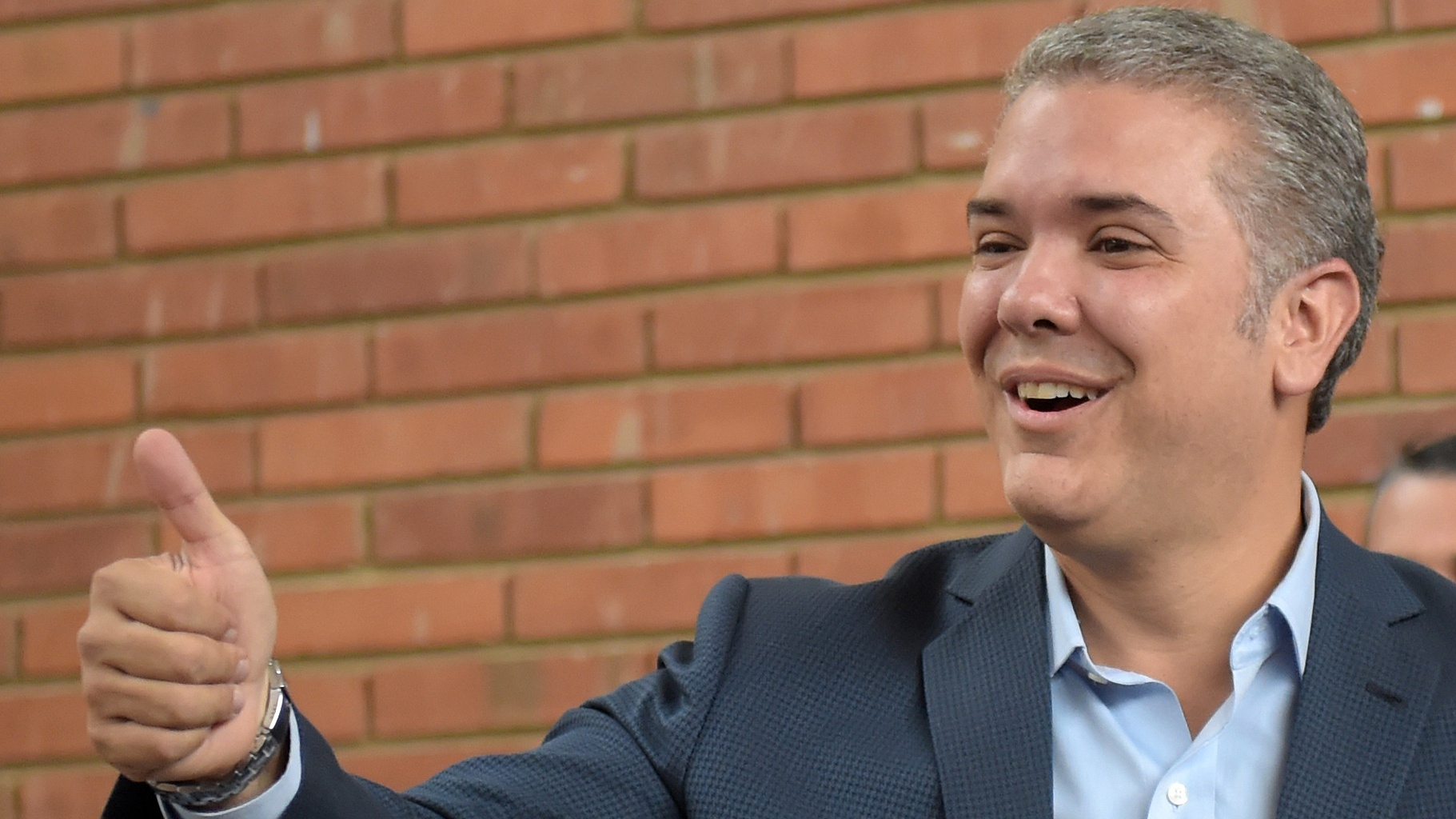
The right-wing candidate, Ivan Duque won Colombia's presidential election Sunday after a campaign that turned into a referendum on a landmark 2016 peace deal with the FARC guerrilla group that he pledged to overhaul.
Duque, 41, won 53.97 percent of the vote, with 99.76 percent of the votes counted, according to National Electoral Council (CNE).
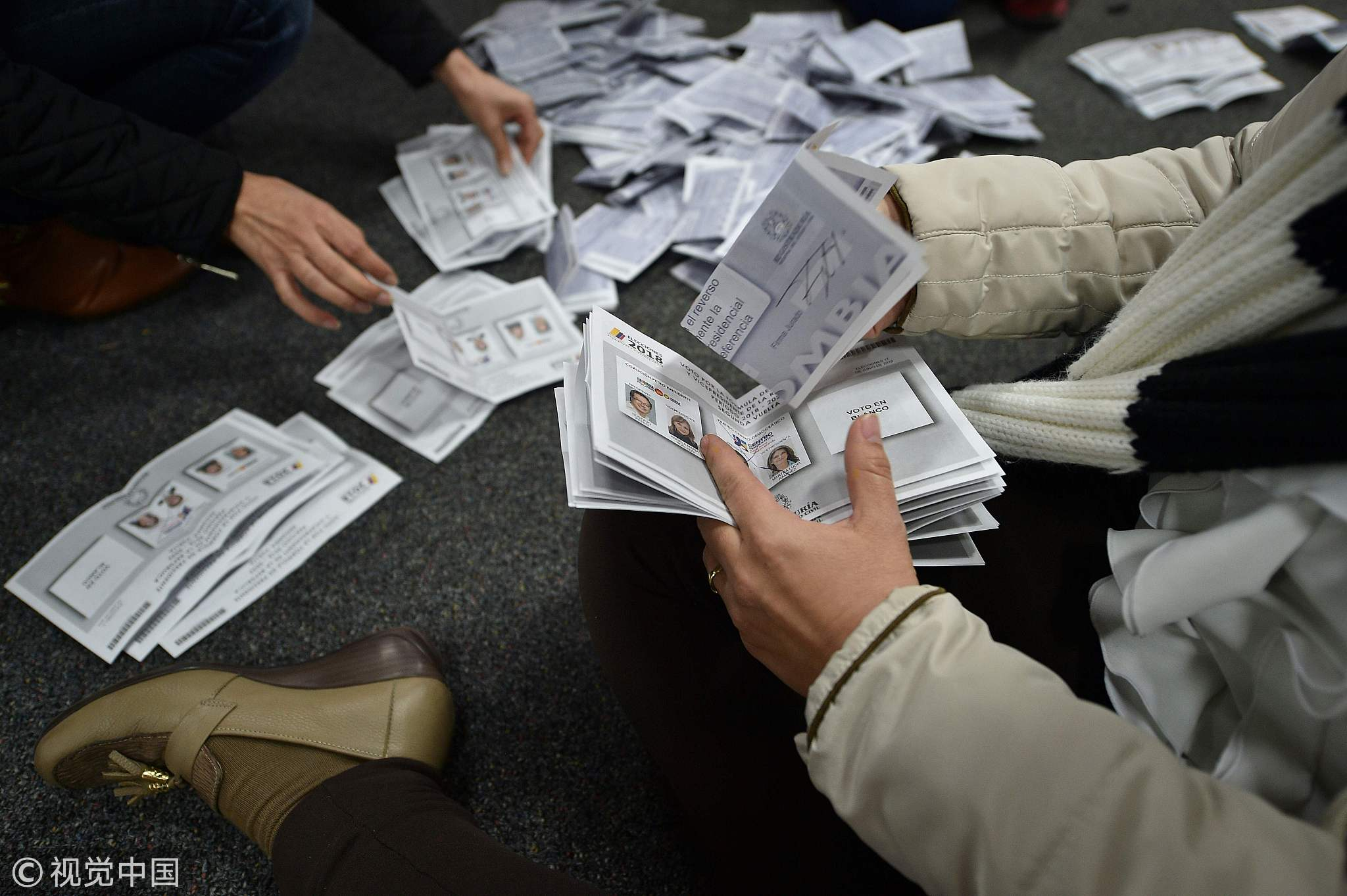
Electoral officials count votes at a polling station during the second round of the presidential elections in Bogota, Colombia, June 17, 2018. /VCG Photo
Electoral officials count votes at a polling station during the second round of the presidential elections in Bogota, Colombia, June 17, 2018. /VCG Photo
Most of the country backed Duque's business-friendly project, appealing to international investors that Colombia was open for trade and investment after years of violence. Petro, a former guerrilla and mayor of Bogota, campaigned on a more social project, vowing to tackle inequality.
He will take over the presidency in August from outgoing President Juan Manuel Santos, whose term was marked by a peace deal with the FARC guerrilla group.
Santos's efforts to end the war with the Revolutionary Armed Forces of Colombia (FARC) brought him the Nobel Peace Prize.
Youngest president, fragile peace deal
Duque's victory means he will be Colombia's youngest president since 1872, during his swearing-in ceremony in August.
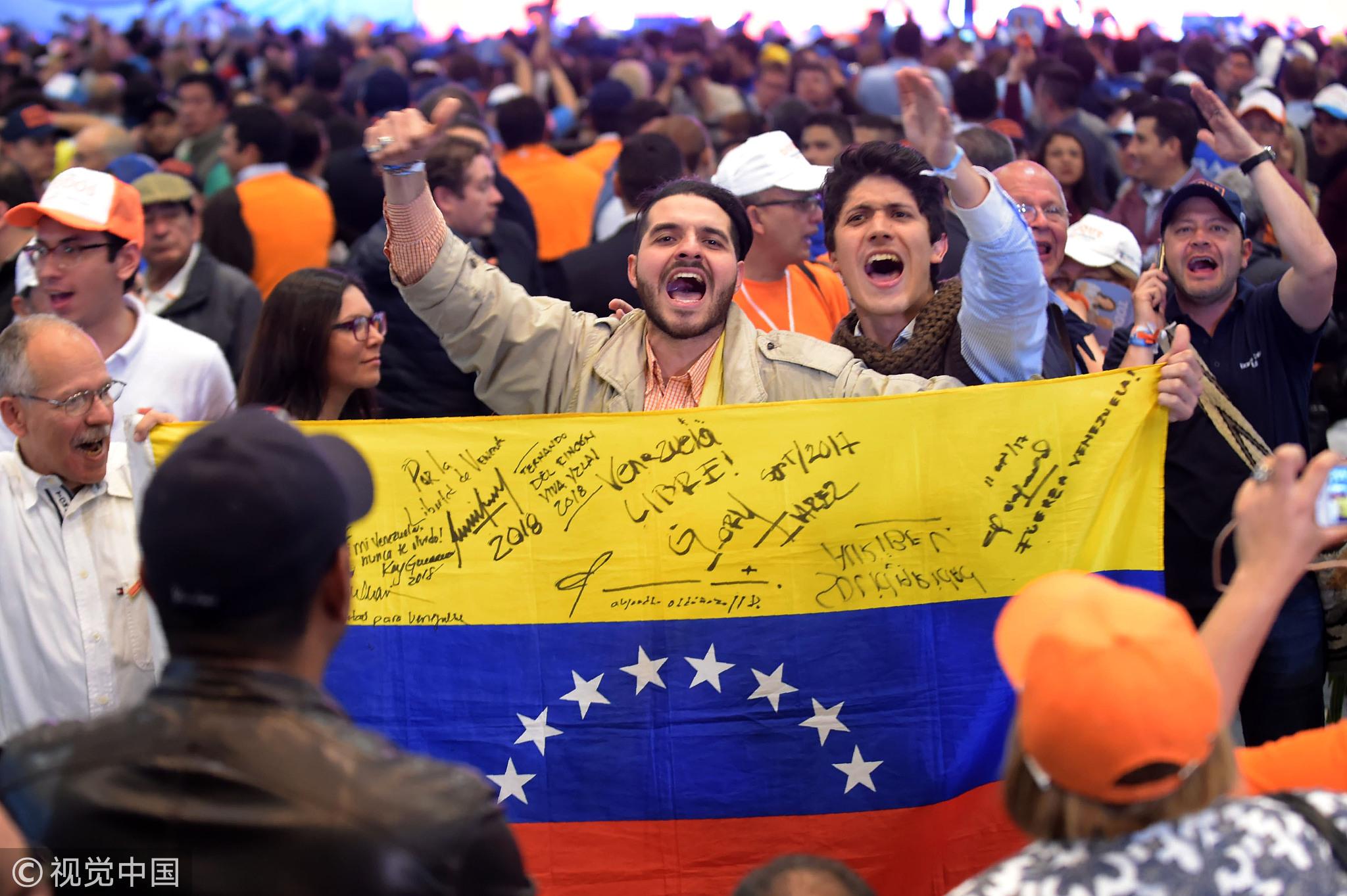
Supporters of the presidential candidate for Colombia's Democratic Center Party, Ivan Duque, react in Bogota as the results from the presidential runoff election in Colombia come in, June 17, 2018. /VCG Photo
Supporters of the presidential candidate for Colombia's Democratic Center Party, Ivan Duque, react in Bogota as the results from the presidential runoff election in Colombia come in, June 17, 2018. /VCG Photo
He comfortably won the first round last month, having campaigned on a pledge to rewrite the agreement with the FARC.
Duque, 41, said he would revise it in order to sentence guerrilla leaders guilty of serious crimes to "proportional penalties."
On Sunday, as he voted surrounded by his children, Duque said he wanted to make sure that those who commit crimes "pay for them."
The former economist and first-term senator said he wants to keep ex-FARC guerrilla group members from serving in Congress. The agreement allowed the group to transform itself into a political party.
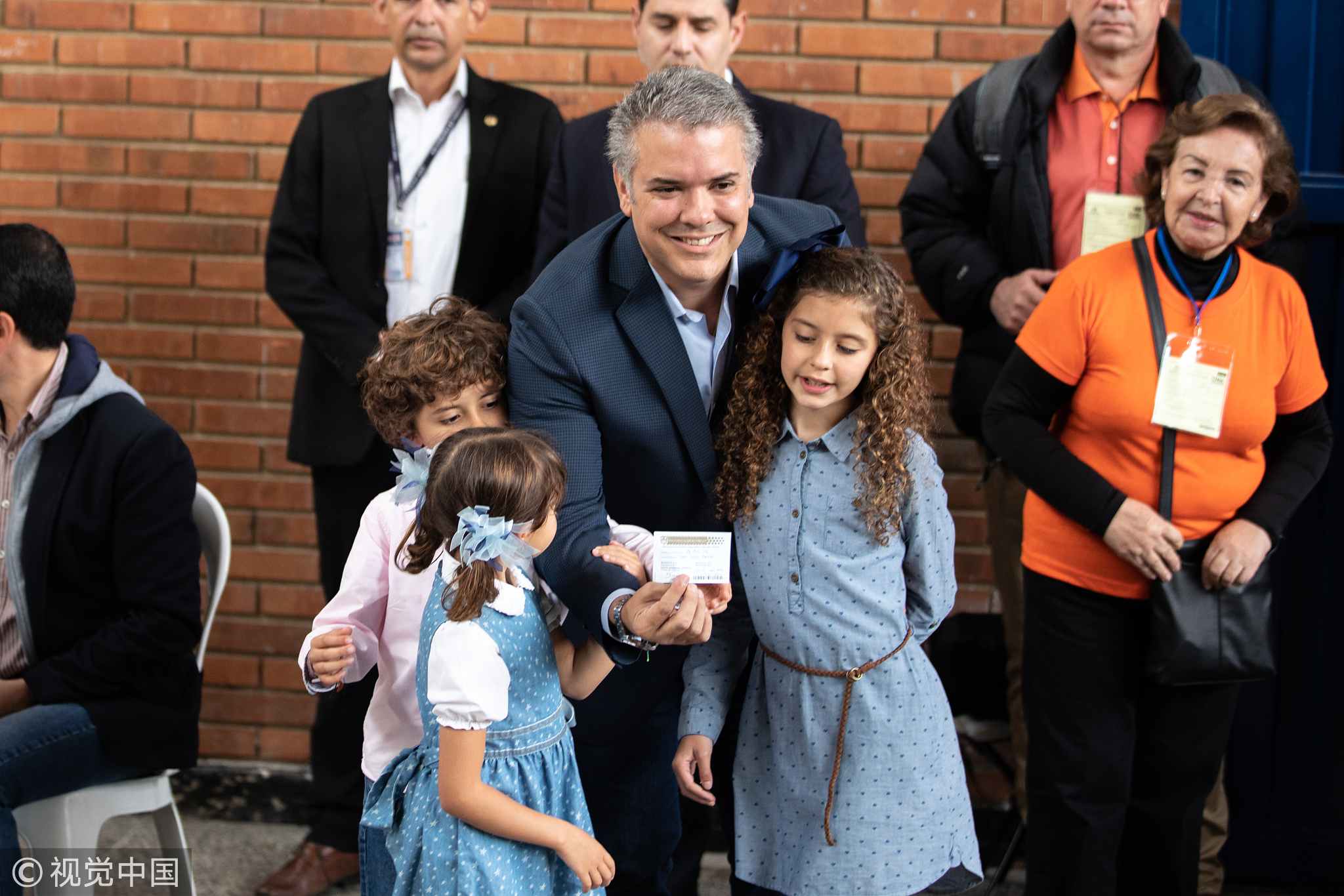
Ivan Duque, presidential candidate for the Democratic Center Party, center, displays his ballot inside a polling station during the second round of presidential elections in Bogota, Colombia, June 17, 2018. /VCG Photo
Ivan Duque, presidential candidate for the Democratic Center Party, center, displays his ballot inside a polling station during the second round of presidential elections in Bogota, Colombia, June 17, 2018. /VCG Photo
Duque is buoyed by the backing of his popular mentor, former president and now senator Alvaro Uribe, whose two-term presidency from 2002-2010 was marked by all-out war on the FARC.
FARC leader Rodrigo Londono, known as Timochenko during the conflict, said: "With either one of the two (candidates), we cannot let down our guard."
'We are in limbo'
"The biggest challenge will be to adopt a clear position on the peace agreement because, for the moment, we are in limbo," Fabian Acuna, professor of political science at Colombia's Javeriana University said.
"It will be very costly to go backwards," Acuna warned.
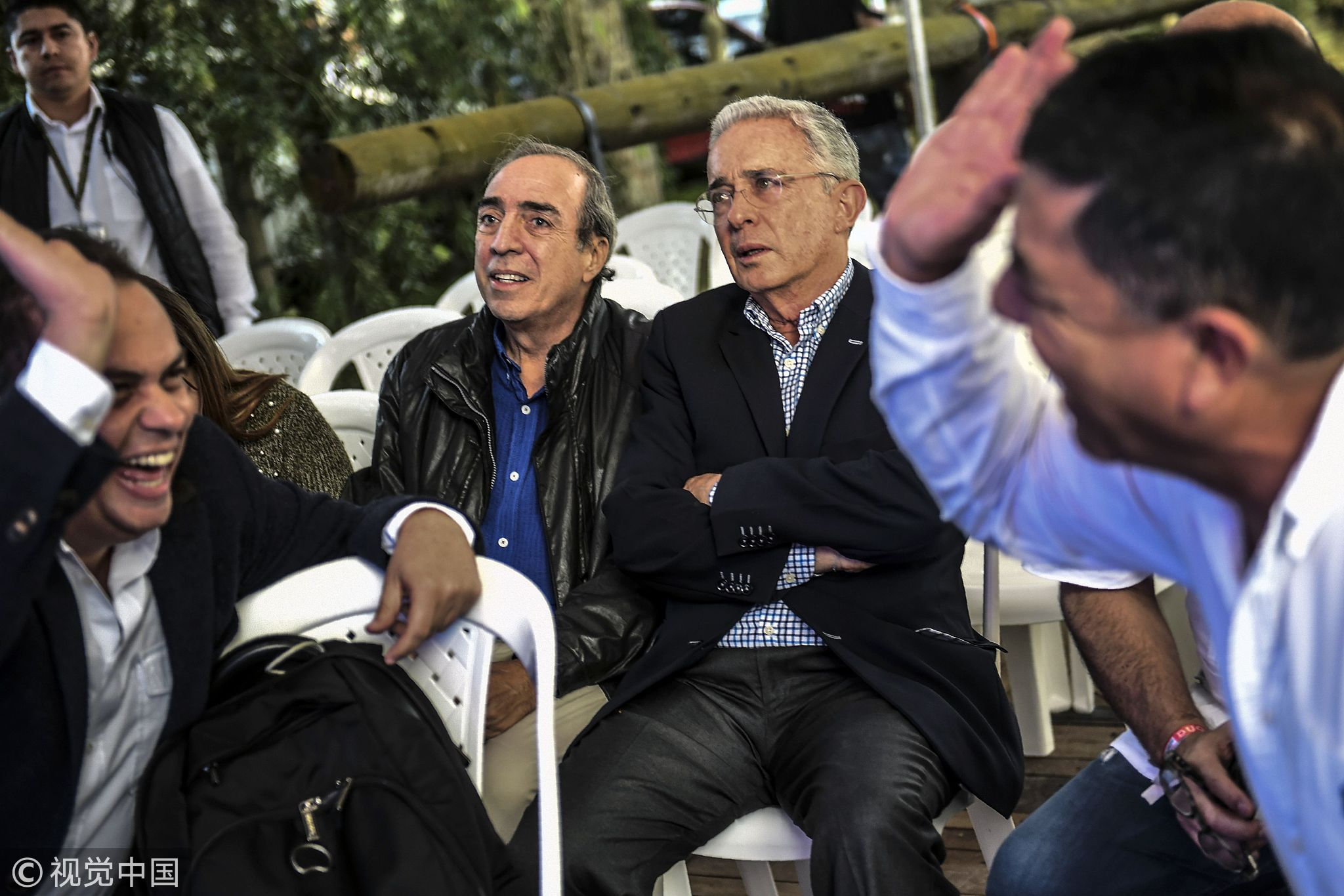
Former president and senator Alvaro Uribe (C) is pictured with supporters as they celebrate the second-round victory of Ivan Duque, at his home in Rionegro, Antioquia department, in Colombia, June 17, 2018. /VCG Photo
Former president and senator Alvaro Uribe (C) is pictured with supporters as they celebrate the second-round victory of Ivan Duque, at his home in Rionegro, Antioquia department, in Colombia, June 17, 2018. /VCG Photo
According to Andres Ortega of National University, Duque will "arrive with a very strong coalition in Congress," where the right swept the polls in March legislative elections.
The FARC withdrew from the presidential elections, having suffered a drubbing in its first electoral contest as a political party in March, polling less than half a percent.
It still gets 10 seats in Congress as a result of the peace agreement – a clause Duque is intent on scrapping.
Source(s): AFP
,Xinhua News Agency

 ["china"]