
World
10:15, 02-May-2018
At least 15 killed in church attack in Central African Republic
 ["africa"]
Share







Copied
At least 15 people were killed and about 100 injured when gunmen attacked a church in Bangui on Tuesday, amid continued sectarian violence in the Central African Republic (CAR), medical staff and aid groups said.
AFP news agency cited hospital sources saying at least 16 people had died, while 96 people were being treated for wounds.
A morgue official, quoted by Reuters, meanwhile said nine bodies had been taken to Bangui's Community Hospital, while aid agency Doctors Without Borders said six people had died and 60 were wounded.
The attack by unidentified gunmen occurred on the border of Bangui’s mainly Muslim PK5 district – an area that has become a flashpoint in a country weakened by sectarian violence and dogged by militia rule.
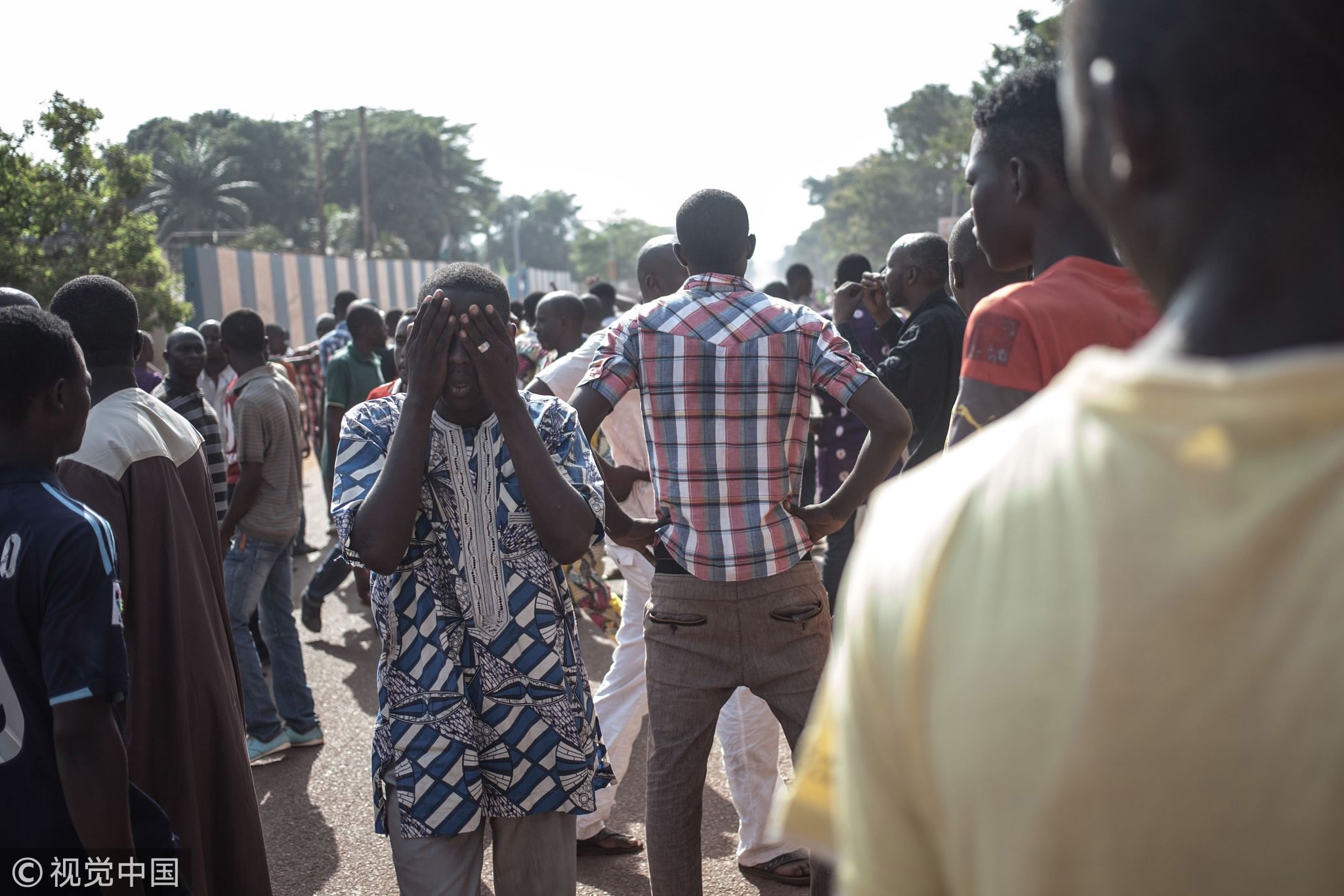
Residents of the PK5 demonstrate in front of the headquarters of MINUSCA, the UN peacekeeping mission in the Central Africa Republic, following clashes in Bangui, April 11, 2018. /VCG Photo
Residents of the PK5 demonstrate in front of the headquarters of MINUSCA, the UN peacekeeping mission in the Central Africa Republic, following clashes in Bangui, April 11, 2018. /VCG Photo
Witnesses said Notre Dame de Fatima church was attacked with gunfire and grenades during a morning service, forcing trapped churchgoers to escape through a hole made in the church wall by police.
It is not clear if the victims were all killed in the church attack itself or during skirmishes that occurred afterwards in the surrounding area.
Among those shot dead during the attack was a priest, said the Chancellor of the Archdiocese of Bangui, Walter Brad Mazangue.
As hostile crowds gathered at various points in the city, the UN mission MINUSCA said it sent patrols "to secure the zone and other key points" in Bangui.
It also sent a patrol to the district of Lakouanga, where a mosque was set on fire by demonstrators, MINUSCA spokesman Vladimir Monteiro told AFP.
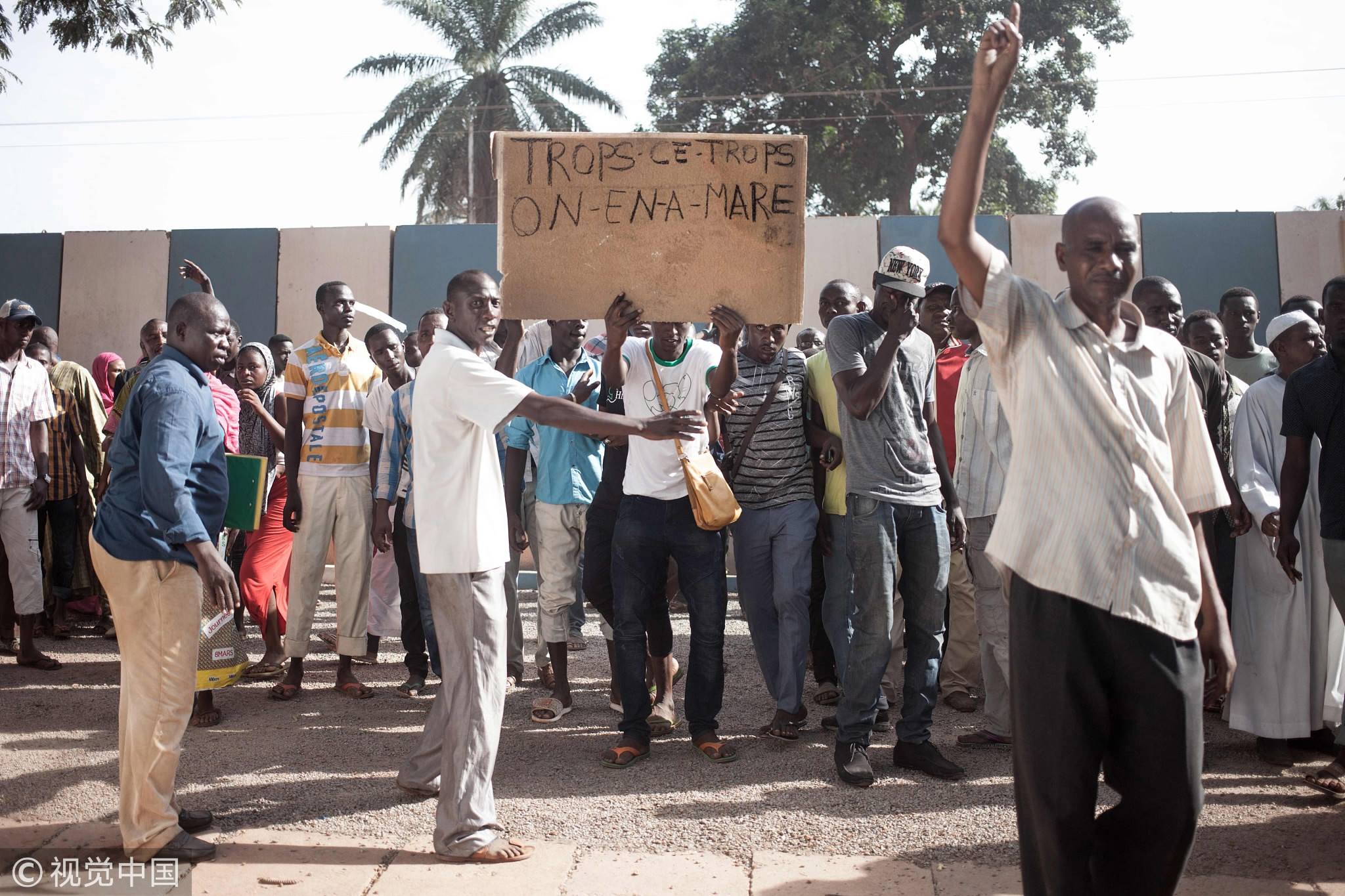
A demonstrator holds up a sign reading "enough is enough, we are sick of it" as residents of the mainly Muslim PK5 neighborhood demonstrate in front of the headquarters of MINUSCA, the UN peacekeeping mission in the Central African Republic, in Bangui, April 11, 2018. /VCG Photo
A demonstrator holds up a sign reading "enough is enough, we are sick of it" as residents of the mainly Muslim PK5 neighborhood demonstrate in front of the headquarters of MINUSCA, the UN peacekeeping mission in the Central African Republic, in Bangui, April 11, 2018. /VCG Photo
One of the world's poorest and most unstable countries, the CAR spiraled into bloodshed after longtime leader Francois Bozize was overthrown in 2013 by a mainly Muslim rebel alliance called the Seleka.
France intervened militarily from 2013 to 2016 to push out the Seleka, winding down the operation after Bozize's successor, Faustin-Archange Touadera, was elected president. But despite UN backing, Touadera can only claim to control a fraction of the country.
The rest is in the sway of ex-rebels and vigilante militias, many of them claiming to act in the name of the Muslim or Christian community.
Tensions within the PK5 district, a major economic hub, have been running high for months, stoked by resentment among traders over demands to pay protection money to so-called self-defense groups.
Last month, 21 people were killed in the area when a joint mission by UN peacekeepers and local security forces to disarm criminal gangs descended into open fighting.
Afterward, demonstrators who blamed UN soldiers for firing on residents protesting against the operation carried the bodies of the dead to the gates of the UN mission in a dramatic protest.
MINUSCA has also struggled to overcome accusations of inaction and sexual abuse by some of its troops in the past.
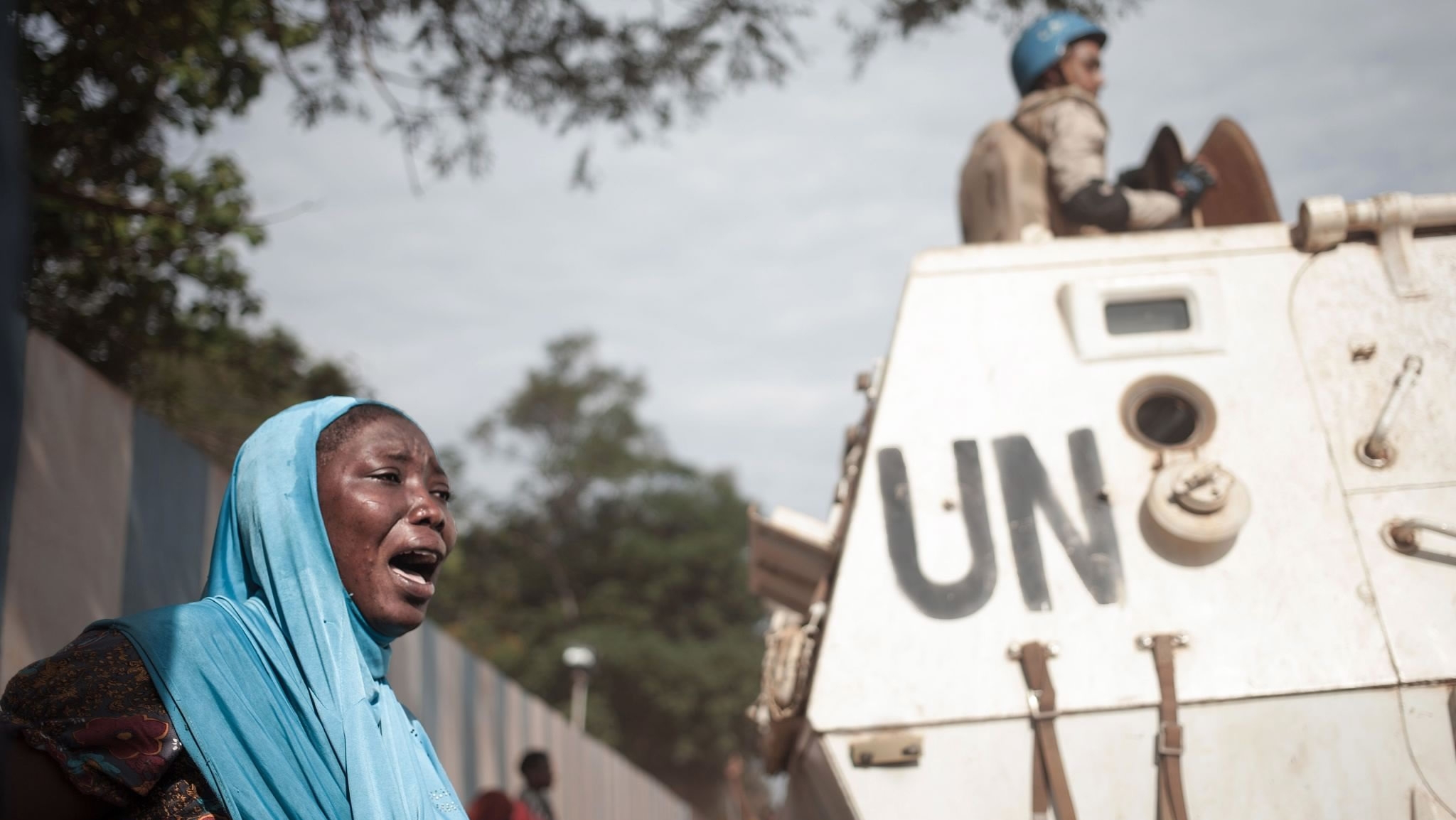
(Top picture: A woman reacts next to UN soldiers as inhabitants of the mainly Muslim PK5 neighborhood demonstrate in front of the headquarters of MINUSCA, the UN peacekeeping mission in the Central Africa Republic, in Bangui, April 11, 2018. /VCG Photo)
Source(s): AFP
,Reuters