
Opinions
14:15, 16-Aug-2018
Opinion: US fortifies wall against Chinese investment
Updated
14:10, 19-Aug-2018
 ["china"]
Share







Copied
02:35
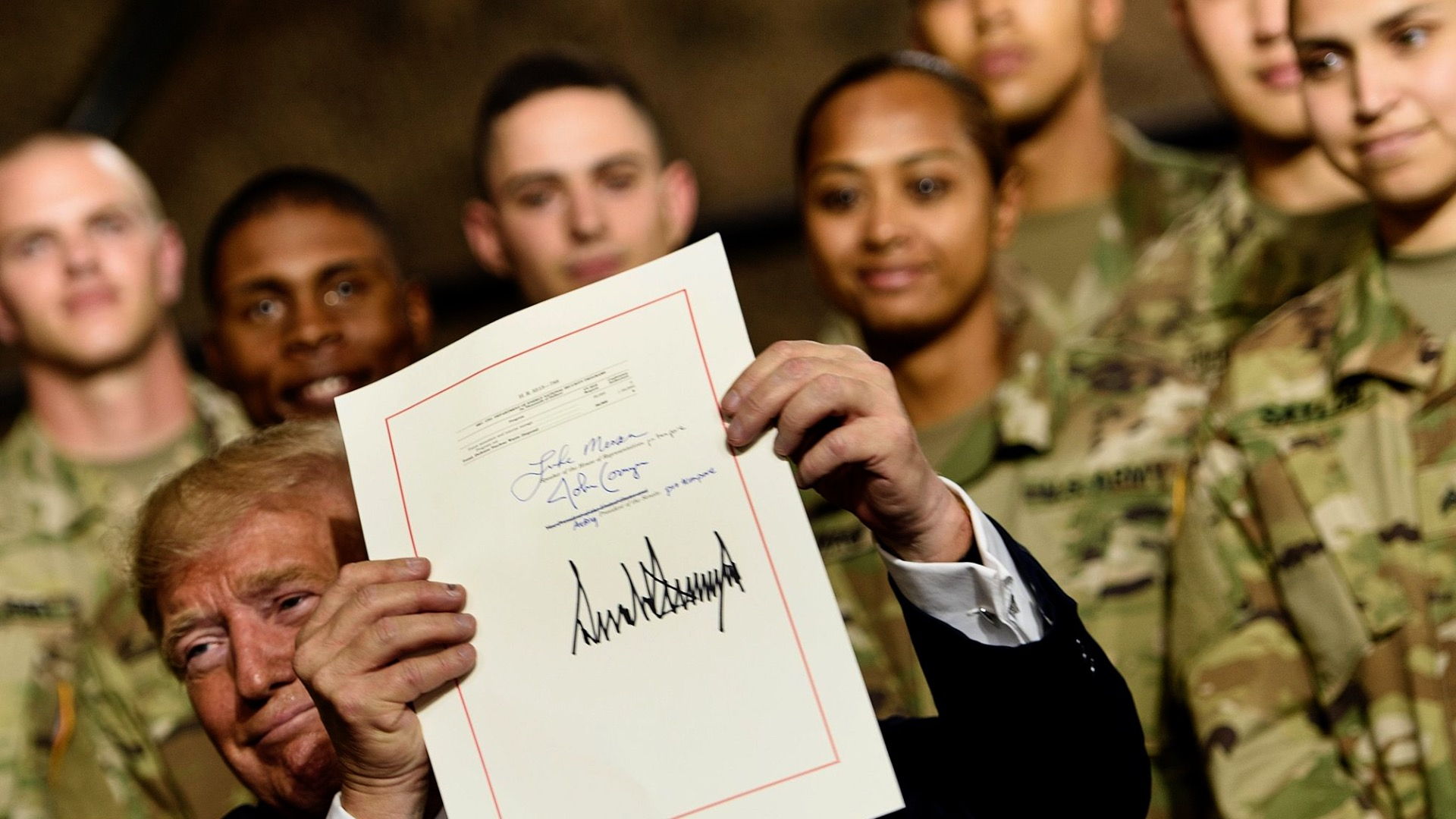
This week, US President Donald Trump signed into law the National Defense Authorization Act for Fiscal Year 2019, which incorporated the Foreign Investment Risk Review Modernization Act, mainly targeting Chinese companies.
The new law lists China's tech companies as national security concerns. Though it didn't outrightly ban the sales of HUAWEI and ZTE products to the general public, the NDAA bars their purchase or use by the federal government and its contractors. The bill also tightens the export of sensitive technology by issuing stricter guidelines for investment regulators.
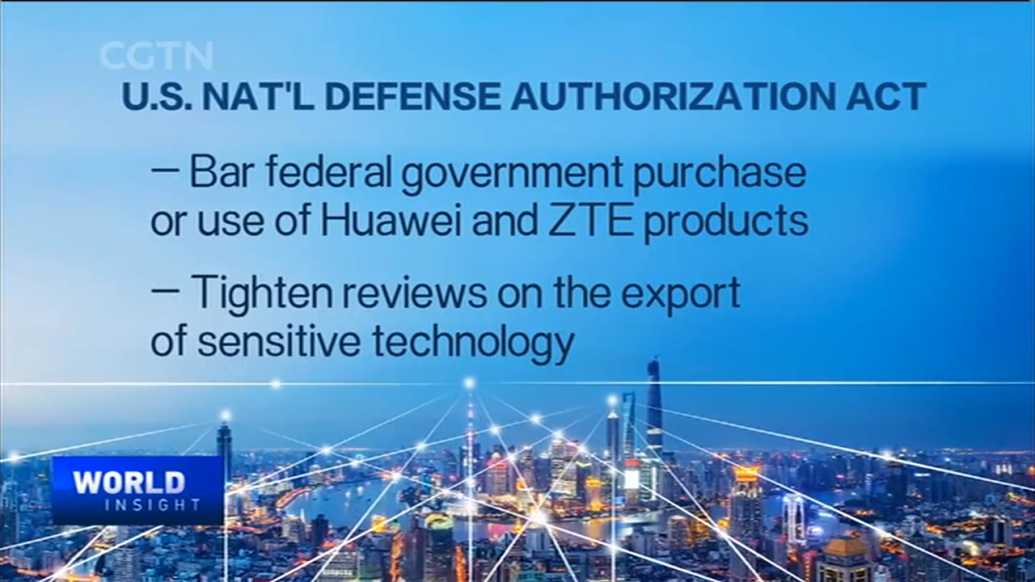
CGTN Photo
CGTN Photo
What parts of Huawei and ZTE business are going to be severely affected? How should China's two telecom giants deal with the challenges?
“The US, prickly leaders in Washington today, regards United States and China in a competition for leadership. And most important, technology of the 21st century,” said Robert Hormats, former US Under-Secretary of State and currently the Vice Chairman of Kissinger Associates, when recently talking to CGTN’s World Insight with Tian Wei.
And this will not be a short term issue. “This is just the beginning. This is not going away with Trump or with Congress. United States consider it as a longer term issue. It won’t be just for today. It would be for the long term," said Mr. Hormats.
"Chinese companies have to figure out ways on working through this, and figure out ways to convince people in Washington that what they buy and what they sell are not going to be national security issues, ” he added.
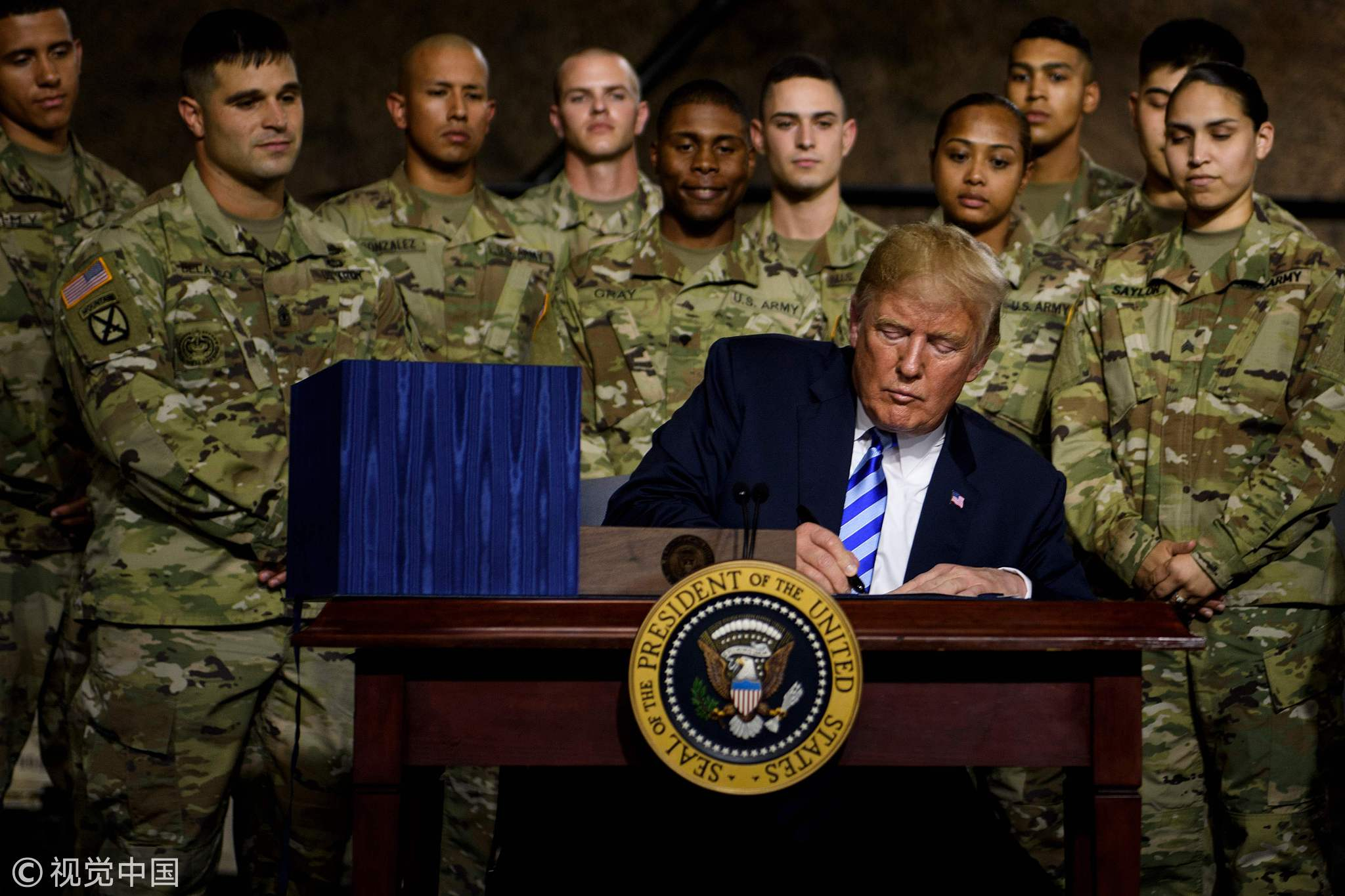
US President Donald Trump signs the “John S. McCain National Defense Authorization Act for Fiscal Year 2019” at Fort Drum, New York, on August 13, 2018. /VCG Photo
US President Donald Trump signs the “John S. McCain National Defense Authorization Act for Fiscal Year 2019” at Fort Drum, New York, on August 13, 2018. /VCG Photo
If things are going downhill, what kind of picture are we facing for both countries? Who’s responsible if things are too late? Mr. Hormats said Trade is very interactive. A lot of products of China in the US are intermediary. It’s the global supply chain that is very intricate. There are interactions among economies. When the US takes measures, Beijing has to take measures in response. And this hurt both economies.
“I think there is a view in Washington thinking American economy in the stock market are working quite well, and Chinese problem like the currency and financial markets have had some difficulties," he said.
"So I think US thinks it could outlast China about this. China wants to make sure the US does feel it can get away with imposing these measures. And every time China acts, US seems doing more things," he added. We should figure out a way to get past this, I don’t see that happening now."
"The US to negotiate effectively, it has to be clear about what it wants. Somehow they have to come together at a middle level first and then state level later on.” said Mr. Hormats.
World Insight with Tian Wei is a 45-minutes global affairs and debate show on CGTN. It airs weekdays at 10:15 p.m. BJT(1415 GMT) with rebroadcasts at 4:15 a.m. BJT(20:15 GMT)