
Tech & Sci
15:43, 09-Aug-2018
India junks an environmental report, once again
Updated
15:09, 12-Aug-2018
 ["other","India"]
Share







Copied
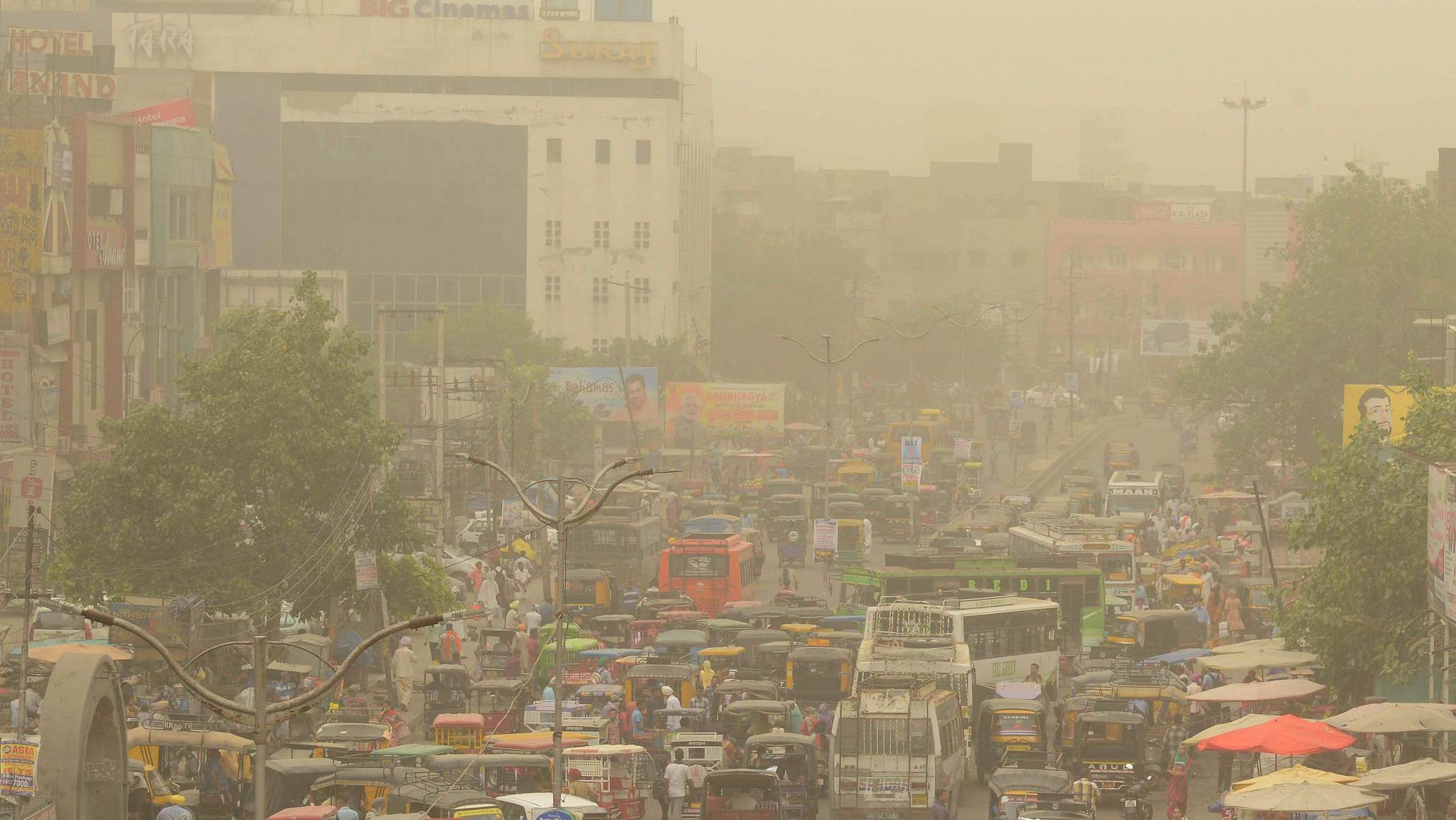
India raised doubts over the “changes” made in the preparation of the Environment Performance Index-2018 (EPI) that drastically downgraded the country’s global ranking.
“The changes made have not been explained or backed by scientific arguments, and seem to be arbitrary,” Mahesh Sharma, minister of state for environment, said in a written reply to Lok Sabha ( lower house of Indian Parliament).
The report, titled "Environmental Performance Index 2018," ranked 180 countries on various environmental criteria, with India placing in the bottom five for failing to meet several criteria leading to pollution and depleting forest cover. The 2018 report ranked the country 177; it was 141 in 2016.
The biennial report was jointly prepared by World Economic Forum, European Commission, and Yale and Columbia universities. “An assessment indicates that the weightage given to the parameters at the three hierarchical levels (policy objectives, issue categories and indicators) are different in 2016 and 2018,” Sharma mentioned.
“The report relied on data gathered by NASA Satellite in place of actual monitored data. Report has not been peer reviewed.”
Specifying the changes in methodology used in the last two studies, the minister said in 2016, the two policy objectives environmental health and ecosystem vitality had a weightage of 0.5 (or 50 percent) each. However, for preparing EPI in 2018 2018, the same objectives were weighed 0.4 and 0.6 respectively.
“Further, for the category Air quality, the weightage given in EPI 2016 was 0.3, which has been increased by over 100 percent to 0.65 in EPI 2018,” he added. The EPI report was released in January in Davos on the sidelines of World Economic Forum Summit.
Last year, Central Pollution Control Board (CPCB) rejected the exhaustive State of Global Air report 2017 claiming India accounts for the highest number premature deaths due to ozone pollution.
“Over the last 25 years, India experienced a nearly 150 percent increase in ozone-attributable deaths, while China’s number remained about the same,” the study said. The death toll is 13 times higher than the toll in Bangladesh and 21 times higher than in Pakistan.
“There is no violation of our standards. Anyone can say anything. I am not aware of their methodology but Ozone level is not exceeding so seriously in India,” Dipankar Saha, in-charge of CPCB’s air lab was quoted by Press Trust of India in 2017.
In 2014, India had rejected the findings of a World Health Organization (WHO) study that ranked it’s national capital, New Delhi, as the “world’s worst city for air pollution.” The report had also ranked 13 Indian cities in the top 20 most polluted cities in the world.
"Delhi is not the dirtiest ... certainly it is not that dangerous as projected," AB Akolkar, a member secretary of the Central Pollution Control Board of India (CPCB) said.
(Cover Image: Commuters make their way as dust covers the sky at a bus stand in Amritsar on June 15, 2018. /VCG Photo)