
World
14:40, 28-Mar-2019
NZ PM welcomes Facebook's white nationalism, separatism bans
Updated
22:17, 28-Mar-2019
 ["china"]
Share






Copied
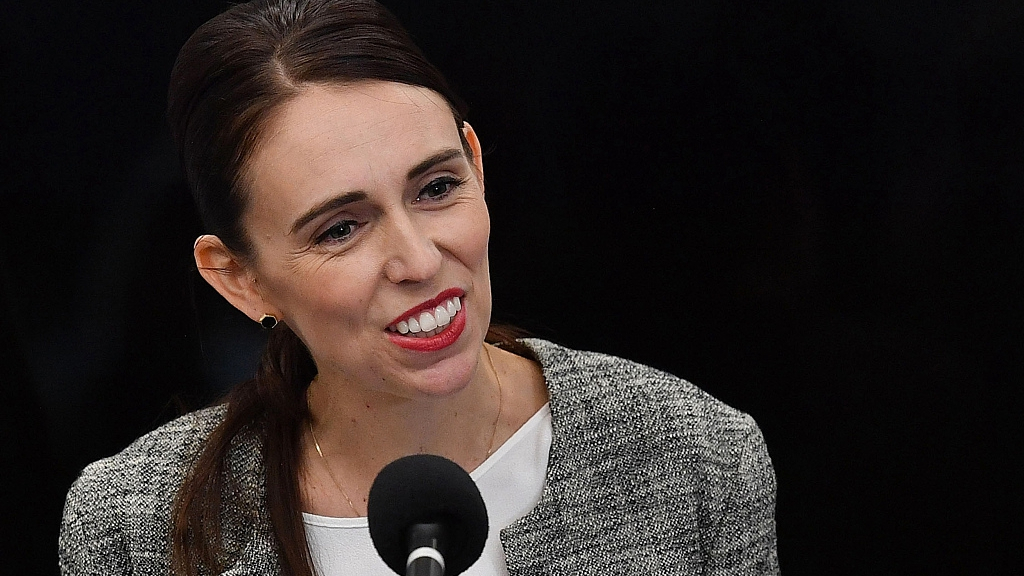
Facebook Inc on Wednesday banned praise, support and representation of white nationalism and white separatism, a move that drew qualified approval from New Zealand where a massacre of 50 people in mosques was live streamed earlier this month.
New Zealand Prime Minister Jacinda Ardern said on Thursday that she welcomed Facebook Inc's decision.
"Arguably these categories should always fall within the community guidelines of hate speech, but nevertheless it's positive the clarification has now been made in the wake of the attack in Christchurch," She said.
The ban will be enforced starting next week at the leading online social network and its image-centric messaging service Instagram.
"It's clear that these concepts are deeply linked to organized hate groups and have no place on our services," the social network said in a statement.
Previously, Facebook only had prohibited users from sharing messages that glorified white supremacy, a rhetorical discrepancy, in the eyes of civil rights advocates, who argued that white nationalism, supremacy and separatism are indistinguishable and that the policy undermined the tech giant's stepped-up efforts to combat hate speech online.

VCG Photo
VCG Photo
Facebook now agrees with that analysis, saying that conversations with academics and "members of civil society" in recent months led it to view white nationalism and separatism as linked to organized hate groups.
"Going forward, while people will still be able to demonstrate pride in their ethnic heritage, we will not tolerate praise or support for white nationalism and separatism," Facebook said.
People who enter search terms associated with white supremacy will get results referring them to resources such as Life After Hate which focus on helping people turn their backs on such groups, according to the social network.
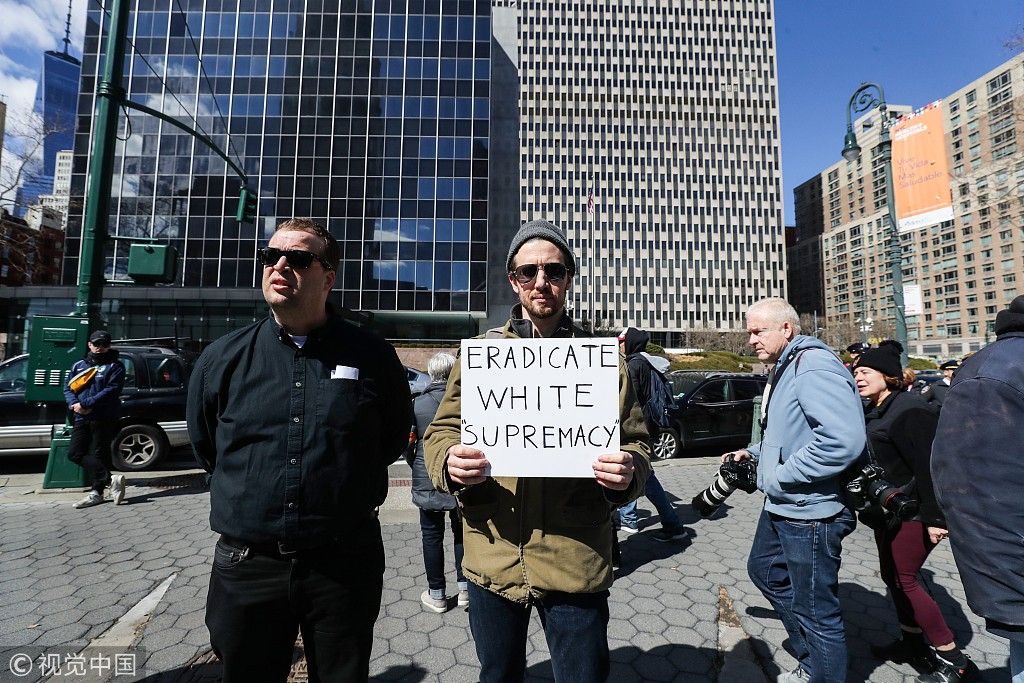
A group of people gathers and march against fascism, racism, Islamophobia at Foley Square in New York, the United States, March 16, 2019. /VCG Photo
A group of people gathers and march against fascism, racism, Islamophobia at Foley Square in New York, the United States, March 16, 2019. /VCG Photo
Difficult to enforce
Amid pressure from governments around the world, Facebook has ramped up machine learning and artificial intelligence tools for finding and removing hateful content while remaining open to free expression.
"Unfortunately, there will always be people who try to game our systems to spread hate," Facebook said.
"Our challenge is to stay ahead by continuing to improve our technologies, evolve our policies and work with experts who can bolster our own efforts." Facebook said the new ban would not apply to topics such as American pride and Basque separatism, which "are an important part of people's identity," according to the statement.
Mark Potok, a senior fellow at the Center for Analysis of the Radical Right, believed Facebook's new ban could limit the spread of white nationalist rhetoric but doubted it would rid the world of the ideology.
"We'll see if they are able to enforce this," Potok said.
"There are thousands of white nationalists posts on Facebook every day. They weren't able to stop the Christchurch video so it will be challenging to do this" he said, referring to the stream of the deadly attacks at New Zealand mosques earlier this month.
Ardern expressed Thursday that she was pleased to see social giants like Facebook have taken that step, but "I still think that there is a conversation to be had with the international community about whether or not enough has been done."
"There are lessons to be learnt here in Christchurch and we don't want anyone to have to learn those lesson over again."
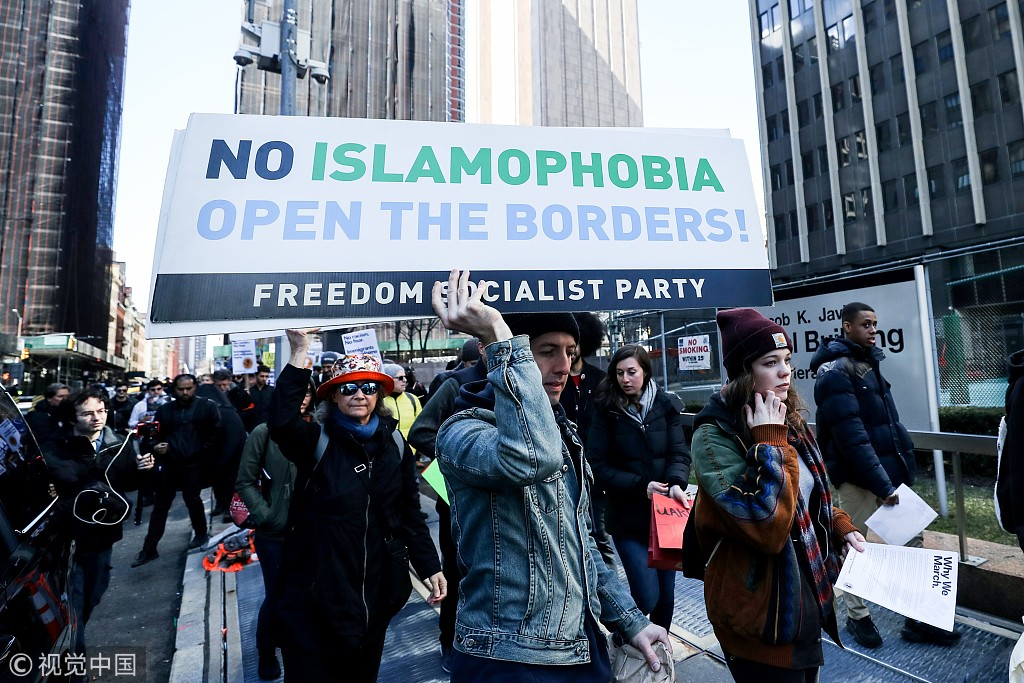
Activists shout slogans and hold banners against fascism, racism and Islamophobia and call people to solidarity with Muslims after the terrorist attack in New Zealand, March 16, 2019. /VCG Photo
Activists shout slogans and hold banners against fascism, racism and Islamophobia and call people to solidarity with Muslims after the terrorist attack in New Zealand, March 16, 2019. /VCG Photo
Cross-continental white supremacy
The New Zealand massacre demonstrated the global reach of a white nationalist movement that preaches an imagined "European" ideal, rejects immigration and shares often vicious threats over the internet.
Some analysts say it is a cohesive movement bound together online that stretches across Europe into Russia, has a deep following in the U.S. and Canada.
They say it poses as much of an international threat as Islamic extremism, and even more so in the United States where white nationalist attacks have outpaced those by jihadists for years.
According to some researchers, white nationalists have been emboldened by the rise of politicians espousing traditionalist views and a tough line on immigration, from Marine Le Pen in France and Viktor Orban in Hungary to Russian President Vladimir Putin; and the UKIP party in Britain.
The same holds true in the United States where President Donald Trump campaigned for the White House on an anti-immigration platform, backed by an overwhelmingly white voter base.
Trump notoriously appeared to sanction the march by white supremacists and neo-Nazis in Charlottesville, Virginia in 2017, and has avoided condemning violence from the far-right.
(With inputs from AFP and Reuters)