
Business
18:48, 16-Oct-2018
Corrupt Huarong chairman led company's 'blind expansion'
Updated
18:39, 19-Oct-2018
 ["china"]
Share







Copied
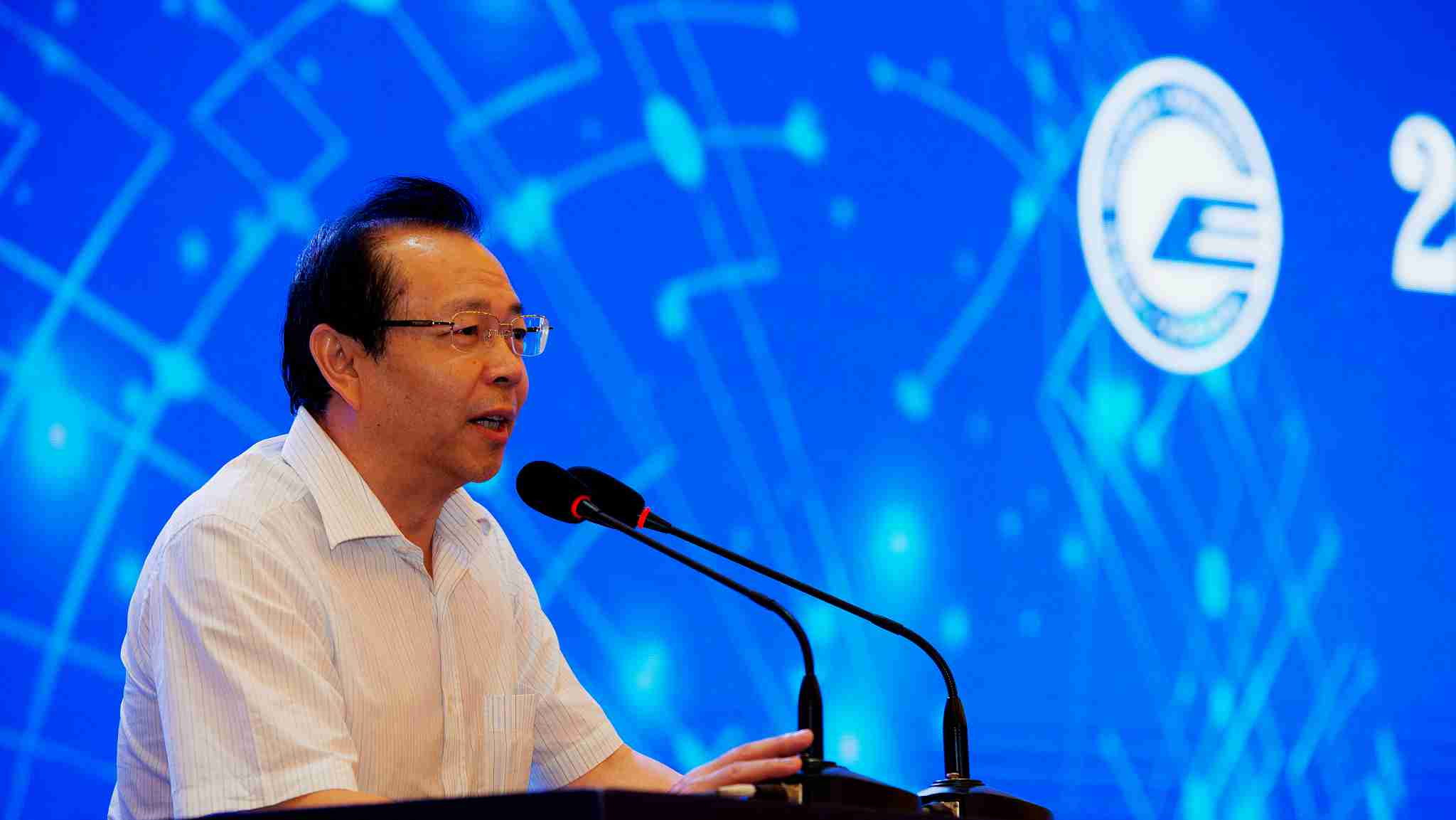
Graft charges against Lai Xiaomin, the former chairman of China Huarong Asset Management Co. Ltd., come after an era of blind expansion and disorderly operations at one of China's four largest state-owned asset management companies.
On Monday, Lai was expelled from the Communist Party of China (CPC) and dismissed from public office for "serious violation of Party disciplinary rules and law," according to the Communist Party of China (CPC) Central Commission for Discipline Inspection (CCDI) and the National Supervisory Commission.
With Lai at the helm of the company, the CCDI said "he violated political disciplines and central financial work policies to blindly expand the company and operate it in a disorderly manner, resulting in its deviating from its main tasks and businesses."
Lai was also found to have accepted bribes, abused his power and used public funds for extravagant banquets and sending family members on trips, as well as using "his rank and position to have sexual relationships with many women."
According to the National Supervisory Commission, his ill-gotten assets have been confiscated and evidence of his criminal activities will be sent to prosecuting departments for charges.
Lai stepped down as chairman of Huarong in April when the investigation into his conduct was first launched. Shares in the Hong Kong-listed company plummeted to a one-year low, and in August Huarong announced a 94.9 percent decrease in profits.
Established in 1999, Huarong is the largest of four state-owned asset management companies, and was originally founded to focus on handling non-performing debt by buying distressed assets with the goal of restructuring them and recouping as much money as possible.
However, Huarong saw its profits increase at an unprecedented scale in the past five years, as it shifted focus from its original purpose towards maximizing its own revenue through risky investments.
The company's 2017 annual report shows net profit increasing by more than 250 percent since 2013. Huarong's total assets hit 1.87 trillion yuan (270.1 billion US dollars) in 2017, representing a 505 percent increase in five years.
The company's data report shows that in 2017, its chief source of revenue was from investment income, at 44.2 billion yuan (6.38 billion US dollars), more than five times the amount it made in 2013.
In contrast, income from distressed debt assets was 30.8 billion yuan (4.4 billion US dollars), an increase of just over five billion yuan on the year before.
After announcing the 94.9 percent decrease in profits in August, China Daily reports that Huarong admitted it had adopted a relatively aggressive business model in recent years under Lai Xiaomin, which led to much higher growth than the industry average, but the business model became difficult to sustain.
With Huarong set up to handle non-performing assets, it was ironically the company's own poor investment choices that provided the biggest blow to profit in 2018.
According to the company's filing to the Hong Stock Exchange in August, impairment losses on financial assets increased by 155.6 percent year-on-year to 12.05 billion yuan (1.74 billion US dollars) in the first half of the year.