
Politics
22:44, 19-Jun-2018
One week after Trump-Kim summit: Progress made, gaps remain
 ["china"]
Share







Copied
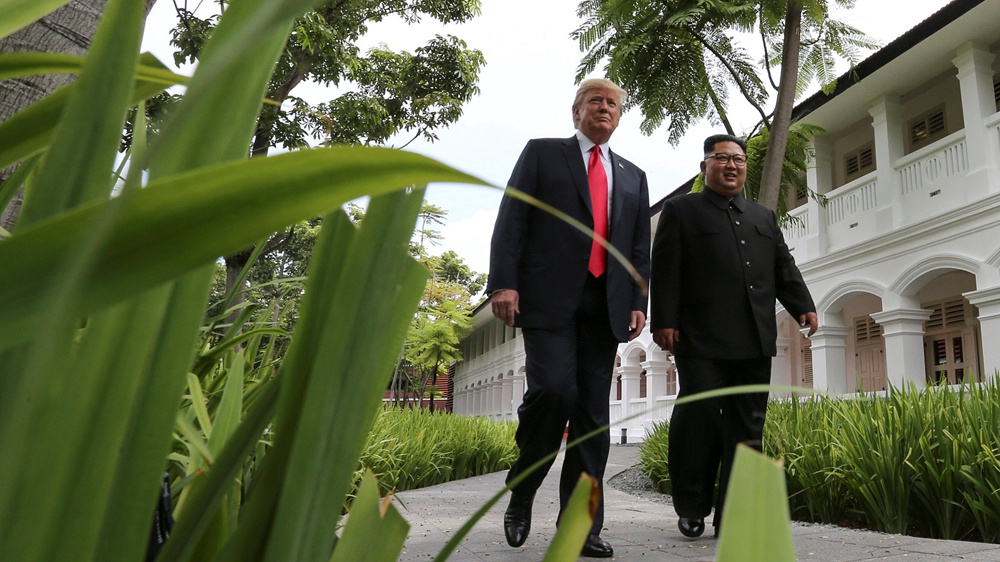
The first week following the Singapore summit between US President Donald Trump and leader of the Democratic People's Republic of Korea (DPRK) Kim Jong Un on June 12 saw several encouraging developments:
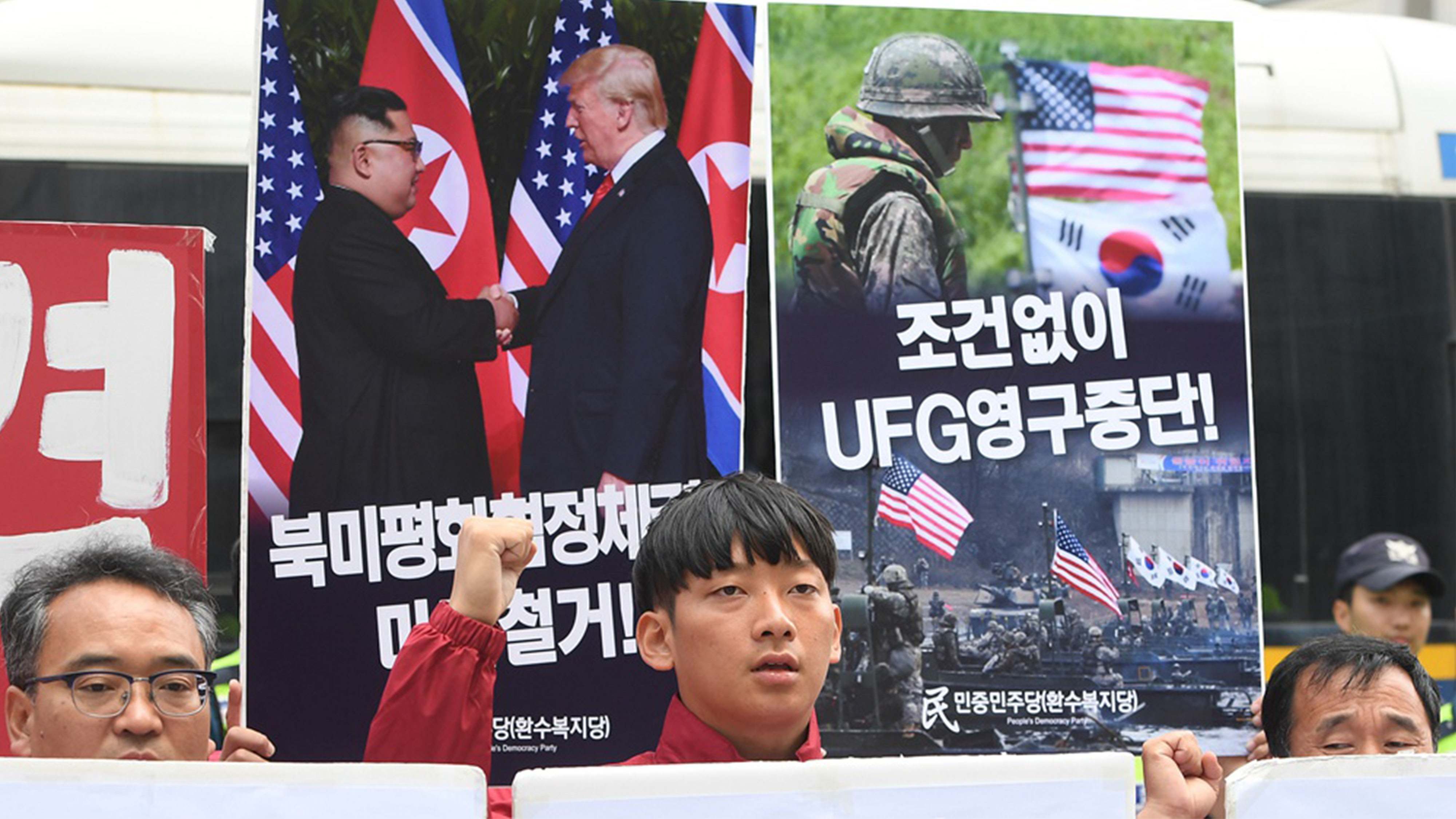
– The US and South Korea agreed to suspend their joint military exercises slated for August;
– The DPRK started returning the remains of the US soldiers missing in the 1950-1953 Korean War;
– The DPRK and South Korea held their first general-level military talks in over 10 years, agreed to field unified teams at some events during the upcoming Asian Games in Indonesia, and are making efforts to establish a joint liaison office in the border town of Kaesong.
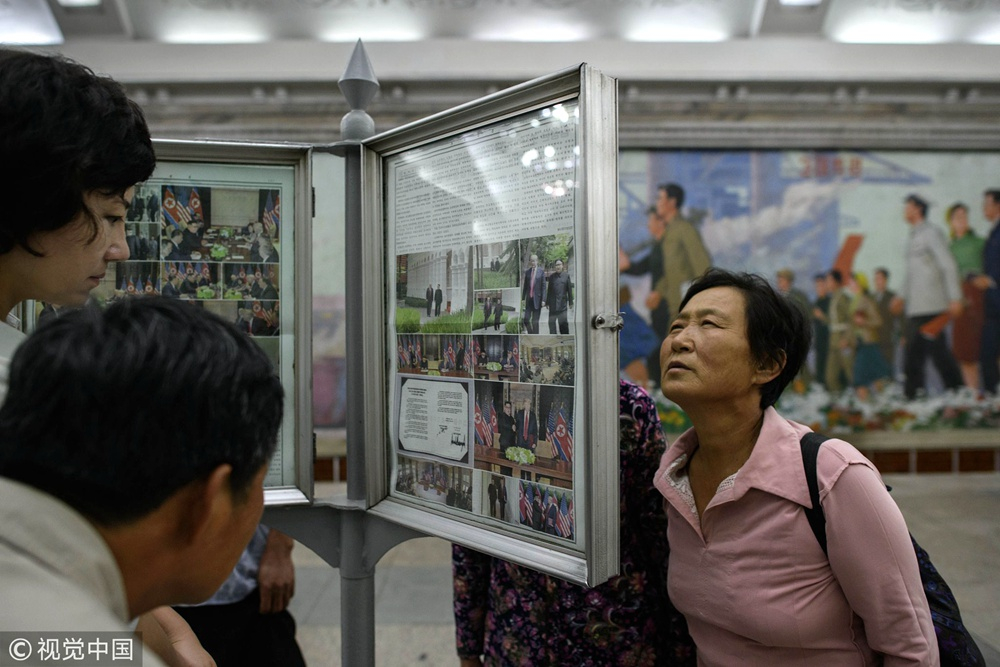
Commuters read the Rodong Sinmun newspaper showing images of DPRK leader Kim Jong Un meeting with US President Donald Trump in Singapore, at a newsstand on a subway platform of the Pyongyang metro, June 13, 2018. /VCG Photo
Commuters read the Rodong Sinmun newspaper showing images of DPRK leader Kim Jong Un meeting with US President Donald Trump in Singapore, at a newsstand on a subway platform of the Pyongyang metro, June 13, 2018. /VCG Photo
Read more:
Nevertheless, there are still gaps on some core issues such as how and when to achieve "complete denuclearization" of the Korean Peninsula, when can sanctions on the DPRK be eased, and what security guarantees the US will provide to the DPRK.
According to a recently published report by the Center for International Security and Cooperation at Stanford University, the denuclearization process would take as long as 15 to 20 years. However, the US government expects Pyongyang to accomplish major nuclear disarmament before the end of President Trump's first term in January 2021.
While Pyongyang said Trump has agreed to lift sanctions "as progress is made," Washington stressed sanctions would remain in place until DPRK's "complete denuclearization," warning that military exercises would restart if talks collapse.
In a more conciliatory tone, South Korea indicated that sanctions could be eased once the DPRK takes "substantive steps towards denuclearization," without specifying what can be regarded as "substantive steps."
China has repeatedly called for a "dual-track" approach, which seeks denuclearization alongside establishing a peace regime on the Peninsula. It has also urged Pyongyang and Washington to show patience and flexibility and "meet each other halfway."
00:52
All sides get involved
During the past week, a flurry of diplomatic activities took place between Washington, Pyongyang, Seoul, Beijing, Tokyo and Moscow – all sides of the former Six-Party Talks – aiming to iron out details of the US-DPRK agreement.
According to the joint statement signed by Trump and Kim, the US and the DPRK will make joint efforts to build a lasting and stable peace regime on the Peninsula; the DPRK is committed to working towards "complete denuclearization" of the Peninsula; the US is committed to providing security guarantees to the DPRK; the two countries will immediately repatriate remains of identified soldiers. The statement also says the two sides will hold "follow-on negotiations" to implement the outcomes of the summit.
At a press conference after the summit, Trump announced he would end the "very expensive" and "provocative" military exercises with South Korea.
US Secretary of State Mike Pompeo (C), South Korean Foreign Minister Kang Kyung-wha (R) and Japanese Foreign Minister Taro Kono (L) leave after a joint press conference in Seoul, South Korea, June 14, 2018. /VCG Photo
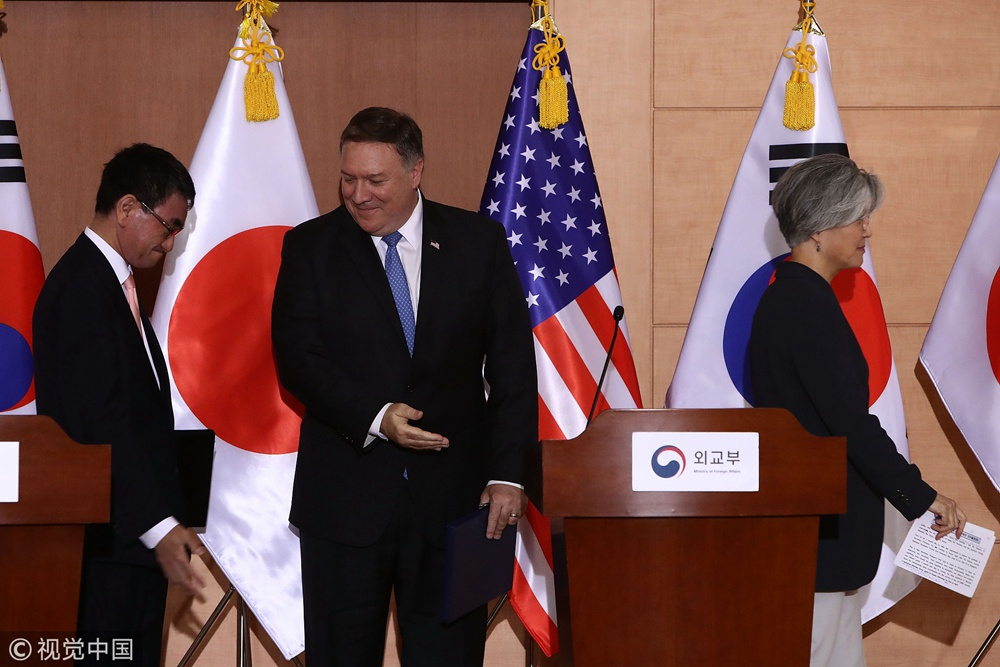
US Secretary of State Mike Pompeo (C), South Korean Foreign Minister Kang Kyung-wha (R) and Japanese Foreign Minister Taro Kono (L) leave after a joint press conference in Seoul, South Korea, June 14, 2018. /VCG Photo
Read more:
On Wednesday and Thursday, US Secretary of State Mike Pompeo visited South Korea, where he briefed South Korean officials about the summit and held a trilateral press conference with South Korean and Japanese foreign ministers. The top US diplomat then traveled to Beijing for talks with Chinese President Xi Jinping and State Councilor and Foreign Minister Wang Yi.
Also on Thursday, Kim Yong Nam, president of the Presidium of the Supreme People's Assembly of the DPRK, visited Moscow and met with Russian President Vladimir Putin.
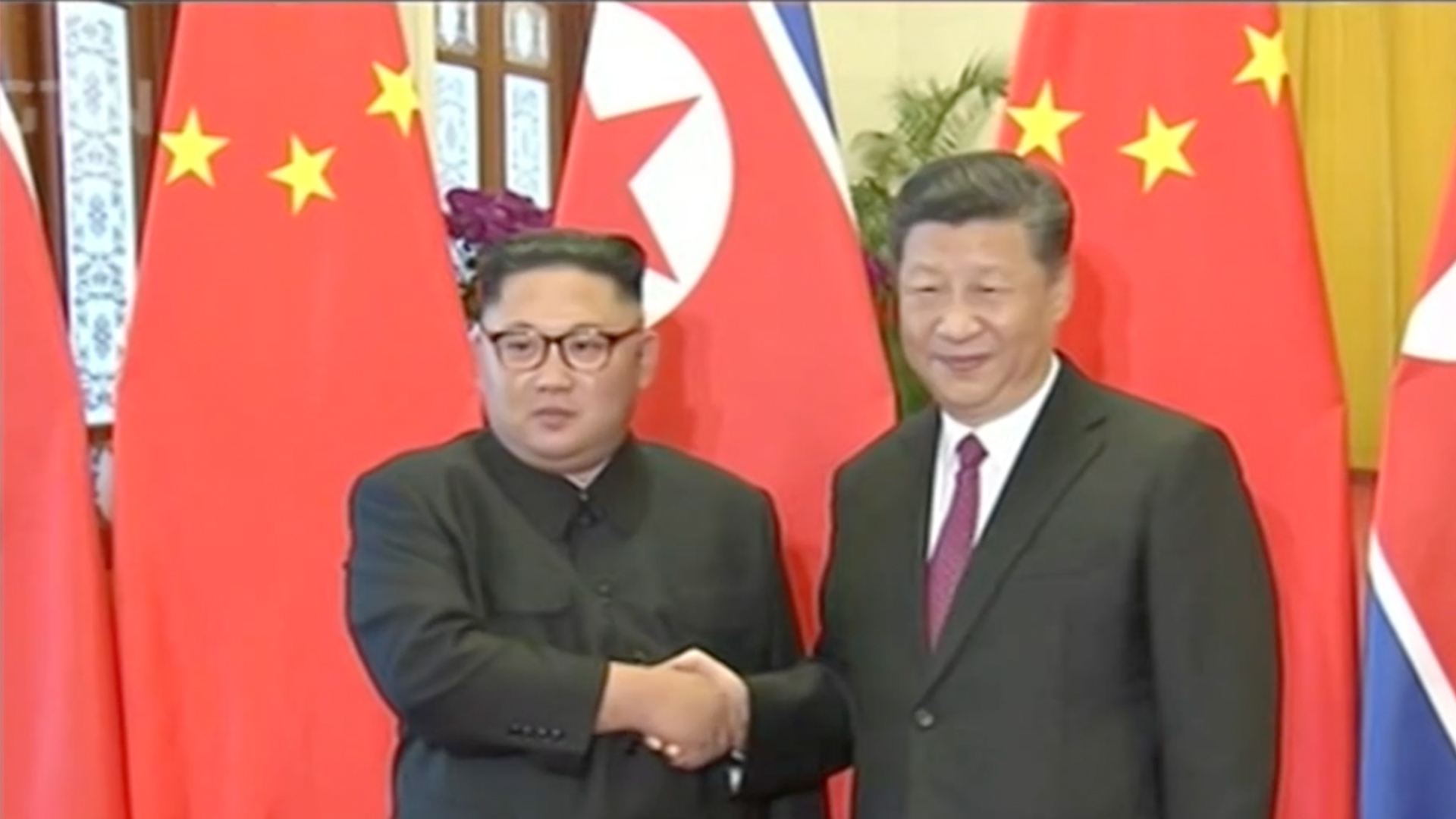
The high profile diplomatic move is Kim Jong Un's third visit to China in less than three months, which has once again highlighted the close ties between Beijing and Pyongyang and China's vital role over issues on the Peninsula.
00:22
What has happened since June 12?
June 13
– US Secretary of State Mike Pompeo visits South Korea, saying Washington hopes "major disarmament" by the DPRK to be achieved in the next two and a half years.
– DPRK's KCNA says US President Donald Trump has agreed to lift sanctions against Pyongyang "as progress is made from dialogue and negotiations."
June 14
– Pompeo says there will be no sanctions relief for the DPRK until "complete denuclearization."
– Chinese President Xi Jinping meets with Pompeo in Beijing, stressing that China and the US share broad common interests and shoulder important responsibilities in safeguarding world peace and stability.
– Russian President Vladimir Putin meets with senior DPRK official Kim Yong Nam in Moscow and invites DPRK leader Kim Jong Un to visit Russia.
– The DPRK and South Korea hold the first general-level military talks in over 10 years.
June 15
– US President Donald Trump says the DPRK has started to return the remains of the US soldiers missing in the Korean War.
– Russia calls for easing sanctions against the DPRK after Pyongyang agreed to the denuclearization of the Korean Peninsula.
June 16
– Japanese Prime Minister Shinzo Abe offers to bear the expense related to the denuclearization, but says Japan will not provide economic assistance to the DPRK unless the "abduction issue" is resolved.
June 17
– Trump says US-South Korea "war games" can resume immediately "if talks break down."
June 18
– Trump has agreed to "alter the armistice agreement" halting the Korean War if the DPRK gives up its nuclear weapons, says Pompeo.
– South Korean Foreign Minister Kang Kyung-wha says sanctions against the DPRK could be eased once it takes "substantive steps towards denuclearization."
– The DPRK and South Korea agree to field unified teams at some events during the upcoming Asian Games scheduled for August in Indonesia.
June 19
– The US and South Korea agree to suspend the "Ulchi Freedom Guardian" joint military exercises scheduled to take place in August.
– Kim Jong Un starts his two-day visit to China, which is his third China tour since late March.
– A South Korean delegation visit the border town of Kaesong to establish a joint liaison office with the DPRK.