
Opinions
11:49, 29-Jun-2018
The Heat: Trump’s travel ban, a political play to the president’s base?
Updated
11:25, 02-Jul-2018
 ["china"]
Share






Copied
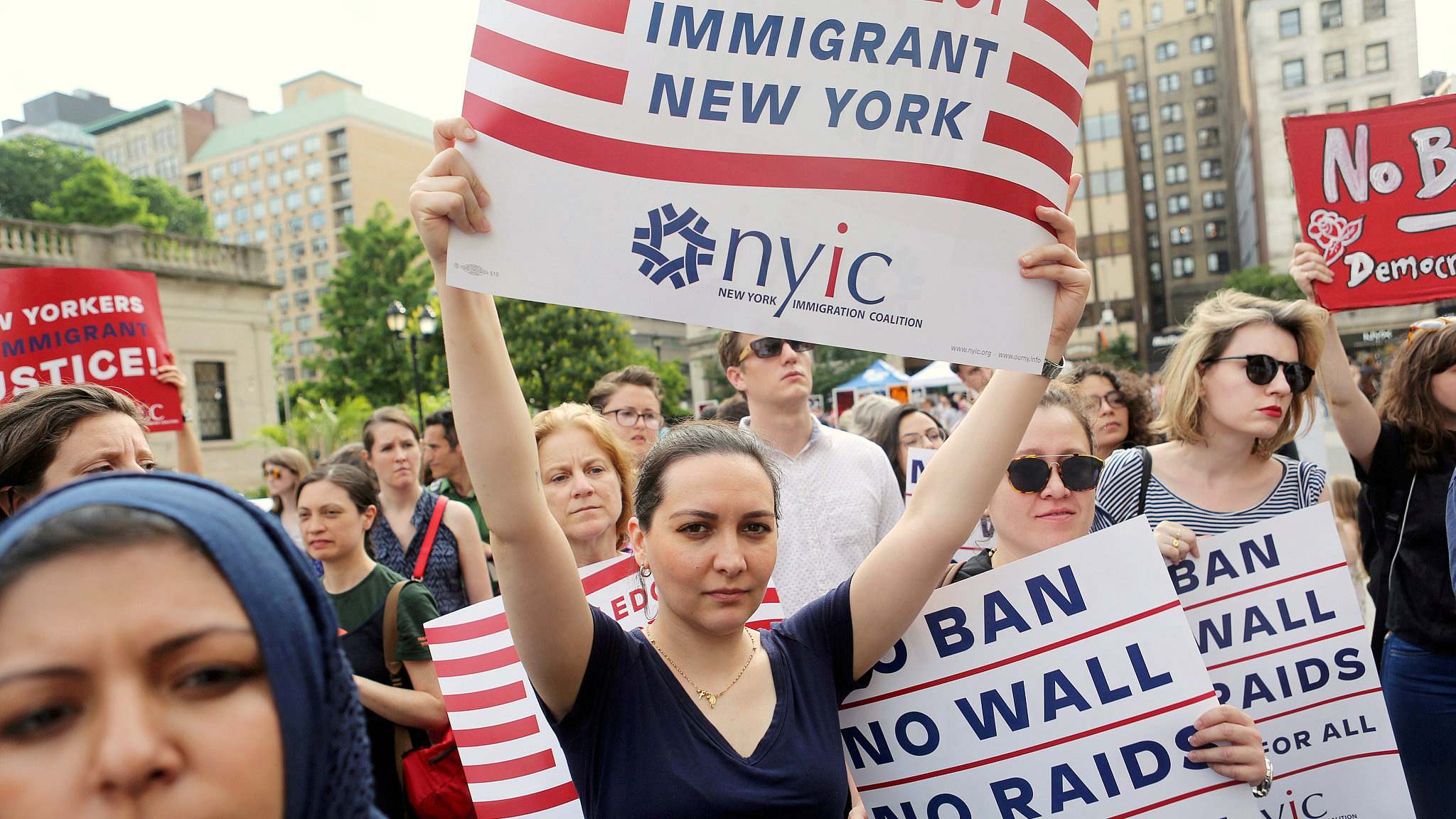
America’s highest court upheld the latest version of President Donald Trump’s highly controversial travel ban on Tuesday, handing the president a big victory.
The court’s 5-4 ruling means that the United States can restrict entry to travelers from seven different countries, five of which are Muslim-majority nations, including Iran, Syria, Libya, Somalia, and Yemen.
President Trump initially pledged to enact “a total and complete shutdown of Muslims entering the United States” in 2015 for his campaign. Later in 2017, he signed an executive order, after which the ban was revised and paused several times.
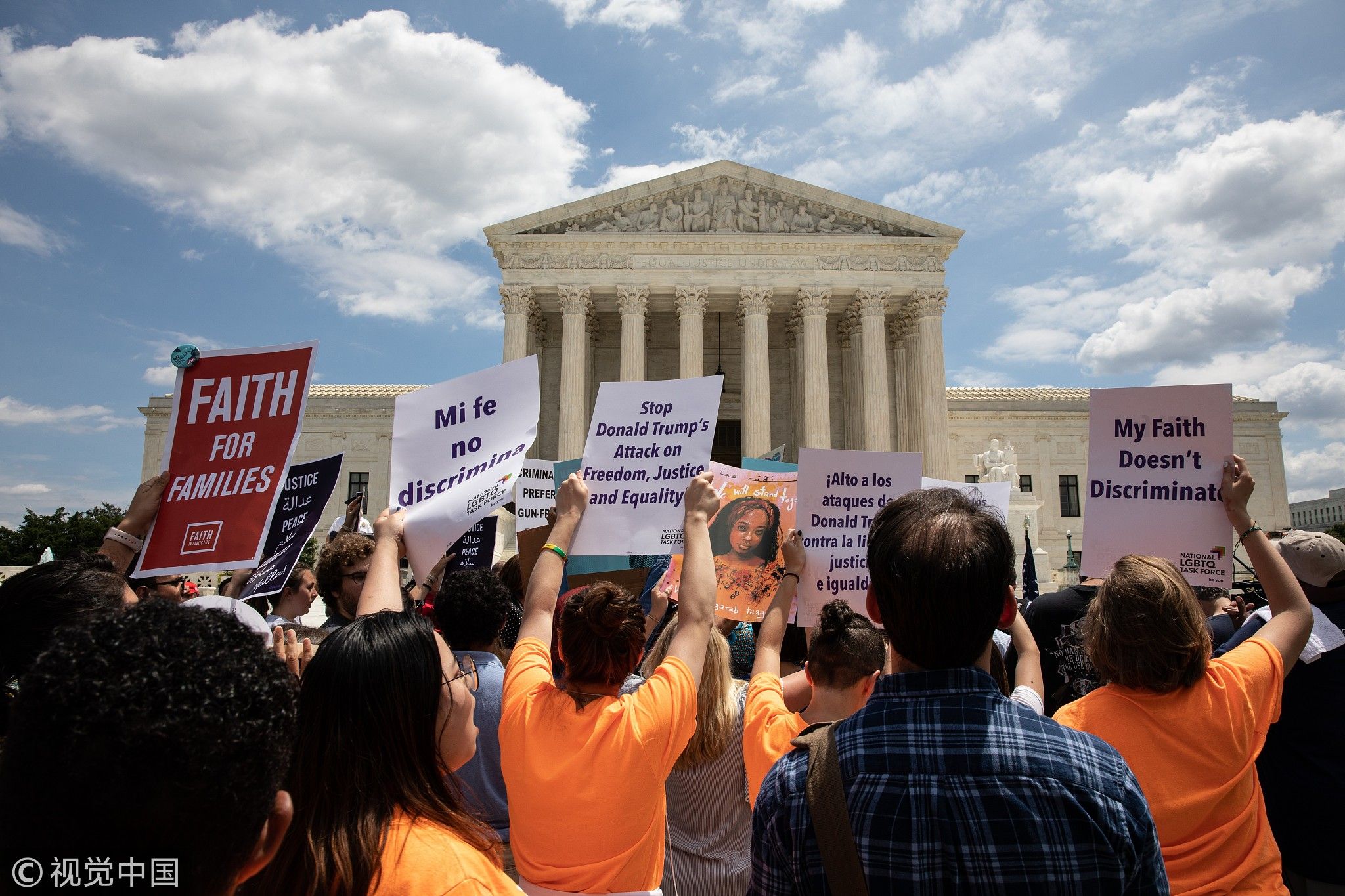
People protest the Muslim travel ban outside of the US Supreme Court in Washington, US, June 26, 2018. /VCG Photo.
People protest the Muslim travel ban outside of the US Supreme Court in Washington, US, June 26, 2018. /VCG Photo.
Today President Trump finally has his travel ban. The court found his order “squarely within the scope of presidential authority,” but critics insist this ban is unfair and un-American. Many are calling it a “Muslim ban” and say it will add to a greater division within the country.
Afshin Molavi, a senior fellow in foreign policy at John Hopkins University’s School of Advanced International Studies, is one of those not in favor of the court’s decision. Molavi viewed the president’s travel ban more as a play to his base, which he could easily carry out at minimum cost.
“This hasn’t really made us any safer today than we were two days ago,” Molavi said.
“This is the Muslim that President Trump was able to get through, and he was really playing to a base here. There were the countries that were the most vulnerable. There were the countries that could be targeted without a whole lot of political lobbying pushing back against them.”
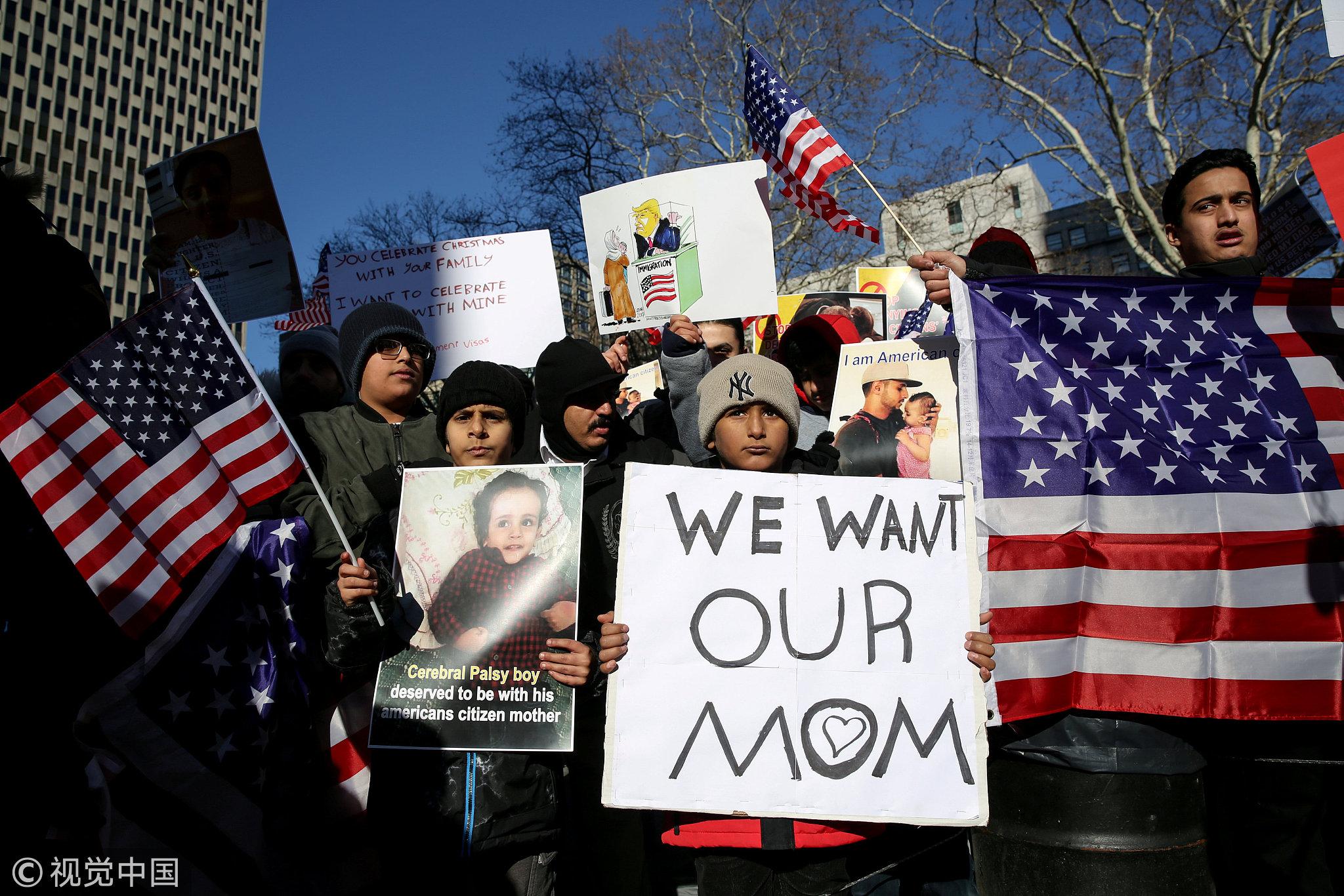
New York Yemeni Americans demonstrate in response to US President Donald Trump's travel ban and recent denials of visa applications in Foley Square in lower Manhattan in New York City, New York, December 27, 2017. /VCG Photo.
New York Yemeni Americans demonstrate in response to US President Donald Trump's travel ban and recent denials of visa applications in Foley Square in lower Manhattan in New York City, New York, December 27, 2017. /VCG Photo.
Michael Johns, a co-founder of the National Tea Party Movement, disagreed with Molavi, arguing that the seven countries targeted have been hotbeds of terrorism, and the ban is rooted in the president’s constitutional obligation to protect his country.
“I think that’s beyond dispute,” Johns said. “Many of them are on our terrorist watch list and have been designated state sponsors of terrorism. They have not indicated it, for the most part, any willingness to cooperate with the United States to the extent that needs to be done.”
For Johns and many other ban supporters, national security is a key element to consider in this case. President Trump himself has also insisted that the travel ban is necessary to enact for a safer United States.
However, Bruce Fein, a lawyer specializing in the US Constitution, said that the order had some “slipshod vetting practice” that was simply counterfactual.
“When the order was issued, it wasn’t based upon the idea that these particular countries were the sources of all sorts of immigrants coming on and committing terrorist acts,” Fein said. “In fact, two of the most major sources of terrorists into the United States – Saudi Arabia and Pakistan – are not on the list.”
01:04
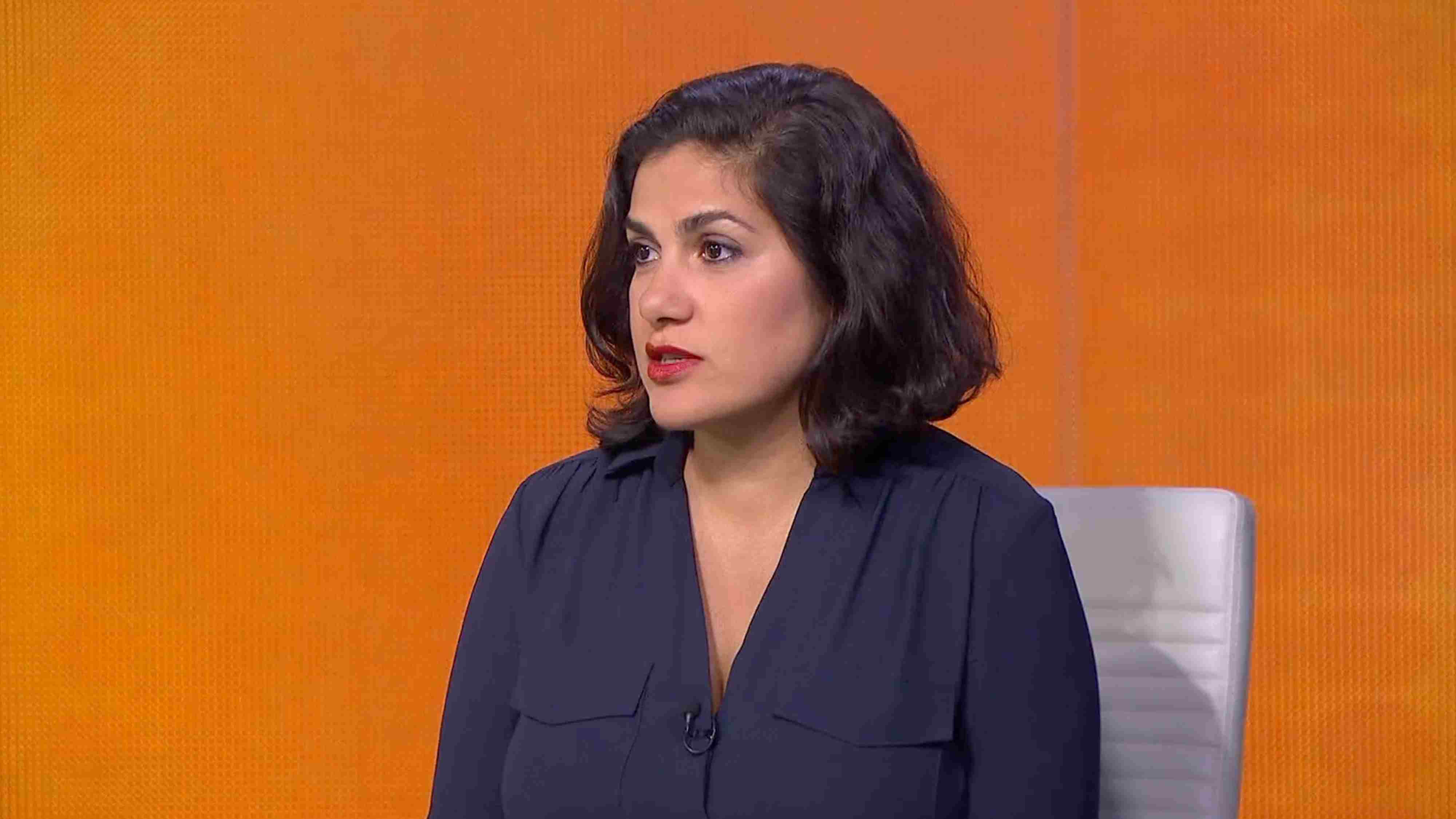
Negar Mortazavi, the Washington correspondent for Iran International, agreed with Fein. She accepted that there are issues with terrorism and radicalization, but the travel ban cannot make the United States any safer.
“Looking at the recent terrorist attacks in the US in California, the Boston bombing, going all the way back to the 9/11, none of these countries that are in the travel ban were part of these terrorist attacks,” Mortazavi said. “How does this add up to national security?”
Looking at this argument, Johns responded that the exemption was granted to Saudi Arabia and Pakistan because the relationships between the United States government and the two countries have been sufficiently strong, and the US has more confidence in the vetting processes that they are implanting than it has in the seven countries.
Nevertheless, this viewpoint failed to convince everyone.
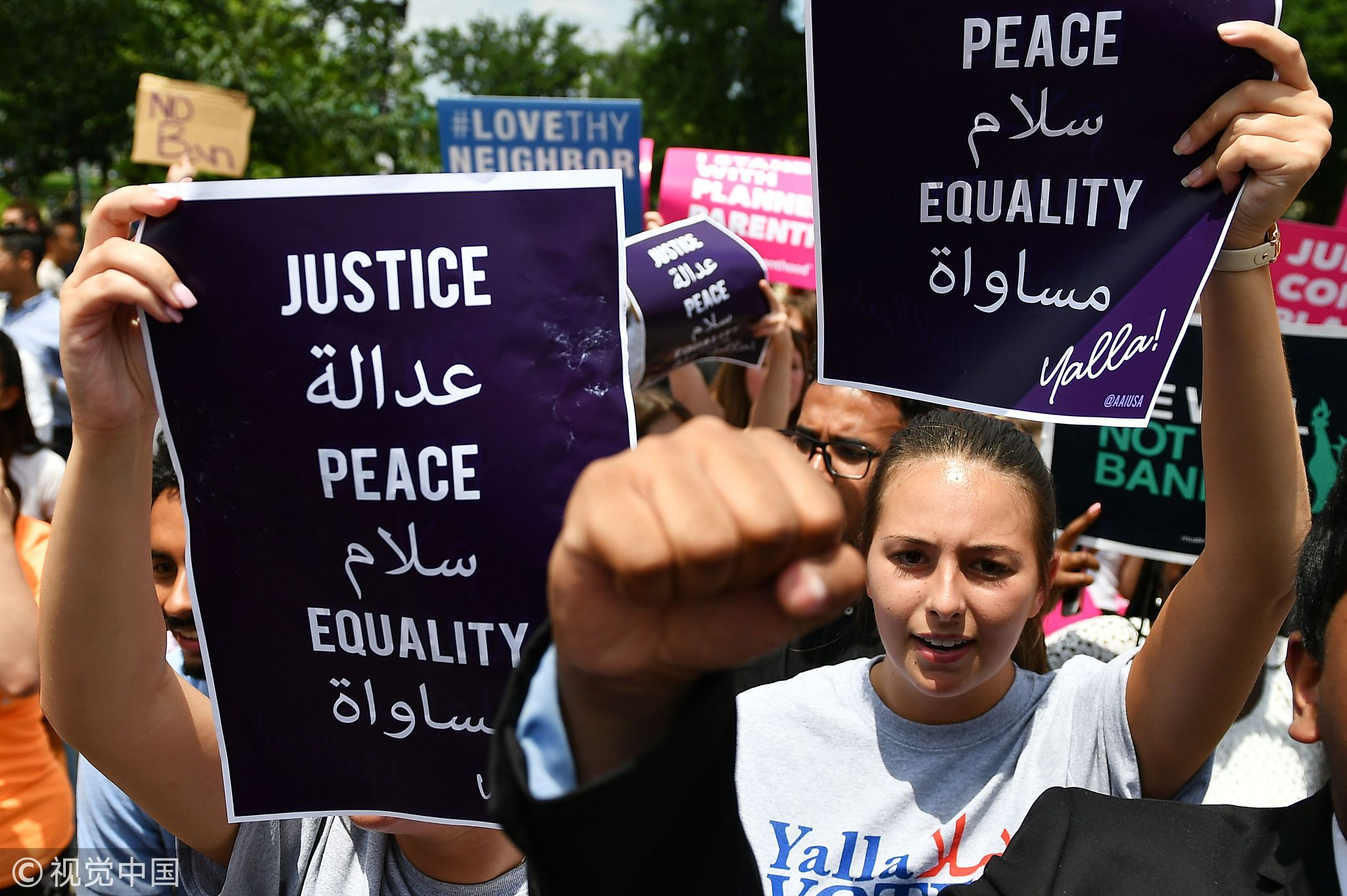
People protest the Muslim travel ban outside of the US Supreme Court in Washington, DC, June 26, 2018. /VCG Photo.
People protest the Muslim travel ban outside of the US Supreme Court in Washington, DC, June 26, 2018. /VCG Photo.
“We have no idea what was and what has been investigated to determine whether or not countries had sufficient reliability in issuing passports to make the vetting process reliable,” Fein said.
“All we have is the statements of the advocates, and there is apparently a 17-page report that’s supposed to be very skimpy. We know when it’s secret, and it never gets tested, the probability that is a lie is pretty high.”
As a lawyer, Fein said he was involved in many visa issues prior to the travel ban. The applicants were turned down regularly because of national security reasons, but it was hard for them to show evidence to prove themselves have good characters.
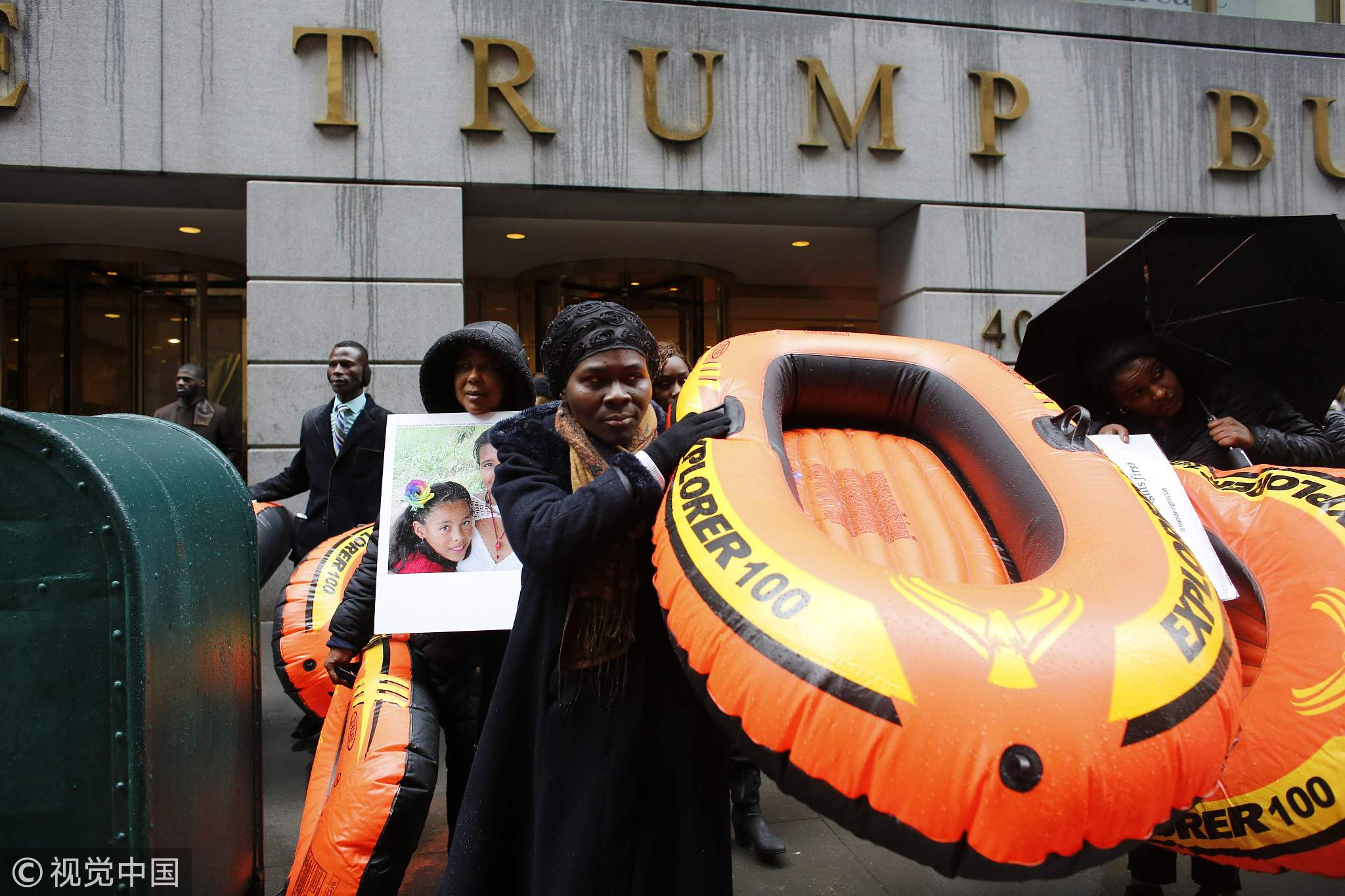
A refugee woman from Africa carries a raft as she takes part in a protest against the US refugee ban outside The Trump building on March 28, 2017, in New York. /VCG Photo.
A refugee woman from Africa carries a raft as she takes part in a protest against the US refugee ban outside The Trump building on March 28, 2017, in New York. /VCG Photo.
Even though the travel ban provides certain waivers, but whether it is implemented or not is another matter to discuss.
“It looks to me like a political statement,” Fein said. “It plays to his base. He (President Trump) doesn’t really care whether it has any impact at all on terrorism. It just looks like he honored a campaign promise.”
The Heat with Anand Naidoo is a 30-minute political talk show on CGTN. It airs weekdays at 7:00 a.m. BJT and 7:00 p.m. Eastern in the United States.