
Culture
21:14, 03-Jul-2018
Fragrant undertaking: Grassroots CPC member fights poverty with roses
Updated
20:20, 06-Jul-2018
 ["china"]
Share







Copied
03:08
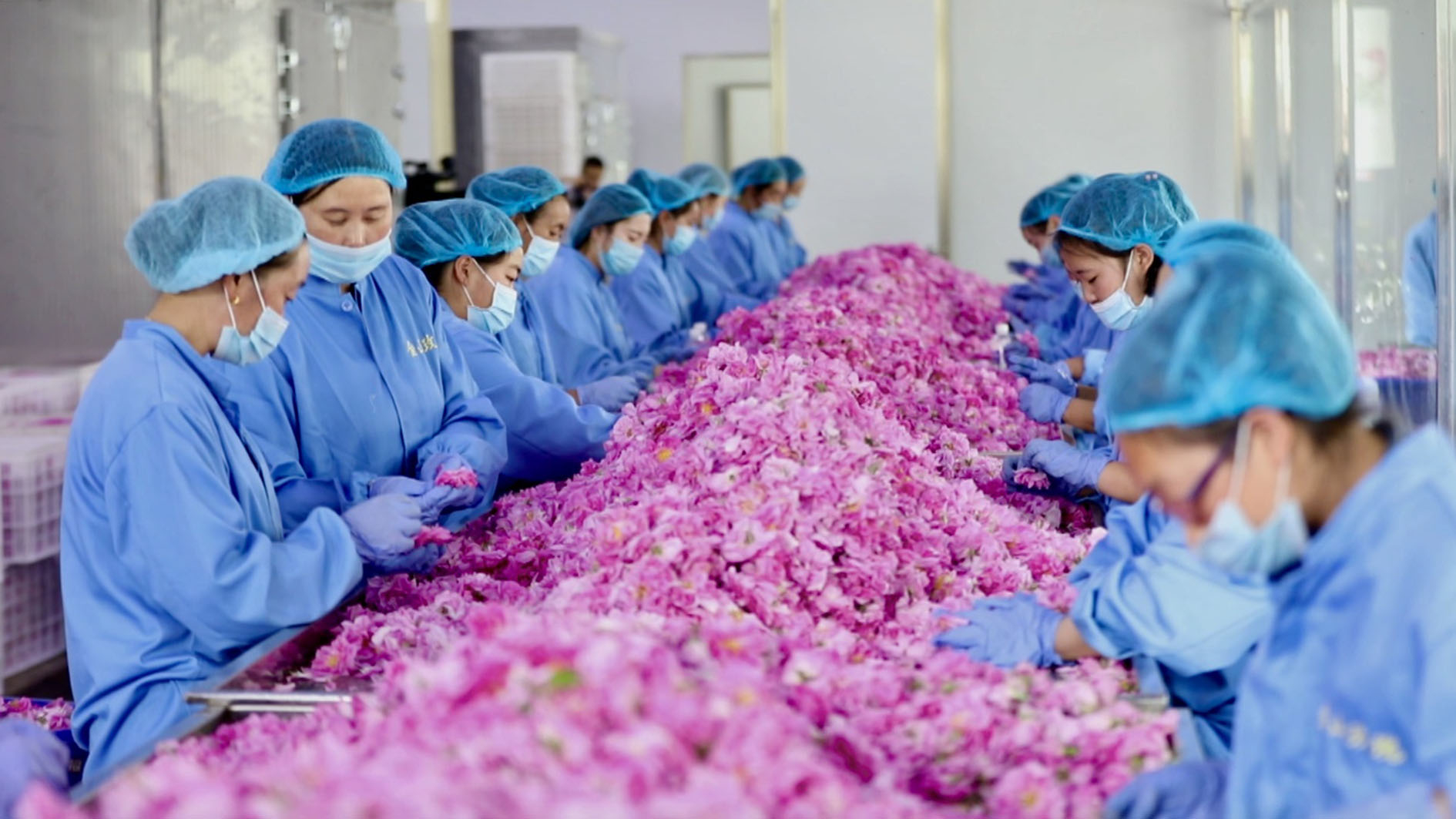
Chen Wanghui’s life is all about roses.
During the harvest season, she starts her day by touring farmlands to urge the farmers to pick the blossoms in a timely manner to guarantee their freshness.
In 2011, when the Tibetan woman had just been elected the chief of her village in Aba Tibetan and Qiang Autonomous Prefecture in southwest China's Sichuan Province, she was faced with a big headache – the invasion of wild boars, which encroached on almost all crops.

The roses harvested from the farmland. /CGTN Photo
The roses harvested from the farmland. /CGTN Photo
She came up with the bold idea of planting roses as a way out when she saw that a rose remained intact in the middle of destroyed crops.
"I was so excited when a friend told me that the rose essence oil is even more expensive than gold. I said I would like to try as long as it’s more profitable than our traditional potatoes and peas," Chen told CGTN.
She then started her journey to explore rose-planting regions across the country to find the most suitable plants to grow. But her burning passion for the project was nearly extinguished by locals themselves.
"They didn’t believe roses could be profitable. They planted the seedlings in my presence but paid no attention to them afterwards. Most of the plants died," said Chen.
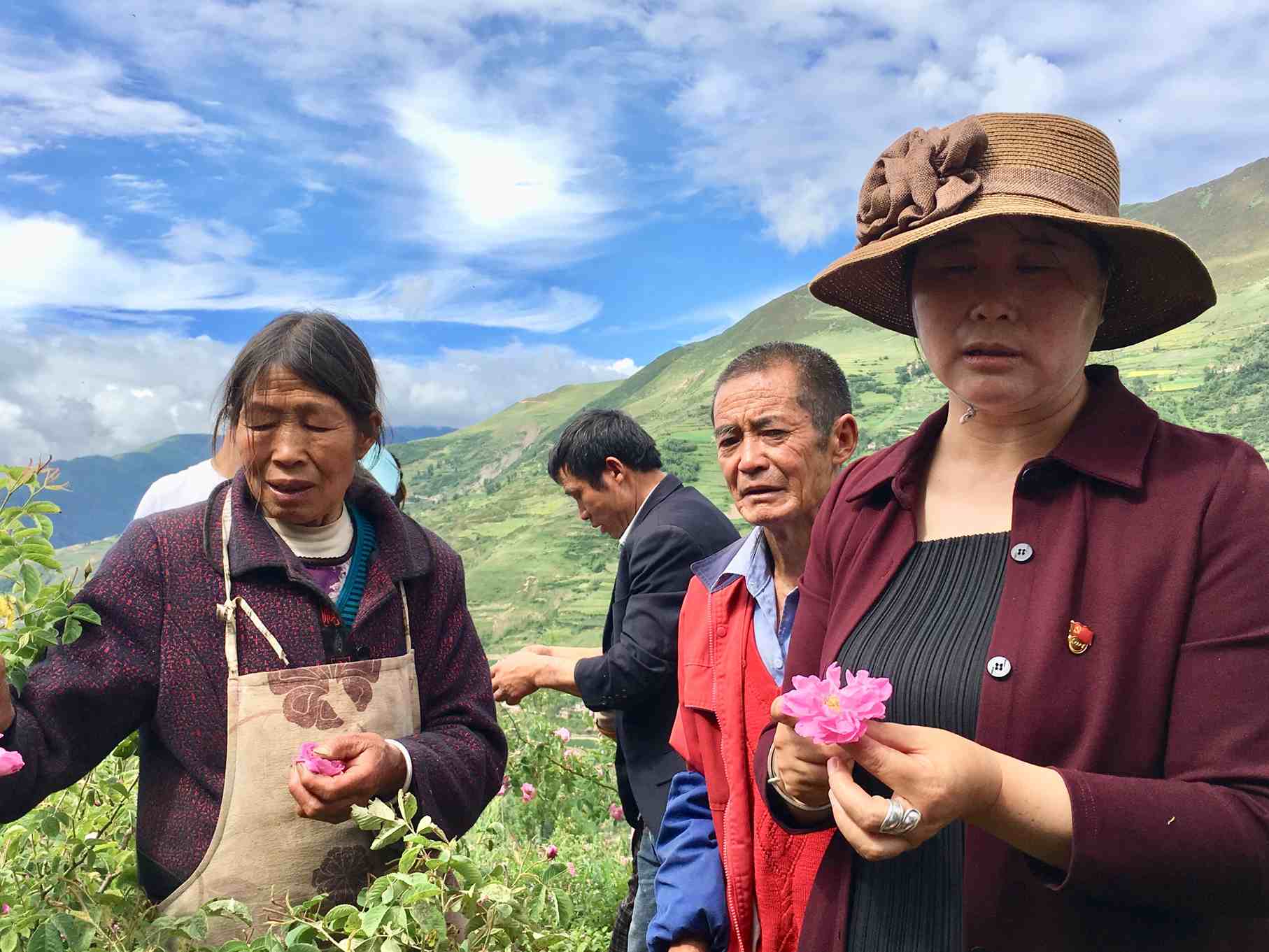
Chen Wanghui talks to farmers at the rose farmlands. More than 530 hectares of roses, mostly Damask roses, have been planted in 22 villages. / CGTN Photo
Chen Wanghui talks to farmers at the rose farmlands. More than 530 hectares of roses, mostly Damask roses, have been planted in 22 villages. / CGTN Photo
She persisted despite setbacks. She later set up a cooperative and promised to purchase the roses at above-market prices.
Chen’s efforts paid off. So far, the planting of roses, mostly the precious Damask roses, has expanded to more than 20 villages across the county, covering an area of some 530 hectares. This is in comparison to only about three hectares five years ago. The farmers’ annual income has also increased considerably.
"We used to scrape a living with the traditional crops and no savings could be expected. Now rose planting has largely improved the livelihood of my family. Our income this year is almost 10 times more than before," said Yu Fuliang, a local villager.
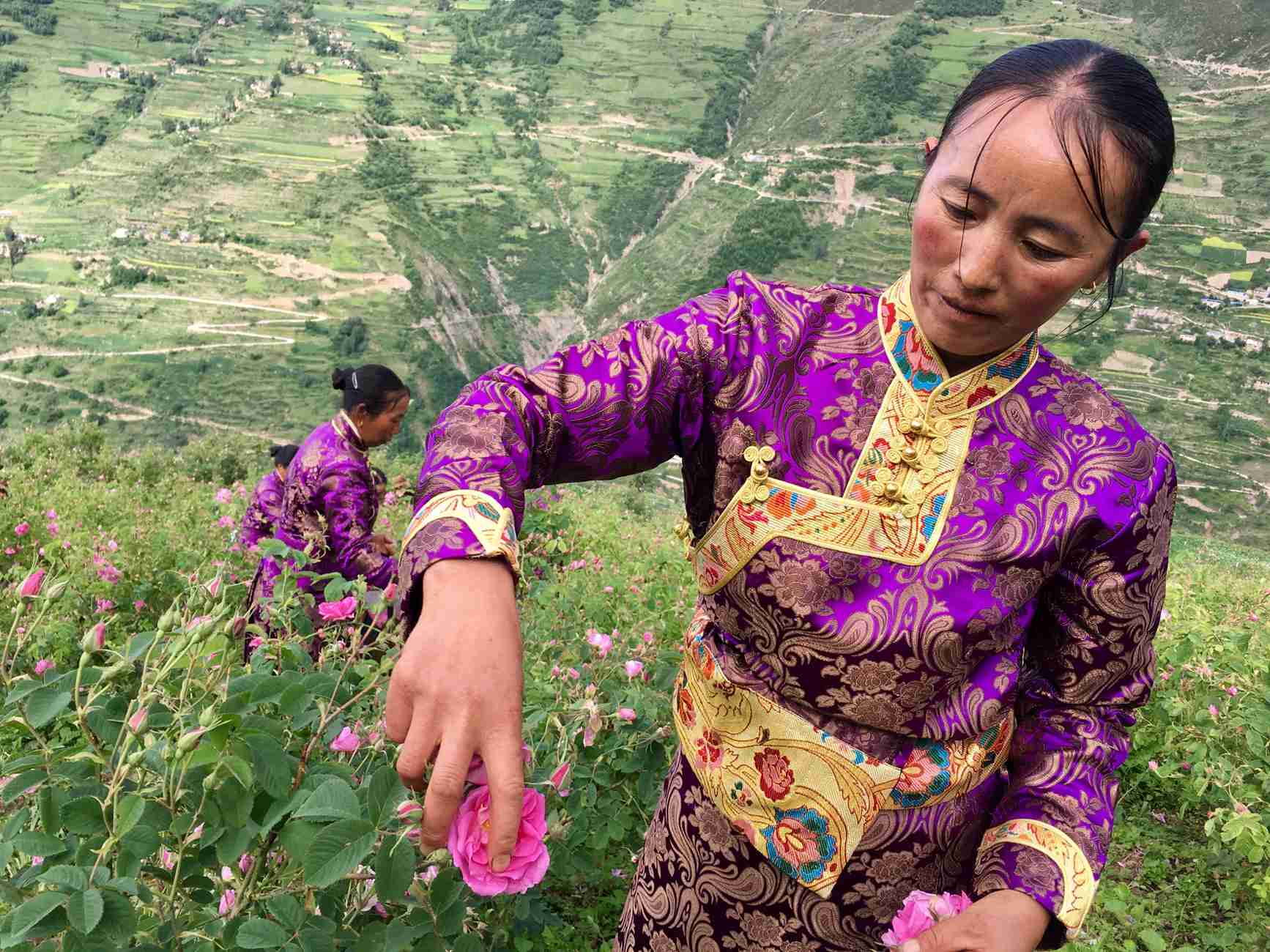
A villager picks the rose blossoms. The annual income of locals has increased considerably thanks to the rose planting. /CGTN Photo
A villager picks the rose blossoms. The annual income of locals has increased considerably thanks to the rose planting. /CGTN Photo
About 260 tonnes of top-quality roses will be harvested this year. They will all be processed into a variety of products – tea, essence oil, jam and cakes – in the factory Chen established in 2016. With more villages to join next year, the output is expected to grow and more farmers will benefit. But the 44-year-old still faces great pressure from her family.
"My husband always calls me a ‘blockhead’. He feels puzzled why I have to devote and risk so much on the flowers," she said, adding that she had sold most of the house properties of her family and took loans of about 1.5 billion US dollars to set up this factory.
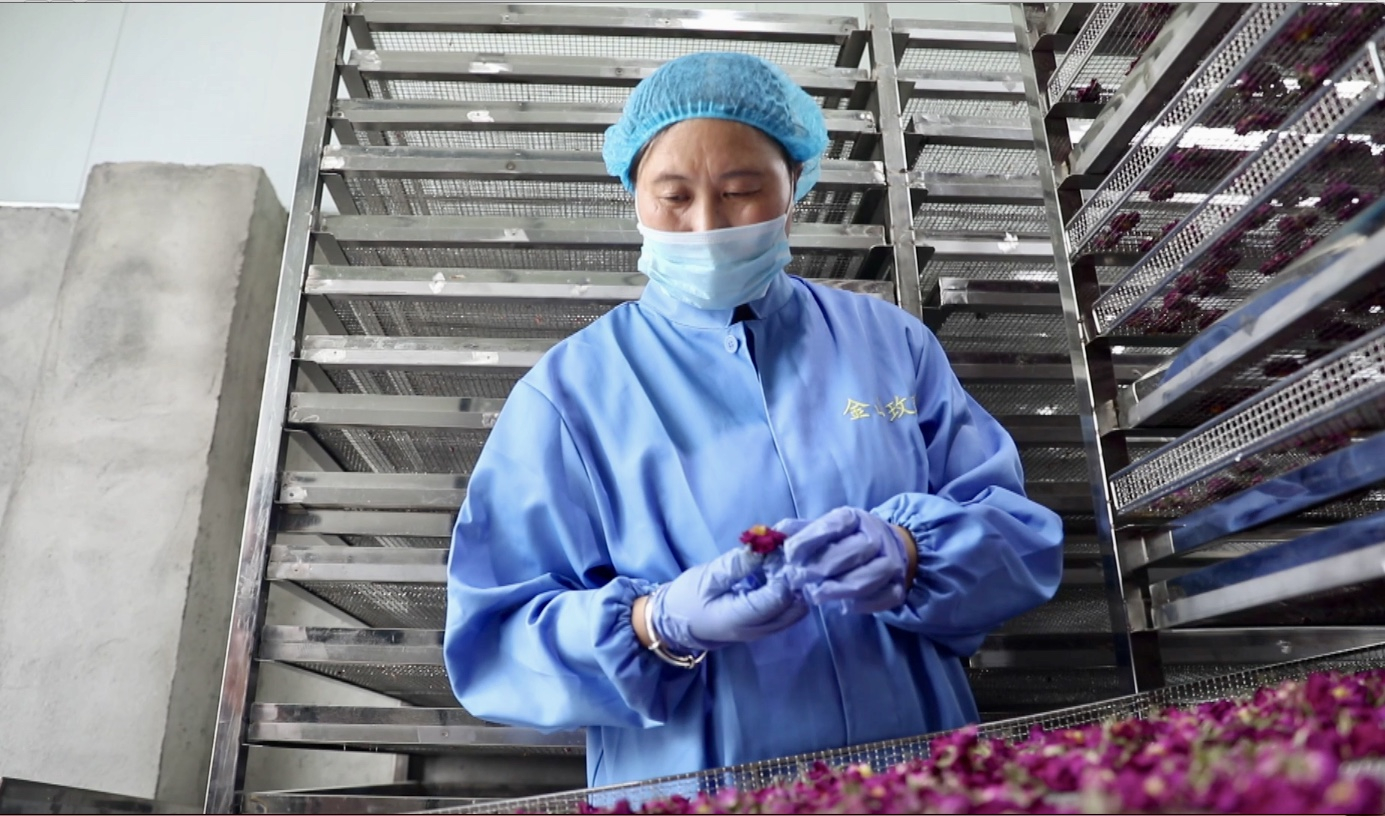
Cheng Wanghui examines the newly-produced rose tea at the factory. / CGTN Photo
Cheng Wanghui examines the newly-produced rose tea at the factory. / CGTN Photo
"I remember that last year, a 77-year-old woman held my hands and called me ‘daughter’ when she got the payment from her roses. I felt what I’ve suffered was worth it at that moment," said Chen, who now works as the Communist Party of China (CPC) secretary of her village.
Chen said as a grassroots CPC member, it’s her responsibility to explore opportunities for locals. Now as the plateau roses are gaining increasing popularity, her next goal is to expand the market for her products through different channels.
"My life with roses has just started," she said.
(Cover photo: Chen Wanghui communicates with employees at the rose processing factory. The roses are made into a variety of products. /CGTN Photo)