
Tech & Sci
12:19, 04-Jul-2018
UK aims to reduce poaching of African elephants by one-third by 2020
Updated
11:37, 07-Jul-2018
 ["europe"]
Share







Copied
The British government has announced major funding aimed at controlling the illegal wildlife trade across the world, with a focus on ivory.
A fund of around 58 million US dollars has been set aside to boost anti-wildlife trafficking projects. One goal is to combat the large-scale poaching of African elephants for ivory.
The government wants to reduce the illicit slaughter of elephants by at least one-third by 2020 and to further halve the rate by 2024.
“More than 20,000 African elephants are killed every year, fuelling the despicable illegal ivory market and poachers’ dirty profits," Foreign Secretary Boris Johnson said. "We need immediate and effective global action to decapitate this terrible trade.”
The government will launch an “Ivory Alliance 2024" in an effort to massively reduce poaching. It will be a network of global leaders, conservationists and experts who will engage with countries where ivory demand and trafficking is high.
One of the crucial roles of the group will be to increase the number of countries committed to banning the domestic trade in ivory to more than 30 by 2020. Plans are also afoot for ensuring stricter enforcement against those caught breaking the law.
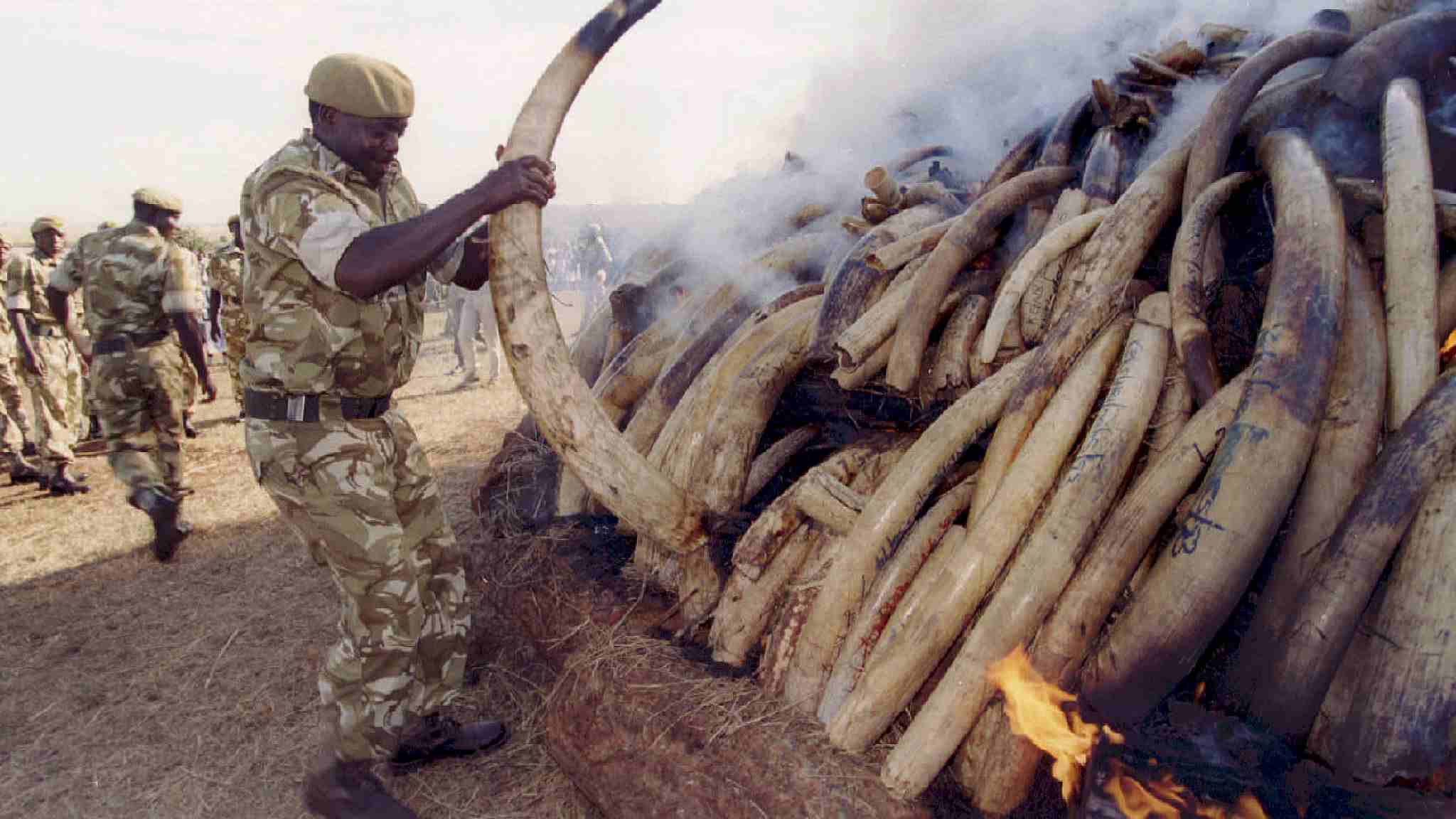
A Kenya Wildlife Service officer puts a piece of ivory onto a burning heap of more than l0 tons of ivory which was set on fire as part of efforts to combat the illegal ivory trade. /VCG Photo
A Kenya Wildlife Service officer puts a piece of ivory onto a burning heap of more than l0 tons of ivory which was set on fire as part of efforts to combat the illegal ivory trade. /VCG Photo
In the last few years, the US, Chinese mainland, Hong Kong Special Administrative Region, and China’s Taiwan have banned domestic trading in ivory. Australia formed a parliamentary committee to determine whether domestic ivory trade leads to poaching of African elephants. Also, the UK has already announced one of the world’s most stringent ivory bans.
Pressure is mounting on Japan, Laos, Vietnam, Thailand and European Union countries to impose a similar ban. “We cannot simply sit back and watch as more endangered species are wiped out by criminal kingpins and corrupt middlemen who are robbing local communities in Africa and Asia of sustainable livelihoods,” Johnson said.
The government announced the new funds for three government departments – the Foreign and Commonwealth Office, Defra, and DFID. “This is a 30 percent increase to the Global Environment Facility’s Global Wildlife Programme – the largest single program dedicated to combat poaching, trafficking, and demand for wildlife and wildlife products,” the UK government maintained.
Defra’s 5.9 million US dollar fund for 14 new "Challenge Fund" projects to combat the illegal wildlife trade focuses on addressing demand reduction, strengthening enforcement and criminal justice, and providing alternative livelihoods.
“Our Illegal Wildlife Trade Challenge Fund is driving change to combat this despicable criminality,” Environment Secretary Michael Gove said.
“The 14 projects range across 27 countries and showcase measures from criminal justice to education. These priorities reflect our commitment in the 25-Year Environment Plan to work with other nations to stamp out this vile trade.”
Some of the Challenge Fund projects include Zoological Society of London (ZSL) training for border staff and detector dog units at crucial points and ensuring participation of border communities to keep out criminal groups through the creation of surveillance networks.
Another project is aimed at developing a standard operating procedure for ivory, accrued by natural mortality or seizures of illegal stock lying in government storerooms in Africa. These ivory pieces are poorly monitored and are prone to theft.
“The illegal wildlife trade not only puts the world’s most endangered species at risk but fuels the corruption and crime which hold back development for some of the poorest nations,” International Development Secretary Penny Mordaunt said.
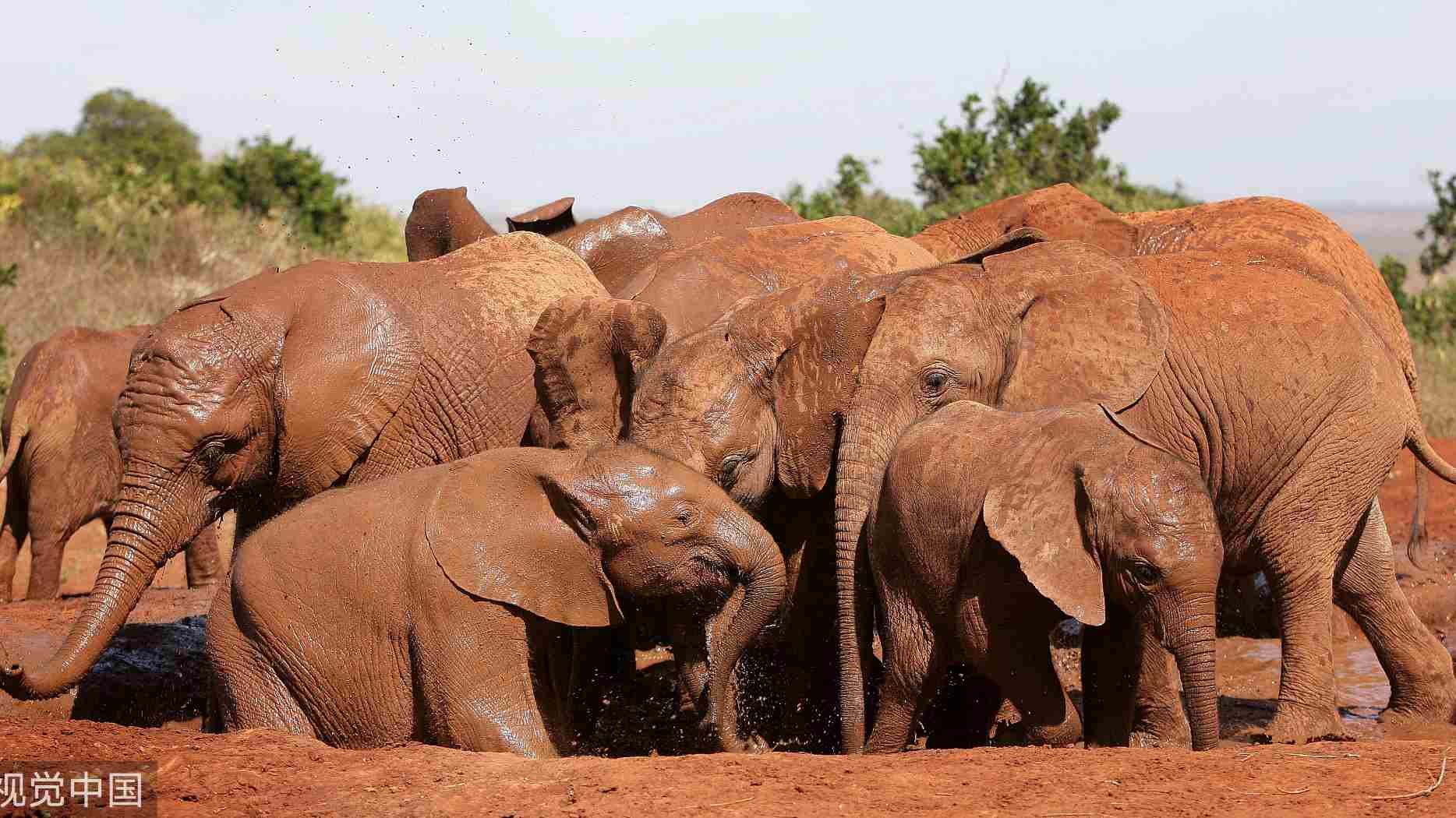
(Cover Image: Orphaned calves at a sanctuary in Kenya. Parents of these calves were killed by poachers for ivory. /VCG Photo)