
Politics
15:45, 16-Jun-2018
Nicaragua agrees talks to allow probe of deadly unrest during unrest
 ["north america"]
Share







Copied
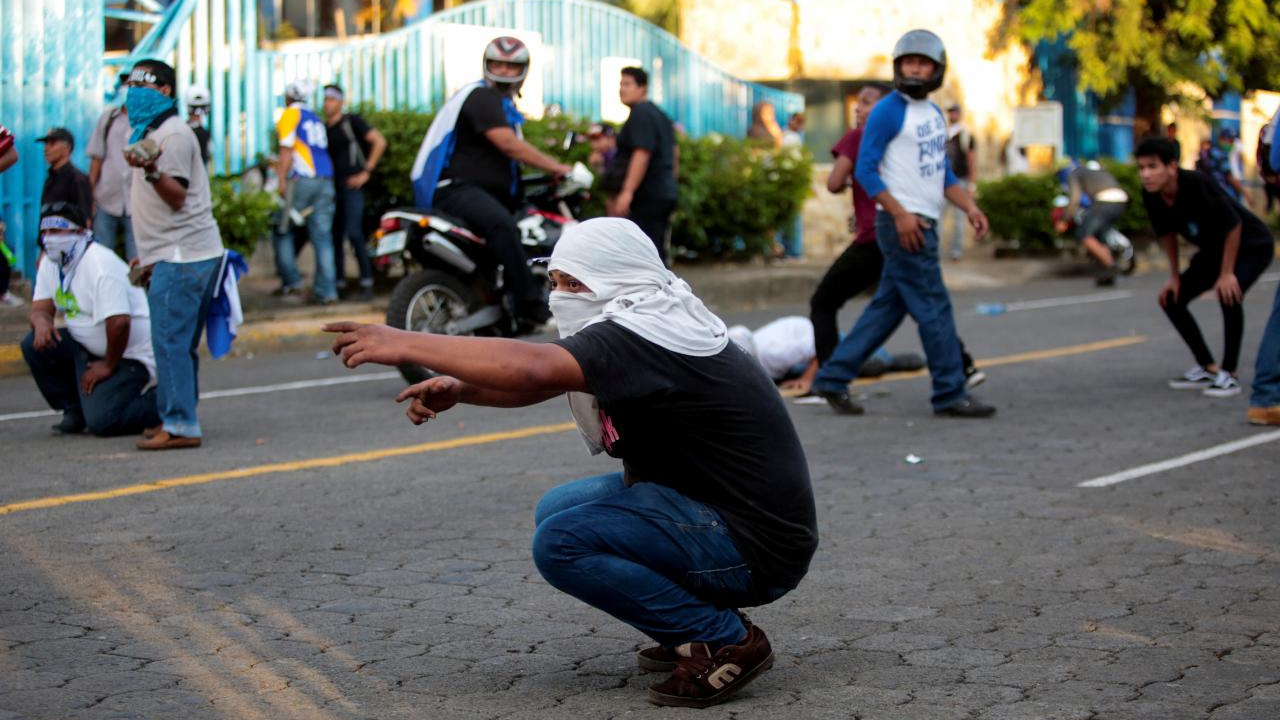
In a surprise announcement, Nicaragua's Catholic bishops late Friday said rival government and civil delegates had agreed to create a "verification commission" and invite independent international bodies to probe the violence that has left at least 170 people dead.
In a twist after a morning session that closed in apparent impasse, the opposing representatives also reached consensus to prepare a plan for removing pervasive road blockades that anti-government activists have built to fend off security forces – a key government demand.
Cardinal Leopoldo Brenes revealed the Church had asked President Daniel Ortega to move up the next general election -- a move activists have vehemently called for – to 2019 from the currently slated 2021.
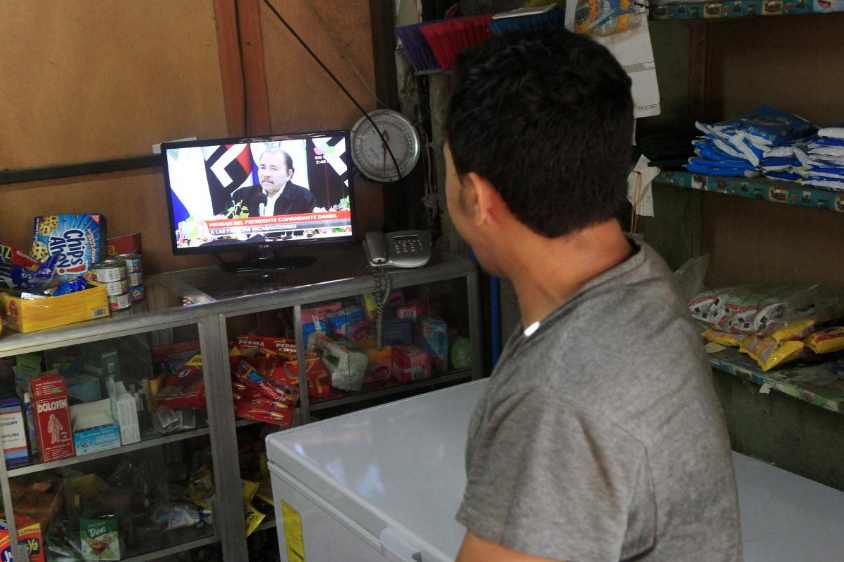
A man watches Nicaraguan President Daniel Ortega addressing the audience following protests over a reform to the pension plans of the Nicaraguan Social Security Institute (INSS) in Managua, Nicaragua April 22, 2018. /Reuters Photo
A man watches Nicaraguan President Daniel Ortega addressing the audience following protests over a reform to the pension plans of the Nicaraguan Social Security Institute (INSS) in Managua, Nicaragua April 22, 2018. /Reuters Photo
The president did not concretely answer, instead telling the bishops "we reiterate our full readiness to listen to all the proposals within an institutional and constitutional framework."
The leftist leader has in the past expressed no intention of stepping aside.
Bishops were to reconvene government and civil representatives Saturday morning to discuss "the process of democratization of the country."
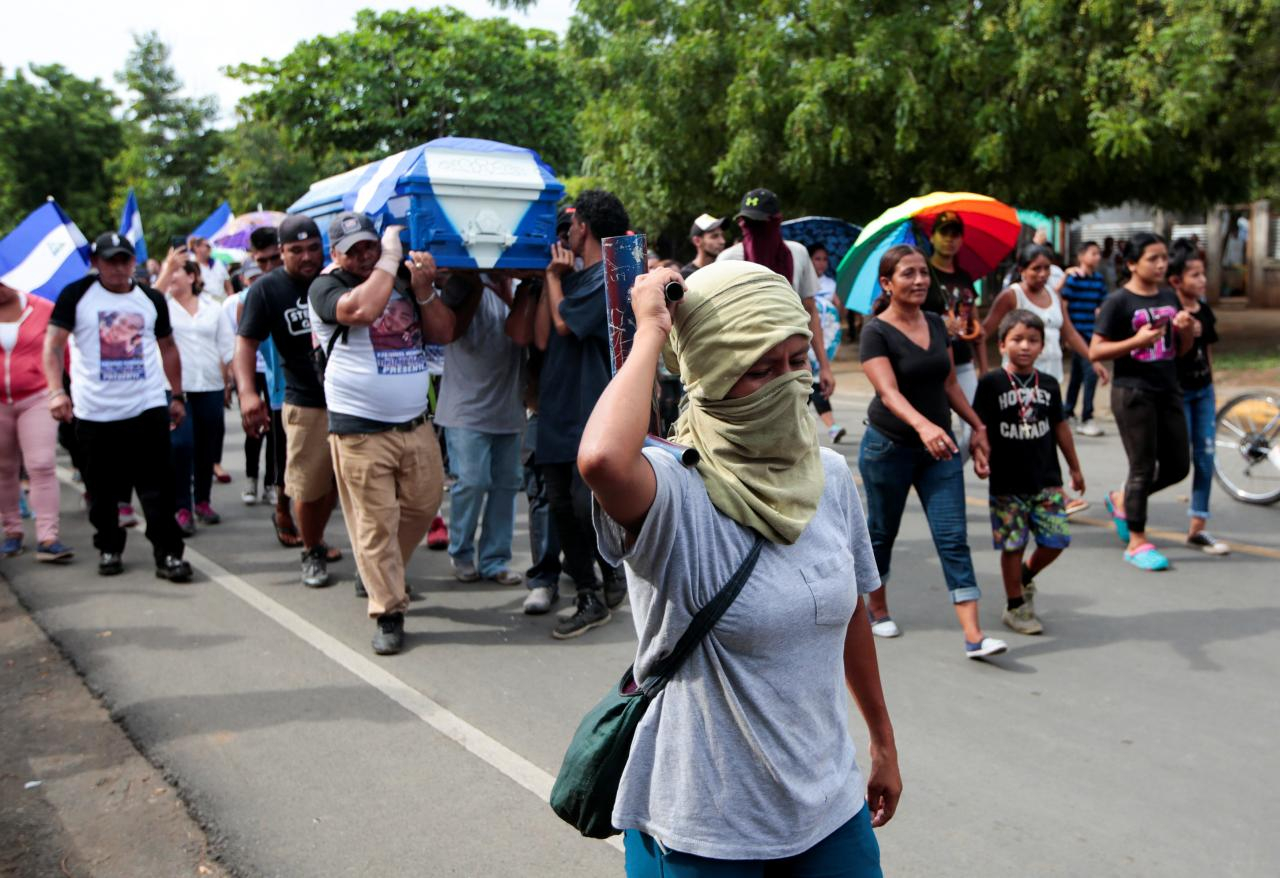
Demonstrators take part in funeral service of Agustin Ezequiel Mendoza, who was shot and killed in recent protests against Nicaraguan President Daniel Ortega's government in Tipitapa, Nicaragua June 15, 2018. /Reuters Photo
Demonstrators take part in funeral service of Agustin Ezequiel Mendoza, who was shot and killed in recent protests against Nicaraguan President Daniel Ortega's government in Tipitapa, Nicaragua June 15, 2018. /Reuters Photo
Nicaragua's descent into chaos was triggered on April 18 when relatively small protests against now-scrapped social security reforms were met with a government crackdown.
In those demonstrations, anti-government protesters faced off against police and pro-Ortega paramilitaries.
Under the new agreement Managua would urge the presence of the Inter-American Commission on Human Rights -- an autonomous branch of the Organization of American States -- to investigate "all deaths and acts of violence, the identification of those responsible and a comprehensive plan for the victims so that effective justice is achieved," Brenes said.
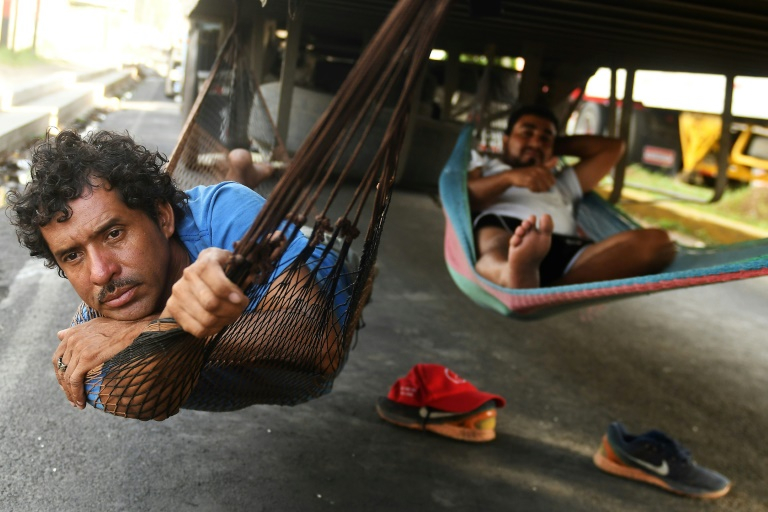
File photo: Truck drivers rest under a truck while waiting for protesters to clear a roadblock in Diriamba, 40 kilometers (25 miles) from Managua. /AFP Photo
File photo: Truck drivers rest under a truck while waiting for protesters to clear a roadblock in Diriamba, 40 kilometers (25 miles) from Managua. /AFP Photo
The country would also allow in the United Nations Commission for Human Rights as well as a European Union delegation.
Those three bodies would accompany a new "verification and security commission," according to the agreement, "always with the Catholic Church as witnesses and mediators."
Source(s): AFP