
Business
16:07, 23-May-2018
NYSE names first female president as US gender gap struggles to narrow
 ["north america","china"]
Share







Copied

The New York Stock Exchange (NYSE) on Tuesday announced Stacey Cunningham as its 67th president, making her the first female head of the NYSE after 226 years.
Cunningham’s presidency is being hailed as a major change on Wall Street, yet US corporate culture remains overwhelmingly dominated by men. According to CNBC, only 4.6 percent of CEO roles at S&P 500 companies are held by women, while 79 percent of company boards are still male.
Cunningham’s ascent to the top of the NYSE comes after Aneda Friedman was named chief executive of Nasdaq in January 2017, yet the US tech industry is also similarly dominated by men in the boardroom.
Three quarters of leadership roles at Amazon and Google are occupied by men, while women only make up seven percent of the top partners at the 100 biggest venture capital firms, according to The Guardian.
While US companies have a lot more work to do on closing the gender gap, Chinese women have a strong presence in the corporate sector, with 49 of the world’s 78 female self-made billionaires coming from China.
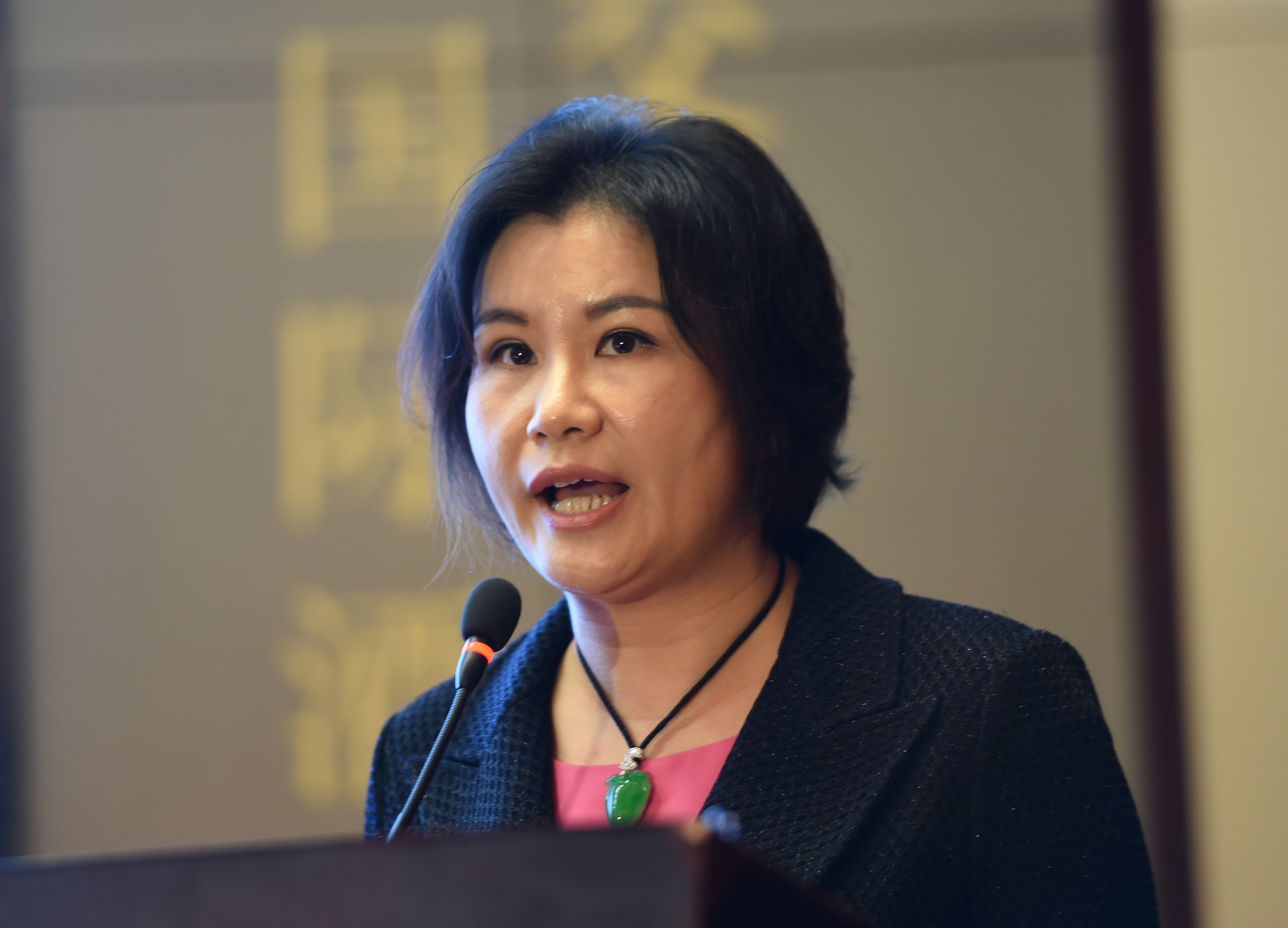
Zhou Qunfei, founder of Lens Technology, has a self-made fortune of more than eight billion US dollars. /VCG Photo
Zhou Qunfei, founder of Lens Technology, has a self-made fortune of more than eight billion US dollars. /VCG Photo
As Xinhua reported earlier this year, China has 174 A-share listed companies run by female chairpersons, which posted 2.12 trillion yuan (335.2 billion US dollars) in aggregate market value as of March.
In 2014, Song Liping was named as the first female general manager of the Shenzhen Stock Exchange, while in April this year Hong Kong Exchanges and Clearing named Laura Cha as its first female president.
550 publicly traded companies in China have women on their boards, while two of the world’s four female-only boards are based in Shenzhen. According to analysis by corporate services company Grant Thornton, China is one of the very few countries where women make up the majority (51 percent) of senior managers.
The success of women in the country is all the more remarkable when considering cultural factors, such as pressure to marry early and avoid being branded a “leftover woman.” A 2015 study by the All-China Women’s Federation suggested 87 percent of female graduates had been discriminated against when looking for work.
China Daily reported in March that the nationwide gender pay gap was 22 percent, while a report released ahead of the World Economic Forum in November 2017 ranked China 100th out of 144 countries for gender equality.
China still suffers from a significant gender gap in the corporate sector, but that divide will likely narrow in the coming decades. Data compiled by the Financial Times suggest Chinese women make up 40 percent of the students at the country’s five top business schools, ahead of a worldwide average of 35 percent.