
Opinions
10:07, 18-Aug-2018
The Heat: US tariffs exacerbated Turkey’s economic crisis
Updated
09:11, 21-Aug-2018
 ["china"]
Share







Copied
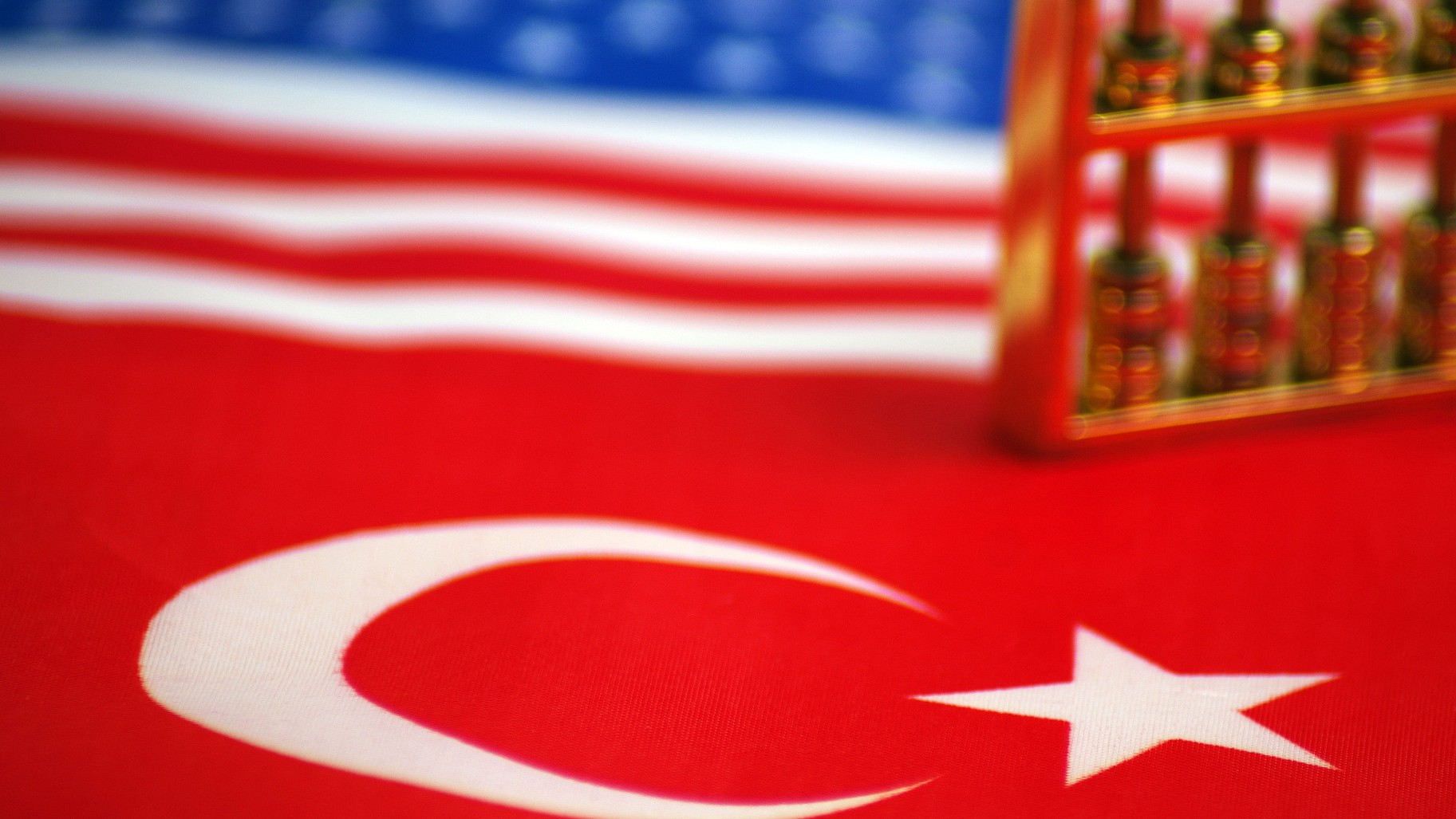
Turkey is suffering from the most devastating economic crisis since 2001, with its currency depreciating almost 40 percent in the last few months. Worse even, because of Turkey’s detention of American pastor Andrew Bronson, who has been charged over alleged links to terror groups, the US has now imposed 50 percent tariffs on Turkish steel and 20 percent tariffs on its aluminum.
This crisis is not surprising to many financial experts, who have long been predicting a plunge of this over-heated economy. Rather than an unexpected drop amidst the unstable global trade dynamics, the crisis reflects turkey’s deep-rooted political and economic mismanagement.
Lisel Hintz, a professor of international relations at Johns Hopkins University’s School of Advanced International Studies, said economic growth has long been the base of the president’s ruling legitimacy.
"To sustain his political position, Erdogan tried to keep economic growth by releasing unsustainable policies, like short-term capital investment and immense amount of foreign borrowing," she said.
01:26
Doga Eralp, a lecturer at the School of International Service at the American University, weighed in on the point. He cited the current mega projects in Istanbul and Turkey’s cooperation with Russia as proof of its economic problem of "rushing too fast."
According to Doga, the defense project imported from Russia has resulted in "a bunch of unnecessary securities." Other than that, Turkey planned to build the largest international airport worldwide in Istanbul, placing the Turkish economy in a fragile status. Data showed that the Turkish private sector has to pay some 240 billion US dollars in liabilities at the end of 2018, but the hope is slim.
"These mega projects do quite the opposite of what the government expected," he said. "They actually further insecurities and show a sign of insincerity."
Some international relations analysts described the situation that Turkey is facing as "double whammy," given the US tightening sanctions and tariffs on the country.
Aykan Erdemir, a former member of the Turkish parliament and a senior fellow at the Foundation for the Defense of Democracies, said the diversion between the two countries has been escalating for more than a decade, since the Iraq war in 2003.
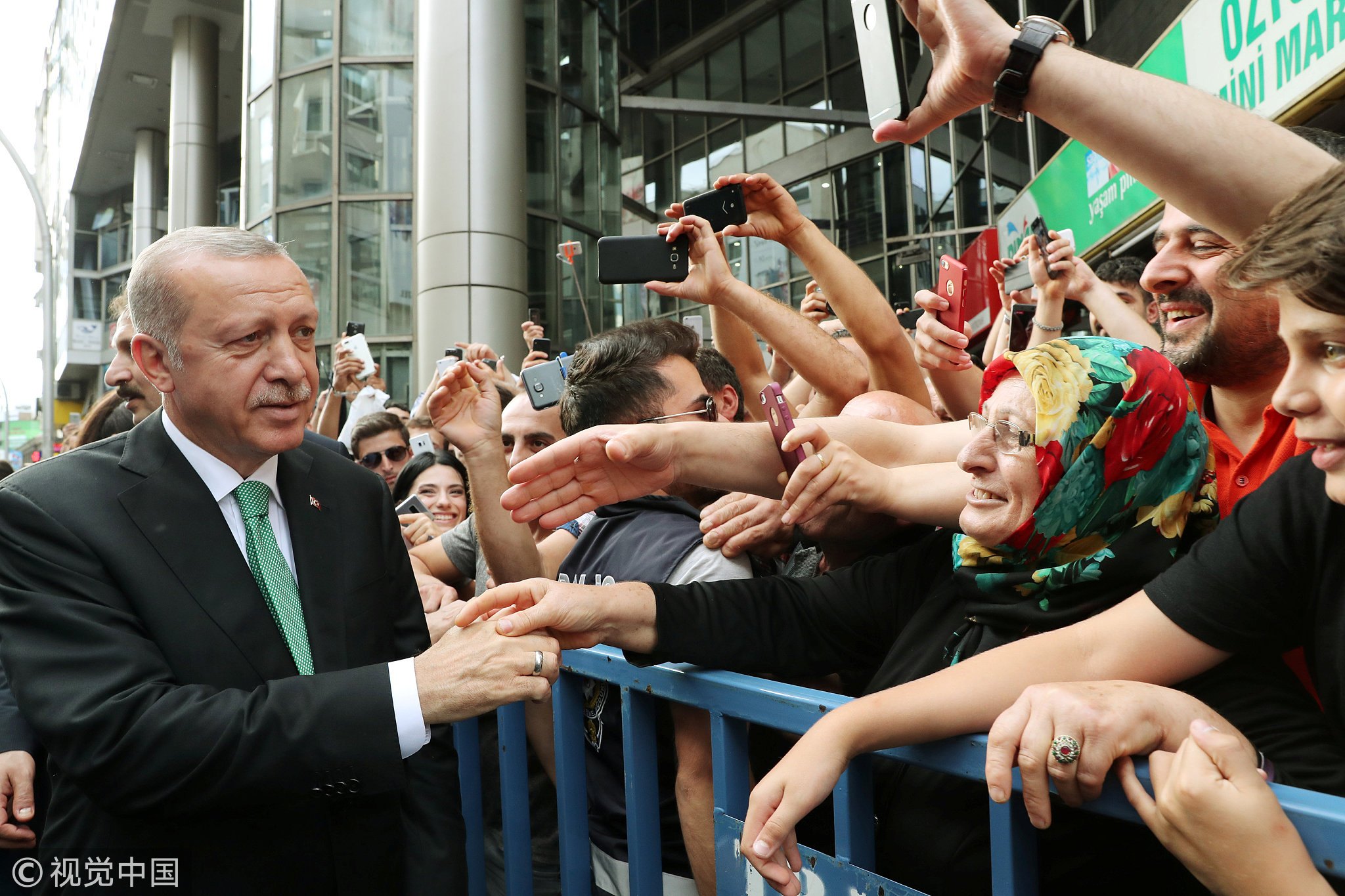
Turkish President Recep Tayyip Erdogan is greeted by his supporters in Trabzon, Turkey, August 12, 2018./ VCG Photo.
Turkish President Recep Tayyip Erdogan is greeted by his supporters in Trabzon, Turkey, August 12, 2018./ VCG Photo.
After the Arab Spring, Turkey started to re-position itself from a heavily dollarized economy, and the US is reacting to that.
"What the US is doing emphasizes the lack of corporation of Turkey as an ally as they wish to see," Aykan said. "Turkey is also diverging from the EU in terms of its value system."
The future looks dim for Turkey, especially now the people started to lose confidence in their government.
On the same day the president tried to assure Turkish that the economic crisis is under control, President Trump announced a second round of tariffs.
"Turkey is now facing a fall in investor confidence in not only capital flight but also brain drain," said Aykan. "It is hurting the Turkish economy in a structural way."
Interestingly, the president might actually benefit from the crisis.
Aykan suggested that the president can now scapegoat the clandestine foreign forces, such as the US, as the cause of the crisis, rather than his years of economic and political mismanagement. He also provided clues illustrating the president’s awareness of the economic crash at least one month ago.
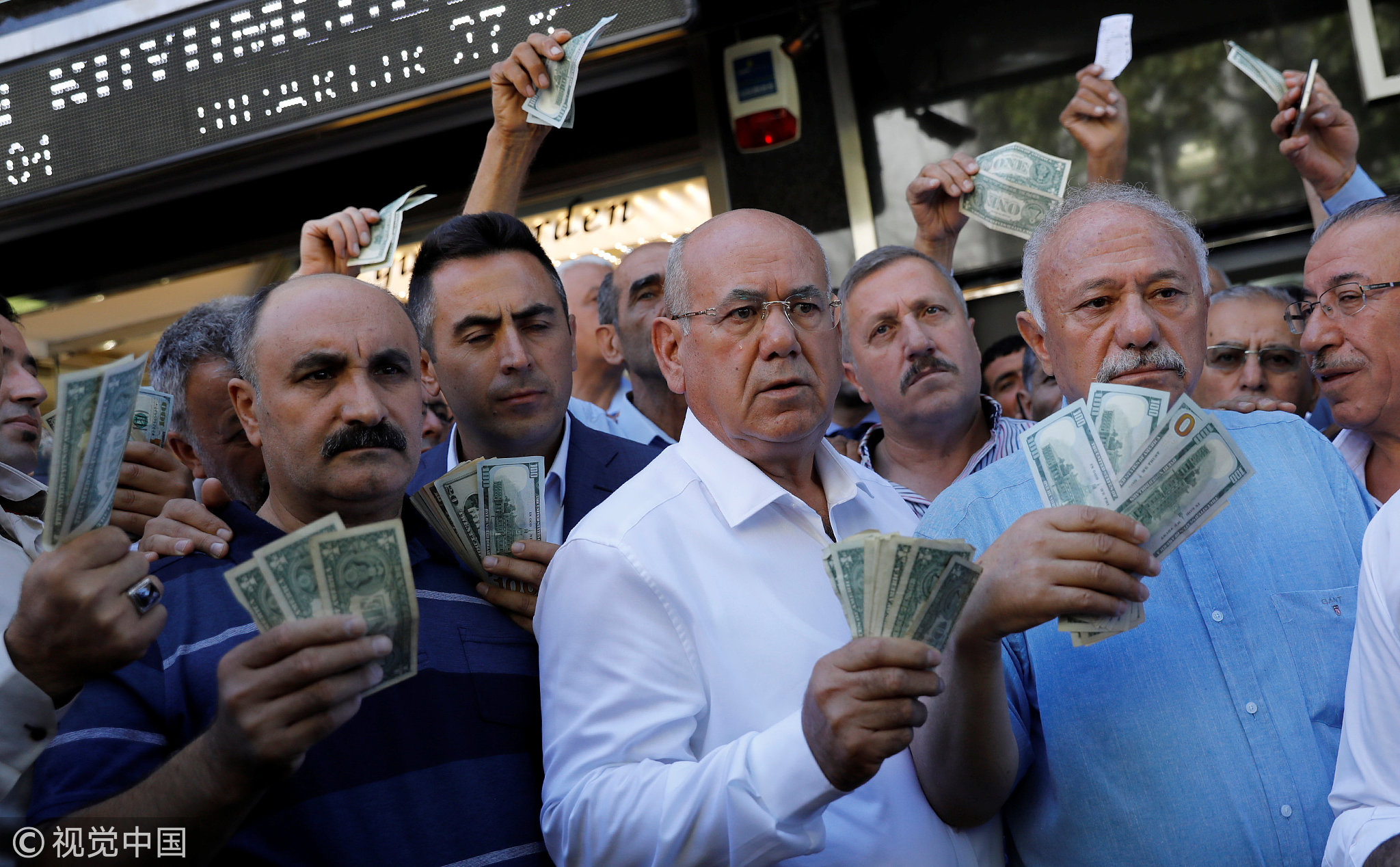
Businessmen holding US dollars stand in front of a currency exchange office in response to the call of Turkish President on Turks to sell their dollar and euro savings to support the lira, in Ankara, August 14, 2018./ VCG Photo
Businessmen holding US dollars stand in front of a currency exchange office in response to the call of Turkish President on Turks to sell their dollar and euro savings to support the lira, in Ankara, August 14, 2018./ VCG Photo
"His behavior gave him away," he said. "Knowing the crisis around the corner, the person who was previously the biggest opponent to snap elections raised a suggestion of a snap election!"
However, there is still a silver lining to the issue. Turkey is not totally isolated, given the fact that Qatar bought millions of dollars’ worth of lira, and remarks coming from German Chancellor Angela Merkel were quite reassuring. The price the president has to pay, on the other hand, is not low.
"Chancellor Angela Merkel is not going to let go of Turkey easily," said Aykan, "If Turkey wants a clear and more secure future, it needs to switch back to its European and Western orientation, which means something more than economic reforms, but also undertaking a set of reforms that will bring democracy into Turkey."
Lisel also expressed her worry about the recovering of Turkey in the foreseeable future.
"Same cases happened in Russia and Israel," she said. "When you look at it from an individual perspective, you will find two hyper-masculine nationalists who are not willing to back down. I am not super optimistic about the outcome."
(The Heat with Anand Naidoo is a 30-minute political talk show on CGTN. It airs weekdays at 7:00 a.m. BJT and 7:00 p.m. Eastern in the United States.)