
Opinions
14:01, 26-Apr-2018
China's progress in 40 years: Commitment to a shared future of the world
 ["china"]
Share







Copied
CGTN note: This year marks the 40th anniversary of China’s reform and opening-up. To help you better understand the significance of the subject, CGTN guest commentator, Dr. Summer, will share with you his findings on the major achievements made by China during the past four decades. To cut a long story short, he has chosen the country’s progress in the political, economic, social and diplomatic fields. Here’s part four of his article.
In the field of diplomacy, there have been three distinctive shifts. Some researchers have coined these changes as Chinese Diplomacy 1.0 (1949-1979), Chinese Diplomacy 2.0 (1979-2012) and Chinese Diplomacy 3.0 (since 2012 ).
In the early years of the People's Republic of China, China used to be isolated by Western powers. China’s diplomacy is termed as Revolutionary Diplomacy because it ushered in a brand new era for the country’s international relations by destroying existing relations between China and the rest of the world.
Mao Zedong divided the countries into three groups: the First World or the two superpowers (the US and the Soviet Union), the Second World (Western developed countries) and the Third World (developing countries).The strategy was to unite the Third World, to cooperate with the Second World and to fight against the superpowers. The characteristics of Chinese Diplomacy 1.0 are independence and self-reliance. It was through years of hard work that China gained recognition by 118 countries as of 1978.
Chinese Diplomacy 2.0 is termed as Development Diplomacy because it focused on the country’s own development. When Deng Xiaoping designed the blueprint for China’s reform and opening up, he advocated a foreign policy that would support China’s modernization drive. Over the years, the priority of the country’s diplomacy was in line with the three frontiers: relations with the major countries (the industrialized countries), relations with neighboring countries and relations with developing countries. The characteristics of Chinese Diplomacy 2.0 are mutual benefit and cooperation.
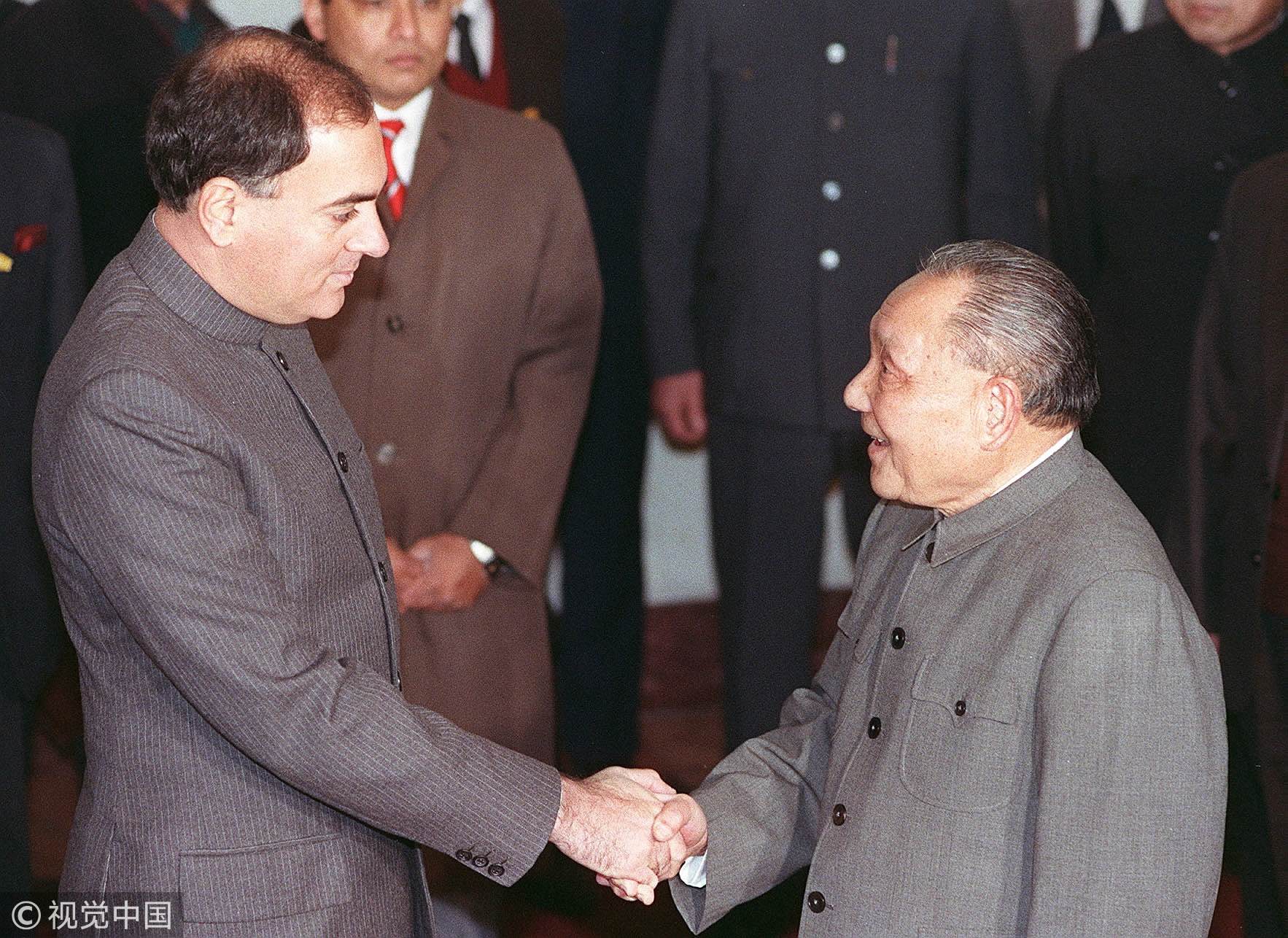
Indian Prime Minster Rajiv Gandhi being greeted by Deng Xiaoping at the Great Hall of the People in Beijing, December 21 1988. /VCG Photo
Indian Prime Minster Rajiv Gandhi being greeted by Deng Xiaoping at the Great Hall of the People in Beijing, December 21 1988. /VCG Photo
Chinese Diplomacy 3.0 is termed as the Major Country’s Diplomacy because it shows China’s commitment to building a just and fair international order. China is now better positioned to fulfill its international obligations and duties corresponding to its status. As one of the UN Security Council permanent members, China has regarded it its duty to maintain world peace, playing an active role in solving regional and international hot issues.
As the world’s second-largest economy, China has tried its best to continue its reform and opening-up policy and to push forward globalization via a win-win cooperation to build a community of shared future for mankind. As the world’s largest developing country, China has proven a simple fact that the development of China needs a peaceful world while a prosperous China is not a threat but an opportunity for other countries.
In 2017, Panama became the 175th country to establish diplomatic relations with China, in order to catch up with the momentum of China’s fast economic development.This shows that China, as a responsible major country on the world stage, has become an active contributor to the world’s economic growth as well as an active promoter of better global governance. The characteristics of Chinese Diplomacy 3.0 are global development based on win-win cooperation and global governance based on equal participation.
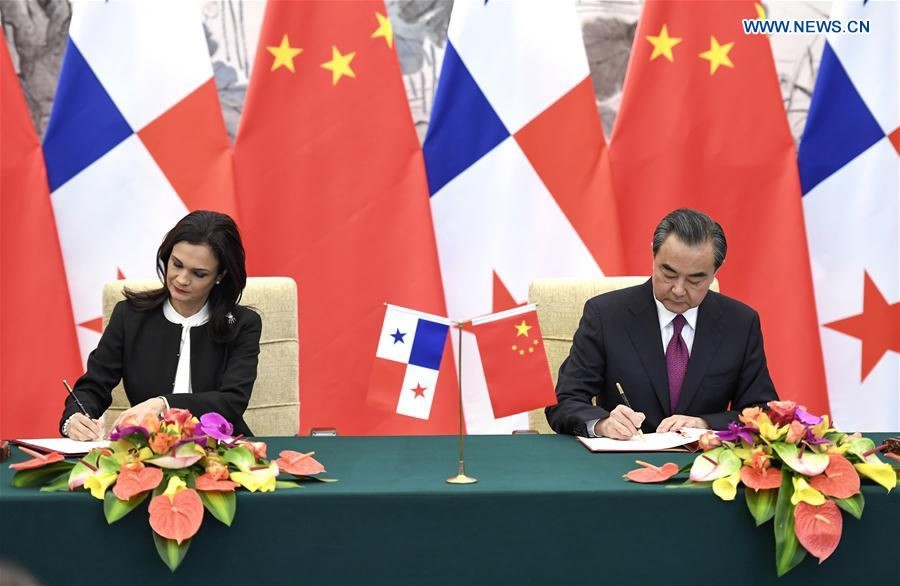
Chinese Foreign Minister Wang Yi and Isabel Saint Malo de Alvarado, Panama's vice president and foreign minister, sign the joint communique in Beijing, capital of China, June 13, 2017. /Xinhua Photo
Chinese Foreign Minister Wang Yi and Isabel Saint Malo de Alvarado, Panama's vice president and foreign minister, sign the joint communique in Beijing, capital of China, June 13, 2017. /Xinhua Photo
In conclusion, the year of 2018 marks the 40th anniversary of China’s reform and opening-up. It’s also a key period for carrying out the 13th “Five-year Plan”. I am sure that the Communist Party of China and the Chinese government will, based on experiences and lessons accumulated over the past four decades, take further reforms in the country’s political and economic systems so as to liberalize productive force, to push social development and to improve people’s livelihood. A better, stronger and more open China will emerge on the world stage.
(With a doctoral degree in communications from the Communication University of China, the author has been working in the field of international journalism for 30 years. The article reflects the author's opinions, and not necessarily the views of CGTN. )