Vote on new Armenia PM: one candidate, majority needed
CGTN
["europe","other"]
Share
Copied
Armenian opposition leader Nikol Pashinyan became the sole candidate for the post of interim prime minister on Monday after a key deadline passed without other candidates registering.
Whether or not he gets the job depends on a parliamentary vote to be held on Tuesday. Pashinyan has received the support of all opposition parties in parliament, who hold 47 seats in the 105-seat legislature, but he will require a majority to win.
Why is the post open?
Anti-government demonstrations, driven by public anger over perceived political cronyism and corruption in the South Caucasian former Soviet republic, led to the resignation of long-time leader Serzh Sarksyan on April 23.
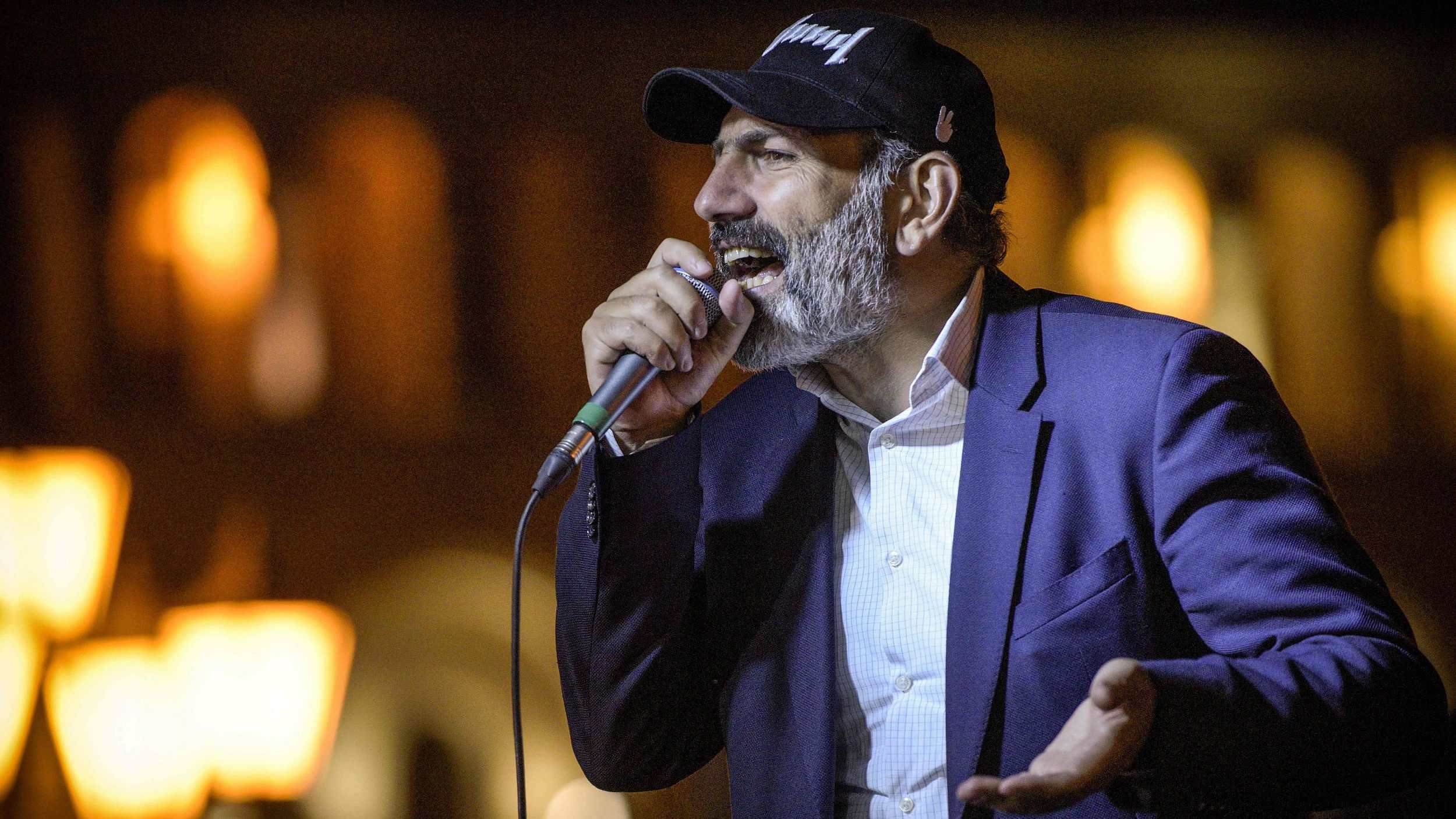
Pashinyan, a former journalist and the leader of the protest movement, swapped his trademark khaki-colored t-shirt for a smart business suit on Monday to hold negotiations with all political forces, including the ruling Republican Party.
Armenia protests
What's behind the protests? Armenians voted to move to a parliamentary system in 2015, vesting more power in the prime minister. Peaceful, mass demonstrations began in April 2018 after Serzh Sargsyan was elected prime minister by parliament, shortly after his 10-year presidency ended.
Who's involved? The protests were led by opposition leader Nikol Pashinyan, who was arrested along with fellow demonstrators. He is now the sole candidate to replace Sargsyan as prime minister, after the former president resigned in response to the protests.
The 42-year-old former newspaper editor still needs a handful of votes from the Republican Party to seal his victory. The party headed by ousted prime minister Sarkisian has yet to announce its official stance on the vote, even though a senior lawmaker, Vahram Baghdasaryan, has said it would not stand in the way of Pashinyan's candidacy.
Pashinyan said that a vote for him on Tuesday would be a vote for an end to the protests that have transformed the country's political landscape. "I think this is a unique and great opportunity to resolve the domestic political crisis and to register the victory of the people, the kind of victory in which there are no losers."
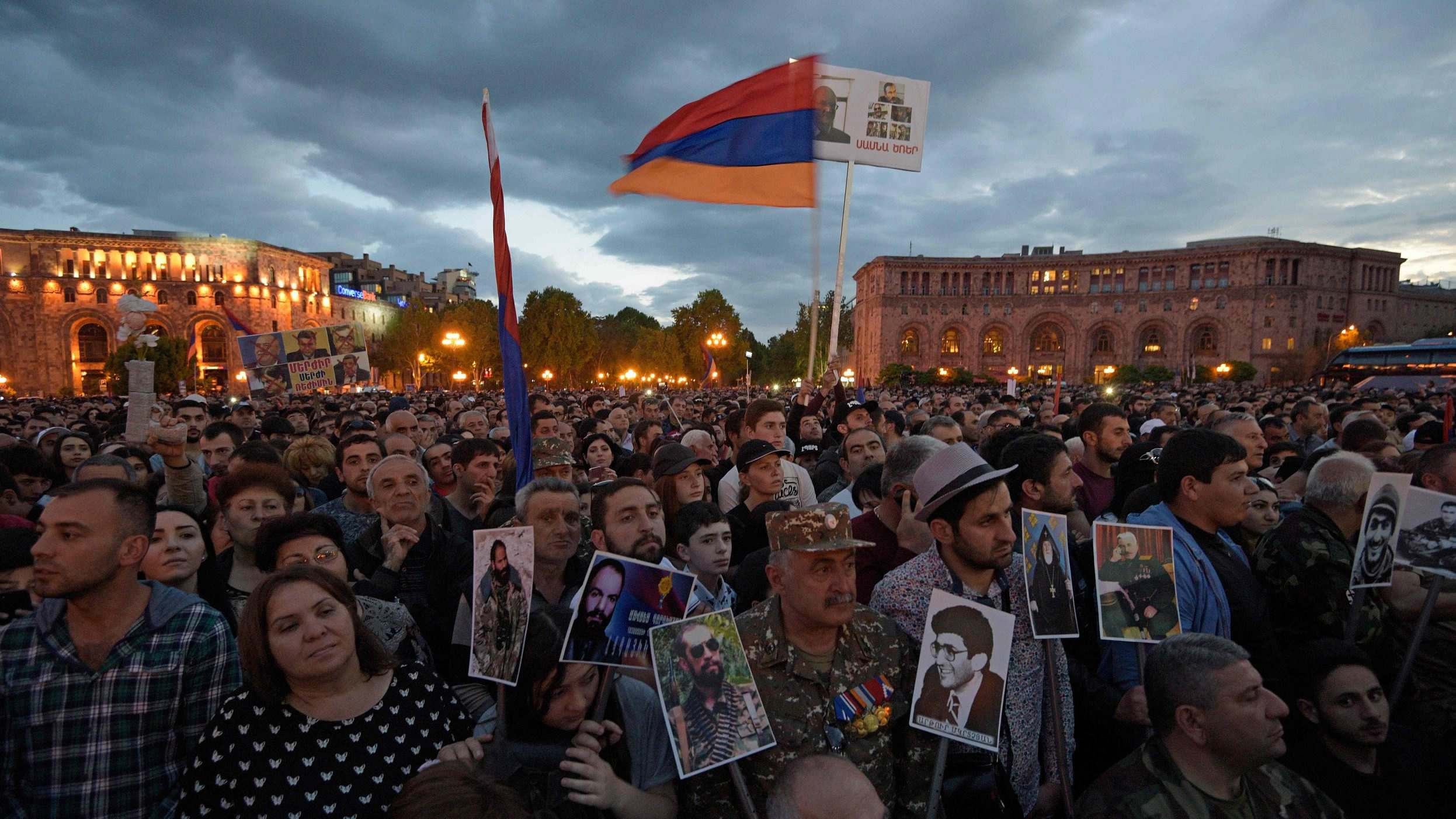
Armenian opposition supporters hold portraits and placards as they attend a rally in Yerevan, April 30, 2018. /VCG Photo
Armenian opposition supporters hold portraits and placards as they attend a rally in Yerevan, April 30, 2018. /VCG Photo
After a break during the day, protests restarted in Yerevan towards the evening, with a column of demonstrators marching to the capital city's main square.
Speaking with journalists on Monday, Pashinyan said his main project as interim prime minister would be to organize new free and fair parliamentary elections for the post of prime minister. He has urged demonstrators to make their voices heard again when parliament meets to vote on Tuesday.
Will Pashinyan be elected?
Many political observers say it is highly likely that the popular protest leader would be elected prime minister, in a whirlwind development that was unimaginable just two weeks ago in the poor South Caucasus country of 2.9 million people.
"I see practically no obstacles to Pashinyan becoming a prime minister tomorrow," political analyst Hakob Badalyan told AFP.
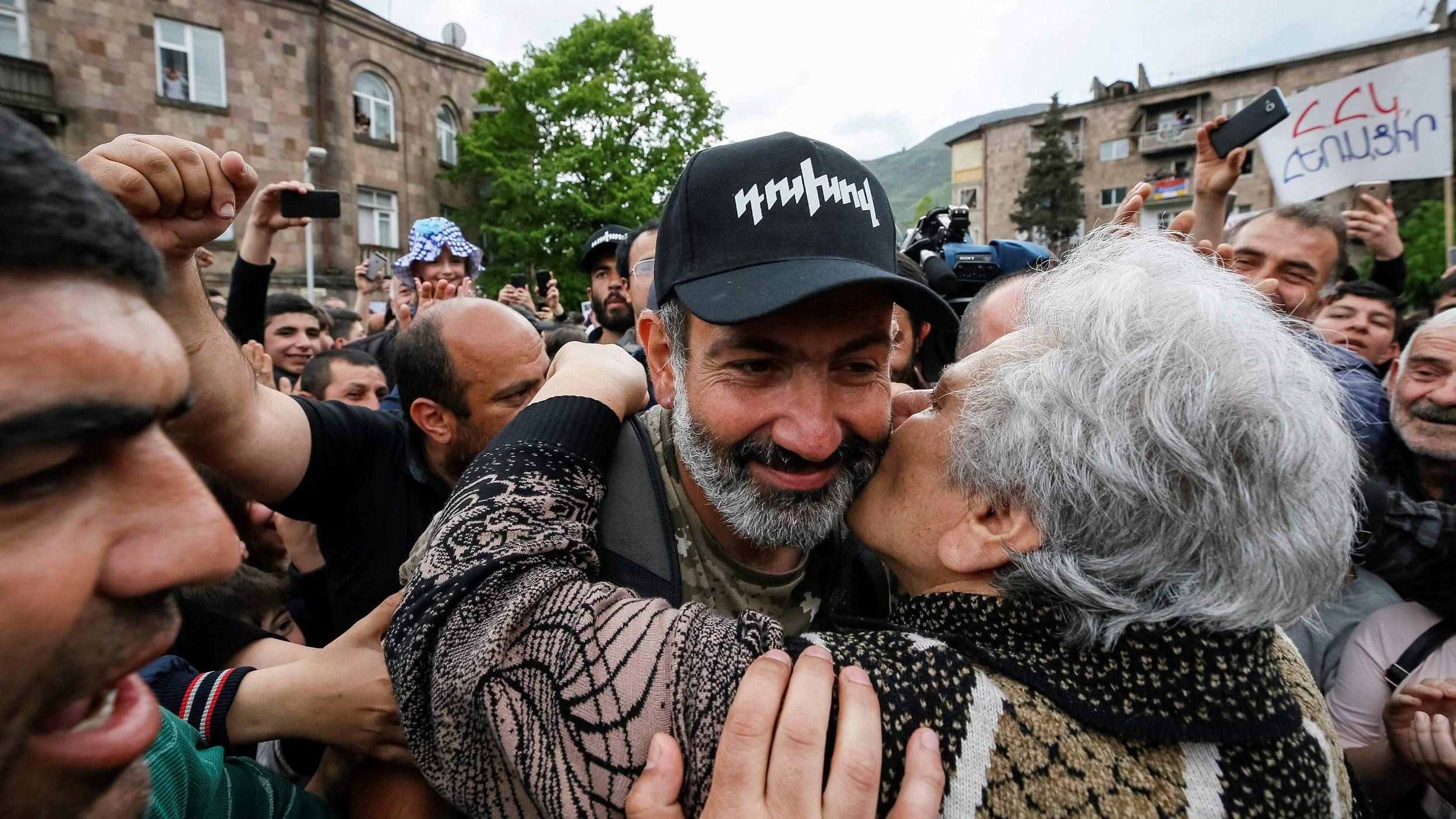
People greet Armenian opposition leader Nikol Pashinyan as he arrives at a rally in the town of Ijevan, Armenia, April 28, 2018. /VCG Photo
People greet Armenian opposition leader Nikol Pashinyan as he arrives at a rally in the town of Ijevan, Armenia, April 28, 2018. /VCG Photo
"There is political consensus including among the Republicans that the settling of the crisis in this way would serve the interests of the country."
Observers have expressed fears that the turmoil could destabilize the Moscow-allied nation which has been locked in a territorial dispute with Azerbaijan for decades.
The European Union expressed support to Armenia in "its efforts to build a prosperous and democratic society." Russia has urged compromise while the US has called for "a resolution that reflects the interests of all Armenians."

 ["europe","other"]