
China
22:31, 12-May-2018
Legless King of Breaststroke: Not everyone has healed
 ["china"]
Share







Copied
03:21
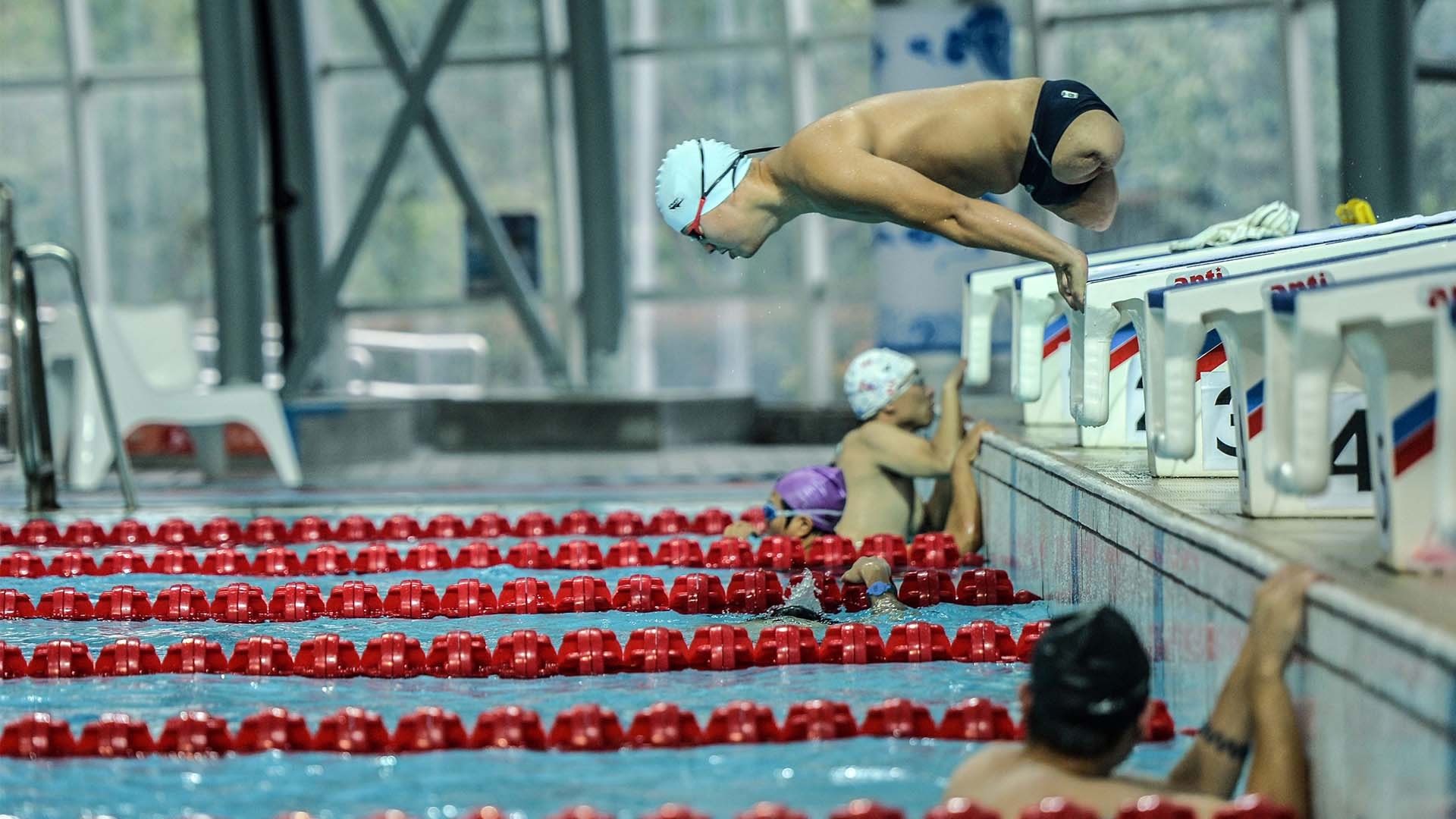
It’s easy to forget that Dai Guohong is a lower-limb amputee. The sturdy 28-year-old former para-swimming athlete is cheerful and talkative – you never have to worry about running out of things to say with him, and almost every exchange of conversation ends with a loud laugh. The only time I was reminded of his disabilities was when we took a stroll in the park, his strong arms spinning the wheels forcefully, leaving me behind, then looking back, expecting me to catch up.
Ten years ago, Guohong was a high school student in Beichuan County in southwest China’s Sichuan Province, preparing for his college entrance exams. May 12 started as just another ordinary school day.
And then it wasn’t.
At 2:28 p.m., a magnitude-8 earthquake devastated much of Sichuan Province, reducing entire towns to rubble, and eventually killing some 80,000 people. Beichuan was one of the hardest hit areas.
Guohong’s school building collapsed as disaster struck. His legs fell into a crack in the floor. The crack then closed, cutting into his flesh.
“There were aftershocks,” Guohong recalls. “So the floor squeezed tighter and tighter. I fainted from the pain. And the next aftershock, another pain would wake me. I fainted, woke, fainted, woke… I wished for the aftershocks to come stronger. I wanted to be dead.”
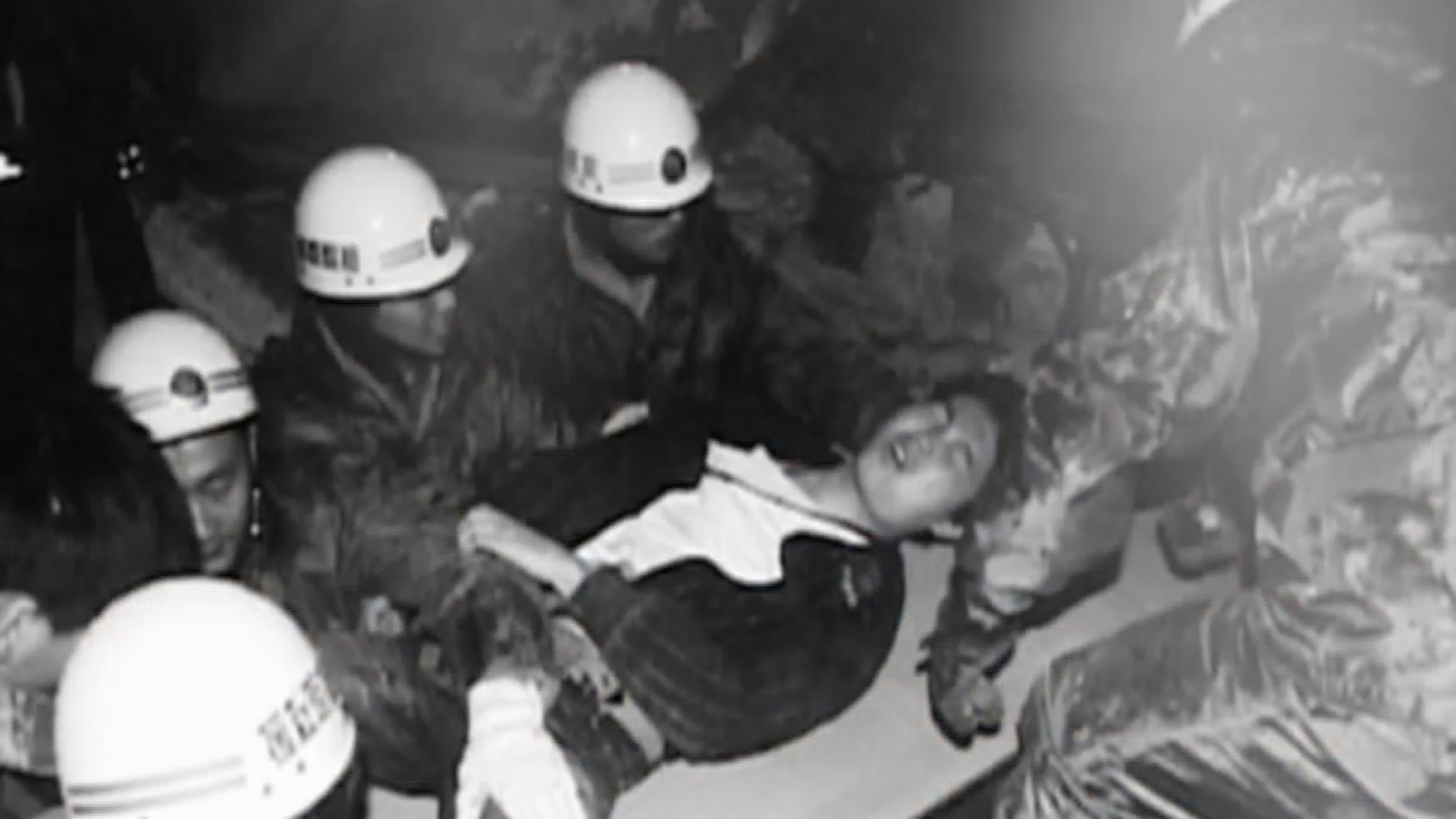
Dai Guohong was stuck under the rubble for two days after a magnitude-8 earthquake struck Sichuan in 2008. / Photo courtesy of Sichuan Radio and Television
Dai Guohong was stuck under the rubble for two days after a magnitude-8 earthquake struck Sichuan in 2008. / Photo courtesy of Sichuan Radio and Television
Guohong was stuck under the rubble for two days and two nights until rescue workers finally dug him out and rushed him to the hospital. Doctors called his parents to a separate room and offered them two options: either Guohong would lose his legs or he would lose his life. His parents signed the agreement for amputation surgery.
Anger, despair, self-pity. Guohong struggled to make sense of his loss. But to the surprise of perhaps even himself, he started a second life, in water.
Doctors suggested that he learn to swim to help with recovery. So less than one year after his amputation, Guohong took his first dip.
“My head sank,” he recalls. “My stump, arms and body shook hard. I couldn’t find my balance. I sank and sank. The water choked me. I thought I was going to drown.”
Little did he expect that he was going to become a professional para-swimming athlete, win nine national champions… and break a national record in 100 meter breaststroke in 2014.
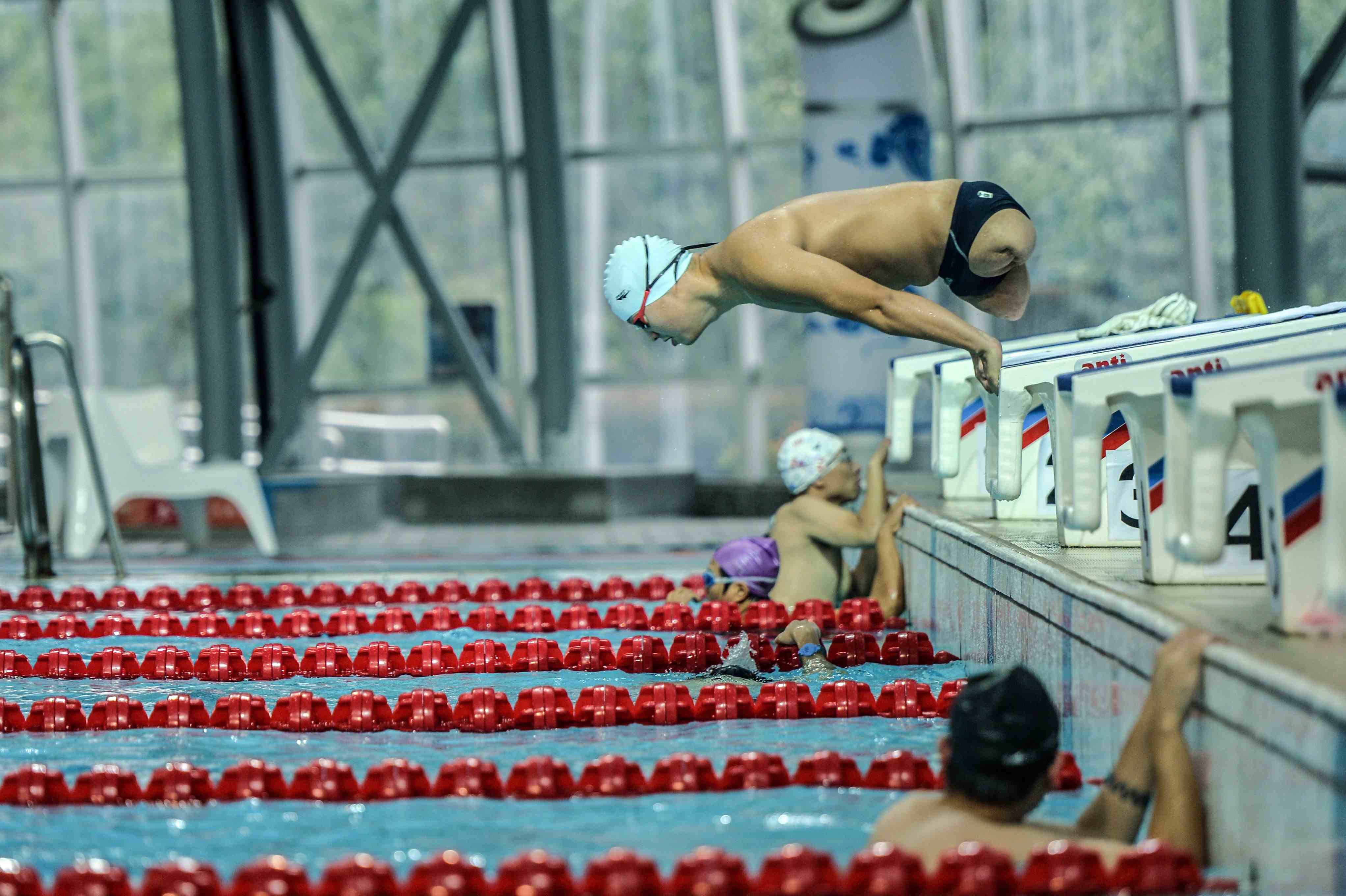
Dai Guohong diving into a swimming pool / Photo courtesy of Dai Guohong
Dai Guohong diving into a swimming pool / Photo courtesy of Dai Guohong
Guohong looks nothing like an athlete now – he retired in 2015, got married and gained weight. When we met him he looked exhausted from the inpouring of media attention as the 10th anniversary of the earthquake approached. News reports hail him as a hero, a symbol of resilience of those affected by the devastating disaster.

Dai Guohong and wife Su Simiao on their wedding day / Photo courtesy of Dai Guohong
Dai Guohong and wife Su Simiao on their wedding day / Photo courtesy of Dai Guohong
Every chance he gets, he tries to shake off that image.
“I don’t represent everyone,” he says. “I’m naturally optimistic, but many others are not. I think it won’t be fair to think everyone is now okay psychologically. In fact, 90% of the people I know are still struggling to deal with the past.” He thinks these people deserves more attention and help.
“I don’t think 10 years can completely wash away the scars,” he said. “We have a long road ahead of us. Those beautiful things – they live in my memory. I miss my classmates and my teachers. I picture them in my head. But it brings me strength more than sorrow. They’ve empowered me. They’ve always been with me, supporting me, encouraging me to move on.”