
Tech & Sci
14:04, 09-May-2018
As Ireland votes on abortion, Facebook bans foreign-funded ads
 ["europe"]
Share






Copied
In an attempt to block foreign interference, Facebook announced Tuesday it would block all ads related to Ireland’s upcoming abortion referendum originating from outside the country.
Citing efforts to “protect the integrity of elections and referendums from undue influence,” the platform said it will start rejecting ads from foreign advertisers.
Ads in Ireland will now undergo a verification process that requires the advertiser to be a resident in the country where the election is taking place.
In a highly emotional referendum, Irish voters will head to the polls on May 25 to decide on the country’s Eighth Amendment. Adopted in 1983, the amendment holds that the life of the unborn child is equal to that of the mother, effectively banning all abortions – even in the case of rape, incest, or cases where a termination of pregnancy is needed to save the mother’s life.
Ireland has one of Europe’s most restrictive abortion laws. If voters decide to repeal the amendment, the government would be allowed to legislate on the matter.
Recognizing the sensitivity of the campaign, Facebook has also fast-tracked the release of its view ads feature, allowing Facebook users in Ireland to see all the ads any advertiser is currently running on the platform. The hope is the increased transparency will allow users to make more informed assessments of the messages they’re seeing.
Ireland is getting the feature early due to the timing of its referendum. The rest of the world should get access to the feature in June. A second phase will also provide information about who paid for the ads, as well as the number of people who see it.
With about two weeks to go, a recent poll by the Irish newspaper Sunday Independent and research firm Kantar Millward Brown showed that the abortion referendum would be passed – but only by a narrow majority.
The poll found that 57 percent of voters support repealing the amendment, with 43 percent opposing. However, this excludes people who are undecided.
When undecided voters are taken into account, the poll shows only 45 percent in favor, 35 percent against and a substantial 18 percent of people stating that they were still undecided.
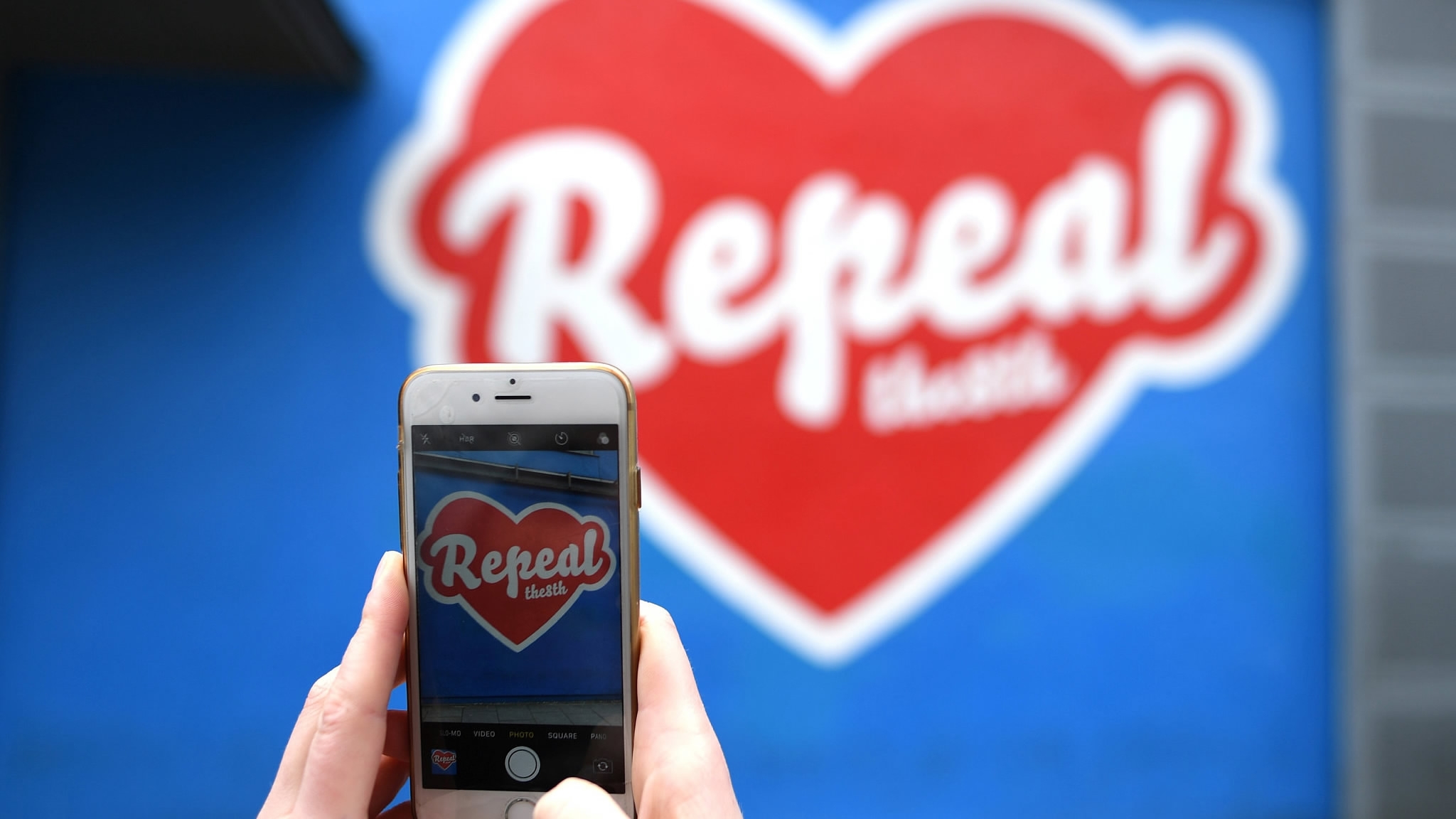
(Top photo: A woman takes a picture of a pro-choice mural ahead of a May 25 referendum on abortion law in Dublin, Ireland, April 12, 2018 / VCG photo)