
Opinions
22:20, 06-Oct-2018
An ill-conceived smear: American leaders make absurd statements about China (Part I of II)
Updated
22:16, 09-Oct-2018
 ["china"]
Share







Copied
Editor's note: This is an edited translation from an editorial piece from People's Daily originally published in Chinese on October 5.
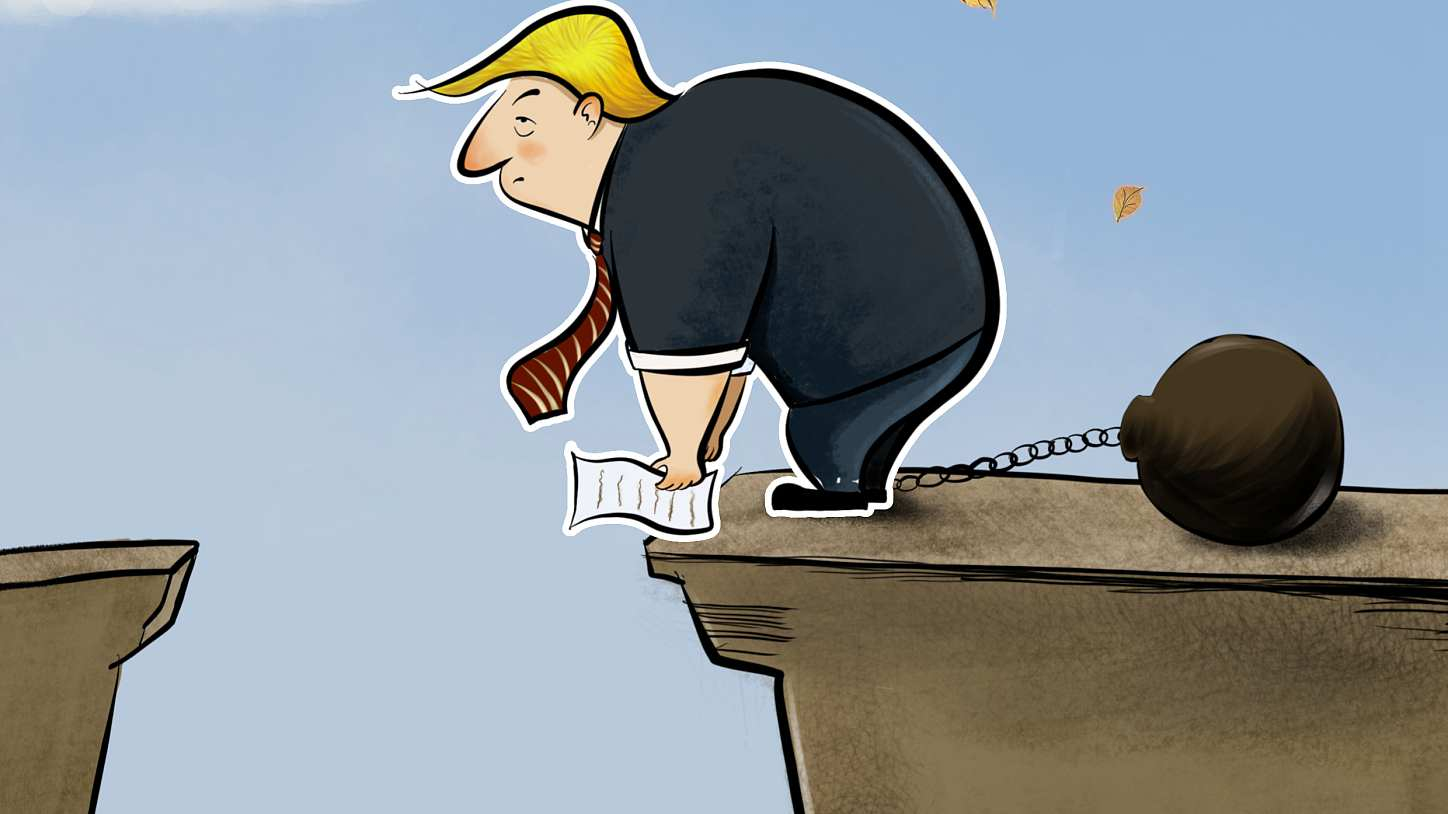
Recently, on various occasions, the US president and vice president have taken turns to claim that China is trying to interfere with US elections, making groundless accusations on China's domestic and foreign policies.
The statements by the US are steeped with the Cold War mentality and the outdated idea of a zero-sum game. They distort the facts, create confusion, and are erroneous in terms of facts, logic and view of the times. The American side's absurd arguments can be summed up as follows.
Myth No.1: there is a deviation in the direction of China's domestic and foreign policies. This is totally nonsense. This year marks the 40th anniversary of China's reform and opening-up. Over the past 40 years, China has made great achievements through continuous efforts in deepening reforms and opening wider to the outside world. China will continue to push ahead with reform and opening-up.
The Chinese people now enjoy unprecedented freedom and rights, hence having the greatest say in this regard. Meanwhile, China has always followed the path of peaceful development. If the US sees China through the lens of bias, it only begets prejudice and even leads to wrong conclusions.
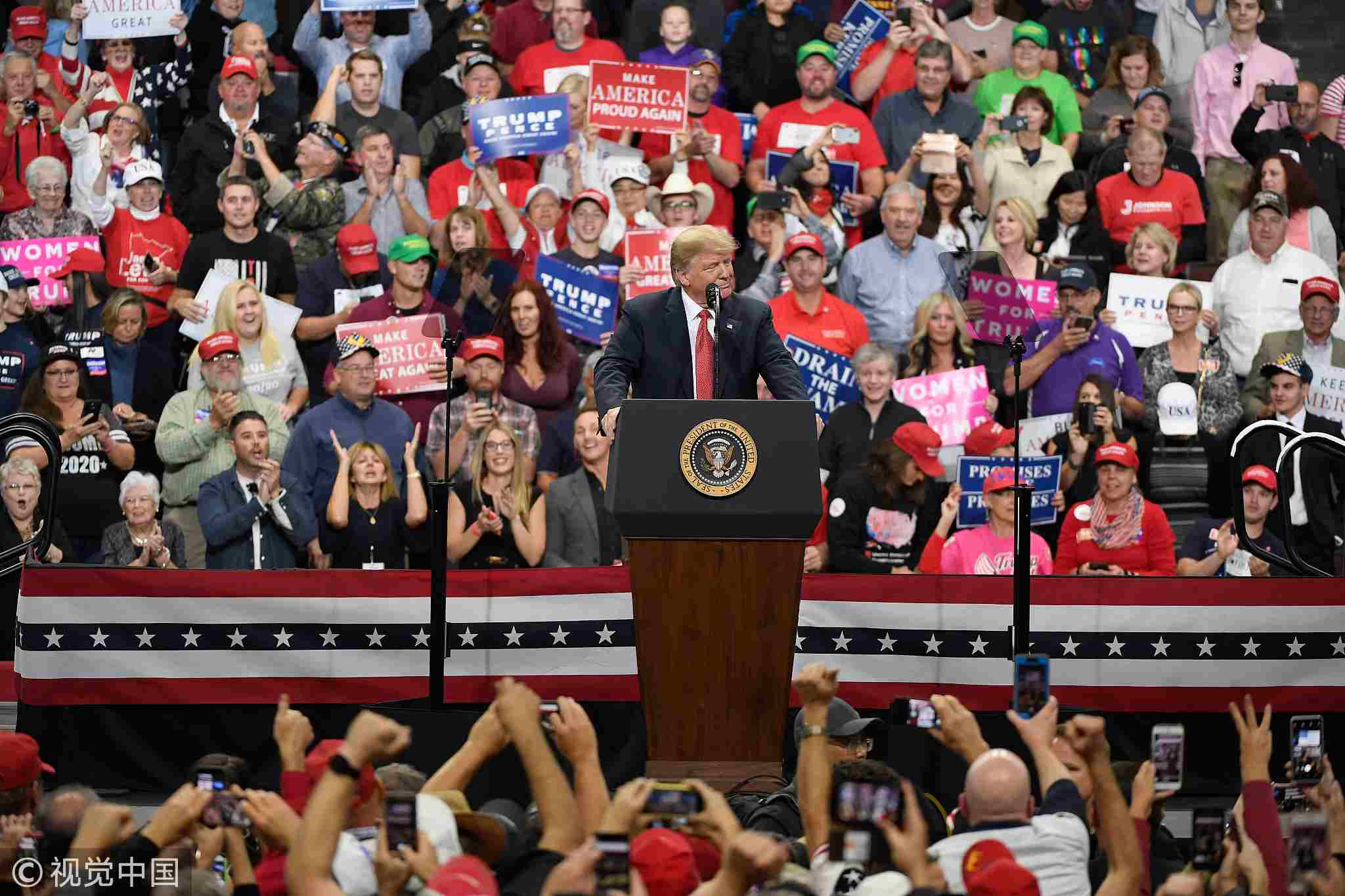
US President Donald Trump speaks at a campaign rally at Mayo Civic Center in Rochester, Minnesota, October 4, 2018. /VCG Photo.
US President Donald Trump speaks at a campaign rally at Mayo Civic Center in Rochester, Minnesota, October 4, 2018. /VCG Photo.
Myth No.2: the Chinese intervention in the US elections. This is totally false. As early as in the 1950s, China put forward the famous "Five Principles of Peaceful Coexistence," one of which is non-interference in each other's internal affairs. What the Chinese government wants to do is to let the people live a happy life. We are too busy to have any interest or intention to meddle with American domestic affairs.
In defiance of America's false accusation of China meddling with its domestic affairs, the US and international media, such as the New York Times, Wall Street Journal, CNN, Reuters and so on, claim there is no evidence for such accusations.
Myth No.3: Chinese media paid to insert a multi-page supplement in a US newspaper to influence public opinion. This is far-fetched. In fact, the action of Chinese media does not violate the US laws at all, and many other countries have done the same.
Americans themselves admit this. Scholars of the Brookings Institution pointed out in an article that China's use of a multi-page supplement in an American newspaper is nothing special considering other countries are doing the same. However, American leaders have singled out China. Why? Obviously, it has ulterior motives.
Myth No.4: China seeks to hit specific US voters with countervailing tariffs. This is all about blaming others while itself is to be blamed. The US has created the trade friction by repeatedly imposing tariffs on China's exports to the US, which harms both sides. China has to respond to this to defend its legitimate rights and interests. This is "justifiable defense."

US President Donald Trump speaks next to Vice President Mike Pence (R) during a swearing-in ceremony for US Secretary of State Mike Pompeo (L) at the State Department in Washington, US, May 2, 2018. /VCG Photo.
US President Donald Trump speaks next to Vice President Mike Pence (R) during a swearing-in ceremony for US Secretary of State Mike Pompeo (L) at the State Department in Washington, US, May 2, 2018. /VCG Photo.
Under the shadow of a possible trade war between the US and China, American producers, exporters, and consumers will inevitably be hurt. America's soybeans and other agricultural products are subject to the impact of the trade war. It has nothing to do with whether they are produced in Republican or Democratic areas.
If the US interpretation prevails, the countries that are adopting countervailing measures against the unilateral trade actions of the US, including their allies, are attacking specific voters in the US. Will the US accuse them of interfering with its domestic affairs?
Myth No.5: China's cyber attack on the US. This is totally made up. China is one of the major victims of cyber threats such as hacking and a staunch defender of cyber security. China has always firmly opposed to and cracked down on any form of cyber attacks and secret theft.
One should not forget the prism gate incident of 2013 when secret documents released by Edward Snowden showed that US surveillance was ubiquitous around the world. The US has even been hacking its allies, including German Chancellor Angela Merkel. It seems that the United States not only successfully fabricates the "Matrix" on the big screen, but also wants to create one in reality.
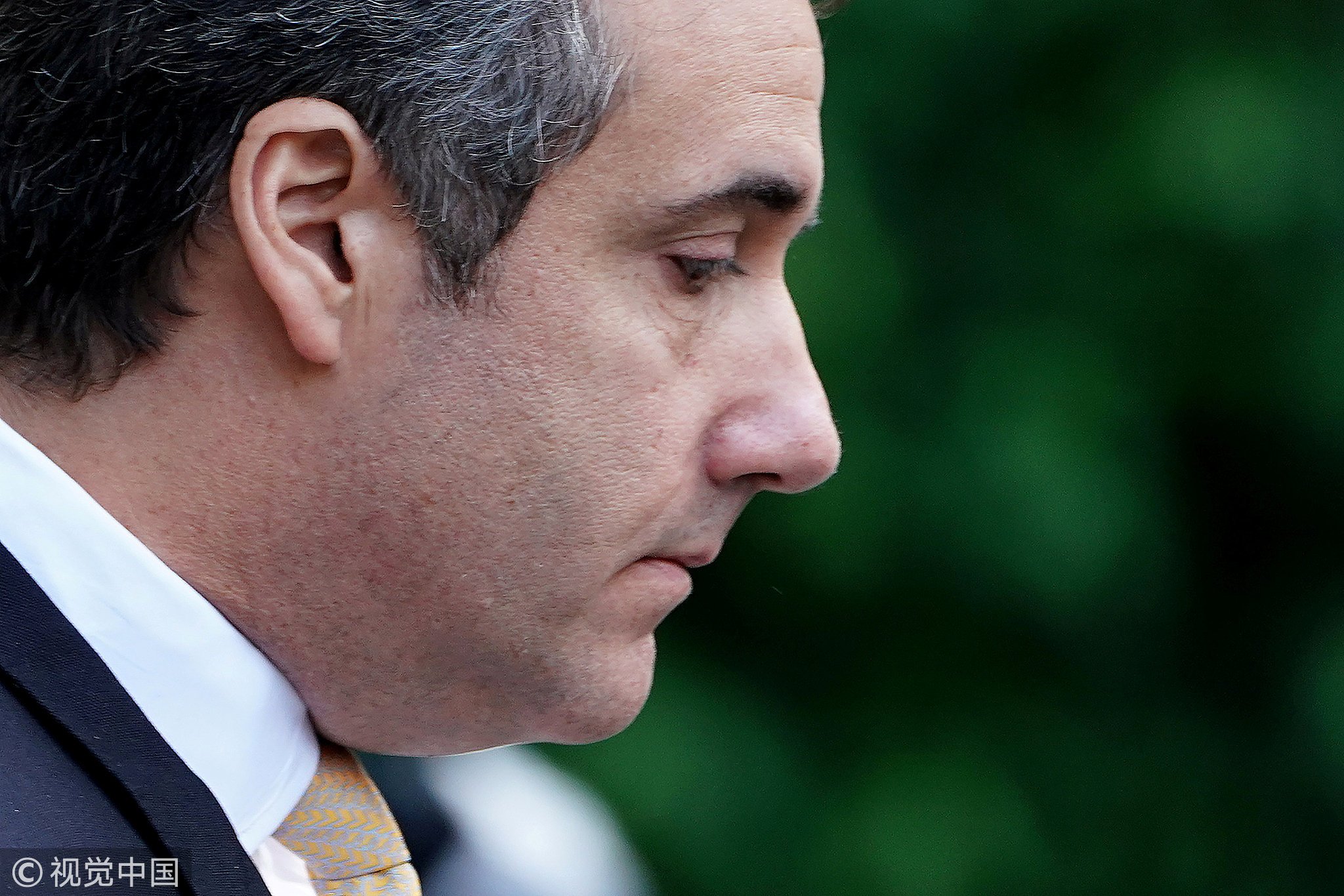
US President Donald Trump's former lawyer Michael Cohen walks out of court in New York City, New York, US. /VCG Photo.
US President Donald Trump's former lawyer Michael Cohen walks out of court in New York City, New York, US. /VCG Photo.
Myth No.6: China steals American intellectual property. It can't be further from the truth. In the past two to three decades, China has been making progress in intellectual property protection. According to a report by the World Intellectual Property Organization, China has become the second largest source of patent applications in the world in 2017.
In 2001, China's outbound payment for intellectual property was only 1.9 billion US dollars, but in 2017, it reached 28.6 billion US dollars. This shows that China is serious about protecting intellectual property rights, and its action is effective. The US side cannot ignore facts selectively.
Myth No.7: the establishment of diplomatic relations between China and El Salvador and other Latin American countries threaten the stability of the Taiwan Strait. This is to confuse right and wrong. There is only one China in the world, and Taiwan is an inalienable part of China's territory.
As early as decades ago, the US recognized the one-China policy and established diplomatic relations with China on this political basis. Decades later, when other sovereign states establish diplomatic relations with China on the basis of the one-China policy, what justifications and legitimacy does the US have to criticize China?
(If you want to contribute and have specific expertise, please contact us at opinions@cgtn.com.)