
World
19:57, 16-Sep-2018
Storm weakening but 'epic' rains still expected on Carolinas
Updated
19:38, 19-Sep-2018
 ["china"]
Share







Copied
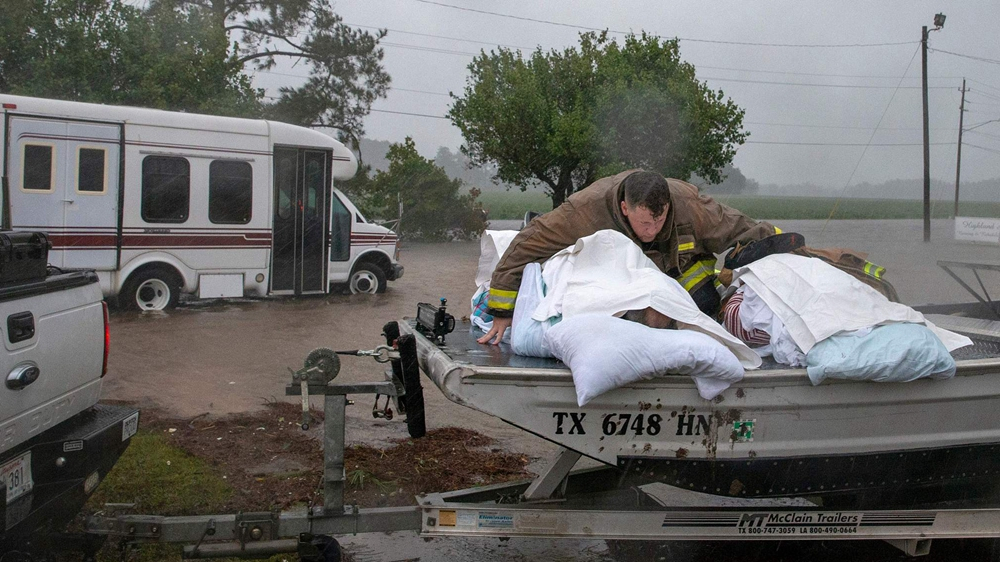
Tropical storm Florence was expected to weaken as it swept through the Carolinas on Sunday, but communities could still face "epic" amounts of rainfall, officials said.
The storm is forecast to become a tropical depression as it trudged inland. It has knocked out power and caused at least eight deaths as flood waters kept rising.
North Carolina officials have reported at least seven storm-related fatalities with unconfirmed reports of a further three deaths. South Carolina authorities reported one death.
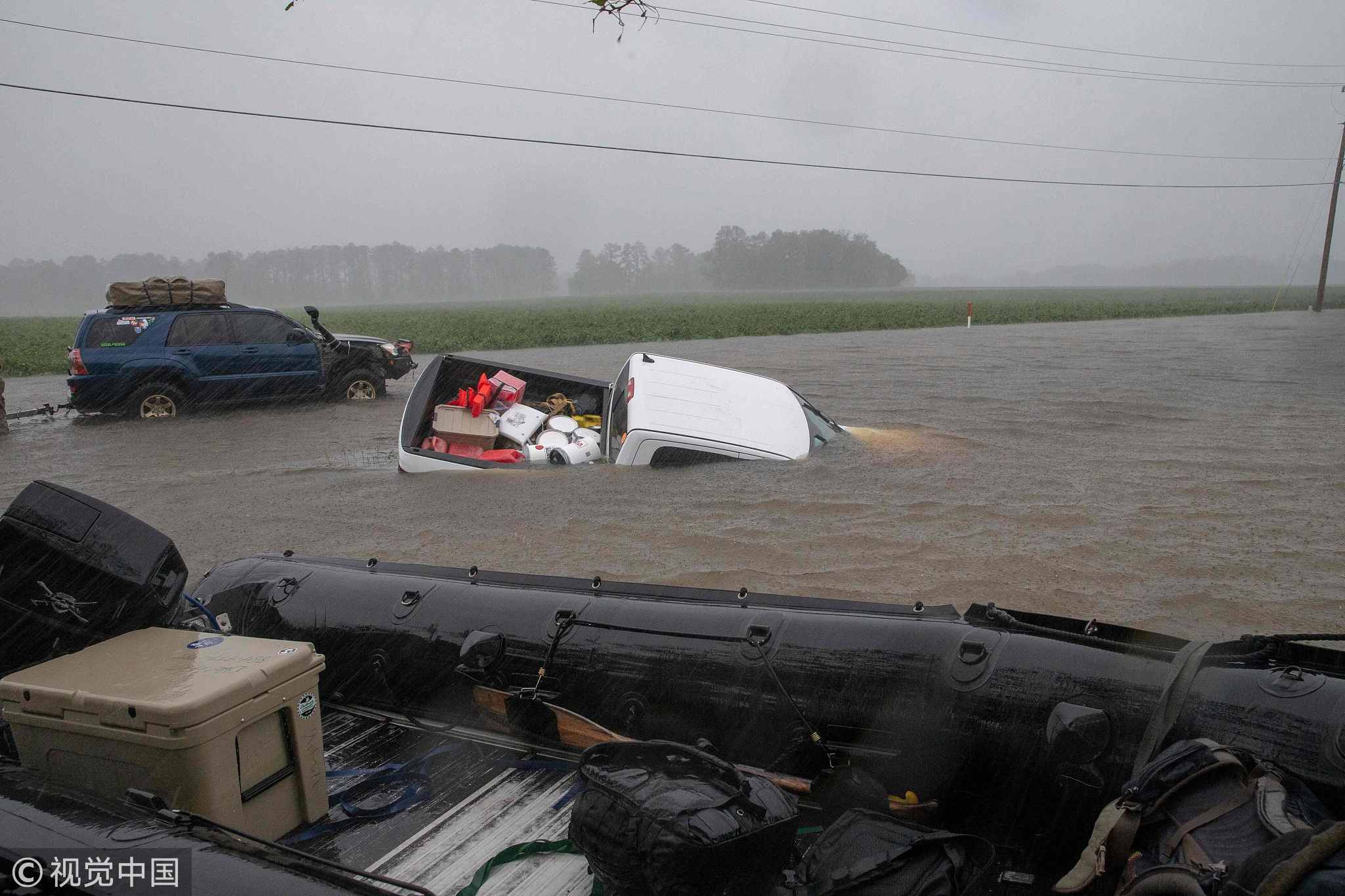
A pickup is seen submerged in floodwater in Lumberton, North Carolina, September 15, 2018, in the wake of Florence. /VCG Photo
A pickup is seen submerged in floodwater in Lumberton, North Carolina, September 15, 2018, in the wake of Florence. /VCG Photo
"This is still a catastrophic, life-threatening storm," said Zack Taylor, a meteorologist with the National Weather Center's Weather Prediction Center in College Park, Maryland.
Winds have dropped to about 40 miles per hour (65 kilometers per hour) since it roared ashore along the US mid-Atlantic coast on Friday as a hurricane and it is crawling west over two states at 6 mph (9 km/h), the National Hurricane Center (NHC) in Miami said early Sunday.
Taylor said the storm had already dumped 30 inches of rain on some parts of North Carolina.
"This storm is still deadly and dangerous and it's expected to turn northward later today into Virginia and the mid-Atlantic," he said.

Barricades block Highway 70 where the Neuse River has flooded the road in Kinston, North Carolina, September 15, 2018. /VCG Photo
Barricades block Highway 70 where the Neuse River has flooded the road in Kinston, North Carolina, September 15, 2018. /VCG Photo
"This system is unloading epic amounts of rainfall, in some places measured in feet and not inches," said North Carolina Governor Roy Cooper, adding that the rivers will continue to rise days after the rain has stopped.
Around 50 stranded people were airlifted by helicopter in North Carolina, said Petty Officer Michael Himes of the US Coast Guard. More than 26,000 hunkered down in shelters.
Roads were closed and authorities warned of landslides, tornadoes and flash floods, with dams and bridges in peril as rivers and creeks swelled. As of Saturday, about 676,000 homes and businesses were without power in North Carolina, along with 119,000 in South Carolina.
Florence was drifting westward over South Carolina, reaching about 25 miles southeast of Columbia S.C. at 2 a.m. Sunday, the NHC said.
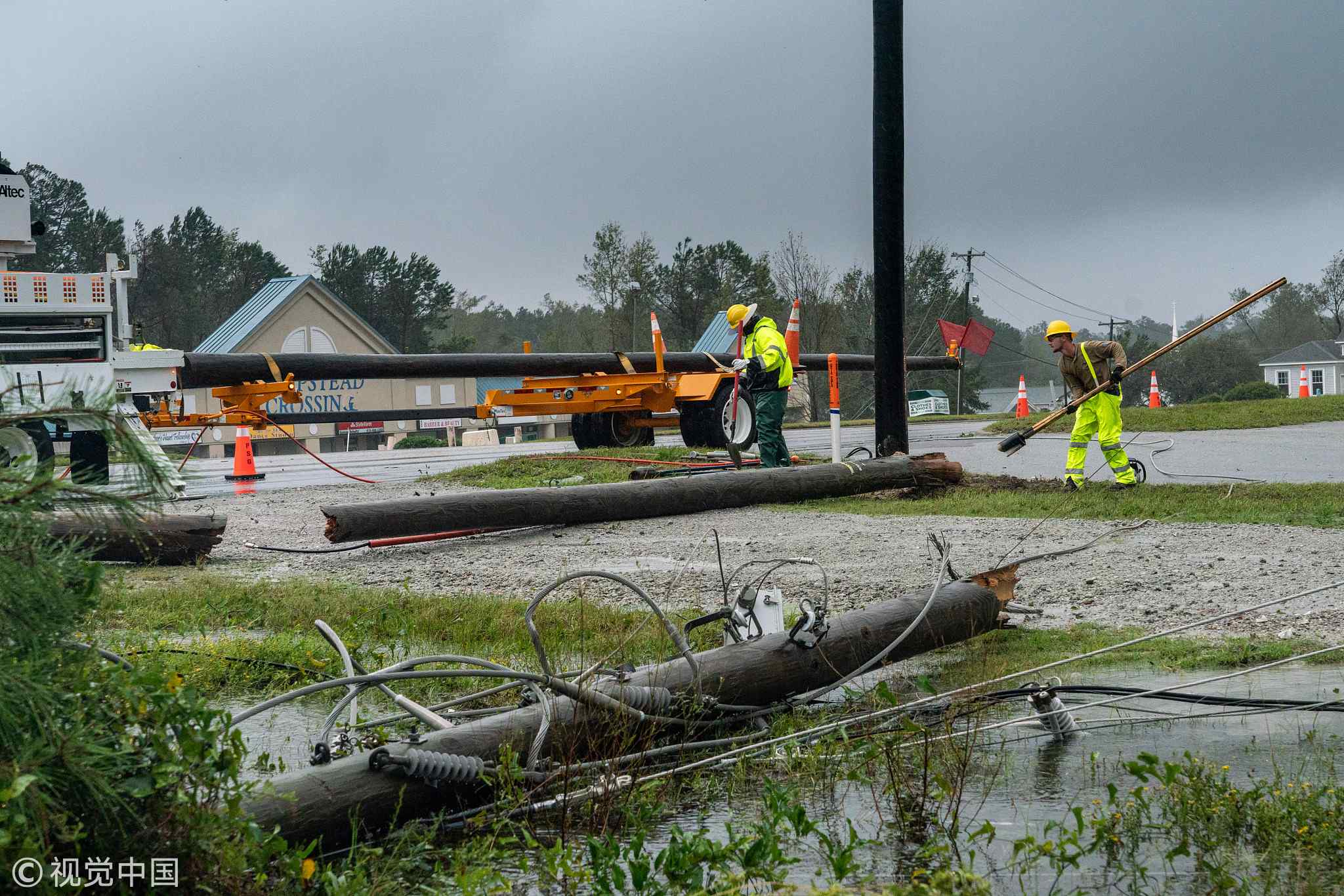
Lonnie Coleman, right, works on replacing a power pole in North Carolina, September 15, 2018. /VCG Photo
Lonnie Coleman, right, works on replacing a power pole in North Carolina, September 15, 2018. /VCG Photo
Up to 40 inches (102 cm) of rain are expected along coastal areas of the Carolinas and up to ten inches in southwestern Virginia, it said.
The White House said President Donald Trump approved making federal funding available in some affected counties.
Trump, who plans to visit the region next week, tweeted his "deepest sympathies and warmth" to the families and friends of those who had lost their lives.
As the US dealt with Florence, a super typhoon landed in southern China after hurtling through the Philippines, where it wreaked havoc killing at least 25.
Source(s): Reuters