
World
11:22, 01-Oct-2018
Mass burials to begin as Indonesia toll tops 800
Updated
10:23, 04-Oct-2018
 ["china"]
Share







Copied
00:49
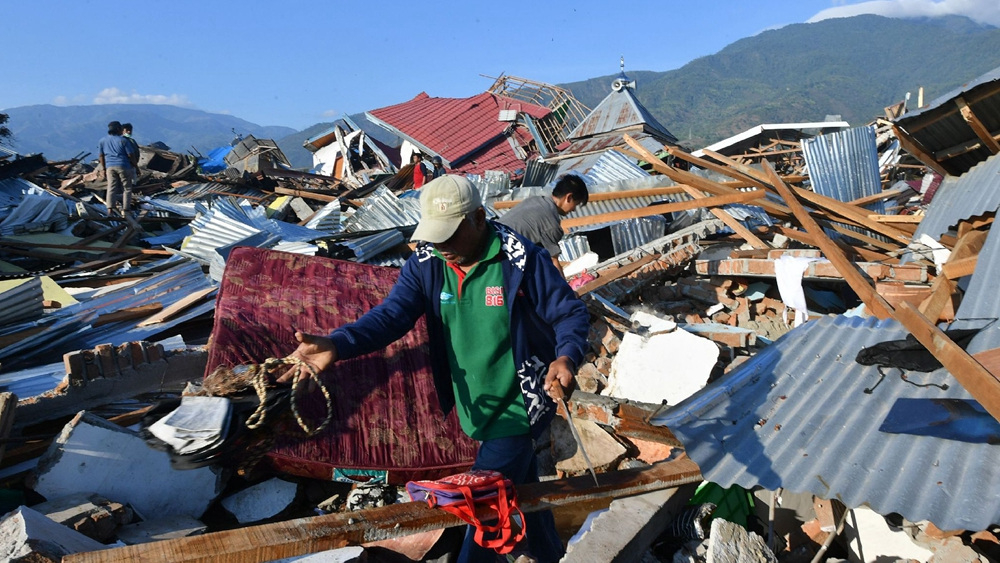
Mass graves were being readied for hundreds of victims of an Indonesian quake and tsunami on Monday as authorities battled to stave off disease and reach desperate people still trapped under shattered buildings.
The tsunami killed at least 832, officials said. But the number was expected to rise further after a disaster that has left the island of Sulawesi reeling.
The Indonesian government on Monday called for international help to deal with the aftermath of the tsunami.
The strong 7.5-magnitude quake struck Friday, toppling buildings and sending walls of seawater crashing into the city of Palu, home to 300,000.
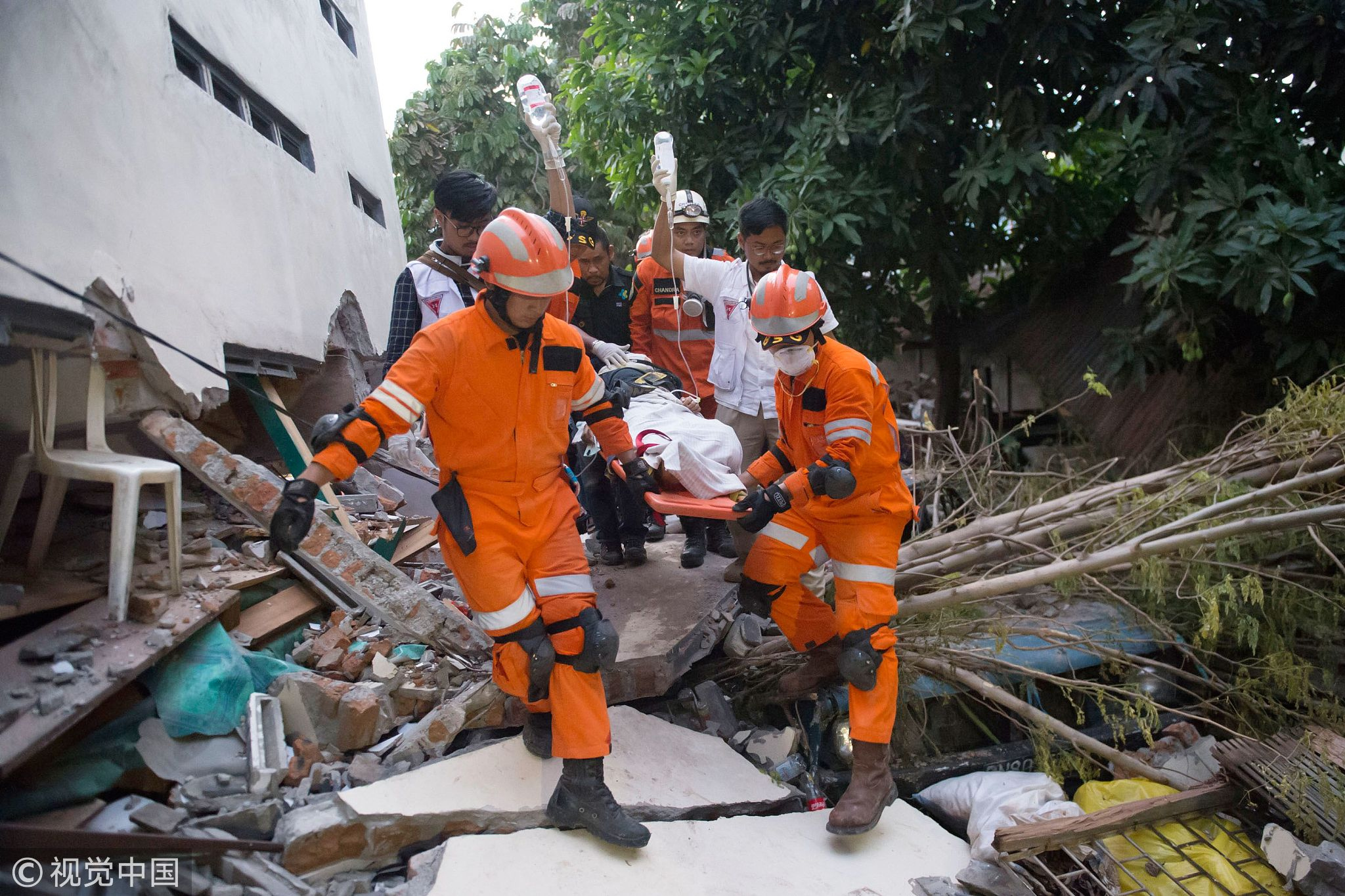
Rescue personnel evacuate an earthquake survivor from the rubble of a collapsed restaurant in Palu, September 30, 2018. /VCG Photo
Rescue personnel evacuate an earthquake survivor from the rubble of a collapsed restaurant in Palu, September 30, 2018. /VCG Photo
Exhausted survivors scoured make-shift morgues for loved ones, and authorities struggled to dig out the living or assess the scale of the devastation in more remote regions beyond Palu.
Grim warnings came that the eventual toll could reach thousands. "The casualties will keep increasing," said Sutopo Purwo Nugroho, spokesman for national disaster agency.
"We will start the mass burial of victims, to avoid the spread of disease," he said.
Rescuers raced against the clock and a lack of equipment to save those still trapped in the rubble, with up to 60 people feared to be underneath one Palu hotel alone.
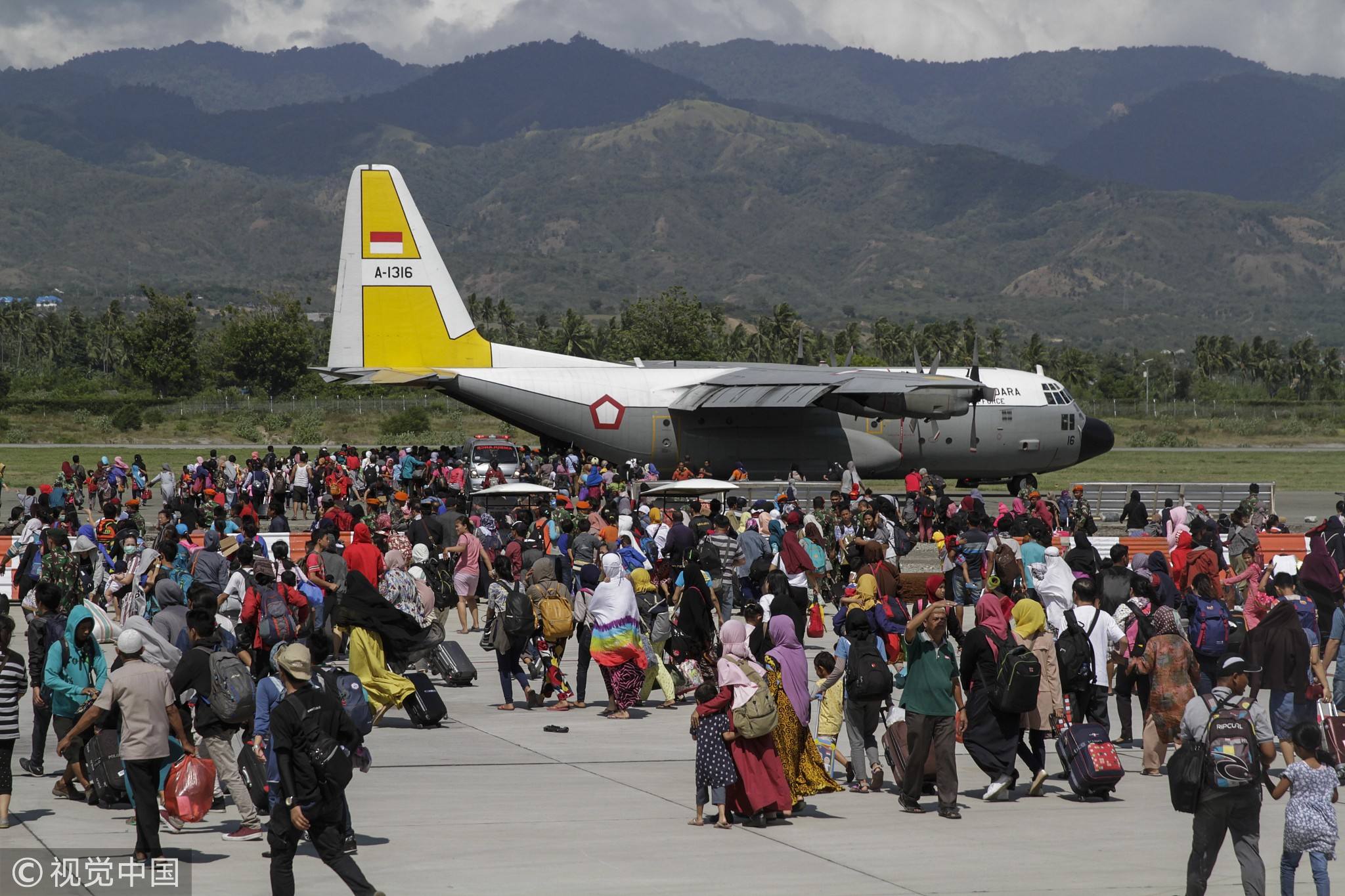
Residents queue to board a Hercules aircraft belonging to the Indonesian Air Force, as they are being evacuated after the earthquake and tsunami hit Palu, September 30, 2018. /VCG Photo
Residents queue to board a Hercules aircraft belonging to the Indonesian Air Force, as they are being evacuated after the earthquake and tsunami hit Palu, September 30, 2018. /VCG Photo
Rescuers said they heard voices and a child's cries from under the rubble.
Many have spent the last two days desperately searching for loved ones.
One survivor, Adi, was hugging his wife by the beach when the tsunami struck on Friday. He has no idea where she is now, or whether she is alive.
"When the wave came, I lost her," he said. "I was carried about 50 meters. I couldn't hold anything. The water was spinning me around," he said.

A collapsed mosque is seen amid waters from a tsunami surge in Palu, September 30, 2018. /VCG Photo
A collapsed mosque is seen amid waters from a tsunami surge in Palu, September 30, 2018. /VCG Photo
"This morning I went back to the beach, I found my motorbike and my wife's wallet."
Others have focused their search around open-air morgues, where the dead lay in the baking sun - waiting to be claimed, waiting to be named.
Indonesian President Joko Widodo visited the region Sunday afternoon, urging a "day and night" effort to save all those who can be saved. But disaster agency spokesman Nugroho indicated sheer power of will may not be enough.
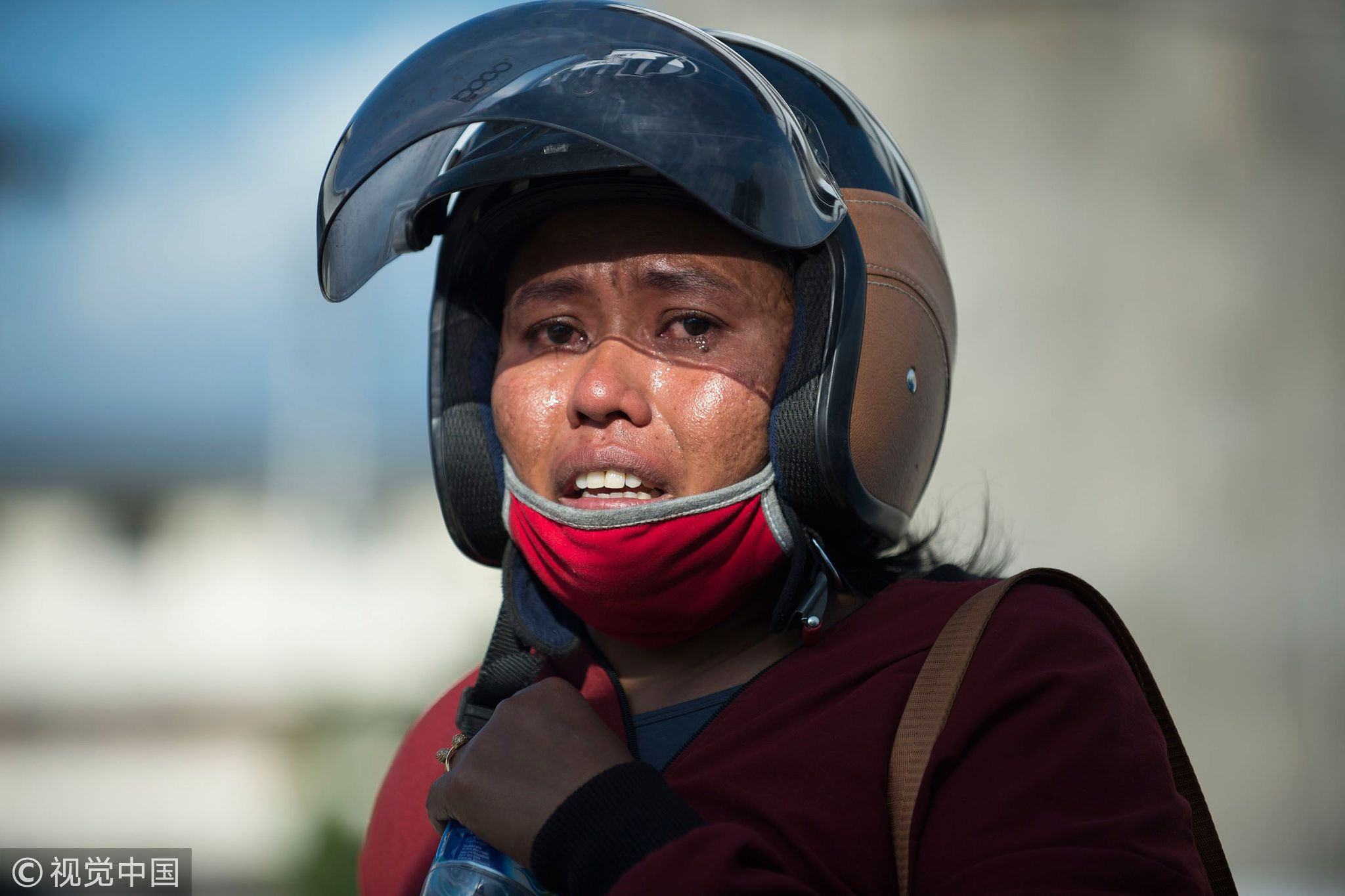
A woman, a relative of a victim, cries while gathered outside the collapsed Roa Roa hotel in Palu, September 30, 2018. /VCG Photo
A woman, a relative of a victim, cries while gathered outside the collapsed Roa Roa hotel in Palu, September 30, 2018. /VCG Photo
"Communication is limited, heavy machinery is limited... it's not enough for the numbers of buildings that collapsed," he said.
Still, as dire as the situation in Palu was, it was at least clear. In outlying areas, the fate of thousands is still unknown.
Indonesian Vice-President Jusuf Kalla said the final death toll in the more remote regions could be in the "thousands" since many regions have still not been reached.
Source(s): AFP