
Opinions
23:02, 25-May-2018
Opinion: Vienna Talks – breaking Iran nuclear deal comes with downsides for US
 ["china"]
Share






Copied
Editor's note: Ghanbar Naderi is an Iranian columnist and political commentator. The article reflects the author's opinion, and not necessarily the views of CGTN.
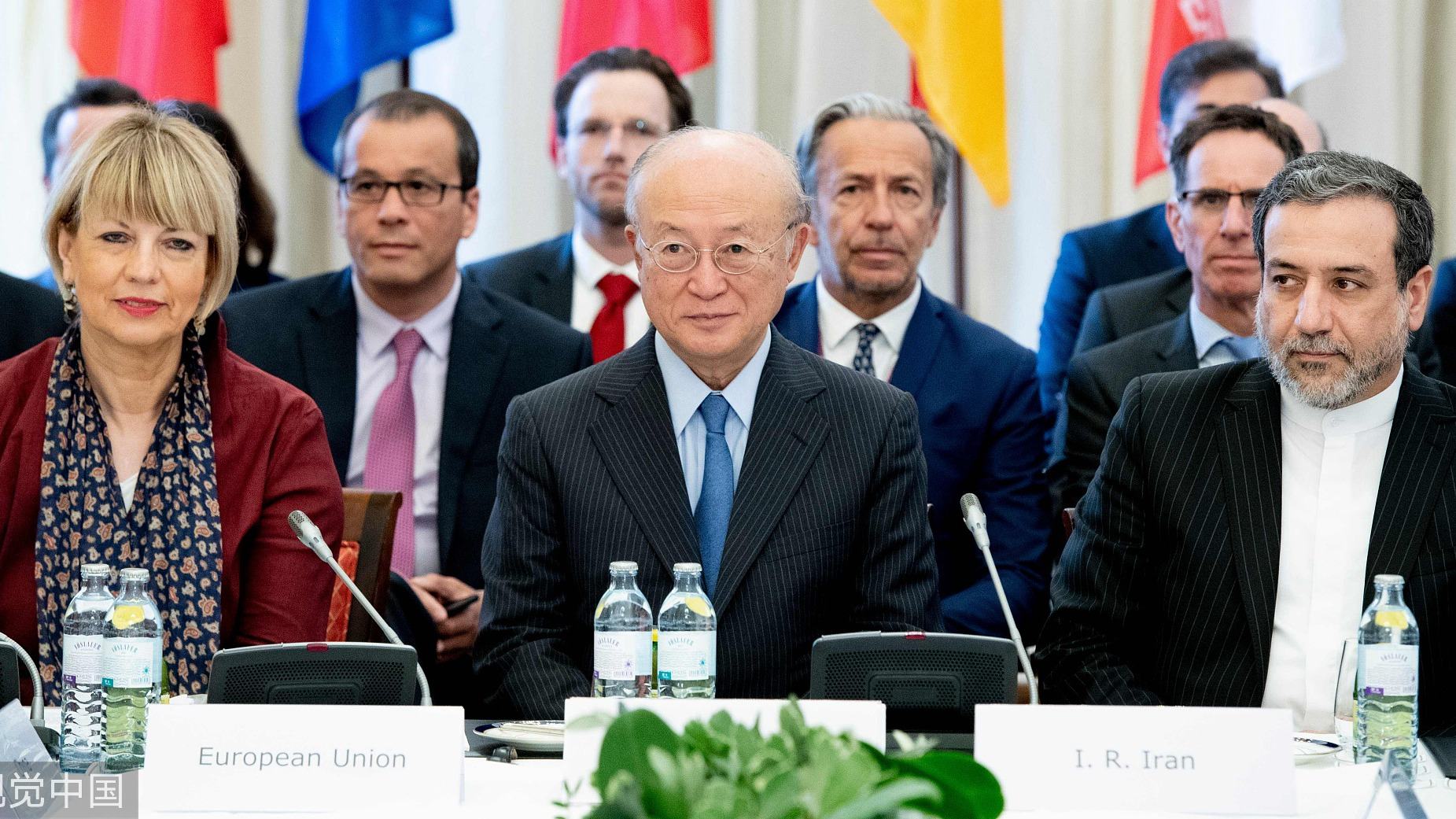
On Friday, May 25, nations still in the Iran nuclear deal met in Vienna for the first time to discuss the way forward since US President Donald Trump left the international agreement on May 8.
During the meeting, Chinese, Russian, British, French, and German officials said they were determined to flesh out a strategy to save the deal by keeping oil and investment flowing, while circumventing US sanctions that risk hurting the economy.
For now, though, the Trump administration has vowed to be tougher than ever on Tehran, and that could leave limited scope for others to salvage the deal. The reasons are plenty:
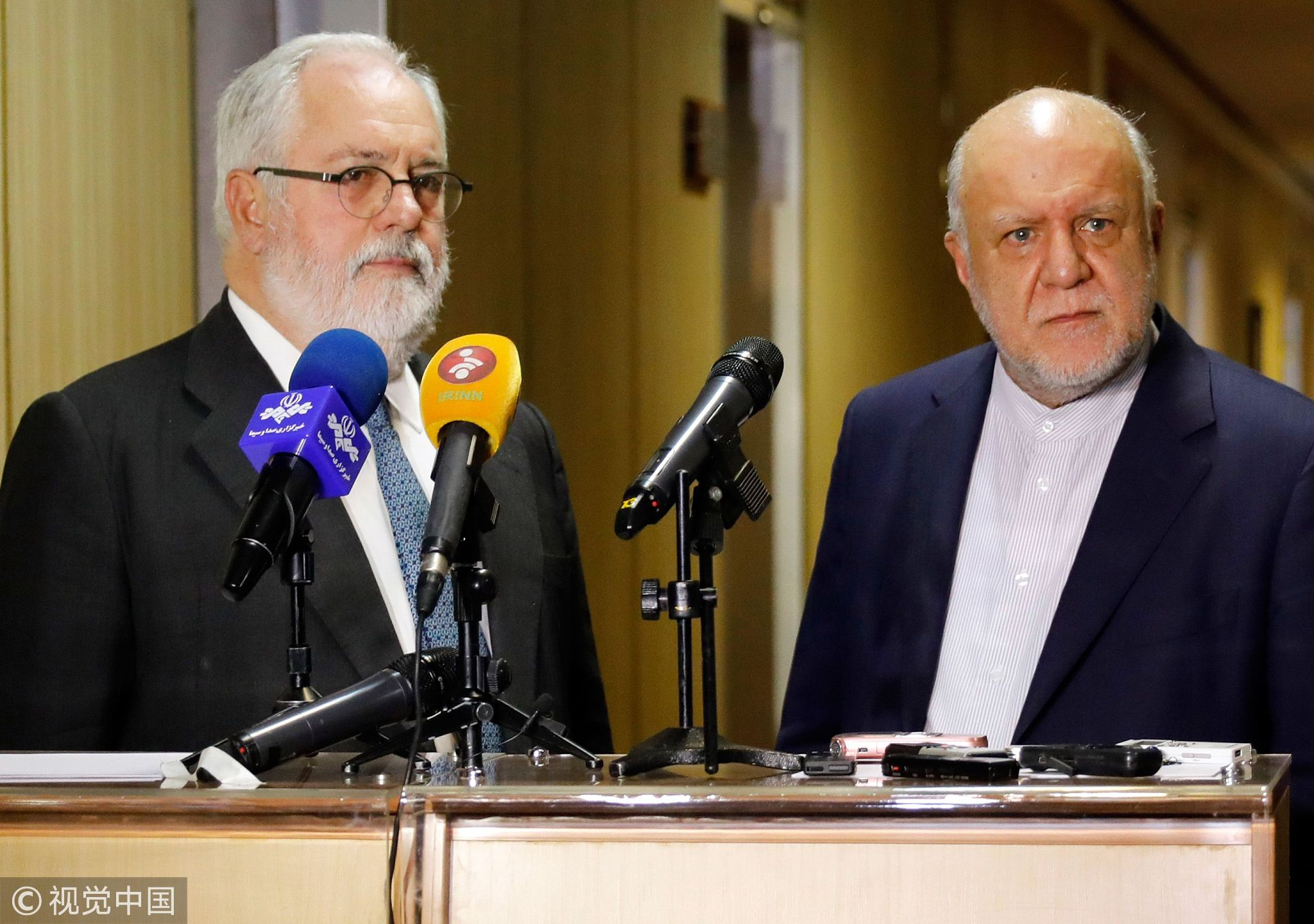
Iranian Oil Minister Bijan Namdar Zanganeh (R) and Miguel Arias Canete, European Union Energy Commissioner, speak to the press after meeting in the capital Tehran on May 19, 2018. /VCG Photo
Iranian Oil Minister Bijan Namdar Zanganeh (R) and Miguel Arias Canete, European Union Energy Commissioner, speak to the press after meeting in the capital Tehran on May 19, 2018. /VCG Photo
Setting a high bar
According to Iran’s Leader Ayatollah Ali Khamenei, Iran’s continued adherence to the landmark Joint Comprehensive Plan of Action (JCPOA) is contingent on the UK, France and Germany agreeing not to interfere with Iran’s non-nuclear weapons programs or activities and involvement in conflicts across the Middle East. They should also continue to buy Iranian crude oil and protect its markets and banking system from the impact of new US sanctions.
These demands fly in the face of competing calls from Washington DC for the European countries to toe the new, harsher US line on Iran. For instance, any new rapprochement between Washington and Tehran would mean Iran would have to stop its missile program and uranium enrichment activities, withdraw its forces in Syria and its support for Houthi fighters in Yemen.
To make things worse, the US has already re-imposed old sanctions on Iran’s Central Bank and the aviation industry. So, it’s not business as usual for Europe. European businesses in particular find themselves running afoul of US sanctions rules if they continue to explore financial opportunities with Iran – one of the world’s biggest oil producers. Some Western companies have already quit Iran or said they may have to leave because of US sanctions.
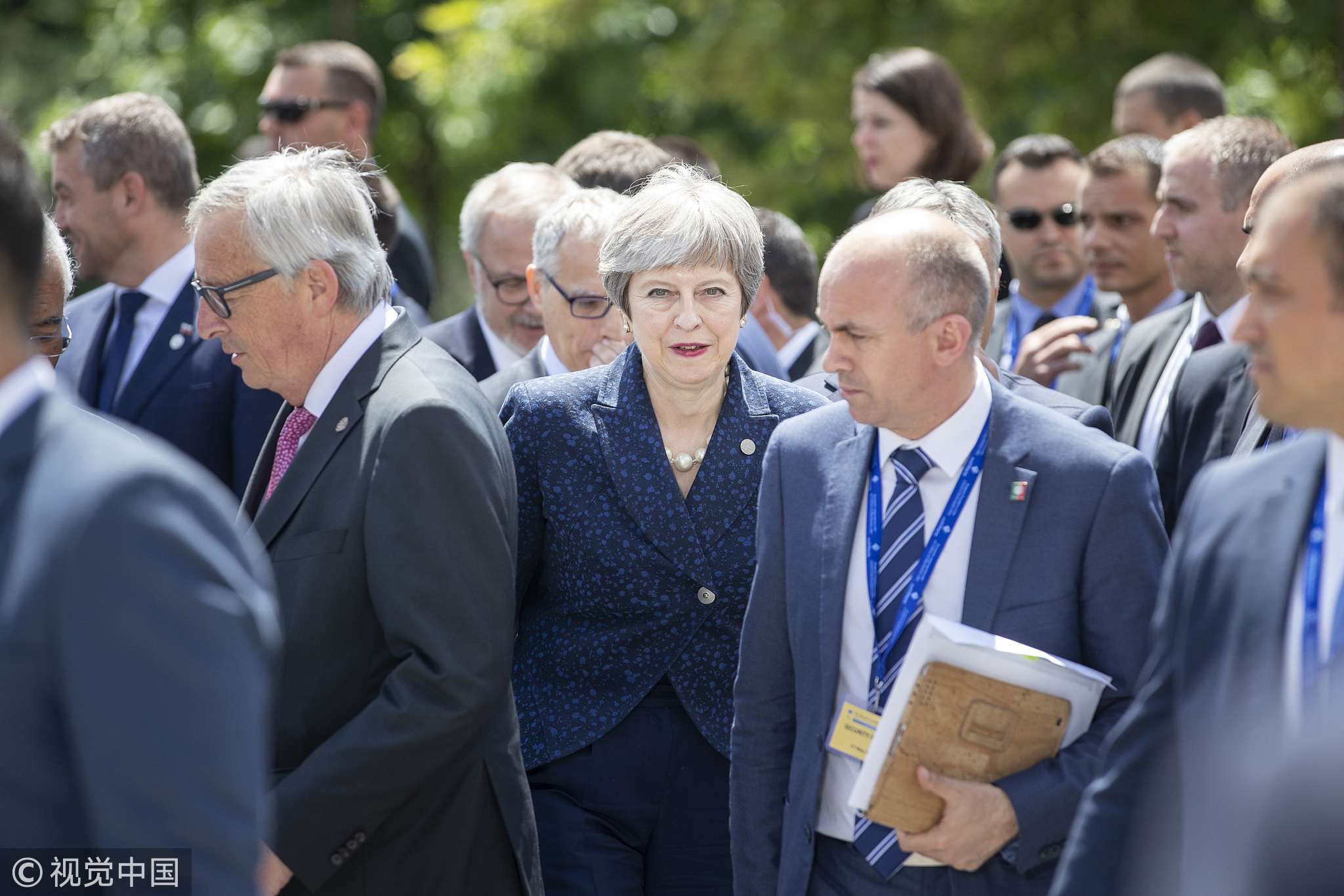
Theresa May, UK prime minister, center, departs with other European Union (EU) and Balkan leaders following a family photo at the summit of EU leaders in Sofia, Bulgaria, on Thursday, May 17, 2018. /VCG Photo
Theresa May, UK prime minister, center, departs with other European Union (EU) and Balkan leaders following a family photo at the summit of EU leaders in Sofia, Bulgaria, on Thursday, May 17, 2018. /VCG Photo
Doubling down on France’s charge
Ahead of the US exit, French President Emmanuel Macron said two pillars of EU policy include addressing Iran's ballistic missile program and its role in Middle East conflicts. Later, US Secretary of State Mike Pompeo doubled down on that charge and came up with 12 unrealistic demands for Iran. And again, on Thursday, France’s foreign ministry spokeswoman said, “the European desire to remain in the agreement does not, however, detract from the concerns we have with regard to Iran. That is why we proposed to establish a comprehensive negotiating framework with Iran. We want Iran to understand the value of a cooperative approach.”
Meaning, the EU might take some measures to block the US sanctions, but that’s all really. It is ultimately up to the continent's banks and companies to decide if they can stomach the risk of running afoul of US sanctions.
The Iranian leader’s demands should be read as the final word on Tehran’s position as well, where no one trusts the US nor the EU. Despite the ongoing talks with China, Russia and the EU, the Iranians might decide to walk and begin enrichment, simply because what the Europeans can offer – with regards to trade, investment and oil sales – will not be sufficient to balance out the nuclear concession that Iran is making.
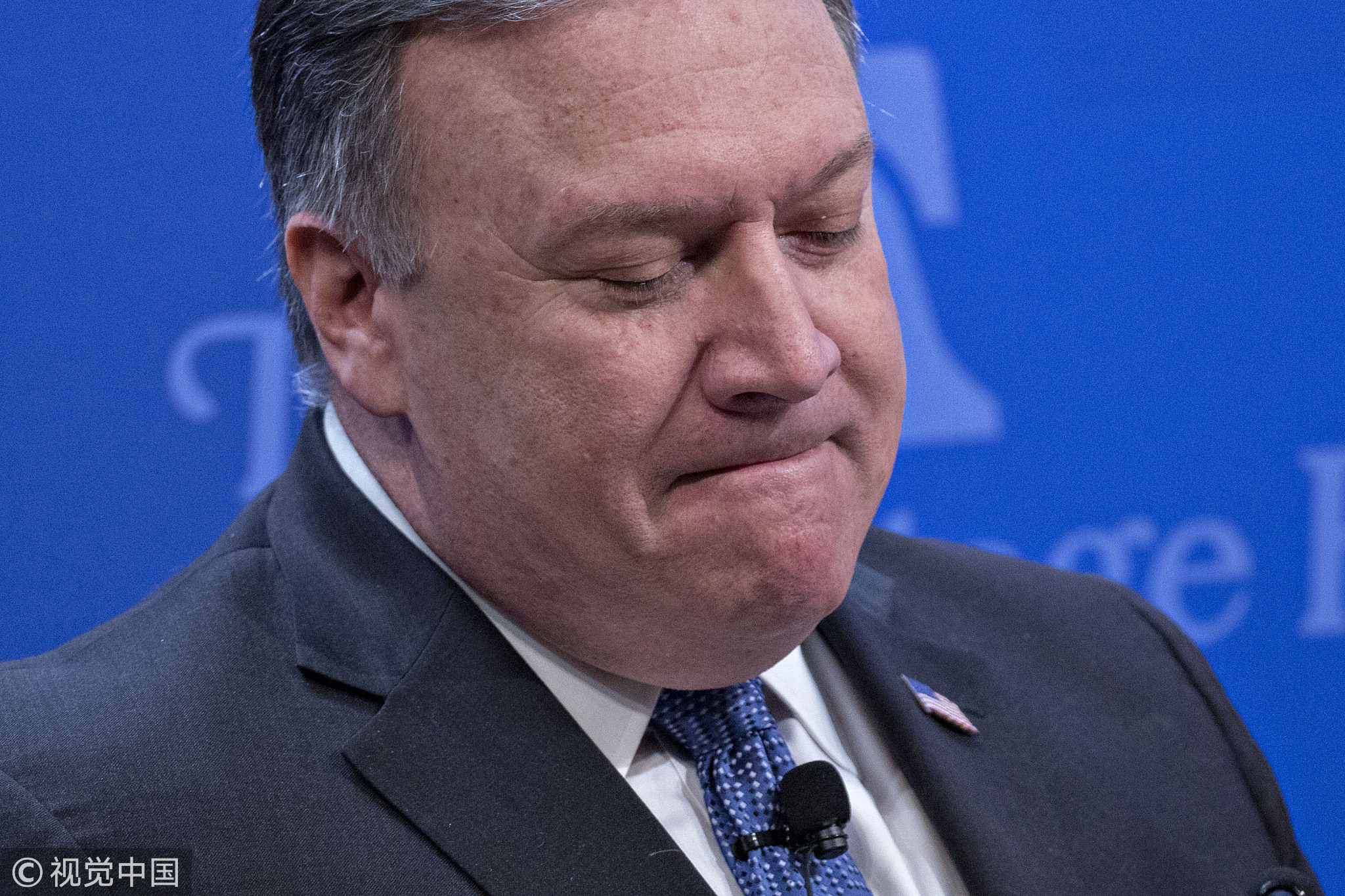
Mike Pompeo, US secretary of state, pauses while speaking at the Heritage Foundation in Washington, DC, on Monday, May 21, 2018. /VCG Photo
Mike Pompeo, US secretary of state, pauses while speaking at the Heritage Foundation in Washington, DC, on Monday, May 21, 2018. /VCG Photo
Preventing wider war
The 2015 accord rests on lifting sanctions and allowing business with Iran in exchange for Tehran curbing its nuclear program. Logic dictates it is crucial to forestalling a nuclear Iran and preventing a wider war in the Middle East. But the US wants “the strongest sanctions in history” if Tehran doesn’t change its behavior in the Middle East. European diplomats say they will try to cling to the deal hoping that there is a possibility of a transaction. But they also say “we’re under no illusions.”
On the other hand, Iranian officials want guarantees from the Europeans that they can protect trade. They want assurances that all parties will continue to buy Iranian oil. A few months from now, the Vienna meeting will show whether the Europeans were serious about the deal or not, and/or whether the demands by Iran’s leader were tough for European leaders to meet. One thing is clear. The accord's demise could threaten to lift limits on Tehran's nuclear program, disrupt billions of dollars in planned European investment in Iran, exacerbate trans-Atlantic relations, disrupt oil flows from OPEC's third-biggest producer, and trigger a wider war in the region.
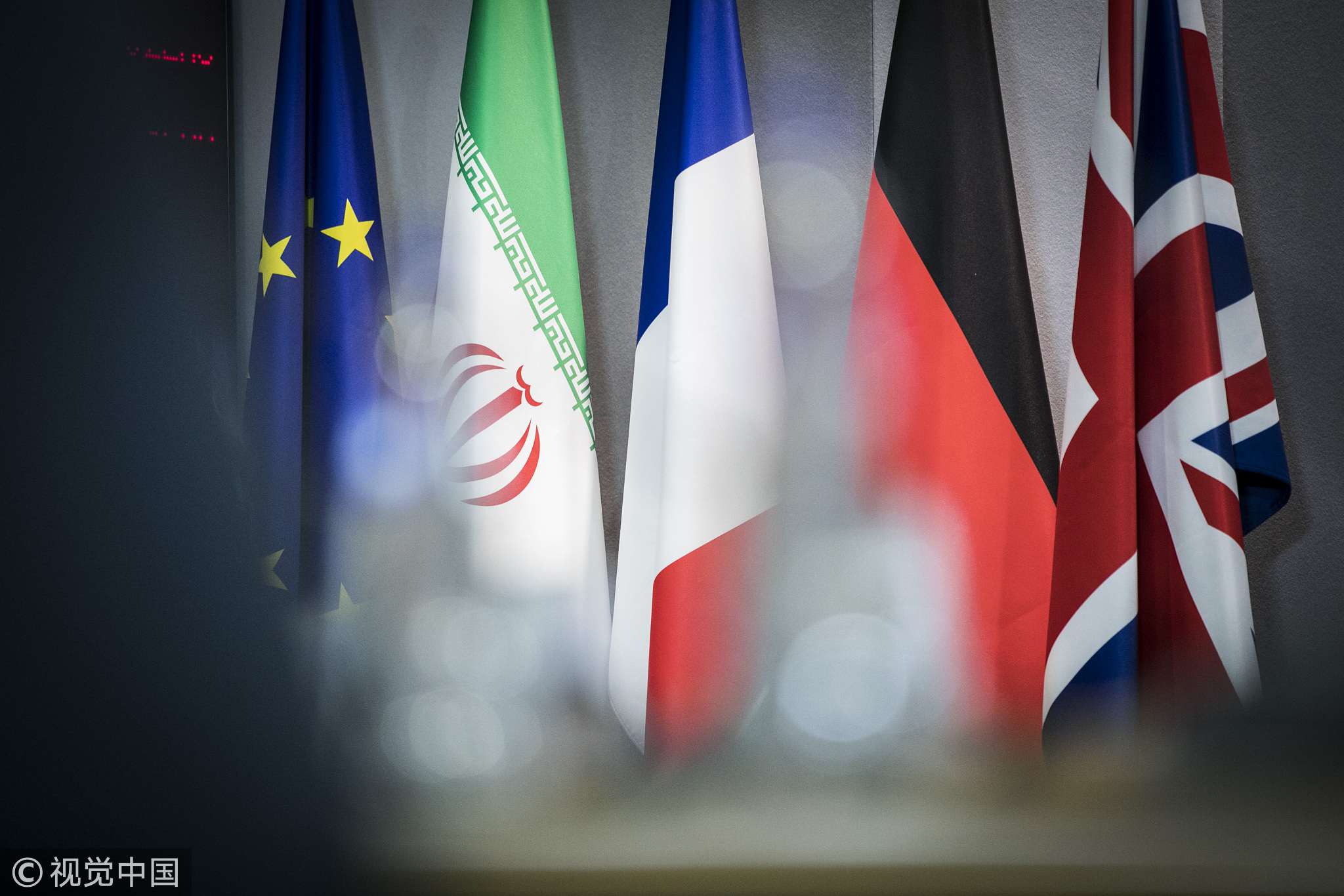
The flags of (L-R) the European Union, Iran, France, Germany and Great Britain are pictured before political conversation on May 15, 2018 in Brussels, Belgium. /VCG Photo
The flags of (L-R) the European Union, Iran, France, Germany and Great Britain are pictured before political conversation on May 15, 2018 in Brussels, Belgium. /VCG Photo
The way forward
Expectations are the shackles that will not permit something to be what it actually is. Idealizing the nuclear deal is surely quite unrealistic. However, it is much better than living in constant despair – or worse, fear of a major war. While European nations share those concerns, they have said that as long as Tehran meets its commitments, they would remain in the deal. The UN atomic watchdog policing the pact has also said Iran continues to comply with the terms of the deal, but could be faster and more proactive in allowing snap inspections.
More so, the Trumpsters and conservative critics in the US say the deal has done little to contain Iran’s involvement in regional conflicts as well as contain its missile ballistic program. They deliberately ignore the fact that International Atomic Energy Agency has repeatedly said that the agreement has successfully halted the weaponization of Iran’s nuclear program.
Whether these trade-offs are reasonable or too much to give up for too little, is an interesting question. Perhaps, the answer will inform future non-proliferation negotiations, such as the one between the US and the Democratic People's Republic of Korea. But the relevant question today is whether US withdrawal was a bad idea. American, British, French, German, Israeli and other intelligence agencies, along with the IAEA, say Iran has complied with the deal. Trump reneging on America’s commitments frees Iran from the JCPOA’s nuclear restrictions. With most of the world opposed to his decision, there are downsides as well, such as breaking the transatlantic alliance. Who knows, maybe that was the ultimate game for Tehran right from the start, knowing full well that:
- The US administration now looks even less reasonable than they already do in trying to build a coalition against Iran.
- The deal is not bilateral. The US, UK, France, Germany, Russia, China and Iran all decided to sign. All have their own national interests.
- The US doesn’t have maximum leverage – the international community does.
- Iran was under pressure only because all the world’s major economies participated in the old sanctions.
-The new US imposed unilateral sanctions signal America’s isolation and bad judgement.
- Even if EU leaves, there is no way Russia and China will go along. China is Iran’s biggest trading partner by far, covering 40.5 percent of imports and 45.6 percent of exports in 2017. Unilateral US sanctions will cause some pain, but with many economic lifelines, Iran will feel less pressure than in 2015.
- Washington’s unilateral sanctions and military threats will not get Iran to capitulate.
The May 25 meeting in Vienna showed us that’s wishful thinking. Nations that remain in the Iran nuclear deal didn’t go to the Austrian capital to support Washington’s new roadmap. They went there to further strengthen the existing deal, to maintain that Trump’s unilateral withdrawal and gut decisions to re-impose old sanctions is the chronicle of a train-wreck foretold, and to make it abundantly clear that Trump has no grasp of their interpretation of what multilateralism truly means in this day and age.