
Politics
11:44, 29-Jun-2018
US set for partisan scrap over Supreme Court pick
Updated
11:26, 02-Jul-2018
 ["north america"]
Share







Copied
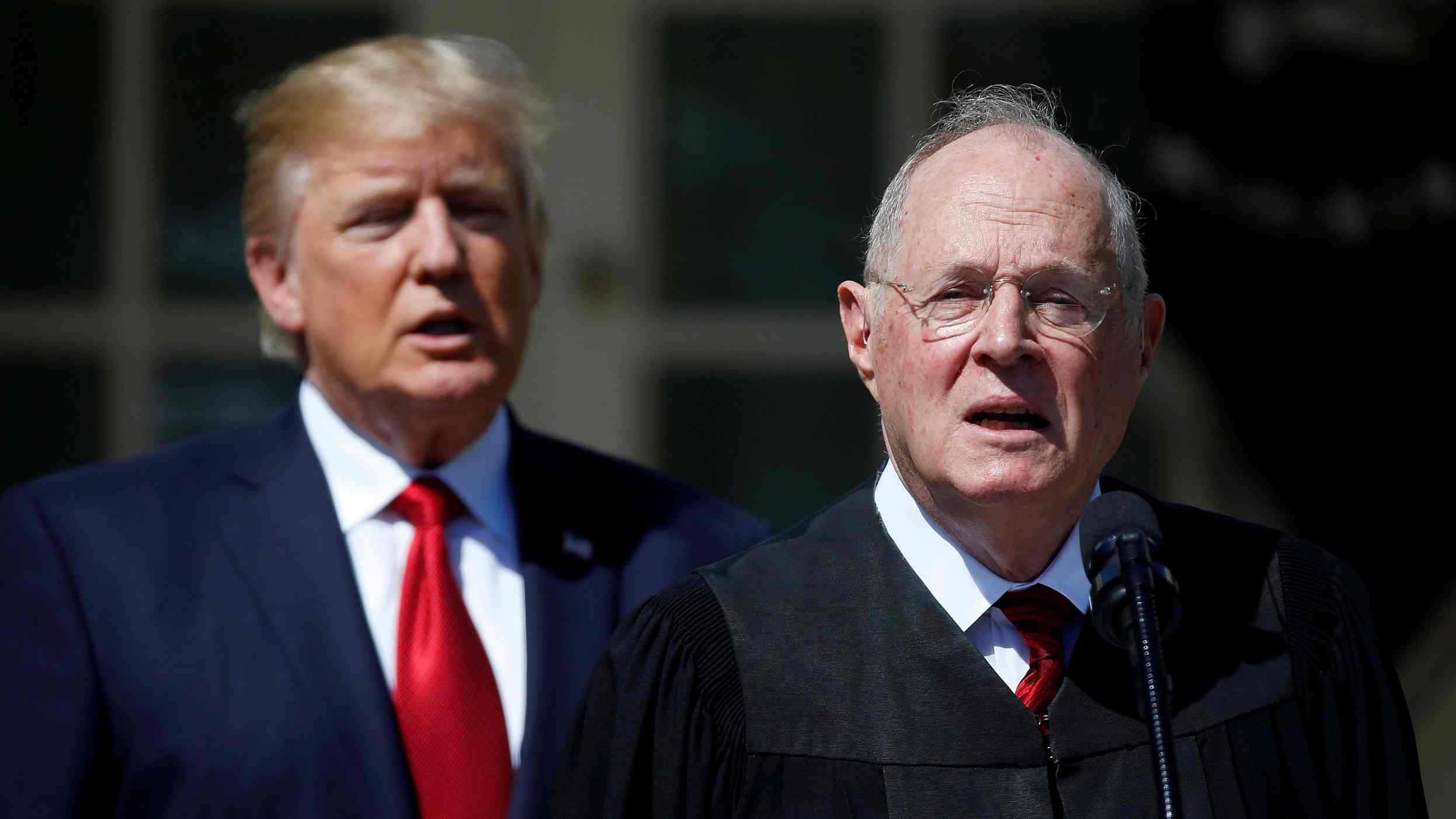
The battle over US President Donald Trump's choice to fill a coming Supreme Court vacancy, an appointment with far-reaching consequences for American society, kicked off on Thursday as Democrats vowed to fight any Republican nominee.
Trump has said the process to appoint a successor to Justice Anthony Kennedy will begin "immediately," while the Democrats are mobilizing to prevent a nominee coming before the Senate ahead of November's midterm elections.
Why does it matter?
Kennedy, who announced on Wednesday he will retire from the bench in July, held the tie-breaking vote between the Supreme Court's liberal and conservative judges. His departure will give Trump the opportunity to appoint his second justice to the nine-seat bench – and shift the high court decisively to the right.
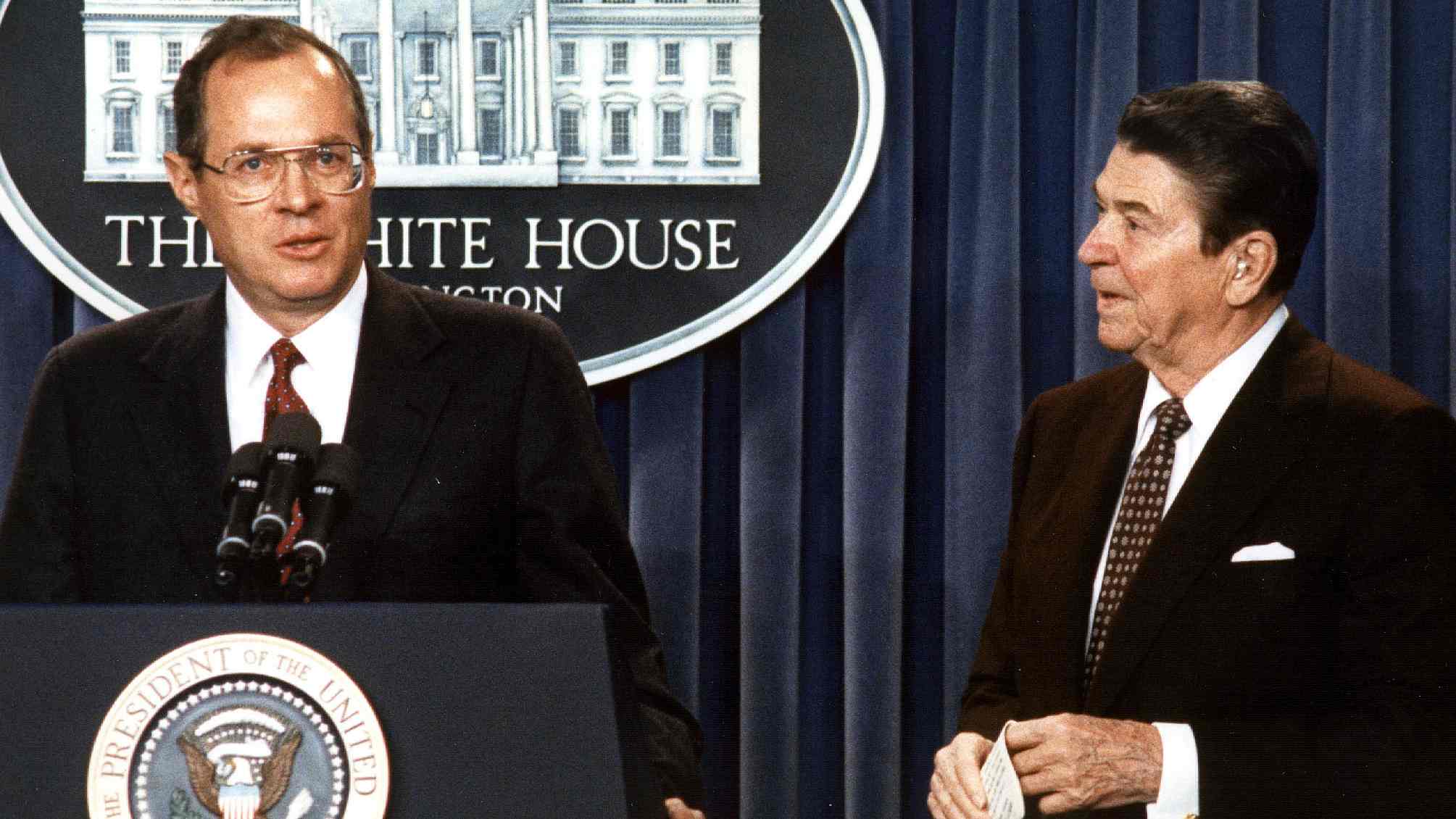
Anthony Kennedy (L) delivers remarks on 11 November 1987, at the White House, Washington, DC, after US President Ronald Reagan (R) announced he will nominate Kennedy to the US Supreme Court. /VCG Photo
Anthony Kennedy (L) delivers remarks on 11 November 1987, at the White House, Washington, DC, after US President Ronald Reagan (R) announced he will nominate Kennedy to the US Supreme Court. /VCG Photo
Kennedy, appointed by Republican President Ronald Reagan in 1987, has been the swing vote on decisions including abortion, same-sex marriage, campaign financing and the Trump travel ban.
The Democrats said on Thursday that women's reproductive rights, health care and gay rights are at stake. "Whomever the president picks, it is all too likely they're going to overturn health care protections and Roe v. Wade," warned top Senate Democrat Chuck Schumer, referring to the court's landmark 1970s ruling that upheld abortion rights.
Who are the contenders?
Trump said 81-year-old Kennedy's successor – who will be appointed for life – would be selected from a list of 25 possible candidates, many of them young and conservative.
A leading contender is Brett Kavanaugh, 53, who once clerked for Kennedy. He was nominated as a federal appeals court judge by President George W. Bush, overriding Democrat concerns he was too partisan, having worked on an investigation of President Bill Clinton.
Also on the list is 47-year-old Senator Mike Lee, among the chamber's most conservative members, and appellate Judge Amul Thapar, who would be the Supreme Court's first Asian-American justice. William Pryor Jr, a federal judge on the 11th Circuit Court of Appeals who has criticized Roe v Wade, is also on the 25-person list.
What's the process?
Whoever is nominated will need to thread the needle in the 100-member Senate. Confirmation requires a majority, after Republican leadership last year invoked the "nuclear option" and dropped the threshold to overcome blocking tactics from 60 to a simple majority.
Republicans hold 51 seats, but Senator John McCain is absent, battling brain cancer. If all Democrats oppose Trump's nominee, that leaves Republicans with no margin of error. Two female Republican senators, Susan Collins and Lisa Murkowski, are being closely watched as they have expressed support for women's reproductive rights.
"I view Roe v. Wade as being settled law," Collins said on Wednesday after Kennedy's announcement. "It's clearly precedent and I always look for judges who respect precedent."
Will it impact the midterms?
The White House believes the timing could help Trump boost conservative voters' enthusiasm and turnout at congressional elections in November.
An open seat on the Supreme Court was an important factor in rallying conservatives behind Trump's presidential election campaign in 2016. He used every opportunity to tell voters only he stood in the way of the court taking a turn to the left should Democrat Hillary Clinton win.
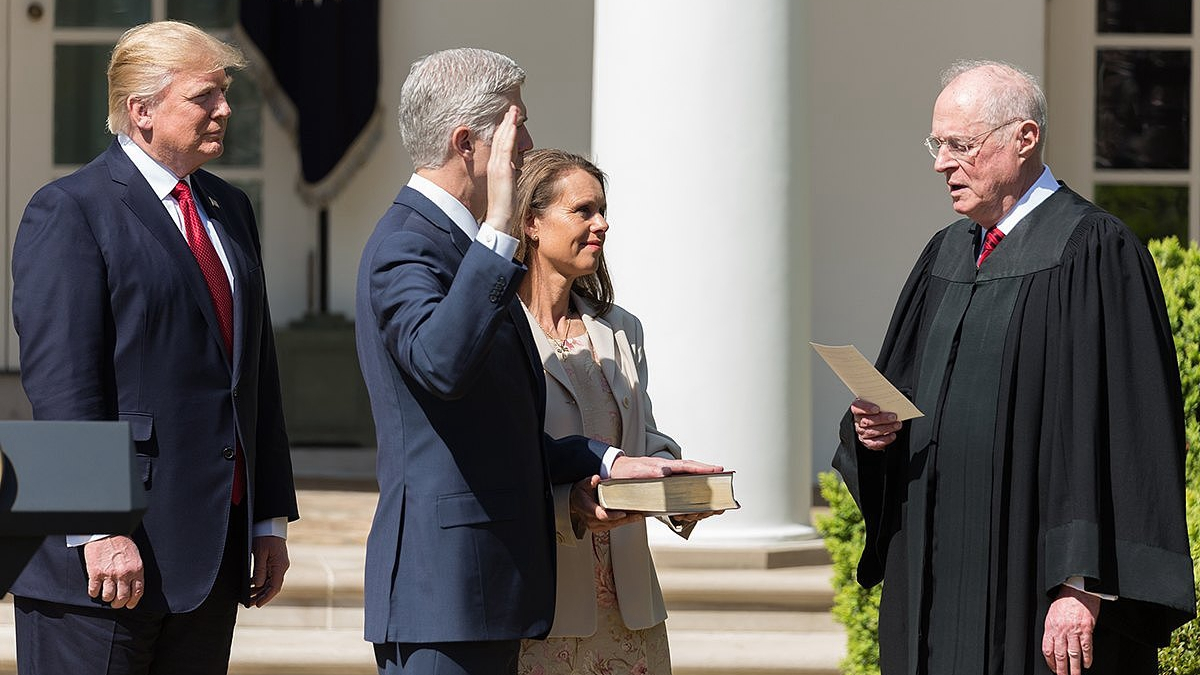
With President Donald Trump (L) looking on, Anthony Kennedy (R), Supreme Court Justice, swears in Judge Neil M. Gorsuch (center, front) to be the Supreme Court's 113th Justice, April 10, 2017, Washington, DC. /VCG Photo
With President Donald Trump (L) looking on, Anthony Kennedy (R), Supreme Court Justice, swears in Judge Neil M. Gorsuch (center, front) to be the Supreme Court's 113th Justice, April 10, 2017, Washington, DC. /VCG Photo
Republicans are fighting to maintain control of both houses of Congress, with opinion polls showing Democrats have a strong chance of winning back the House of Representatives.
"Any time you're in a midterm election year, you're going to have a concern about whether your base will turn out," one official told Reuters. "A high-profile Supreme Court battle will certainly remind all your voters what is at stake."
However, the issue is also likely to fire up Democrats. Trump has said the process to replace Kennedy, 81, will "begin immediately," raising alarm among Democrats fearful that the president will nominate an ideological conservative, upsetting the court's delicate balance and locking in a hard-right majority for a generation.
Three Democrats facing tough re-election fights this year are also in the spotlight. Each of them voted to confirm Justice Neil Gorsuch in 2017, and each released statements after Kennedy's retirement saying they would carefully consider Trump's nominee to replace him.
(With inputs from agencies)