
Tech & Sci
13:02, 29-May-2018
Four things to know about China’s academician system
 ["china"]
Share







Copied
China’s two academies, the Chinese Academy of Sciences (CAS) and the Chinese Academy of Engineering (CAE) have come under the spotlight as Chinese President Xi Jinping addressed the opening ceremony of their biennial assembly in Beijing’s Great Hall of the People on Monday.
During his speech, Xi encouraged China’s scientific community to seize the trend, take the lead, brave difficulties and develop the nation into a major power in science and technology.
As two top think tanks of their respective fields in China, the CAS and CAE, who usually act in a low-profile manner, naturally make the public wonder what they are and what they are doing. Now, it’s time for answers.
Who are academicians?
In China, academician refers to a member of the CAS and/or CAE. It is the highest academic accolade in those fields, and also a lifelong title conferred by the country.
Usually, a leading figure in one certain field who fulfills standards and requirements for membership is eligible to be nominated and then elected by present members in the Academy.
Candidates can be Chinese or foreigners, but Members have to be of Chinese nationality. Scholars and specialists of foreign nationality can be nominated and elected as Foreign Members, like Bill Gates who was among the 18 foreign members elected last year.
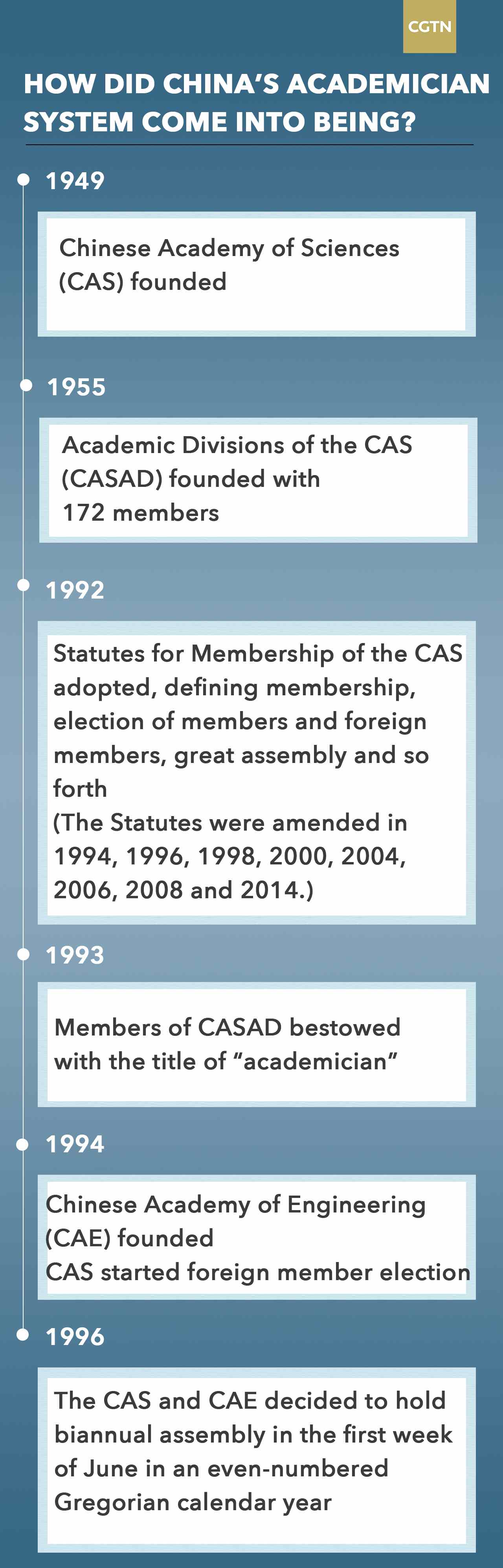
How did China’s academician system come into being?
CGTN Infographic
CGTN Infographic
How many academicians are there?
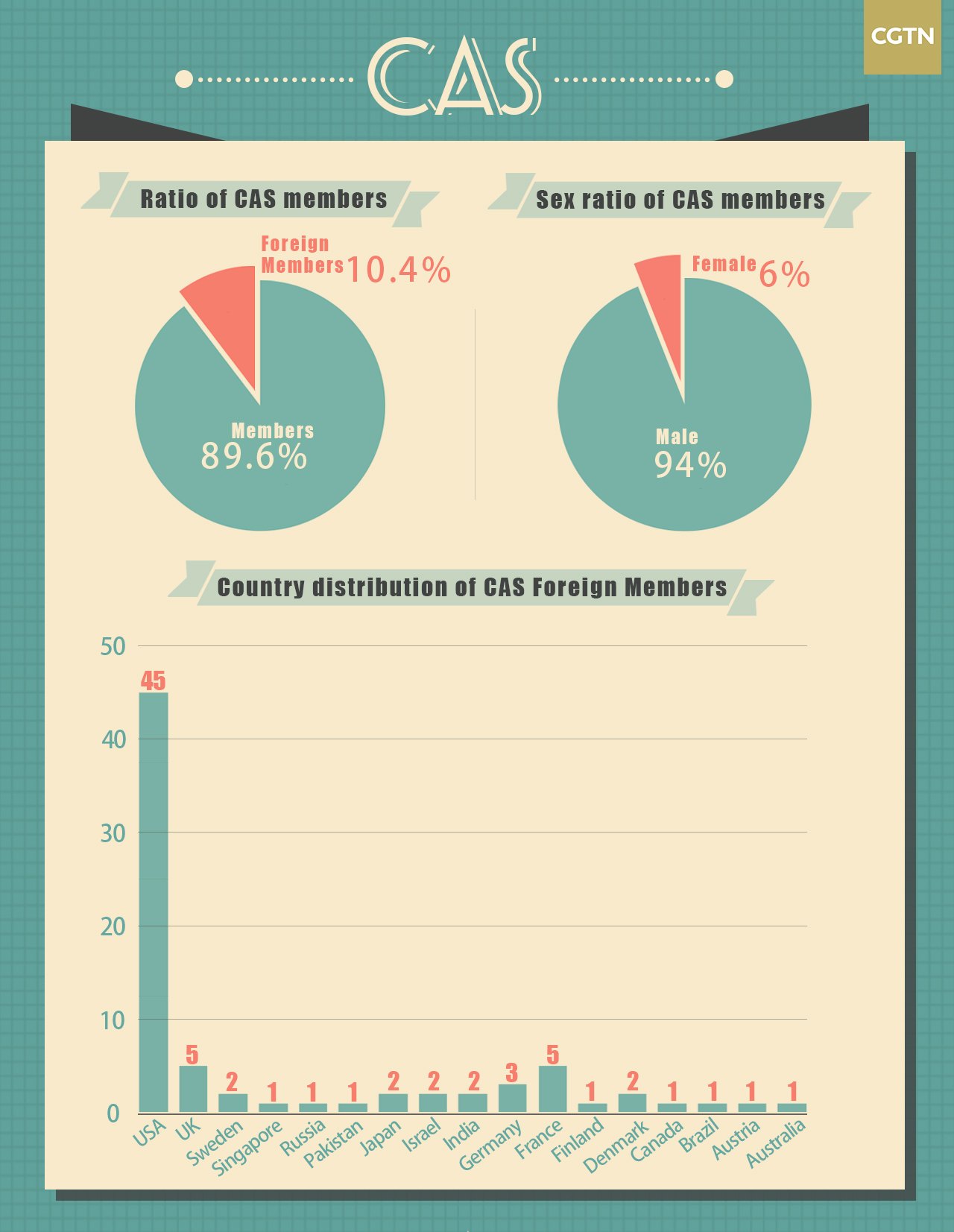
Till the end of 2017, there are 796 Members and 92 Foreign Members in six Academic Divisions of the CAS.
CGTN Inforgraphic
CGTN Inforgraphic
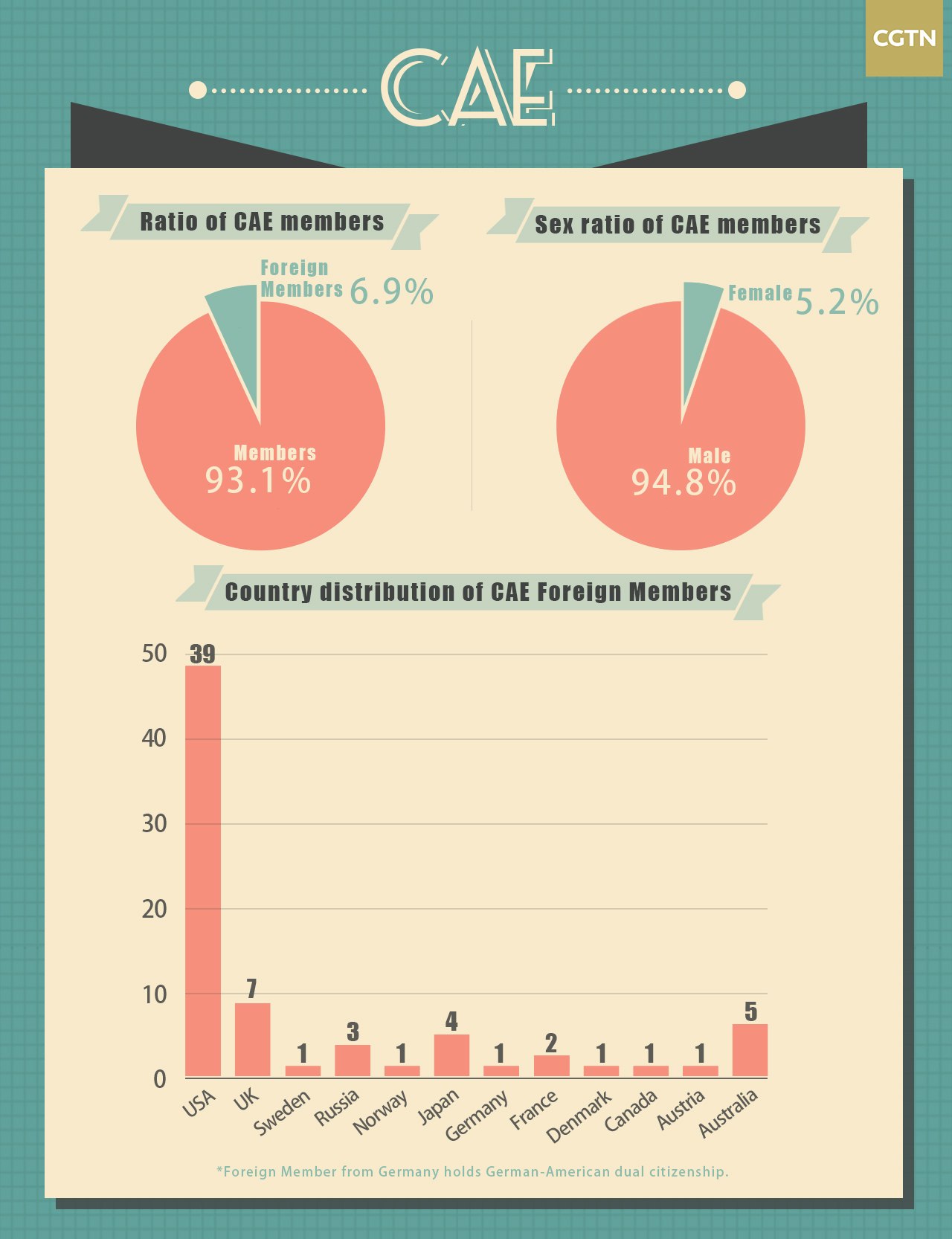
As for
the CAE, it has 872 Members and 65 Foreign Members.
CGTN Inforgraphic
CGTN Inforgraphic
What do academicians do?
The daily work of academicians includes:
- promoting research, development and application of science and technology while striving for innovation;
- undertaking consultation and evaluation initiated by the Academy;
- offering suggestions on policies concerning major science and technology issues;
- training scientific and technological workforce, facilitating international exchanges and cooperation.