
World
15:18, 30-May-2018
With second forced marriage conviction in a week, British activists hopeful of momentum
 ["europe"]
Share







Copied
After a three-week trial and testimony from the daughter, a UK couple was found guilty of forced marriage on Tuesday – the second conviction in a week, and only the third of its kind since the UK banned forced marriages in 2008.
Believing she was going on a family vacation, the British teenager was taken to Bangladesh in 2016 and told by her parents that she would marry her first cousin. The arrangement included her having his child, so that he could get a visa to the UK.
In a first for forced marriage cases, the daughter – who remains anonymous – testified against her parents. In a pre-recorded video, the victim said her father told her, “I have planned this for years, the guy is really suitable, I’ve given him money for university, and he’s a really attractive guy for round here.”
When she refused, the threats of “bringing shame” to the family escalated to physical abuse. “My dad hit me over the head one day. It was so bad that the whole room literally went black.”
Prosecutor Michelle Colborne QC, told the court that the father said that he had brought her up with 18 years of love and “he’d chop her up in 18 seconds if she disrespected him”.
In 2014, the UK made forced marriage a criminal offense, whether that marriage takes place in the UK or abroad. The maximum penalty is seven years.
The first forced marriage conviction came in 2015, when a Welsh court sentenced a man to 16 years in jail, after he admitted to forcing a woman to marry him.
The Tuesday verdict comes less than a week after a jury in Birmingham sentenced a mother to four and a half years for two counts of forced marriage and one count of perjury.
After taking her daughter to Pakistan, the 18-year-old was told that she would marry a male relative twice her age. The marriage contract had been agreed to on a previous trip to Pakistan in 2012, when the girl was 13 and he 29.
The relative – a nephew of the woman’s second husband – took her virginity on the initial trip, for which she later had an abortion.
Four years later, the victim said she was led down the aisle by her mother and forced to sign a marriage certificate, despite her objections. She describes sobbing during the ceremony.
The mother later left her in Pakistan and when concerns were raised by the authorities, the mother lied under oath, telling the High Court that her daughter had not been married.
As she was being sentenced, the judge told the mother: “You had cruelly deceived her. She was frightened, alone, held against her will, being forced into a marriage she dreaded.
“You must have known that was her state of mind. Yet for your own purposes, you drove the marriage through.”
The government’s Forced Marriage Unit (FMU) recorded 1,196 cases related to possible forced marriage. Though that figure is down 19 percent from the number of cases in 2016, the FMU cautioned that it does not necessarily mean that there’s a decrease in the number of forced marriages in the UK.
Figures shared with the Guardian by NGOs report far higher numbers of cases of forced marriage. Over a three-year period, one national hotline received over 22,000 calls related to concerns over forced marriage.
Many activists argue that cultural factors play a role in why the crime is so underreported. Because the two recent convictions were cases where the victims spoke out against their family members, many are hoping it will bring greater awareness to the issue.
Karma Nirvana, a support group for victims of forced marriages wrote on their Twitter account: “With a second conviction in under two weeks, we hope this sends the message loud and clear to would be perpetrators: culture, custom, religion or tradition is semantics #ForcedMarriage is illegal in Great Britain.”
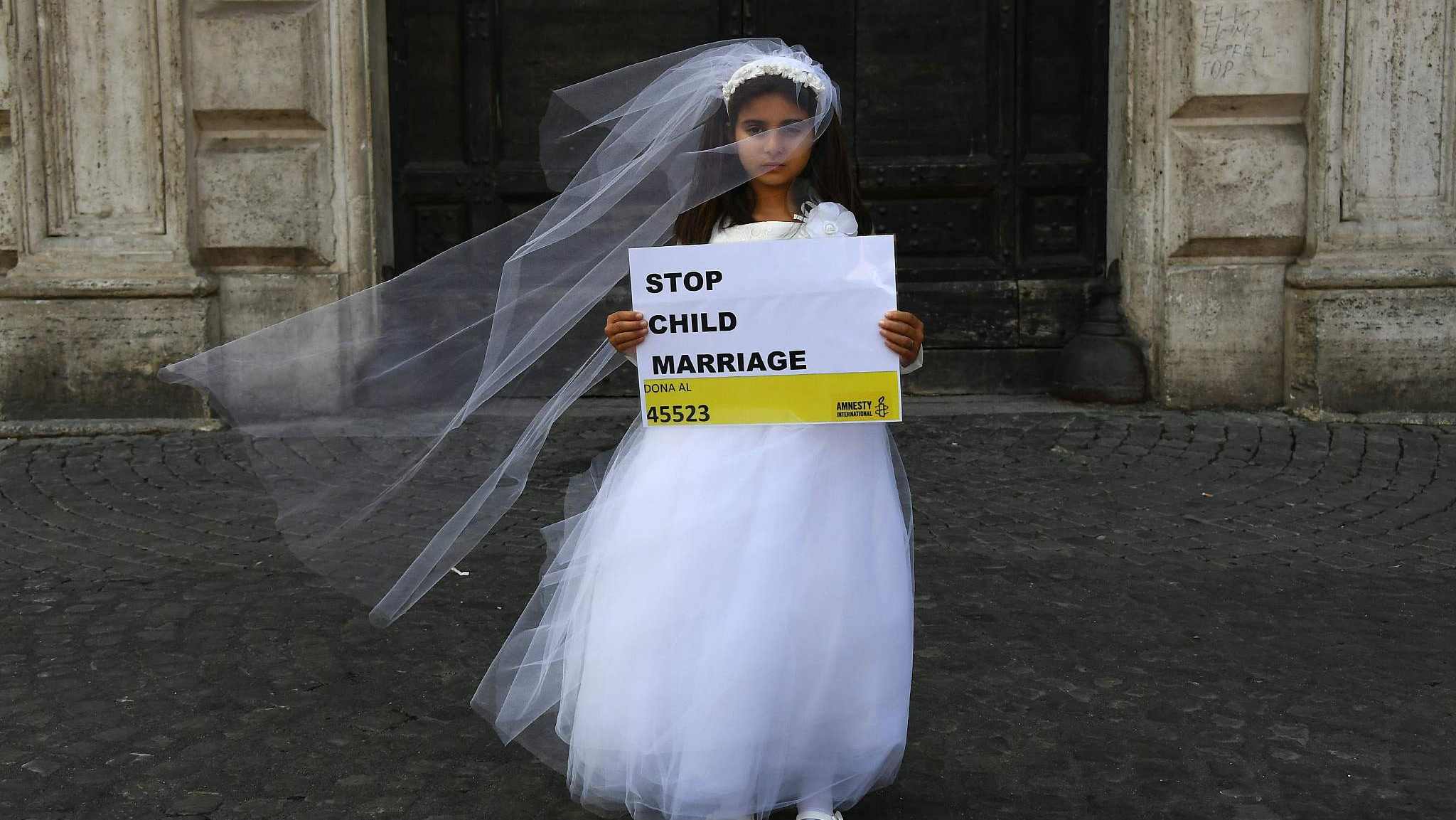
(Top photo: A young actress plays the role of Giorgia, 10, forced to marry Paolo, 47, during a happening organised by Amnesty International to denounce child marriage, on October 27, 2016 in Rome. / VCG photo)