
World
16:16, 07-Jul-2018
German officials voice concerns over Trump-Putin summit
Updated
15:50, 10-Jul-2018
 ["europe"]
Share







Copied
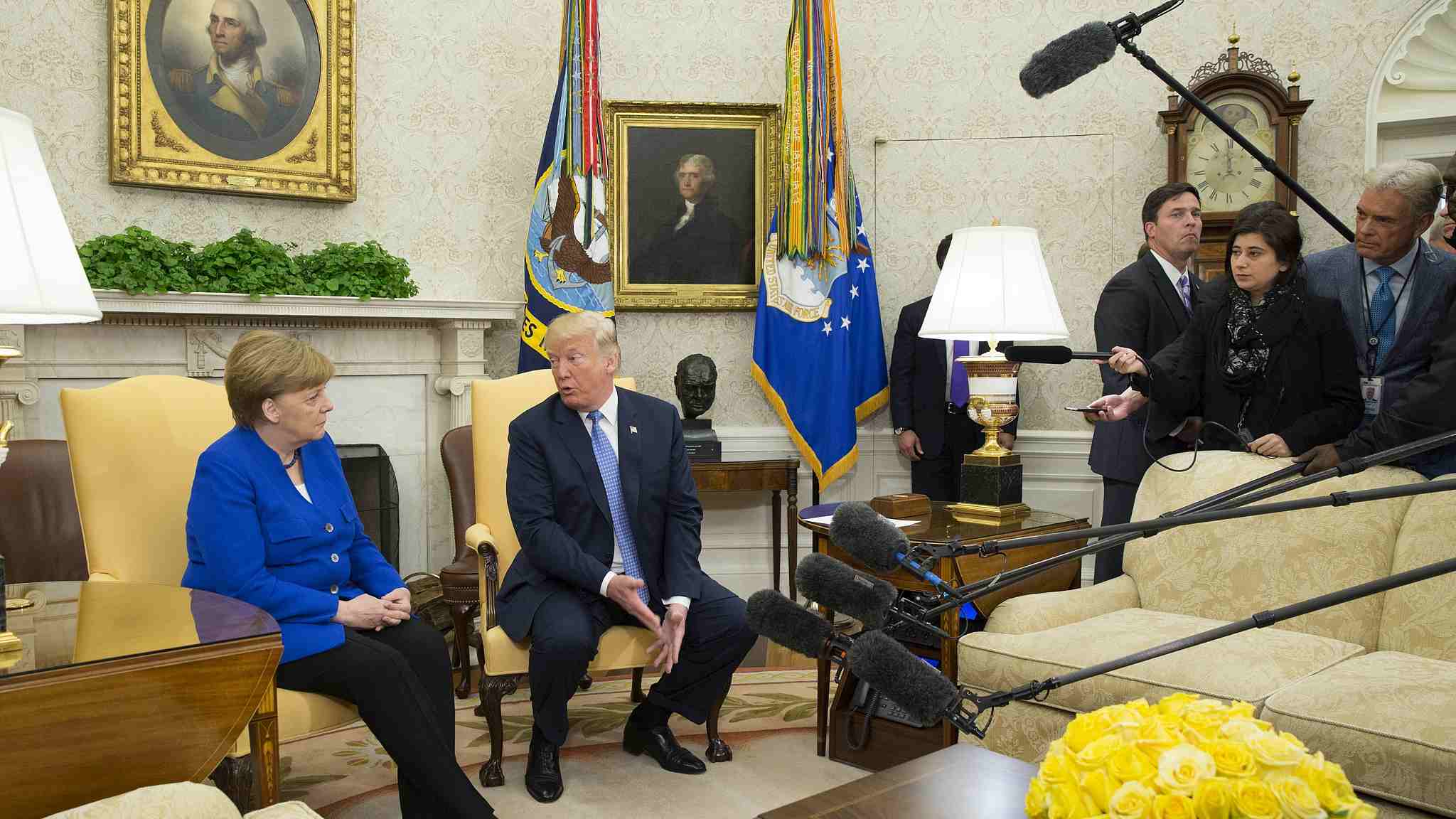
US President Donald Trump is heading to Europe next week amid concerns he could reach agreements with Russian President Vladimir Putin that are not coordinated with the North Atlantic Treaty Organization (NATO).
Peter Beyer, the transatlantic coordinator for Chancellor Angela Merkel's ruling coalition, told a German newspaper chain that NATO states had not been included in the planning for the Trump-Putin summit in Helsinki, Finland, on July 16, which has alarmed many in the defense bloc.
"There are great concerns in the alliance about what agreements Trump and Putin could reach," Beyer told the Funke Mediengruppe newspapers in an interview published Saturday.
The allies’ worries and Moscow’s hopes are rooted in Trump’s combative approach to foreign policy, the Washington Post said in a report on Friday, quoting a senior administration official who said that in recent days Trump has told senior aides that he wants to slash US spending on Europe’s defense if the allies are unwilling to contribute more to NATO.
Trump is set to leave for Europe on Tuesday and will hold talks with NATO allies in Brussels, and visit Britain before meeting with Putin.
Wolfgang Ischinger, head of the Munich Security Conference and a former German envoy to Washington, hinted at the possibility that Trump could refuse to sign a communique at next week's NATO summit in Brussels, mirroring what he did at the G7 summit.
"It cannot be ruled out," Ischinger told the German newspaper Die Welt in an interview published on Saturday.
Despite Trump's criticism, Ischinger said the transatlantic alliance was in its best shape in years given rising military spending and efforts to shore up defenses in the Baltic states and Poland after Russia's annexation of the Crimea region of Ukraine in 2014.
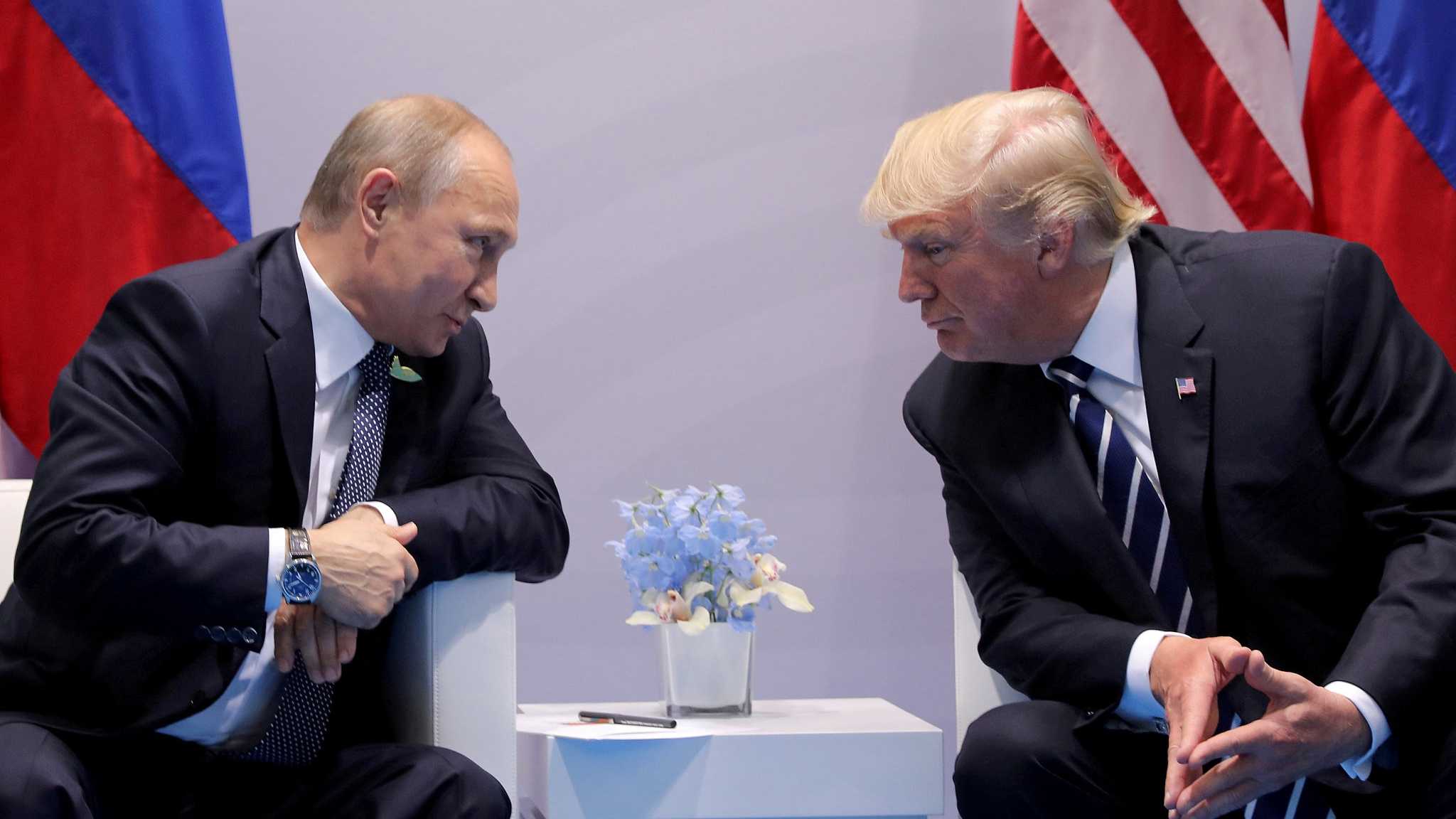
Russia's President Vladimir Putin talks to US President Donald Trump during their bilateral meeting at the G20 summit in Hamburg, Germany, July 7, 2017. /VCG Photo
Russia's President Vladimir Putin talks to US President Donald Trump during their bilateral meeting at the G20 summit in Hamburg, Germany, July 7, 2017. /VCG Photo
Christian Lindner, head of the pro-business Free Democrats, told Deutschlandfunk in an interview that he did not trust Trump, and his actions on trade and in the security arena were not in the United States' long-term interest.
"He is too volatile ... Within 24 hours, Mr. Trump can change his position by 180 degrees," said Lindner, although he warned against growing anti-American sentiments given that the United States was and would remain Germany's closest ally.
Lindner called for Europe to take a united stance as the world's largest single economic zone, providing a counterweight to Trump and Russian President Vladimir Putin.
Trump had said that he expected to have a productive meeting with his Russian counterpart in Helsinki on July 16.
In an interview with Fox News, Trump said last month that the two heads of state could, in theory, work out the Syria and Ukraine issues over dinner, reiterating that he wanted Russia to be reinstated to G7: “whether you like it or not and it may not be politically correct, but we have a world to run.”
(With input from Reuters)
(Cover: US President Donald Trump (R) and German Chancellor Angela Merkel meet in the Oval Office of the White House on April 27, 2018 in Washington, DC. /VCG Photo)